Does Calm Feel Like Distance?
Explore Survival-Bond Fusion through grounded pattern descriptions, related tarot cards, and tarot reading insights from connected readings.

Survival-bond Fusion
What does this feel like?
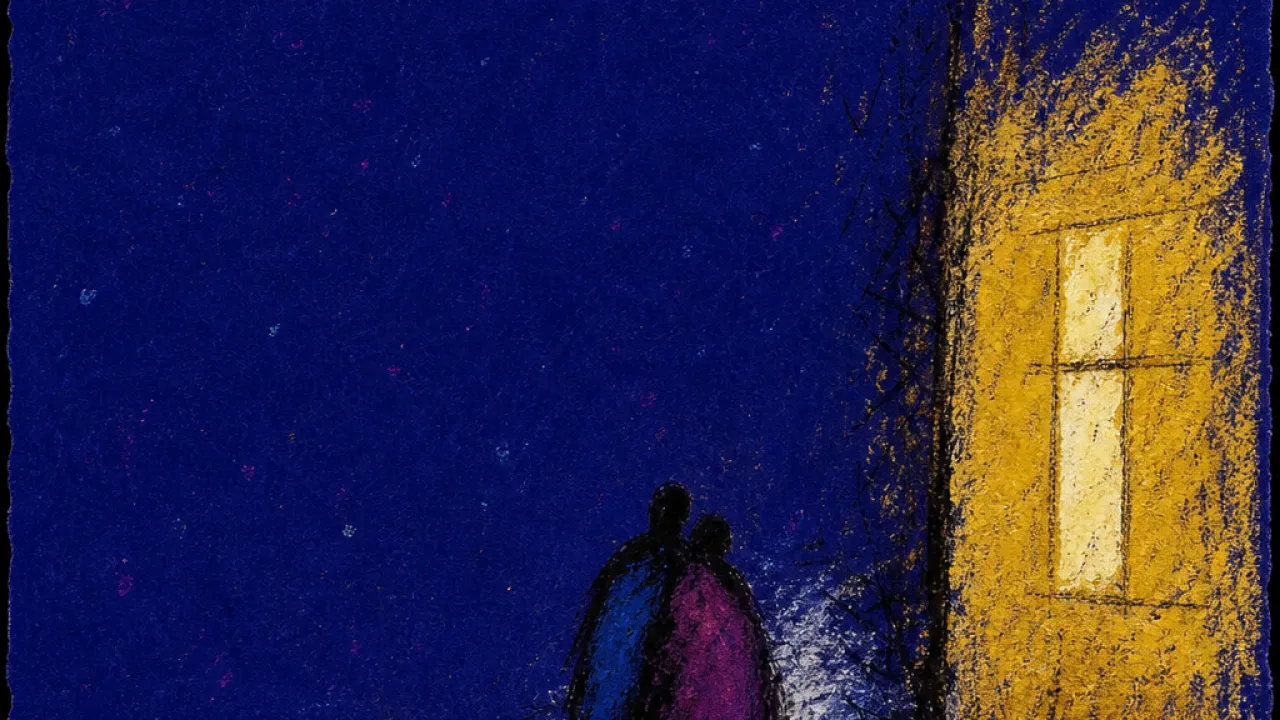
Survival-Bond Fusion is when a relationship feels most solid when you are both under pressure — you notice it in the moment your phone lights up late at night and your whole body shifts into readiness before you have even read the message. Your shoulders rise, your breathing gets small, and some quiet part of you thinks, okay, here we are again, this is where we know how to be close. Calm does not always feel calming; sometimes it feels like an empty room after the alarm stops, and you are left wondering whether the connection can still stand when nobody is bleeding time, money, sleep, patience, or attention into keeping it alive. You may trust the bond most when there is something to endure together, because hardship gives the relationship a shape you can recognize: the urgent call, the long debrief, the mutual complaint, the problem you solve as a team, the private language built out of “we got through it.” When things are easy, your mind starts checking the edges — are we drifting, are we softening, are we losing the thing that made us us? So you might step back into the cold before you mean to, offering one more fix, one more apology, one more late-night rescue, one more heavy bundle carried in both hands because the carrying itself feels like proof. The cost is subtle at first: you stop knowing whether you want the person, the pattern, or the role you have inside the pattern; you stop knowing whether warmth feels unfamiliar because it is unsafe or because you have practiced surviving for so long that shelter now feels almost suspicious. And at the center of it is the ache of loving something that may be intimate without being nourishing, much like the two figures on the Five of Pentacles moving together through the snow, close enough to share direction while the warm lit window remains beside them, unused.
What's pulling at you?
You are caught between wanting connection that feels dependable and only recognizing dependability when there is something difficult to get through together. The bond may feel safest when both of you are carrying the cold, even when another part of you knows closeness should not require constant exposure.
How It Shows Up?
- You get a text that starts with “can you talk?” and your body answers before you do — shoulders lifting, stomach tightening, thumb already opening the thread. Part of you wants to be needed because it proves the bond still has weight, and part of you feels the familiar drain of stepping back into emergency mode. The room around you seems to narrow into one snowy path, like there is only one acceptable direction: keep walking beside them. You can pause before replying; the bond does not have to be measured by how fast you enter the cold.
- A calm weekend morning arrives, and instead of relief, you feel oddly exposed. No problem to solve, no hard conversation to manage, no shared pressure to push through — just coffee cooling on the table and a silence that feels unfamiliar in your chest. Your fingers keep checking your phone, your jaw tightens, and you wonder whether peace means distance is coming. It is allowed to feel strange when warmth shows up without a crisis attached.
- You are with a partner or close friend, and they say things have been “better lately.” You smile, but something in your ribs pulls tight, because better sounds good and also unstable, like the relationship might lose its main language if there is nothing to survive together. You hear yourself searching for the next issue, the next task, the next heavy thing to carry, as if the Ten of Wands is the only posture your body trusts. You do not have to turn ease into a test just to know the connection is still there.
- At work or school, you notice how quickly you volunteer to be the one who handles the messy part — the late-night edit, the emotional check-in, the last-minute fix. Your chest gets hot, your neck stiffens, and there is a small rush of usefulness before the exhaustion lands. The pattern feels familiar: carrying the load keeps you placed inside the group, even when your own body is asking for a different pace. It is possible to notice the impulse without immediately obeying it.
- In a group setting, people are laughing about light things, and you feel slightly outside the room, like your closeness with someone only makes sense in private when life is hard. Your smile arrives half a second late, your hands fold tightly in your lap, and your throat feels dry because easy connection has no script you fully trust. The warm window is right there, but part of you keeps standing in the snow, waiting for difficulty to confirm where you belong. You can let the lighter moment exist without proving its worth.
Survival-bond Fusion in Tarot Cards
Survival-Bond Fusion lives in the place where hardship starts to feel like the clearest proof that a bond matters. You may feel it in the shoulders lifting before you answer a crisis text, or in the tightness in your ribs when peace starts to feel unstable. From an existential perspective, the structural framework of this struggle shows how connection can become organized around endurance instead of shelter. These Tarot Cards make that shape visible without explaining it away.
Survival-bond Fusion in Tarot Card Reading Insights
When Survival-Bond Fusion shows up, people often bring the same question into readings: if the relationship is not under pressure, does it still count? The readings below move from the cards into how this bond feels when someone pulls around love, friendship, or family pressure. Tarot Reading Insights for this pattern.

A Lease Became a Family Referendum, Then She Let Her Preference Stand
Topic:Family Tarot Reading
Struggle:Inherited Role Lock
Context:Family Enmeshment

Adult Role Regression: From a Tight Throat to a Three-Line Reply
Topic:Family Tarot Reading
Struggle:Inherited Role Lock
Context:Boomerang Kid Negotiation

Declining a Late-Night Family Call: Toward Support Without Compliance
Topic:Family Tarot Reading
Struggle:Inherited Role Lock
Context:Family Boundary Backlash