Too Many Options, Nothing Chosen

Explore endless viewing options, related tarot cards, and how other people brought the same crowded decision into their readings.

Audience Choice Overload
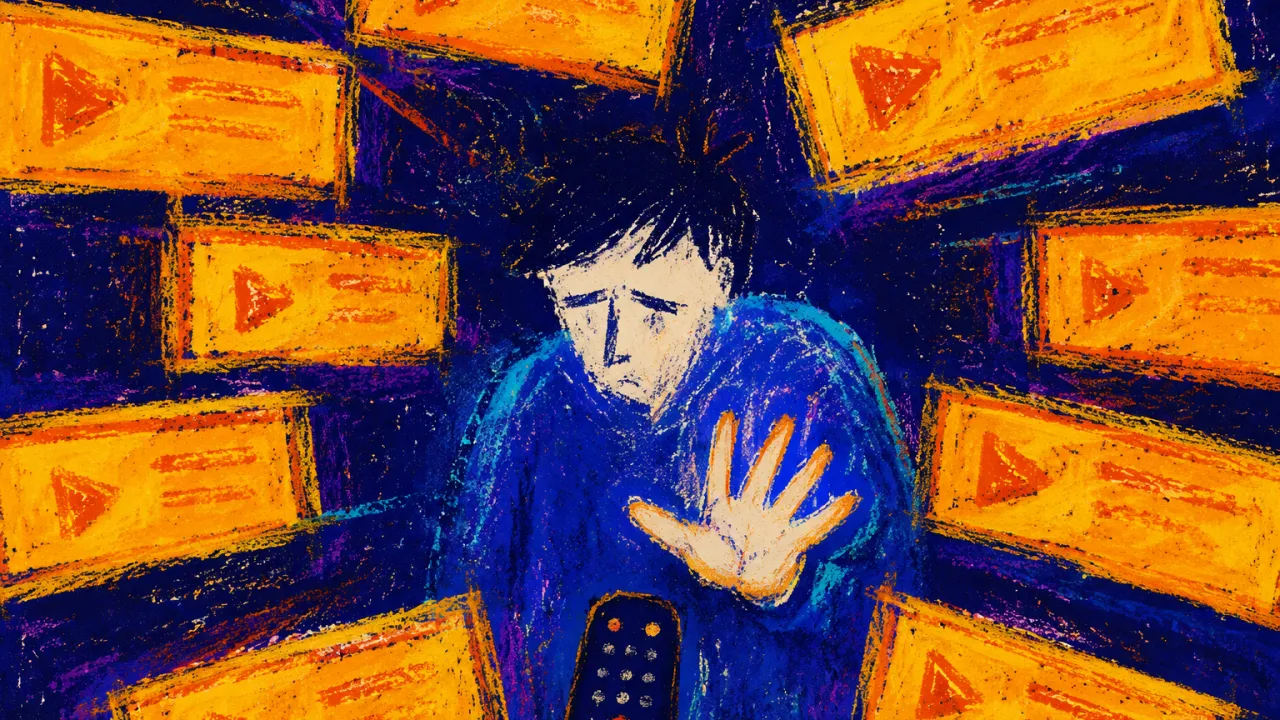
A solitary figure with shoulders drawn inward and palm above a remote as recommendation panels close in from every side

What is this situation?

Audience Choice Overload starts when you sit down after work or class, open a streaming app for one easy choice, and meet a wall of ranked rows, auto-playing previews, 'Leaving Soon' badges, and titles saved from months of recommendations. A friend has texted one pick, a group chat is debating three others, reviews disagree, and several promising titles sit behind subscriptions you do not have. You move from tile to trailer to search results, checking runtimes, episode counts, ratings, and whether everyone watching will agree. Every return to the home screen rearranges the field: familiar titles reappear, new releases take the top row, and countdown labels turn browsing into a deadline. Your thumb keeps moving, your eyes skim faster, and your shoulders draw inward as the evening gets shorter. In a group, the remote passes around while each suggestion is rejected for being too long, too intense, too familiar, or available on the wrong service; alone, you can spend the same stretch of time comparing options no one else will see. By the time the food has cooled or the free hour is half gone, you may default to something you have already watched, play a title without wanting it, or close the app with nothing chosen. The promised break becomes another round of comparison, and the choice you wanted to enjoy starts consuming the time set aside for it. The same script can repeat across podcasts, games, short-form feeds, and event listings, wherever abundance arrives without a clear stopping point. The screen keeps offering more while the usable time keeps shrinking, much like the figure on the Seven of Cups, standing before a cloud of raised cups, each displaying a different object at once.

Why it's not you?

The problem is not that you are bad at choosing; the environment presents too many incomparable options, then adds rankings, previews, deadlines, and other people's recommendations to every decision. When the catalog is larger than the time available and the interface keeps reopening the comparison, stalled browsing is a property of the setup, not a personal shortcoming.

Audience Choice Overload in Tarot Cards

Audience Choice Overload is the repeated scene of opening a streaming app for one easy pick and meeting ranked rows, auto-playing previews, expiring labels, and competing recommendations. Your fast-skimming eyes, continuously moving thumb, and inward-drawn shoulders register an environmental and structural dynamic in which the interface keeps multiplying comparisons as usable time shrinks. The Tarot Cards below reflect the visible outline of that pressure without deciding what you should choose.

Four of Cups
Upright
Under a tree, a seated figure folds their arms while three cups line the ground and a fourth is offered from a cloud. The still body and repeated vessels capture the late stage of the browse: familiar titles are available, another recommendation arrives, yet the growing menu no longer feels like a meaningful break. After the comparison has consumed the available energy, you may replay something known, start a title without wanting it, or close the app. The issue is not a lack of content but the mismatch between an abundance-first interface and a tired evening that needs low-friction recovery. Upright, the offered cup remains easy to miss because attention is occupied by dissatisfaction with the whole field. In the daily routine, the image exposes how leisure can lose its restorative function when every pause is treated as a demand to optimize.
Seven of Cups
Upright
Seven raised cups float in a cloud before a solitary figure, each holding a different lure: jewels, a castle, a snake, a wreath, a dragon, or a veiled form. The scene physically stages a catalog in which every tile can claim attention while no shared measure makes one option decisively usable. You move from trailer to rating to runtime because the field keeps converting preference into comparison. Ranked rows and autoplay previews reproduce the cloud: more information enlarges the choice surface, while a short evening and subscription limits reduce the path that can actually be taken. Upright, the open cups show genuine possibility alongside the cost of treating every possibility as equally live. The structure lets you name a platform-shaped decision bottleneck rather than a failure of taste, making the boundary between useful comparison and an unending search visible.
Two of Pentacles
Upright
One figure keeps two pentacles moving in an infinity loop while rough waves and ships shift behind them. The juggling posture gives a concrete shape to a post-work decision that has to hold limited time against multiple services, runtimes, group preferences, and the wish to actually relax. As the evening narrows, each new tile adds another item to the balance rather than resolving it. Your attention is being asked to manage a moving system, so the practical cost appears in cooled food, lost downtime, and a routine that never reaches the viewing part. Upright, the loop shows adaptability and a workable capacity to handle competing demands, but it also shows why constant switching has a cost. The structure becomes visible when leisure management is treated as resource allocation rather than a test of personal decisiveness.
Two of Swords
Upright
A blindfolded figure sits between the shoreline and the water, holding two swords in a tight X across the chest while the moon offers no clear route forward. The body makes a decision deadlock visible: incoming reviews, runtimes, group preferences, and service limits are held in suspension rather than converted into a usable criterion. You keep scanning because each new fact can reopen the choice, while any commitment risks disappointing someone or wasting the remaining hour. The crossed blades are not a lack of intelligence; they are the posture produced when incompatible standards compete and the interface provides no agreed stopping point. Upright, the guarded pause preserves neutrality but also keeps the field closed. The image separates the external conflict of criteria from the personal story that you are bad at choosing, making the bottleneck legible as a coordination problem with a finite time budget.
Five of Wands
Upright
Five figures lift their wands into a crowded, overlapping contest, each body angled toward a different line of action. The scene gives physical form to a group chat debating several titles, a remote moving between hands, and suggestions being rejected for runtime, intensity, familiarity, or platform access. You enter a small social negotiation in which the chosen show also communicates whose taste, time, and comfort matter. Every new recommendation adds another participant's standard, so the group has to manage belonging and disagreement while the usable evening keeps getting shorter. Upright, the competing wands keep the friction above the surface: the delay is produced by active preference collision, not by one person's hidden deficiency. The structure makes the social cost of audience choice visible without reducing the group to a single consensus-maker.

Audience Choice Overload in Tarot Card Reading Insights

Others have brought Audience Choice Overload into readings after spending limited downtime scrolling through streaming options and leaving without a choice. The Tarot Reading Insights below show what surfaced when this same crowded decision reached the cards.
Psychological Contexts Related to Audience Choice Overload