Who Gets To Come?

Explore the invitation pressure, related tarot cards, and reading insights around guest limits, access, and social boundary tension.

Plus-one Boundary Negotiation
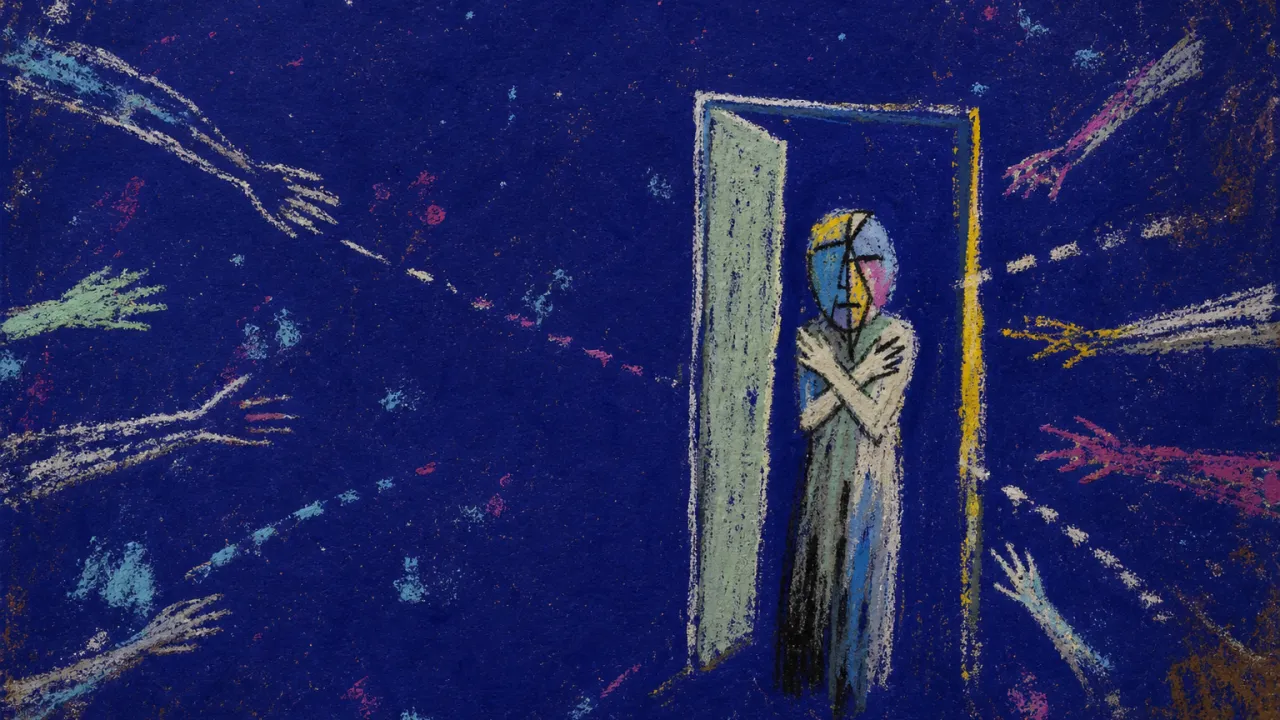
A solitary figure blocking a doorway with one arm across the chest as paper lines and reaching hands press inward

What is this situation?

Plus-One Boundary Negotiation — you open an invite that should be simple, and the first thing you notice is the small line that changes everything: “guest included,” “no plus-ones,” “partners only,” or a blank RSVP box that leaves you guessing what you are allowed to ask for. It starts in texts, group chats, wedding websites, dinner plans, work events, birthday reservations, and family gatherings where space, money, relationship labels, and social optics all get folded into one tiny decision. You may be the person asking whether your partner, date, friend, roommate, or not-yet-defined someone can come, or you may be the person having to say no without making it sound personal. Either way, the conversation rarely stays about logistics; it turns into a quiet negotiation over who counts, whose relationship is recognized, whose comfort matters, and who is expected to absorb the awkwardness. Someone says “it’s just numbers,” someone else says “but they’ll feel left out,” and suddenly you are managing feelings, budgets, seating charts, expectations, and the fear that a boundary will be read as rejection. Your phone stays face-up on the table while you draft and delete the same message, your throat tightens before you hit send, and even after the answer is settled, the air around the event feels marked by who was allowed through the door. By the time the date arrives, the invitation has become less like a welcome and more like a checkpoint, much like the figure on the Two of Swords, seated at the edge of the water with crossed blades held over the chest, keeping a boundary in place while the tide moves behind them.

Why it's not you?

This is not you being dramatic over an invitation; the setup itself turns access into a social test. Guest limits, unclear wording, relationship-status rules, and other people’s expectations can make a basic RSVP carry far more weight than it should. The pressure belongs to the structure of the event, not to your character.

Plus-one Boundary Negotiation in Tarot Cards

That tight feeling in your throat when a simple RSVP turns into a debate is part of the Plus-One Boundary Negotiation itself, not a private overreaction. The pressure around who counts as welcome, who gets included, and who has to explain themselves is an environmental, structural dynamic built into the way invitations, budgets, relationship status, and social expectations collide. The cards below do not decide who should come with you; they reflect the shape of the pressure sitting at the threshold. Here are the Tarot Cards that tend to mirror this kind of situation.

The Hierophant
Reversed
Two acolytes face a robed authority while crossed keys lie between them and the formal seat of recognition. In plus-one negotiations, that hierarchy resembles an event policy that admits spouses or established partners while leaving dates, queer partnerships, roommates, and undefined relationships outside the approved category. You encounter a rule that claims to be logistical but depends on a conventional institution deciding which bonds count. The reversed quality does not erase the ceremony; it reveals where its categories no longer map cleanly onto contemporary relationships. Access is obstructed when the invitation recognises only labels that the relationship cannot or does not want to perform. The keys therefore expose the deeper friction: the host controls attendance, but the inherited definition of “partner” controls whose connection becomes socially legible at the door.
Justice
Upright
A level scale is held beside an upright sword between two formal pillars. Together, these symbols mirror the host’s need to translate limited capacity into a rule that can be explained and applied across a guest list. You are dealing with a boundary that will be judged not only by its outcome but by whether similar relationships and requests receive comparable treatment. The upright structure keeps a route open through transparent criteria and direct language. A consistent rule cannot remove every disappointment, but it can prevent hidden status rankings from masquerading as logistics. The card separates fairness from universal accommodation: the relevant audit is whether the limit reflects real capacity, whether exceptions have a stated basis, and whether the message owns the decision without shifting blame onto the requester.
Three of Cups
Reversed
Three companions raise their cups at equal height, presenting friendship itself as a valid bond of celebration and accompaniment. The scene becomes especially relevant when an invitation assumes that a plus-one must be romantic, even though the person you trust at the event may be a close friend. You are confronting a hierarchy in which friendship provides real support but receives less automatic recognition than couple status. The reversed quality exposes the social ranking hidden inside the festive image. Substituting a friend may be blocked not by total headcount but by a rule that treats romantic partnership as the only legitimate form of paired attendance. The card names why that refusal can alter a friendship dynamic: the friend is not simply missing a party but being classified as less socially consequential than someone with a recognised romantic label.
Two of Pentacles
Upright
Two pentacles move through an infinity loop while ships rise and fall behind the juggler. The image anchors the practical layer of plus-one negotiation: every additional guest affects headcount, seating, food, transport, and cost, while the event continues moving toward a fixed date. You are not merely deciding whether one more person would be pleasant to include; you are trying to keep several finite parts of a physical plan in motion without allowing one request to destabilise the whole arrangement. The juggler remains mobile rather than locking either pentacle away, so the upright structure preserves room for an explicit trade-off. You can see which constraint is genuinely fixed, which detail can be rearranged, and where accommodating a guest would transfer cost or labour elsewhere. The awkward conversation becomes easier to audit once “Can they come?” is separated into capacity, budget, substitution, and relationship-recognition questions.
Five of Pentacles
Upright
Two figures move through the cold outside a lit window, physically separated from the shelter and community represented within. That exterior position captures the social consequence of a guest policy when one person is admitted and the person beside them is not. You may technically possess an invitation, yet the relationship or support arrangement that would make the event comfortable remains outside the threshold. The window is visible, so the exclusion is neither abstract nor easy to dismiss as “just numbers.” It shows exactly what is available and who lacks access, while also revealing that the invited person may experience the boundary alongside the excluded guest. The upright scene makes the cost legible enough to compare real options: attending alone, declining in solidarity, or asking whether the host has an alternative form of inclusion.
Six of Pentacles
Reversed
A standing giver holds scales in one hand and distributes coins with the other while two people wait below. The arrangement mirrors a host who possesses the guest slots, defines the eligibility criteria, and decides whose request receives an exception. You may hear that the policy is fair because capacity is limited, while still noticing that access depends on proximity, status, or the gatekeeper’s personal discretion. The reversed quality exposes the imbalance built into apparently generous allocation. The scales are present, but the recipients cannot independently verify how they are being used, so an exception for one guest can make another refusal feel like a ranking of relationships. The card names the practical power difference without requiring either side to become a villain: one party controls a scarce resource, and the other must disclose personal significance to petition for it.
Ten of Pentacles
Reversed
An elder, a couple, a child, and dogs occupy a multigenerational space beneath an archway marked by ten pentacles. The family compound visually represents gatherings where access is organised through lineage, recognised partnership, and established household roles. You may be invited as a family member while the person you consider part of your life remains outside the category the family is willing to acknowledge. The reversed quality turns the archway into a contested checkpoint rather than an uncomplicated sign of belonging. An unmarried partner, recent date, queer relationship, chosen-family companion, or estranged relative may be excluded because the guest rule protects a traditional image of the family gathering. The card exposes the structural conflict between finite hosting capacity and inherited definitions of legitimacy, making it possible to see when “family only” is a logistical boundary and when it is also a status judgment.
Two of Swords
Upright
Crossed swords cover the seated figure’s chest while a blindfold blocks her view and the tide moves behind her. The pose gives physical form to an invitation decision in which both available answers carry social cost: asking may feel like challenging the host, while staying quiet may leave a partner or friend unrecognised. You hold the boundary in place because moving either blade appears capable of being read as rejection, entitlement, or disloyalty. The upright figure is paused but not powerless; both swords remain in her hands. That matters when the RSVP wording is incomplete, because the immediate choice does not have to be made from imagined reactions alone. The card’s stable posture separates a temporary hold from avoidance and exposes the missing criterion: whether the decision should be governed by capacity, relationship status, equal treatment, or your willingness to attend alone.
Queen of Swords
Upright
An upright sword defines a clean vertical line while the Queen extends her other hand toward the person approaching. The combined gesture captures the communication challenge inside a plus-one refusal: the limit must remain unmistakable, but the conversation does not have to withdraw recognition or respect. You can acknowledge why the companion matters without implying that empathy automatically creates another seat. The open hand keeps dialogue accessible while the sword prevents the message from dissolving into apology, blame, or false hope. Clear wording locates the decision in the event’s actual constraint and avoids using vague phrases that invite continued bargaining. The card reveals that warmth and firmness are separate communication functions, both of which can remain present in the same answer.
Four of Wands
Upright
Four wands hold a garland above a threshold while paired figures raise flowers in front of a public celebration. The scene closely mirrors weddings, parties, and milestone gatherings where attending as a couple makes a relationship visible to the wider group. You are negotiating more than an extra seat because crossing that decorated threshold together can function as public acknowledgement that the relationship belongs in the shared celebration. The upright gateway remains open, which gives the negotiation a constructive path when expectations are named before the event. A clear answer can distinguish the host’s physical limit from any verdict on the bond, while the couple can decide what attendance would represent for them. The card makes visible why “come alone” may not feel neutral even when the guest policy was designed as a practical constraint.
Seven of Wands
Upright
A lone figure holds the high ground with one wand while six others press upward from below. The unequal positions capture what happens after a guest limit is announced and several people argue that their request should be the exception. You may be defending a real capacity boundary while absorbing separate stories about travel anxiety, relationship recognition, fairness, and fear of being left out. The upright stance keeps the boundary available without pretending that resistance will disappear. The figure’s task is not to defeat the people below but to remain clear about which part of the event structure cannot move and which part is open to discussion. The card exposes how repeated pressure can make a host overexplain, improvise inconsistent exceptions, or treat every disappointed response as evidence that the original limit was illegitimate.

Plus-one Boundary Negotiation in Tarot Card Reading Insights

When Plus-One Boundary Negotiation turns an invitation into a public test of access, other people have brought that same guest-list pressure into readings. The shift from cards to readings shows how this situation appears when someone sits with the question of who gets included, who gets questioned, and who is left explaining. Tarot Reading Insights from sessions on this boundary tension.


Psychological Contexts Related to Plus-one Boundary Negotiation