Who Gets Heard First?

A grounded look at meeting-room competition, related tarot cards, and tarot reading insights from similar workplace dynamics.

Competitive Meeting Culture
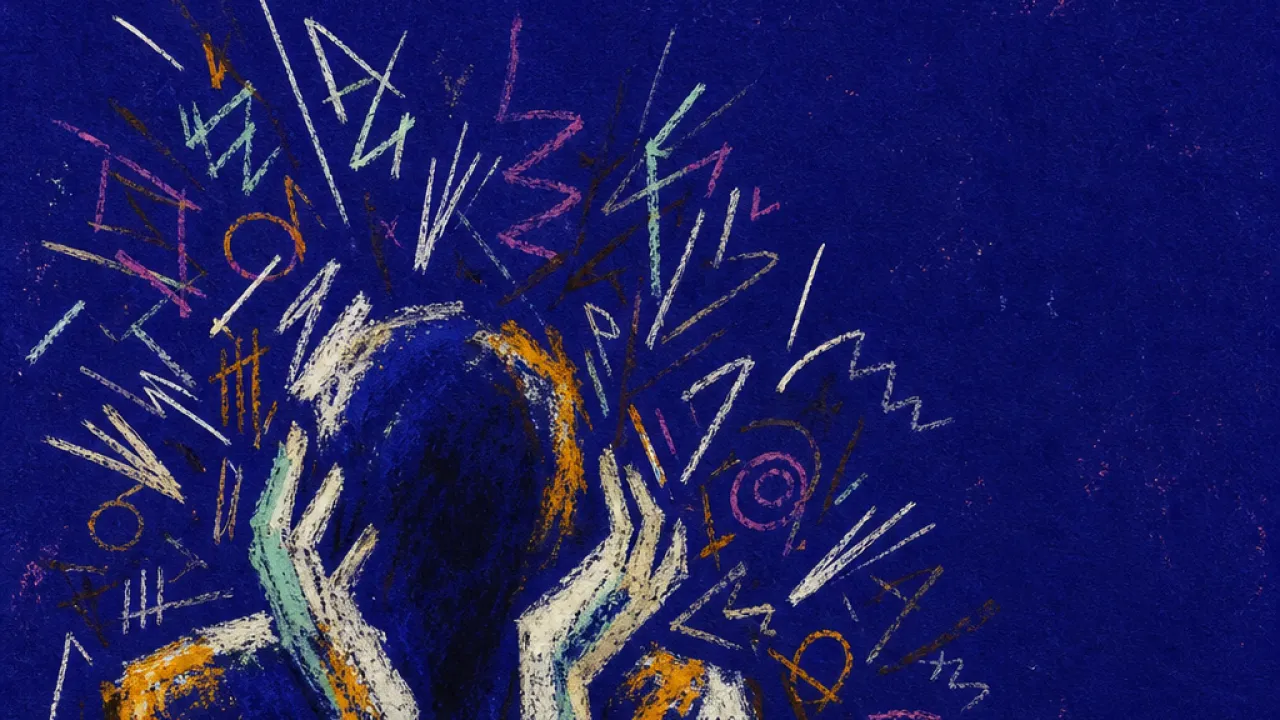
A solitary figure with tight shoulders surrounded by raised hands and overlapping speech lines pressing inward from all sides

What is this situation?

Competitive Meeting Culture — you join the calendar invite already knowing the room will reward whoever speaks first, speaks longest, or sounds the most certain. It might be a glass-walled conference room, a Zoom grid, a weekly stand-up, or a strategy call where every update becomes a performance of control. Someone jumps in before the question is finished, someone reframes your point as if they just invented it, and someone else turns a simple decision into a contest for visibility. You learn to keep one eye on the agenda and the other on the people circling for airtime: who interrupts without being stopped, whose half-formed idea gets praised, whose careful answer gets passed over because it did not arrive fast enough. Even when the meeting is polite on paper, the rules underneath are sharp: hesitation reads as weakness, listening looks invisible, and being concise can make your work disappear. By the end, your shoulders are tight, your jaw has been locked for twenty minutes, and the notes page is full of things you meant to say but never found a clean opening for. What wears you down is not the meeting itself, but the way the room turns collaboration into a public contest for space, much like the Five of Wands, where every raised wand crowds the same air and no one can move without blocking someone else.

Why it's not you?

The issue is not that you lack confidence or need to become louder; the room is organized around interruption, speed, and visibility as currency. When airtime gets treated like territory, careful thinking and quieter forms of contribution are pushed out by the format itself. That is a meeting culture problem, not a personal flaw.

Competitive Meeting Culture in Tarot Cards

The moment your shoulders tighten before you unmute is part of what Competitive Meeting Culture trains into the room. This is an environmental and structural dynamic, not just a personal communication style, because airtime is treated like territory and visibility becomes the operating rule. The cards below do not decide who is right in the meeting; they reflect the shape of the pressure underneath it. Here are the Tarot Cards that tend to mirror this kind of workplace situation.

Justice
Reversed
A seated figure holds balanced scales in one hand and a raised sword in the other between two formal pillars. Reversed, those instruments no longer align rule, consequence, and evaluation, mirroring a room where interruption is interpreted differently depending on who does it. The obstructed fairness structure exposes the gap between a polite agenda and the meeting's actual enforcement norms. You may be expected to wait, qualify, and stay concise while a higher-status colleague faces no cost for taking the floor, locating the problem in unequal governance rather than in personal conversational skill.
Three of Pentacles
Reversed
A craftsperson stands beneath a carved arch while two other figures hold the plans and inspect the work. Reversed, the shared architecture no longer coordinates expertise, standards, and recognition, turning what should be a working session into three separate performances of authority. The blocked collaborative structure mirrors meetings where participants reference the same project but compete to control its narrative. You may bring detailed work into the room only to see delivery style outrank substance, revealing that the professional bottleneck lies in the team's collaboration design rather than in individual capability.
Four of Pentacles
Upright
A seated figure crowns the head with one pentacle, presses another to the chest, and pins two more beneath both feet. The closed posture turns every available resource into defended territory, closely matching a colleague who hoards airtime, framing rights, and proximity to authority. The upright arrangement shows that control is working for the person who holds the floor, even while access narrows for everyone else. You may experience every pause as already claimed and every concise answer as professionally risky, exposing how scarcity behaviour can be rewarded by the meeting format until collaboration becomes secondary.
Six of Pentacles
Reversed
A standing figure holds scales in one hand while distributing coins to two kneeling people with the other. Reversed, the scales no longer guarantee equitable access, and the person controlling the resource can decide who receives enough and who remains waiting. The same vertical arrangement maps airtime, managerial attention, and permission to interrupt onto a workplace allocation system. You may notice that senior or forceful colleagues receive expansive space while your concise contribution is cut short, making unequal facilitation a visible power structure rather than a neutral difference in communication style.
Five of Swords
Upright
A central figure gathers the swords while two others turn away toward the water, separating possession of the field from any shared success. The weapons left on the ground and the winner's backward glance mirror meetings where one person secures the final framing, credit, or executive attention after everyone else has contributed material. The upright scene shows the zero-sum tactic functioning in plain view: someone can win the exchange even while the group loses trust and decision quality. You may leave with your point appropriated or your objection publicly outmanoeuvred, making the professional cost of the culture visible without treating participation as a personal confidence test.
Seven of Swords
Upright
A figure carries five swords away from the encampment while looking back, leaving two swords planted behind. The divided haul and sideways attention form a precise image of selective appropriation: a colleague lifts the strongest part of your contribution, detaches it from its source, and returns it to the meeting as their own framing. The upright movement shows that the tactic has a usable route through the system because ownership is poorly recorded and fast repetition is mistaken for authorship. You can watch an idea travel from your sentence to someone else's status without an explicit rule being broken, which locates the problem in weak attribution norms and competitive incentives rather than in the quality of the original idea.
Nine of Swords
Upright
A figure sits upright in bed with the face covered while nine swords line the dark wall above. The repeated blades and wakeful posture resemble a meeting continuing as mental rehearsal after the calendar event has ended: missed openings, stolen framing, and possible responses remain queued for review. The upright image makes the accumulated pressure visible rather than attributing it to a defective personality. You may replay the exchange or brace before the next call because the room has trained attention toward interruption risk, showing how an external meeting culture can occupy internal bandwidth long after everyone has left.
Knight of Swords
Reversed
An armoured knight drives a charging horse forward with a raised sword while clouds and trees bend around the rush. Reversed, that momentum loses command of its own force, reproducing the colleague who enters before a question is finished and treats conversational speed as evidence of authority. The blocked orientation separates decisive communication from reckless occupation of the floor. You may be pressured to match the pace even when the topic requires qualification or thought, showing how the meeting's speed premium filters out careful analysis before its professional value can become visible.
King of Swords
Reversed
A crowned figure sits frontally on a high-backed throne and holds an upright sword as the central sign of intellectual authority. Reversed, the sword and elevated seat stop organising clear judgment and instead support the appearance of unquestionable certainty. The blocked authority structure matches meetings where confidence outranks evidence and the most forceful interpretation becomes the official one. You may find that caveats, careful reasoning, or requests for clarification are read as weakness, showing how professional credibility has been tied to dominance rather than to the quality of thought.
Five of Wands
Upright
Five figures raise their wands into the same crowded centre, with every movement obstructing someone else's line. The uneven ground, overlapping staffs, and absence of a shared target reproduce a meeting where several people compete for one limited channel of attention instead of building toward one decision. The upright scene keeps the contest visible and active: participation is available, but recognition is routed through public struggle. You may enter with a useful contribution and still have to defend the opening, volume, and ownership of it, revealing that the friction comes from the room's operating rules rather than from a lack of preparation.
Six of Wands
Reversed
A wreath-crowned rider moves before a crowd while carrying another wreath at the top of a wand. Reversed, the public recognition system loses its reliable connection to actual contribution, so visibility can circulate without accurately identifying who produced the work or the idea. The blocked recognition pathway mirrors a meeting where the most assertive summary receives praise while the careful analysis behind it disappears. You can be present, prepared, and professionally useful yet leave without credit, revealing that the room is measuring command of attention rather than the value created.
Seven of Wands
Reversed
One figure stands above six rising wands, trying to hold a narrow position while wearing mismatched footwear. Turned upside down, the precarious ledge and multiple incoming challenges make stable footing unavailable, matching a meeting where every attempted contribution is interrupted, redirected, or forced into immediate defence. The reversed structure shows speaking access being depleted rather than successfully protected. You may spend so much attention anticipating the next interruption that the substance of your work remains in your notes, exposing how the room transfers the burden of facilitation onto the person already being crowded out.

Competitive Meeting Culture in Tarot Card Reading Insights

Competitive Meeting Culture does not stay inside the conference room; people bring the interruptions, claimed ideas, and pressure to sound certain into readings. The entries below shift from the cards into how others have sat with this meeting-room pattern. Tarot Reading Insights from sessions involving this kind of workplace dynamic.

Psychological Contexts Related to Competitive Meeting Culture