When Family Drama Follows You

A grounded look at family disruption spilling into daily life, with related tarot cards and reading insights from sessions.

Family Crisis Spillover
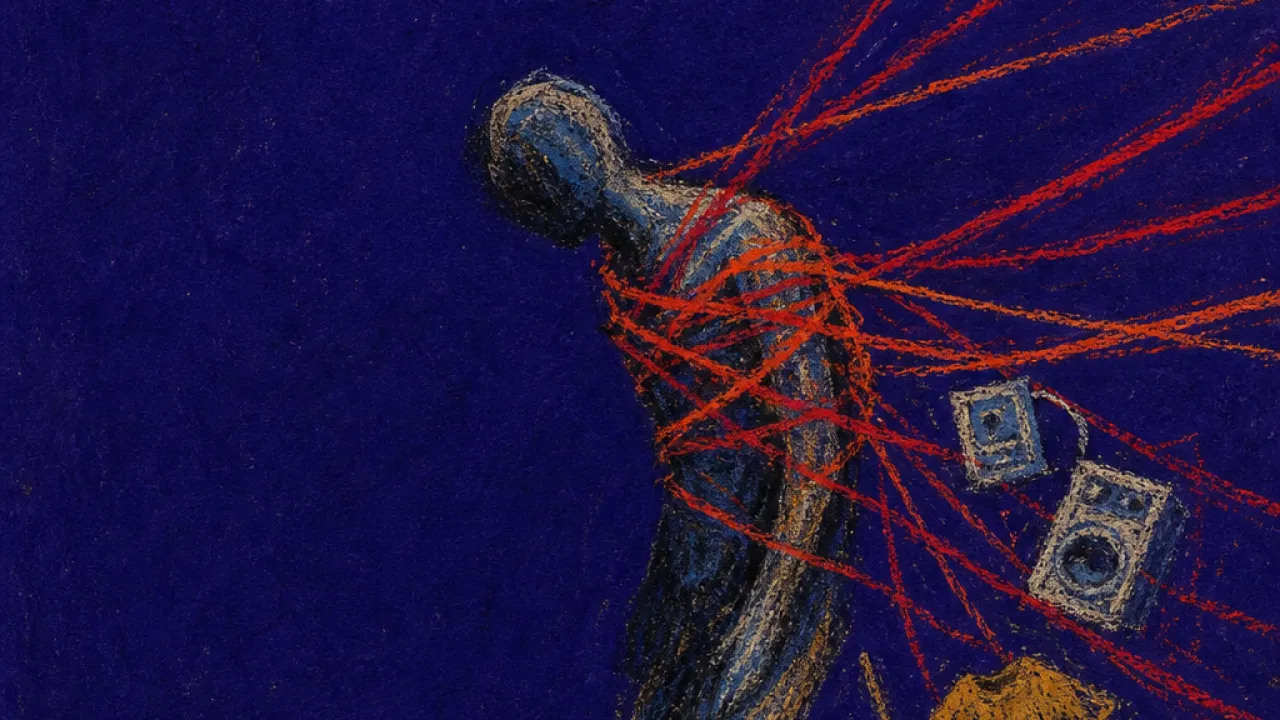
A solitary figure pulled down by glowing message threads around the torso, with unfinished daily objects dragged behind

What is this situation?

Family Crisis Spillover — you are not living inside one dramatic scene so much as a constant series of interruptions that keep crossing the edges of your own life. It starts with a missed call during work, a group chat lighting up while you are trying to sleep, a parent or sibling asking you to “just talk to them,” a relative sending screenshots, updates, demands, or vague warnings that make it impossible to know whether you are being informed or recruited. You may be in your apartment, at your desk, on the train, out with friends, or trying to answer normal emails, but the family situation keeps entering the room through your phone and rearranging the day around itself. Someone needs you to mediate, someone wants you to take a side, someone expects a reply right away, and someone else acts wounded when you do not have the bandwidth to absorb another update. The crisis may technically belong to the family system, but its schedule lands on your calendar: your lunch break becomes a call, your evening becomes damage control, your weekend becomes logistics, and your plans become conditional on whether another message arrives. The power dynamic is especially draining because family language can make every request sound like a duty, even when the load is unevenly placed on you; you are treated as the available one, the steady one, the one who can translate, soothe, organize, remember, explain, and pick up the pieces without being asked what it costs. Over time, the spillover stops feeling like a single event and starts becoming the weather of your week: phone face-down but still present, stomach dropping when a name appears on the screen, shoulders tightening before you even read the message, and a quiet sense that your own life is always one notification away from being interrupted, much like the figure on the Ten of Wands, bent forward under a bundle that blocks the view of the road ahead.

Why it's not you?

The problem is not that you are cold, selfish, or bad at handling family. The problem is that this situation keeps moving its urgency into your time, your body, and your decisions without clear limits. Constant calls, emotional delegation, side-taking pressure, and last-minute logistics are not personal failures; they are the shape of a family crisis spilling past its proper edges.

Family Crisis Spillover in Tarot Cards

Family Crisis Spillover is the kind of situation where urgent calls, tense messages, and other people's unresolved choices keep pushing into your day. The phone tight in your hand, the tightened shoulders, the half-finished work left open on your screen — these are not random reactions; they are contact points with an environmental, structural, and dynamic pressure around family roles and availability. The cards below do not decide what you owe anyone or what you should do next. They map the shape of the pressure, the overload, and the interrupted boundaries through Tarot Cards that often mirror this kind of situation.

The Chariot
Reversed
The black and white sphinxes face different impulses while the armoured driver holds no visible reins and the city sits behind him. Reversed, coordination breaks down: conflicting relatives, competing versions of events, and urgent requests pull your time in several directions without giving you real control over where the situation goes. You may be assigned responsibility for movement while lacking authority over the forces that must cooperate. The blocked pathway is self-directed momentum, and the image separates that structural loss of steering from any claim that you simply need more discipline.
Wheel of Fortune
Reversed
The turning wheel, rising and falling figures, and fixed witnesses in the corners depict change occurring on several levels at once. Reversed, the cycle captures your schedule instead of providing a usable transition: every apparent lull is followed by another message, argument, or logistical demand that restarts the same role assignment. You cannot time your own life effectively when the family system supplies neither a stable cadence nor a credible endpoint. The blocked resource is predictable transition, and the recurring image makes it possible to distinguish a genuinely new emergency from another rotation of the same unresolved pattern.
The Hanged Man
Upright
The suspended figure, fixed ankle, and quiet halo hold action in a deliberate interval rather than showing movement toward an endpoint. The image fits plans kept conditional on the next call, decision, or family development, especially when nobody can say what information would actually end the wait. The upright stillness retains a reflective function, so the pause can be examined rather than merely endured. You can identify the concrete event you are waiting for and expose any open-ended family expectation that has turned temporary responsiveness into indefinite suspension.
The Devil
Upright
The chained pair stand beneath a larger authority figure, yet the collars are visibly loose enough to expose how compliance is maintained as much by the perceived contract as by physical restraint. The image matches family language that turns availability into duty and frames delayed replies, privacy, or refusal as moral failure. The upright scene makes the attachment mechanism visible, which is the usable resource inside an otherwise restrictive arrangement. You can examine the inherited equation between care and unlimited access without denying that the family crisis itself may be real.
The Moon
Upright
The moonlit path runs between two towers while a dog and wolf react from opposite sides and something rises from the water. The scene captures the informational ambiguity of vague warnings, partial screenshots, emotional versions of events, and uncertainty about whether you are being informed or strategically recruited. The path remains visible despite incomplete light, so uncertainty does not have to be filled immediately with someone else’s interpretation. You can notice which facts are present, which reactions belong to other family members, and which feared implications have not yet been established.
Three of Cups
Reversed
Three figures raise their cups inside a shared circle while fruit and flowers establish a contained space for connection. Reversed, that circle cannot function as a reliable source of friendship time: family calls interrupt the hangout, plans are cancelled at short notice, and your attention remains partly stationed in a crisis elsewhere. You may care about your friends and still be structurally unavailable to them. The blocked resource is reciprocal presence, so the strain comes from repeated family intrusion into the friendship container rather than from a lack of affection or interest.
Two of Pentacles
Reversed
The two pentacles, looping ribbon, and ships pitching on high waves depict a life being kept in motion while unstable conditions continue in the background. Reversed, the loop no longer functions as a workable rhythm: family updates introduce tasks faster than your day can absorb them, so flexibility becomes chronic reactivity. You may still look functional from the outside because calls are answered and plans are repeatedly moved. The blocked resource is sustainable cadence; the family system is borrowing flexibility from work, sleep, and private time without creating additional capacity.
Six of Pentacles
Reversed
The standing giver controls both the scales and the distribution of coins while two kneeling figures wait below. Reversed, support no longer operates as balanced exchange: family members can decide when your time is needed, define refusal as disloyalty, and leave the cost of helping outside the calculation. You are not encountering neutral generosity when access, gratitude, and obligation are controlled from one side. The unavailable resource is reciprocity, and the inverted scale makes visible how family care can become an uneven transfer rather than a shared response to crisis.
Eight of Pentacles
Reversed
The seated craftsperson and carefully repeated pentacles depict learning built through protected attention and cumulative practice. Reversed, the sequence is continually broken: family updates enter reading sessions, assignments, and revision blocks, leaving you to restart material before it can settle into usable knowledge. You can be spending long hours at a desk without receiving the benefit of uninterrupted study. The missing resource is continuity, which explains why effort remains high while retention, completion, or confidence fails to grow at the expected rate.
Ten of Pentacles
Reversed
The elder, couple, child, dogs, and stone arch place several generations inside one material and relational structure. Reversed, the arch no longer contains the system reliably: instability in one part of the family travels through shared history, obligations, money, housing, or care roles until it reaches your separate household and calendar. You may live elsewhere and still be treated as operationally inside the old family infrastructure. The blocked resource is functional containment between generations and households, which explains why a crisis that is not physically in your home can repeatedly reorganise life inside it.
Two of Swords
Upright
The crossed swords protect the blindfolded figure from two opposing directions while rough rocks interrupt the water behind her. The scene mirrors a family system presenting selective evidence and incompatible demands, then treating immediate side-taking as proof of love or loyalty. The upright pause keeps the conflict from entering your role automatically. You can hold the distinction between caring about the family and consenting to become an adjudicator, especially when no shared process or complete account exists.
Four of Swords
Reversed
The recumbent figure, enclosed chapel, and swords suspended above the resting body construct a protected pause that should be insulated from outside demands. Reversed, that enclosure no longer holds: family calls reach the bed, the phone remains psychologically present when face-down, and recovery time becomes another period of monitoring. You are not failing to rest correctly when the conditions for rest keep being breached. The unavailable resource is a genuinely off-duty interval, because the family system treats silence, evenings, and sleep as open channels for further crisis management.
Eight of Swords
Upright
The blindfolded, loosely bound figure stands inside a partial ring of swords while an open gap remains in the enclosure. The scene mirrors a role that feels inescapable because family duty language narrows the perceived options to compliance or abandonment, even when smaller forms of participation may exist outside that binary. The upright image does not deny the mud, the restrictions, or the social cost of movement, but it keeps those constraints distinguishable from total captivity. You can audit which limits come from actual dependence or emergency conditions and which come from an inherited family-fixer script.
Nine of Swords
Upright
Nine swords line the wall above a figure sitting upright in bed with face covered, placing unresolved pressure directly inside the sleep environment. The image matches a night shaped by possible calls, unread messages, and mental rehearsal of what the next family update might require from you. The swords remain visible and separate from the body, which allows the pattern to be named rather than treated as proof that you are personally incapable of switching off. You can trace the mental backlog to an external system that has removed the expectation of uninterrupted rest.
Five of Wands
Upright
Five people raise intersecting staffs without a shared formation, making conflict and failed coordination occupy the same space. The scene resembles relatives sending competing accounts, recruiting allies, and asking you to mediate while nobody agrees on the problem, the rules, or who has decision-making authority. Because the conflict is visible in the upright image, its structure can be inspected instead of absorbed as a private duty. You can distinguish genuine coordination work from being used as another staff in a dispute that remains organised around opposition.
Seven of Wands
Upright
The lone figure stands on higher ground while six staffs rise toward the position from below. The image gives physical form to repeated family demands arriving from several directions and requiring you to defend the same limit more than once against guilt, urgency, or boundary backlash. The upright figure still has footing and a clearly occupied line, so the family pressure has not removed every source of agency. You can recognise that maintaining a boundary under repeated challenge is work in itself and that the number of objections does not determine whether the limit is legitimate.
Eight of Wands
Reversed
Eight staffs move through open air in a dense, fast line, closely matching a family channel filled with calls, screenshots, warnings, and rapid updates. Reversed, speed is no longer coordinated movement: information reaches you without context, several relatives speak at once, and communication multiplies the crisis instead of containing it. You are asked to treat arrival as proof of importance even when the messages do not create clarity or action. The blocked resource is an orderly communication pathway with defined senders, recipients, and response expectations.
Nine of Wands
Upright
The bandaged figure grips one staff while eight more form a barrier behind him, embodying a posture shaped by repeated impact rather than one isolated event. That physical readiness resembles shoulders tightening before a family name appears on screen and attention shifting toward defence before the message has even been opened. The upright stance retains experience as a resource: the pattern is recognisable because it has happened before. You can separate the present notification from the accumulated history that teaches your body to expect another demand, conflict, or role assignment.
Ten of Wands
Upright
The single carrier holds all ten staffs while no other person appears to share the weight. That concentration of labour mirrors a family system that casts you as mediator, organiser, translator, and steady responder, even though the crisis involves multiple adults and decisions you do not control. The upright road still leads toward a destination, so contribution and total absorption do not have to be treated as the same role. You can make the family workload visible enough to separate what genuinely belongs to you from what has accumulated simply because you are considered the available one.

Family Crisis Spillover in Tarot Card Reading Insights

When Family Crisis Spillover follows you from the group chat into work, sleep, and plans, other people have brought that same overflow into readings. The section below shifts from cards to how this situation has appeared in sessions. Tarot Reading Insights from readings where family disruption kept crossing into everyday life.

Psychological Contexts Related to Family Crisis Spillover