Talking it through, or trapped?

A clear look at co-rumination, the tarot cards that mirror its loop, and reading insights tied to similar patterns.

Co-rumination
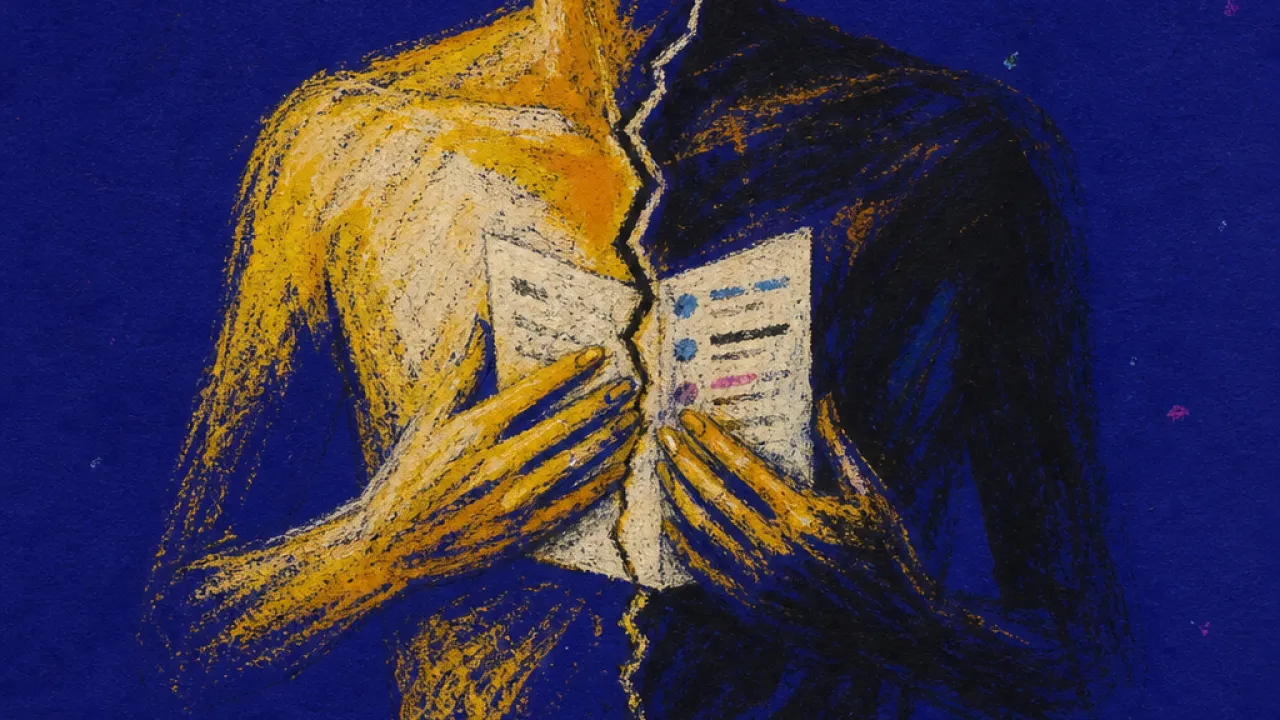
A figure presses a glowing chat transcript to their chest, amber lines splitting into blue-black shadows around them

What is this really?

Co-rumination is when you process stress by repeatedly unpacking the same problem with someone else: rereading texts together, replaying tone, asking what it meant, and circling the same few details until the conversation feels like a shared control room. You are usually not trying to create drama; you are trying to feel less alone, reduce uncertainty, and borrow another nervous system long enough to make the situation feel manageable. Yet the more you talk it through, the less your own inner signal seems to count, and the bond that was meant to steady you can become a thought trap with company, much like the figure in the Eight of Swords standing bound among blades, surrounded by every angle except a clear way out.

Why did it happen?

At some point, talking everything through may have helped you feel held when silence felt too wide or confusing to manage alone. Over time, your body learned to reach for another person the second discomfort appears, and that inner pattern can turn connection into a loop where each retelling brings brief relief, then a fresh wave of mental fatigue.

How does it feel?

  • You open a chat thread and type three versions of the same message, deleting and rewriting until the wording feels exact; while the bubbles sit on the screen, your thumbs hover and your breathing gets shallow. You might notice a tight little pull behind your eyes, as if the conversation has already started inside your head before anyone replies. Let that pause exist for a moment; you do not have to turn every feeling into a full transcript immediately.
  • At brunch or on a walk, you keep circling back to the same moment: the tone they used, the pause before they answered, the emoji that felt slightly off; as you talk, your fork stays untouched or your coffee goes cold. Somewhere in your body, the replay may feel like a buzzing in your chest that gets louder each time the details sharpen. It is okay to notice the loop without forcing yourself to solve it on the spot.
  • After a meeting, you catch a friend or coworker and replay what you said word for word, watching their face for any sign that you were fine; your shoulders lift, your laugh comes out a little too quick, and you keep adding one more detail. Underneath the talking, your stomach may feel clenched, as though reassurance lands for a second and then slips away. You can let that need for confirmation be present without treating it as an emergency.
  • Alone at night, you reopen old screenshots, scroll back to the exact lines, and imagine how you will explain them to someone tomorrow; the room is quiet, but your jaw keeps shifting like you are still mid-conversation. You may feel tired and wired at the same time, with your body asking for rest while your mind keeps reaching for one more angle. Nothing has to be decided in that state; uncertainty can sit beside you without being fed.
  • When a friend starts venting, you lean in, mirror their intensity, and keep asking follow-up questions long after both of you look drained; your forehead tightens, your phone stays face-down, and you lose track of the time. Afterwards, there may be a heavy, cottony feeling in your head, like closeness happened but neither of you got more space. It is allowed to care without staying inside the spiral until it closes around you.

Co-rumination in Tarot Cards

The reflex to replay one more detail with someone until reassurance briefly lands is the same co-rumination loop described above. That buzzing in your chest after the fourth retelling is where the pattern becomes easier to recognize. From a Jungian archetypal theory lens, this is not just talking too much; it is an old inner image of safety seeking a witness. The cards below reflect the unconscious dynamics of that loop; here are the Tarot Cards that tend to mirror it.

The High Priestess
Reversed
The seated figure holds a partly hidden scroll between black and white pillars, with a veil separating the foreground from what lies beyond. Reversed, this threshold becomes crowded by secondhand interpretation, while the knowledge that could emerge through direct reflection remains partially unread. You may pursue cognitive growth by discussing every uncomfortable insight before it has time to form in your own language. Co-rumination can resemble deep self-examination, but the repeated exchange outsources ambiguity tolerance and preserves a gap between collecting perspectives and developing an internally anchored understanding.
Temperance
Reversed
An angel holds two cups in continuous exchange while bridging water and land with a divided stance. Reversed, the flow can depict a family regulation system in which emotion is transferred repeatedly between members but never becomes fully contained or integrated by any one person. You may enter a family conversation with one concern and watch it spread as each person adds memories, warnings, and emotional intensity. Co-rumination makes everyone feel involved, yet the shared flow can leave the household more activated because the conversation distributes distress without establishing psychological boundaries around it.
The Devil
Upright
Two figures are attached to the same dark pedestal beneath a larger authority, with inherited-looking tails and loose chains making the attachment both visible and normalized. The shared structure dominates their field, suggesting a pattern that belongs to the relationship system rather than to either person alone. Family members may repeatedly revisit the same threat, grievance, or feared outcome, borrowing regulation from one another while keeping the concern central. Co-rumination becomes part of the family's attachment language, so stepping out of the conversation can feel disloyal even when continued participation reinforces collective vigilance.
The Moon
Upright
A dog and a wolf respond beneath the same moon while a long path disappears between two towers and a crayfish surfaces from the water. Familiar and untamed reactions coexist under incomplete illumination, showing how an ambiguous signal can activate several emotionally convincing readings at once. You may repeatedly analyse a partner's tone, response time, or small behavioural shift with someone you trust. Co-rumination gives each interpretation social reinforcement, so imagined meanings become more salient than the limited evidence that triggered the conversation.
Two of Cups
Reversed
Two people stand face to face with matching cups extended, creating a direct circuit of attention and emotional response. Reversed, that reciprocity can remain strong while losing its regulating function, so each expression of concern calls forth another equivalent response rather than a wider perspective. You may reassure a friend and receive reassurance back, only to discover that neither response lasts beyond the conversation. Co-rumination turns emotional reciprocity into a loop of short-term relief, making the friendship increasingly responsible for settling discomfort that repeatedly returns.
Three of Cups
Reversed
Three companions form an intimate circle with their cups raised and bodies turned toward one another. Reversed, the circle can become overcontained, repeatedly circulating the same emotional material until mutual attention reinforces the distress more strongly than it broadens perspective. You may experience venting as proof of closeness, especially when a friend remembers every detail and matches your intensity. Co-rumination makes the friendship feel deeply responsive while quietly organising the bond around recurring problems, leaving both of you connected but mentally depleted.
Six of Cups
Reversed
An older child offers a flower-filled cup to a smaller figure inside a sheltered courtyard, while other cups hold similar blooms and the scene remains enclosed by familiar buildings. Reversed, the repeated containers of preserved memory can represent family history passed back and forth in a form that keeps the past emotionally present. You may revisit an old family injury with a sibling or relative so often that the shared retelling becomes the primary way the history is held. Co-rumination provides recognition that may once have been missing, but repetition can preserve each person's role and emotional state instead of allowing the memory to acquire new context.
Three of Pentacles
Reversed
Three figures gather around skilled work and a visible plan inside a structured building. Reversed, their consultation can become disconnected from construction, leaving discussion and performance anxiety to occupy the space where coordinated learning should occur. You may use a study group to repeatedly compare panic about an exam, reread an instructor's wording, or speculate about what a result will mean. Co-rumination disguises itself as academic collaboration, but the group can spend more cognitive energy rehearsing uncertainty than testing knowledge or absorbing material.
Two of Swords
Upright
A blindfolded figure holds two swords crossed tightly over the chest, with rocky water and a thin crescent moon behind her. The blades preserve a balanced stalemate, while the blindfold limits contact with information that might disrupt it. Competing interpretations are contained, but none is tested. You may keep talking an external choice through with someone because the conversation temporarily protects you from the discomfort of committing. Co-rumination lets both options remain verbally active and repeatedly reassessed, so shared analysis functions as decision deferral rather than evidence gathering.
Eight of Swords
Upright
The bound figure stands inside a field of swords with a blindfold covering her eyes, yet the ties appear loose and the blades leave passages between them. The image distinguishes felt incapacity from total external closure, making the surrounding structure a precise metaphor for beliefs reinforced through repetition. You may repeatedly talk through discomfort to gain enough certainty to act, only to find that every discussion adds another reason to doubt your own judgment. Co-rumination becomes a self-limiting learning system: external analysis is accumulated, but the capacity to test your own perception remains underused and therefore feels increasingly inaccessible.
Nine of Swords
Upright
A figure wakes or sits upright with their face covered while nine swords line the dark space above the bed. The repeated blades visually organise thought into a mental ceiling, and the body posture shows the emotional cost of attention that cannot disengage. You may absorb a shared debrief so thoroughly that the other person's questions and interpretations continue speaking inside your mind after you are alone. Co-rumination has then become an internal echo chamber, where social processing extends the life of the stressor and makes private emotional signals difficult to separate from the conversation's momentum.
Page of Swords
Reversed
The Page grips a sword, scans sideways, and stands inside a landscape where wind moves everything at once. Reversed, this alert curiosity becomes restless interpersonal monitoring, with words, screenshots, and fragments repeatedly examined as though the next detail will finally settle the concern. You and a friend may reread the same exchange together, debating punctuation, response time, and tone until the text feels larger than the relationship context around it. Co-rumination recruits friendship into compulsive checking, creating momentary certainty before another possible interpretation restores the doubt.

Co-rumination in Tarot Card Reading Insights

For anyone who keeps circling back to the same conversation until reassurance briefly lands, others have brought this pattern into readings too. Here is how those cards appeared when similar loops showed up in a spread. Below are Tarot Reading Insights that speak to this pattern.
Psychological Patterns Related to Co-rumination