Am I Allowed To Be Seen?

A grounded look at Body-Worth Fusion, related tarot cards, and tarot reading insights from questions shaped by body-linked self-worth.

Body-worth Fusion
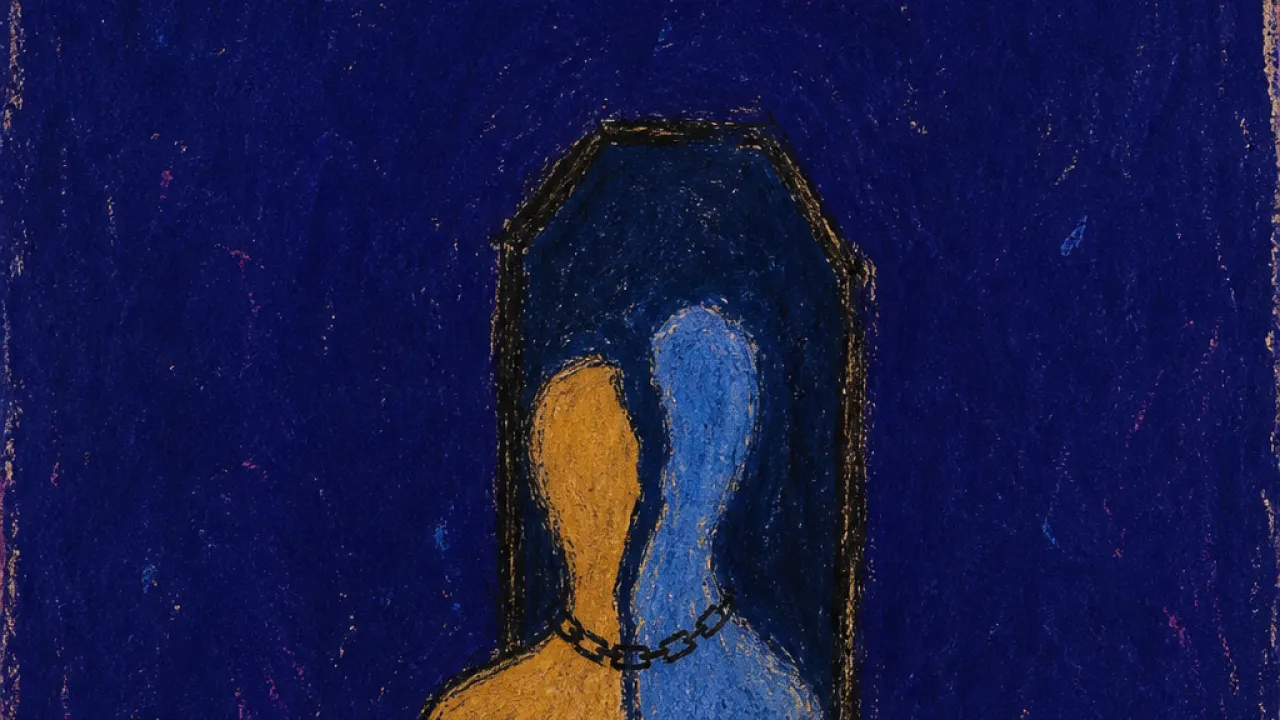
A hollow figure before a dark window mirror, amber skin tones split by cold blue reflection and a narrow doorway outline

What does this feel like?

Body-Worth Fusion — you catch yourself checking your reflection in a dark window, not because you meant to, but because your body has become the first thing your mind reaches for when it needs to know whether you're okay. You notice the angle of your face before you notice the weather, the fit of your clothes before you notice your mood, the way your body sits in a chair before you hear what someone is saying. A photo can change the temperature of an entire day; one glimpse in a mirror can make you quieter, sharper, less present, like some invisible committee has met in your head and decided how much space you're allowed to take up. You know, somewhere, that you are more than what can be seen, but that knowing doesn't always reach your body in time. Your chest tightens when someone tags you, your stomach drops when clothes cling differently, your attention splits in public because part of you is living the moment while another part is watching yourself live it. The hardest part is not vanity, and it is not weakness; it is the slow narrowing of a whole person into a surface that must be checked, managed, and approved before you can relax. Over time, joy starts passing through a filter first — can I be seen like this, can I be loved like this, can I belong like this — until your own body feels less like home and more like a doorway you have to earn entry through, much like the figures in The Devil, standing exposed with loose chains at their throats, close enough to move yet held in place by what they have been made to believe owns them.

What's pulling at you?

You're stuck between knowing your worth should not depend on how your body looks and feeling, in real time, as if your body is the evidence everyone is using. One part of you wants to live freely in the room; another part keeps checking whether your appearance has given you permission to be there. That back-and-forth can make ordinary moments feel like silent auditions.

How It Shows Up?

  • You wake up and check how your body feels before you check how you feel — the waistband, the softness under your hand, the angle of your stomach when you sit up. Your breath gets shallow before your feet hit the floor, and your shoulders pull inward like you're bracing for a verdict no one else has given. The day hasn't started, but your body has already been placed on trial; you can notice the scan without letting it decide the whole morning.
  • You try on an outfit that looked fine in your head, then stand in front of the mirror turning slightly left, slightly right, pulling fabric away from your skin. Your jaw tightens, your chest gets hot, and the room seems to shrink around the mirror until every other part of you disappears. The moment has the stillness of the Two of Pentacles, a private balancing act between wanting to feel at ease and needing visual proof that you're allowed to leave the house; it's okay to change clothes for comfort, not for permission.
  • Someone takes a group photo, and you laugh with everyone else until the picture appears on the screen. Your eyes go straight to your own outline, your posture, your face, the way your body occupies space beside other bodies, and your stomach drops before you can even name what you're reacting to. You zoom in, then hate that you zoomed in, while your throat closes around the sentence you were about to say; you can put the phone down before the image becomes the whole event.
  • You're at work, in class, or on a video call, trying to focus, but the small square of your own face keeps pulling your attention back. You adjust your angle, smooth your hair, sit straighter, then lose the thread of what someone is saying because part of your mind is monitoring how you appear. Your neck stiffens, your eyes feel dry, and your body becomes both the thing doing the task and the thing being watched; it's allowed to turn off self-view when attention needs somewhere else to land.
  • You're out with friends and everyone is choosing food, taking pictures, leaning back in their chairs, moving easily through the moment. You feel your stomach tighten as you calculate how visible your choices will be, whether your clothes are sitting differently, whether anyone can see the discomfort on your face. You smile, nod, and perform normal while a quiet chain pulls at your ribs, closer to The Devil's loose collar than a locked door; you can stay in the room without making your body answer for your belonging.

Body-worth Fusion in Tarot Cards

Body-Worth Fusion lives in the moment when your body stops feeling like the place you live and starts feeling like the proof you have to present. You can feel it in the shallow breath before a mirror, the throat tightening after a photo, or the stiff neck of watching yourself on a call. From an existential perspective, the structural framework is about what happens when being seen starts to feel fused with being allowed to exist. The Tarot Cards below make that outline visible without reducing you to it.

The Empress
Reversed
The Empress rests inside a richly embodied scene of grain, water, fabric, and the Venus emblem, all of which ordinarily connect physical sensation with inherent value. Reversed, the same scene becomes estranged from itself: softness can be scrutinised, appetite can be moralised, and the body can be treated as a surface that must justify receiving care. You may know that your body deserves kindness while an internal visual audit interrupts that knowledge before it becomes felt experience. This card positions Body-Worth Fusion at the break between sensing what you need and checking whether your appearance has earned it, making self-nurture vulnerable to an image-based veto.
The Hierophant
Upright
The Hierophant sits above two kneeling figures, with crossed keys below and a formal gesture authorising the rules of belonging. The hierarchy makes socially produced standards look objective, allowing dominant body ideals to be internalised as if they were neutral entry requirements rather than changeable cultural codes. You can enter a group already measuring whether your body conforms closely enough to receive ease, attention, or legitimacy. The card shows why the pressure feels larger than personal insecurity: the gaze has been institutionalised, and Body-Worth Fusion turns that inherited social rule into an automatic self-assessment at every threshold.
The Lovers
Reversed
Two unclothed figures stand exposed beneath an angel while their lines of attention do not fully meet, and a steep mountain rises between them. Reversed, this scene turns bodily visibility into a fault line inside connection: being seen by a partner can feel less like mutual presence and more like awaiting a verdict about whether your body qualifies for desire. You can want closeness while monitoring posture, lighting, clothing, touch, or the imagined comparison in another person's mind. The card holds that divided experience without reducing it to vanity: intimacy is trying to move between two people while fused body-worth keeps redirecting attention toward how you appear within the encounter.
Strength
Reversed
A woman places her hands around a lion's jaws beneath an infinity symbol, staging a close bodily relationship between reflective awareness and instinctive life. Reversed, that contact can cease to be collaborative and become coercive: the living body is approached as a force that must be controlled, reduced, or perfected before confidence is permitted. You may call this self-improvement while repeatedly treating embodiment as an opponent to defeat. The card locates the growth blockage in the method itself: when worth is fused with bodily control, every attempt to evolve can reinforce the belief that the current body is unacceptable and must remain under supervision.
Justice
Reversed
The scales hang beside an upright sword before a seated judge, creating a chamber in which evidence is weighed and a verdict becomes final. Reversed, the process is distorted: a photograph, waistband, camera angle, or reflection can be admitted as total evidence while mood, context, bodily variation, and the rest of your identity are excluded from consideration. You may experience the resulting judgment as objective precisely because it arrives in the language of proof. The card identifies an inner tribunal whose standard is structurally biased, showing how Body-Worth Fusion converts a partial visual signal into a sweeping sentence about how much space, joy, or connection you deserve.
Temperance
Reversed
An angel pours water between two vessels while keeping one foot on land and one in water, linking separate domains through a continuous embodied flow. Reversed, that circulation cannot integrate the body you live through with the body you watch from outside; sensation and image remain competing information systems. You can understand intellectually that worth exceeds appearance while still reacting physically as though the mirror has delivered the final truth. The card places the growth gap between insight and embodiment, where new beliefs have been learned but cannot yet move through the old appearance-based channel that controls permission, safety, and participation.
The Devil
Upright
The chained figures have human bodies altered by small tails while the larger figure above them presents domination as their defining reality. The scene shows identity narrowing under a system that repeatedly names one feature as the whole truth, much as body-focused self-optimisation can make appearance the central project of becoming worthy. You may pursue growth through stricter monitoring, more comparison, or another promised future body, only to strengthen the same worth equation each time. The loose collars preserve an important boundary: the card locates the controlling belief as learned and maintained, not as an essential fact about who you are.
The Star
Reversed
The uncovered figure pours from two vessels while one knee meets solid ground and the other approaches water, joining visible embodiment with a deeper emotional field. Reversed, the streams feel draining rather than circulating, and attention collects on the exposed surface instead of moving between body, feeling, environment, and identity. You may repeatedly inspect what can be seen while losing contact with the emotional state underneath the inspection. The card names a depletion of self-recognition: Body-Worth Fusion does not only produce negative thoughts about appearance; it redirects the inner world's available water toward maintaining an observed image.
The Sun
Reversed
The unclothed rider moves forward with open arms, carrying no visible apparatus for editing, concealment, or self-assessment. Reversed, that embodied freedom is present as a possibility but cannot become a stable developmental base because awareness keeps folding back onto how the body appears. You may pursue confidence as a future visual achievement rather than a capacity to participate while imperfectly seen. The card identifies the practice gap: Body-Worth Fusion delays spontaneous living until the image feels safe, so growth remains organised around earning freedom instead of inhabiting it.
Judgement
Reversed
The exposed figures look upward from rigid containers toward a trumpet that defines the moment as one of reckoning. Reversed, the external call collapses inward and becomes an invisible committee that repeatedly summons the body for review, even during otherwise neutral moments. You may experience a reflection or photograph as if it has revealed a final truth rather than one limited angle in time. The card locates the internal lock in self-judgment: Body-Worth Fusion converts noticing into sentencing, so a visual impression is not allowed to remain partial or temporary.
The World
Reversed
The visible central figure occupies the middle of a wreath that signifies an integrated whole, with four distinct witnesses holding the edges of the scene. Reversed, wholeness is intellectually visible but not internally granted because one domain, the body's appearance, has been allowed to veto the value of everything else. You may accumulate insight, competence, relationships, and lived experience while still feeling incomplete after an unflattering image. The card identifies the bottom-level cognitive error: Body-Worth Fusion treats one visible part as the certification of the whole, keeping integration just outside reach no matter how much the wider self develops.
Two of Pentacles
Upright
A figure keeps two pentacles moving inside an infinity-shaped cord while ships rise and fall on uneven water behind him. The body itself performs the balancing act, capturing a day split between living through physical experience and continuously checking how that same body appears. You can dress, commute, work, eat, and socialise while a parallel monitoring task keeps demanding attention. The card names the hidden workload in Body-Worth Fusion: ordinary life remains in motion, but every change in clothing, reflection, or sensation must be absorbed into an endless worth-calibration loop.
Four of Pentacles
Upright
Pentacles cover the figure's crown and chest while fixing both feet to the ground, visually merging a measurable asset with thought, feeling, and bodily position. The posture reveals an internal system trying to secure identity by holding a visible worth marker so tightly that no other self-information can circulate. You may return to the mirror because the answer feels concrete even when it is painful: shape, fit, and angle seem easier to measure than an entire human life. The card locates the psychological lock in that false solidity, where Body-Worth Fusion offers a controllable metric at the cost of emotional range and a more complex identity.
Five of Pentacles
Upright
Two visibly vulnerable figures move through cold conditions outside a brightly lit stained-glass window, with one body marked by injury and both positioned beyond the apparent shelter. The scene places bodily difference beside institutional belonging, capturing the fear that visible form determines who may enter warmth, status, or community. You can approach a social setting already feeling outside because your body has been treated as the membership evidence. The card witnesses the cost of that fusion without confirming the exclusion as fact: the experienced distance is real, but the body-based rule deciding who belongs is a social construction, not an objective border.
Seven of Pentacles
Reversed
A figure leans on a tool and studies a crop of pentacles, pausing to assess whether sustained labour has produced an acceptable result. Reversed, the assessment becomes frustrated and recursive, mirroring a body project whose promised payoff keeps moving because ordinary fluctuation is interpreted as failed progress. You may wait to participate until the body shows enough return on effort, then revise the target when the anticipated sense of worth does not arrive. The card locates the timing bind where life is placed on hold for a harvest that cannot resolve the underlying fusion between appearance and value.
Eight of Swords
Upright
The woman's blindfold, bodily bindings, and surrounding swords create a closed perceptual field in which thoughts appear to describe the limits of the body itself. The image precisely separates physical fact from interpreted captivity: the body is present, but a narrow mental frame decides what that presence permits. You may feel that appearance is the obvious cause of distress because every thought points back toward the visible body. The card names the deeper mechanism without dismissing the experience, showing Body-Worth Fusion as a loop where mental conclusions become bodily restriction and that restriction is then used as evidence that the conclusions were true.
Nine of Swords
Upright
A figure sits upright in bed with the face covered while nine swords occupy the dark wall overhead. The body is awake inside a private chamber of accumulated judgments, matching the way a photograph, mirror encounter, or anticipated outfit can keep replaying after the external trigger has ended. You may revisit angles, comparisons, clothing fit, or imagined reactions until the body's appearance seems to explain the entire emotional weight of the moment. The card locates the night-time amplification clearly: Body-Worth Fusion gives recurring thoughts a single visible target, allowing them to multiply without producing a fuller account of what hurts.

Body-worth Fusion in Tarot Card Reading Insights

When Body-Worth Fusion follows someone into a reading, the question is rarely just about appearance — it is about what happens when self-trust gets routed through the body first. Other people have brought this same mirror-checking, photo-scanning, room-shrinking feeling into readings. Tarot Reading Insights from sessions where this struggle shaped the question.
Psychological Struggles Related to Body-worth Fusion