Invited, But Still Editing

Explore the pressure of edited belonging, related tarot cards, and tarot reading insights shaped by constant self-translation.

Code-switching Inclusion Gap
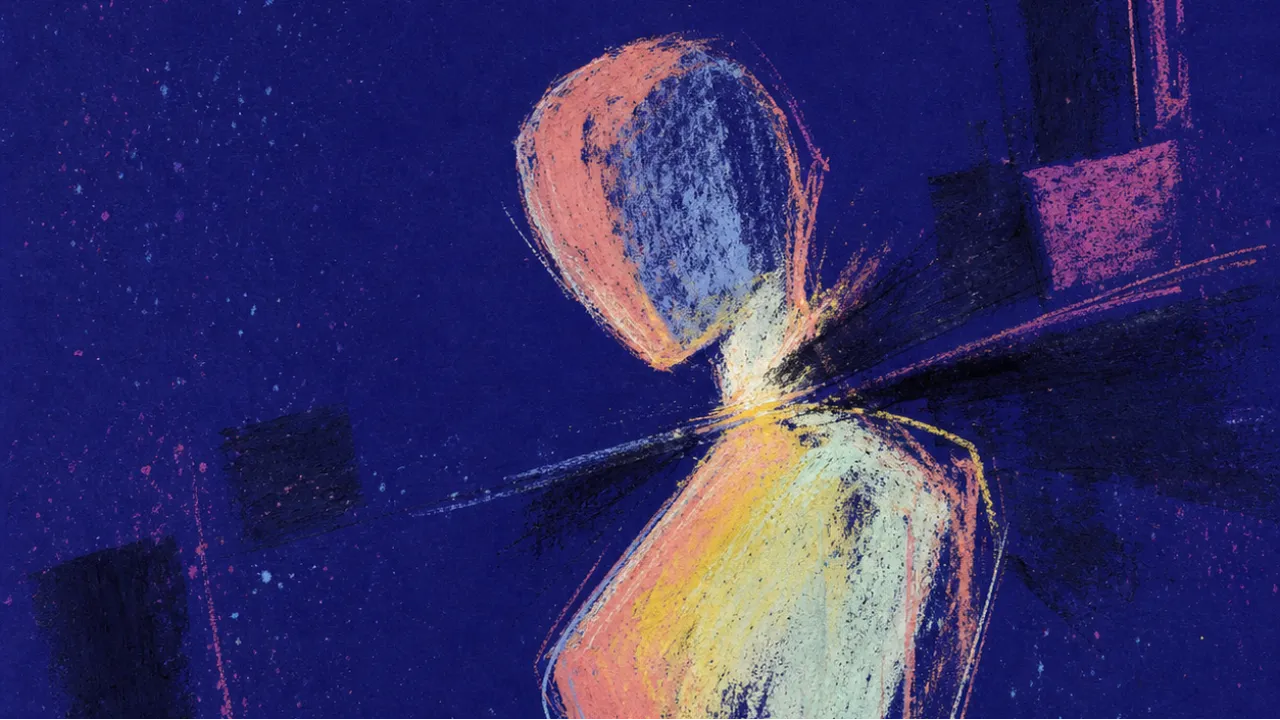
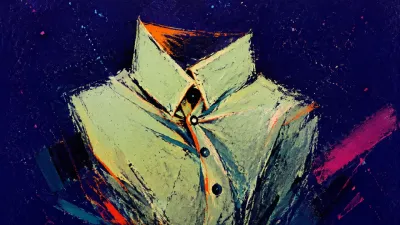
A solitary figure turned inward as translucent room signals press language, name, and posture into a narrower outline

What is this situation?

Code-Switching Inclusion Gap — you step into the office, seminar room, group chat, studio, or friend circle and quickly read the room before you fully arrive. People say the space is open, diverse, casual, progressive, or chill, but the small signals tell you which version of yourself will pass smoothly: the accent to soften, the name to shorten, the joke not to make, the reference to explain, the hairstyle or outfit to think twice about, the direct sentence to wrap in extra warmth. You learn the rhythm of it through meetings where your point lands better when someone else repeats it, through nights out where your background becomes a curiosity topic, through feedback that praises you for being “professional” when what it really means is less noticeable. No one has to say you do not belong; the gap shows up in the pause before people respond, the extra proof you have to provide, the way inclusion is offered as long as you keep translating yourself into the room’s preferred language. Over time, the work is not just doing the job, taking the class, joining the group, or showing up for the conversation; it is running a second track underneath every interaction, checking what can be shown, what has to be smoothed over, and what might cost you access if it comes out too clearly. By the time you leave, you may look composed from the outside, but the day has asked you to juggle two versions of presence at once, much like the figure on the Two of Pentacles, keeping both coins in motion while the waves behind him refuse to settle.

Why it's not you?

The problem is not that you are difficult to understand or bad at fitting in; the problem is that the room has a narrow idea of what belonging is supposed to sound and look like. When access depends on constant translation, that is not inclusion working well. It is a gap built into the space itself.

Code-switching Inclusion Gap in Tarot Cards

In the Code-Switching Inclusion Gap, the room keeps asking for an edited version of you while calling that access inclusion. The tight jaw, the checked wording, the breath you hold before speaking are not random reactions; they track an environmental and structural dynamic built into who gets to sound effortless and who has to translate first. The cards below do not decide whether you should keep adapting or stop. They show the visible outline of this pressure through Tarot Cards that mirror the gap between being invited in and being fully received.

The Hierophant
Upright
The formal teacher, kneeling initiates, and crossed keys depict knowledge moving through an authorised institutional language. In education, this can become a hidden curriculum in which one accent, argumentative style, cultural reference set, or model of confidence is treated as naturally academic. Upright, the code can be decoded and its gatekeeping function named. The card preserves access to useful disciplinary conventions while separating them from cultural preferences that have been mistaken for intellectual standards.
Justice
Reversed
The upright sword and suspended scales depict an institution claiming to measure work by consistent standards. Reversed, that claim is obstructed when identical academic behaviours are interpreted through culturally uneven expectations about confidence, clarity, politeness, or scholarly voice. The disrupted balance makes the hidden criterion available for scrutiny. It separates the quality of your thinking from the institution's familiarity with the form in which that thinking arrives.
Temperance
Reversed
Temperance's two cups and split footing offer a picture of friendship across different cultural codes, where connection should involve movement in both directions. Reversed, the exchange becomes asymmetric: you explain, soften, and translate, while the circle retains the privilege of remaining unchanged. The obstructed flow names why apparent closeness can coexist with feeling only partly known. Your bridging capacity remains available, but friendship becomes genuinely inclusive only when curiosity and adjustment stop being assigned to one person.
Three of Cups
Reversed
The three raised cups create an intimate circuit of shared recognition in which every person should contribute to the celebration. Reversed, the circuit closes around a familiar in-group style, leaving you to edit humour, references, language, or appearance to remain inside it. The blocked reciprocity exposes a friendship gap hidden by frequent invitations and visible warmth. The issue is not whether you can imitate the circle's rhythm, but whether the friendship can expand enough to recognise you without translation.
Two of Pentacles
Upright
The figure's gaze remains fixed on two moving coins while waves continue behind him, capturing the mental concentration required to keep separate versions of presence coordinated. The outer room may see composure, while your internal attention is occupied with predicting reactions and deciding what to soften, explain, or withhold. Upright, the loop offers a way to map this cognitive workload instead of treating it as personal inconsistency. You can recognise code-switching as a learned response to unstable inclusion conditions and distinguish adaptive range from the exhaustion of never being allowed to set either coin down.
Three of Pentacles
Reversed
The craftsperson and two plan-holding figures gather around work that requires shared interpretation. Reversed, the learning partnership fails to recognise expertise evenly, so a contribution may become legible only after a more institutionally familiar student or instructor restates it. The disrupted triangle reveals a seminar or studio problem, not an absence of knowledge. The visible plan provides a route for tracing authorship and evaluation when informal cultural authority has interrupted direct recognition.
Five of Pentacles
Upright
The paired figures travel together yet remain outside the lit interior, capturing the contradiction of having company without full social shelter. A friend circle can produce the same arrangement when you are regularly present but must minimise your background to remain comfortably included. Upright, the shared path makes it possible to recognise who genuinely accompanies you and where support is only symbolic. The window clarifies that the missing resource is reciprocal belonging, not greater effort to make yourself easier for the circle to receive.
Six of Pentacles
Reversed
The central figure controls the coins and the scales, making assistance dependent on a relationship of evaluation. Reversed, academic support and recognition can become easier to obtain when a student adopts the department's preferred voice, demeanour, or model of confidence. The disrupted balance reveals that the resource pathway is not equally calibrated. The card separates legitimate academic standards from gatekeepers' comfort with familiar cultural performance.
Seven of Swords
Upright
The figure's backward glance and selective bundle of swords show someone managing what is carried into a shared space and what remains outside it. In a friend group, you may use the same strategy with humour, family stories, language, or direct opinions when prior reactions have shown that full context will be misunderstood. Upright, selective disclosure preserves agency and prevents the group from assuming automatic access to every part of you. The card also tests the quality of the friendship structure: closeness is limited when safety relies on permanent editing rather than growing mutual literacy.
Eight of Swords
Upright
The blindfold obscures the full environment while the swords keep possible consequences psychologically close. Internally, this resembles carrying the room's unspoken standards forward until self-monitoring activates before any actual response has occurred. Upright, the loose bindings and visible openings support a careful separation of current constraint from internalised prediction. The card does not deny the external inclusion gap; it makes possible a more precise map of where the room is policing you and where its rules have continued inside your own psychological cache.
Page of Swords
Upright
The Page's body faces one direction while his attention turns toward another, and the wind keeps the entire scene mentally active. This divided posture mirrors an internal cache occupied by both the present interaction and the prediction of how each word or identity cue might be received. Upright, observation can be separated into usable evidence instead of becoming a vague command to monitor everything. The card reveals which vigilance belongs to current external patterns and which scripts continue running after the room is gone.
Six of Wands
Reversed
The central rider and public wreath show a group deciding whose contribution will carry visible authority. Reversed, recognition fails to reach the original speaker, especially when an idea becomes academically acceptable only after a more culturally familiar person restates it. The blocked acclaim separates intellectual value from the seminar's social allocation of credibility. The image reveals why changing delivery may improve reception without correcting the underlying recognition gap.
Seven of Wands
Upright
The figure maintains a position against six rising wands, embodying the extra defence required when one person's legitimacy is treated as open for debate. In a seminar, this can appear as repeated requests to justify context, soften conclusions, or provide more evidence than peers whose style already matches academic expectations. Upright, the position remains intellectually supportable and the card preserves access to your own argument. The conflict reveals an unequal proof burden in the learning environment rather than a deficit in preparation.
Ten of Wands
Upright
The figure advances with a dense bundle blocking a clear view of the route ahead. In education, the wands resemble coursework combined with the added labour of decoding seminar norms, editing participation, explaining background, and proving legitimacy. Upright, academic progress remains active and the destination has not disappeared. The card makes clear that reaching it costs more when the learning environment assigns cultural translation to the student instead of building accessible participation into the course.

Code-switching Inclusion Gap in Tarot Card Reading Insights

The Code-Switching Inclusion Gap shows up when people bring the cost of constant editing into a reading: the accent held back, the name explained again, the comment rewritten before it leaves the mouth. From the cards, the focus shifts toward how that edited access appears in readings. Tarot Reading Insights from sessions shaped by this kind of inclusion gap.
Psychological Contexts Related to Code-switching Inclusion Gap