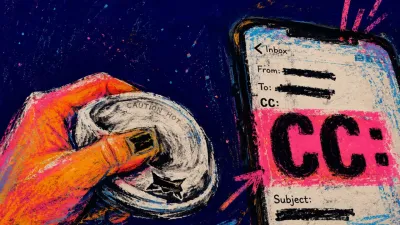
When Emails Carry Blame

Unpack politicized workplace emails, related tarot cards, and reading insights for inbox tension shaped by CCs and careful wording.

Office Political Email
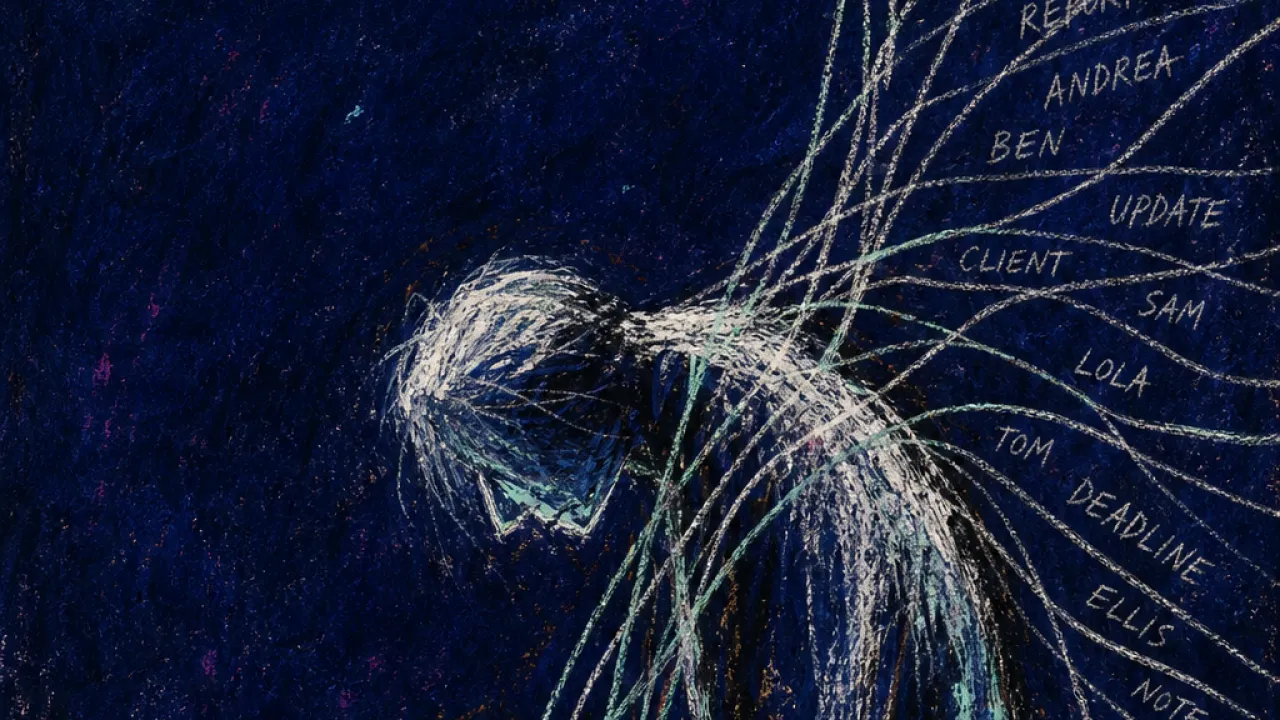
A solitary figure hunched over a glowing inbox as paper-like hands pin message threads across their shoulders

What is this situation?

Office Political Email — you open your inbox and the subject line already tells you this is not just a normal work update. Someone has replied-all, added your manager, maybe added a senior lead who was not in the thread yesterday, and the message is written in that polished office tone where every sentence sounds reasonable while quietly moving responsibility toward you. The email says “just circling back,” “as discussed,” or “for visibility,” but the real work is happening underneath: a timeline is being rewritten, a missed handoff is being placed near your name, or a decision that was made in a side conversation is now being documented as if everyone agreed. You stop what you were doing and start reading the thread like evidence, checking timestamps, attachments, calendar invites, Slack messages, and the exact wording of your last reply. A five-minute response becomes forty minutes of tone management: direct but not defensive, clear but not cold, firm but not escalatory, polite enough for the people copied in, precise enough that the next person cannot twist it. The power dynamic is never fully stated, but it sits inside the CC field, the delayed reply, the selective quote, the manager who only answers one part, the colleague who asks a public question they could have asked privately. By the end of the day, the work itself has barely moved, but your attention has been spent building a paper trail around your own competence, much like the Seven of Swords, where sharp things are carried carefully through a camp while someone keeps looking back over their shoulder.

Why it's not you?

The problem is not that you are overreacting to an email; the email is being used as a workplace tool for positioning, pressure, and plausible deniability. Public CCs, selective quoting, rewritten timelines, and “for visibility” messages are not neutral when they move risk onto you. This is a communication environment that makes ordinary replies carry political weight.

Office Political Email in Tarot Cards

Office Political Email turns the inbox into a public record of positioning, where every reply has to answer the message and the audience watching it. That tightness in your shoulders as you reread the CC line is not random; it belongs to an environmental, structural dynamic where communication is used to shift pressure without naming it directly. The cards below do not tell you who is right or what to send next; they reflect the visible shape of this workplace pattern. Here are the Tarot Cards that tend to mirror this kind of email-driven office politics.

Justice
Reversed
Scales, a raised sword, and a seated institutional figure create a scene in which evidence should be weighed before a judgement acquires force. Reversed, those same instruments describe a process that still looks formal but cannot produce balance because the record has been selectively assembled, the audience has unequal authority, or one version is being treated as settled before all participants are heard. You are facing more than inaccurate wording when an email converts a partial timeline into the organisation's durable account. The reversal locates the blockage in the accountability system: documentation exists, but its visibility and interpretation are unevenly controlled. That distinction protects clarity by separating a legitimate review of evidence from a polished procedure that merely ratifies the most strategically circulated version.
Eight of Pentacles
Reversed
A craftsperson sits at a bench repeating careful work across a visible sequence of pentacles while the town and wider workplace remain at a distance. Reversed, the same production line becomes captured by defensive perfectionism and rework: attention that should advance the task is redirected into polishing one politically loaded response. You may lose forty minutes checking every adjective, timestamp, and recipient while the underlying deliverable remains untouched. The reversal places the resource loss inside the work system rather than inside your character; a communication environment has made ordinary precision insufficient, forcing skilled labour to serve paper-trail maintenance instead of meaningful output.
Two of Swords
Upright
A blindfolded figure holds two swords in exact opposition while rocks interrupt the water behind her and a crescent moon marks an incomplete cycle. The balanced posture captures the controlled stalemate of drafting a reply that must be direct but not defensive, firm but not escalatory, and visible enough to correct the record without enlarging the conflict. You are not simply choosing between two sentences; you are weighing competing professional costs with only partial access to the conversations and alliances behind the email. The upright card presents the pause as an available decision resource, while the crossed blades reveal why endless tone calibration cannot resolve missing information or an unspoken power imbalance by itself.
Four of Swords
Upright
A stone knight lies still beneath three suspended swords while a fourth rests separately below and a stained-glass window places the pause inside a formal structure. The image turns non-response into a bounded interval for separating immediate threat perception from the evidence that actually requires an answer. You are under real timing pressure because delays can be interpreted politically, yet an instant response can preserve the sender's framing and reproduce its urgency. The upright card makes a deliberate review window available without pretending that indefinite silence is neutral; the structural issue is whether the next message is being timed around the facts of the work or around the emotional tempo imposed by the copied thread.
Five of Swords
Upright
One figure gathers the swords while two others withdraw toward the water, turning a shared field into a scene with a visible winner and visible social cost. The arrangement mirrors a work email written to secure narrative advantage rather than restore coordination: the sender can appear factually composed while leaving someone else publicly diminished. You may be pulled into proving that you can win the wording contest, even when winning the exchange would not repair the handoff, deadline, or ownership problem beneath it. The card exposes the distinction between resolution and reputational victory, allowing the thread to be read as a conflict structure with operational costs rather than as a neutral request for clarification.
Seven of Swords
Upright
Five swords are carried carefully away from a camp while two remain planted behind, and the moving figure keeps looking over his shoulder. That combination of selective removal, incomplete evidence, and backward monitoring closely mirrors a political email that extracts convenient details from a longer history while relying on the copied audience to accept the edited version. You are left moving between two tasks: continuing the actual project and checking what remains in the record. The card makes the workplace mechanism visible without assuming that every polished sentence is dishonest; the material distinction is whether the message preserves the full sequence of decisions or strategically carries away only the facts that relocate risk. Because timestamps, attachments, and earlier messages still exist, the structure also contains a route back to verifiable context.
Eight of Swords
Upright
A blindfolded and loosely bound figure stands inside a partial fence of swords, with muddy ground underfoot and a distant structure beyond the enclosure. The scene resembles the choice architecture of a political email: every visible response appears risky, the available information is incomplete, and the professional consequences make the space feel narrower than the literal set of options. You may experience reply-all, private clarification, manager escalation, silence, and delayed response as different routes to being judged. The upright image validates the real constraints while also showing that the enclosure is not fully sealed; the useful distinction is between options blocked by organisational power and options obscured by the thread's manufactured urgency.
Page of Swords
Reversed
A young figure holds a raised sword while turning to look behind, surrounded by moving clouds, wind-bent trees, and distant birds. Reversed, that alert posture becomes communication organised around monitoring, rumour, premature conclusions, or the circulation of information before it has been responsibly verified. You can feel this structure when colleagues use reply-all as a surveillance layer, quote fragments from earlier messages, or introduce senior observers before asking you directly what happened. The reversal does not make every question malicious; it identifies the blocked communication resource, where curiosity and fact-finding have been displaced by watchfulness, insinuation, and audience-conscious messaging.
King of Swords
Reversed
A crowned ruler sits on a formal throne with an upright sword held as the instrument of reason, decision, and enforceable language. Reversed, the authority of that sword becomes detached from fair analysis: precise wording, policy language, or managerial status can be used to narrow the acceptable interpretation before the underlying facts have been examined. You encounter this blockage when a boss rewrites a verbal agreement in email, answers only the part of the thread that supports their position, or treats a polished summary as more credible than the messier work history. The card identifies the power source as control over authoritative language, helping distinguish professional clarity from rhetoric that borrows the appearance of objectivity to protect hierarchy.
Seven of Wands
Upright
One figure occupies the high ground and holds a single wand against six rising from below, while mismatched footwear suggests that the defence began before conditions were fully settled. The image captures the sudden shift from doing your job to publicly defending your position against multiple implied challenges in a copied thread. You may have evidence and a defensible account, but the email forces those resources into a reputational contest that you did not schedule. The upright card keeps the path open by showing that the position is not inherently lost; the structural question is which facts actually support the boundary of your responsibility and which incoming claims merely multiply the pressure to over-explain.
Nine of Wands
Upright
A bandaged figure grips one wand while eight others form a defensive line behind him, and his sideways gaze remains fixed on the possibility of another challenge. The scene captures the psychological residue of repeated political correspondence: each new subject line is evaluated not only for content but for the reputational attack, omission, or escalation that might be hidden inside it. You may reread harmless phrases, check the CC field first, or mentally draft a defence before determining whether one is required. The upright card recognises that vigilance was learned from observable workplace patterns and can preserve useful institutional memory; it also makes visible the cost when every incoming message inherits the threat level of the previous conflict.

Office Political Email in Tarot Card Reading Insights

When Office Political Email becomes part of your workday, other people bring the same inbox tension into readings: the careful wording, the public CCs, the reply that has to defend more than it says. The readings below move from card lists into how this situation appears when someone sits with it in a spread. Tarot Reading Insights from sessions involving email-driven workplace politics.
Psychological Contexts Related to Office Political Email