When a Full Sink Feels Like Failure: Finding One Reachable Burner

The Fridge Light, the Full Sink
If you can handle Slack threads, campaign timelines, and other people’s urgency all day, but one full sink after work makes you close the fridge and open DoorDash, you probably know this kind of overwhelm.
When Casey (name changed for privacy) came onto my screen from their small downtown Toronto apartment, they were still half in work mode. The open-plan kitchen behind them looked like it had never fully stopped being office, recovery zone, and kitchen all at once. They described a Wednesday at 6:47 p.m.: the grocery bag landing with a soft thud, the fridge light spilling across a crowded counter, the fluorescent bulb giving off that thin electric buzz overhead. They moved one cereal bowl, touched the pan by the sink, then ended up holding their phone because it felt warmer and easier than the dishwater.
“I know dishes are small,” they told me, “but once they pile up my brain acts like dinner is a whole project.”
I could hear the body-memory of it in the way their voice dropped at the end of that sentence. Heavy shoulders. A stomach that seemed to fall before the hands moved. The kind of private embarrassment that shows up when you are competent in public and strangely defeated by a room in your own home. What they were describing was not just stress; it was like trying to swim through cold syrup while the sink quietly stood there collecting votes against dinner.
I nodded. “That makes sense to me,” I said. “You came home to feed yourself, and somehow the bowl in the sink got to vote first. Let’s not turn that into a character flaw. Let’s make a map of why a full sink makes cooking feel impossible after work, and where the pressure actually breaks.”

Choosing the Map: A 6-Card Tarot Spread for Household Overwhelm
I asked Casey to take one slow breath and hold the question exactly as it was: Why do I leave dishes until cooking feels like too much? Then I shuffled. For me, that pause is not theater. It is simply a way to let the nervous system step out of reaction long enough to see pattern.
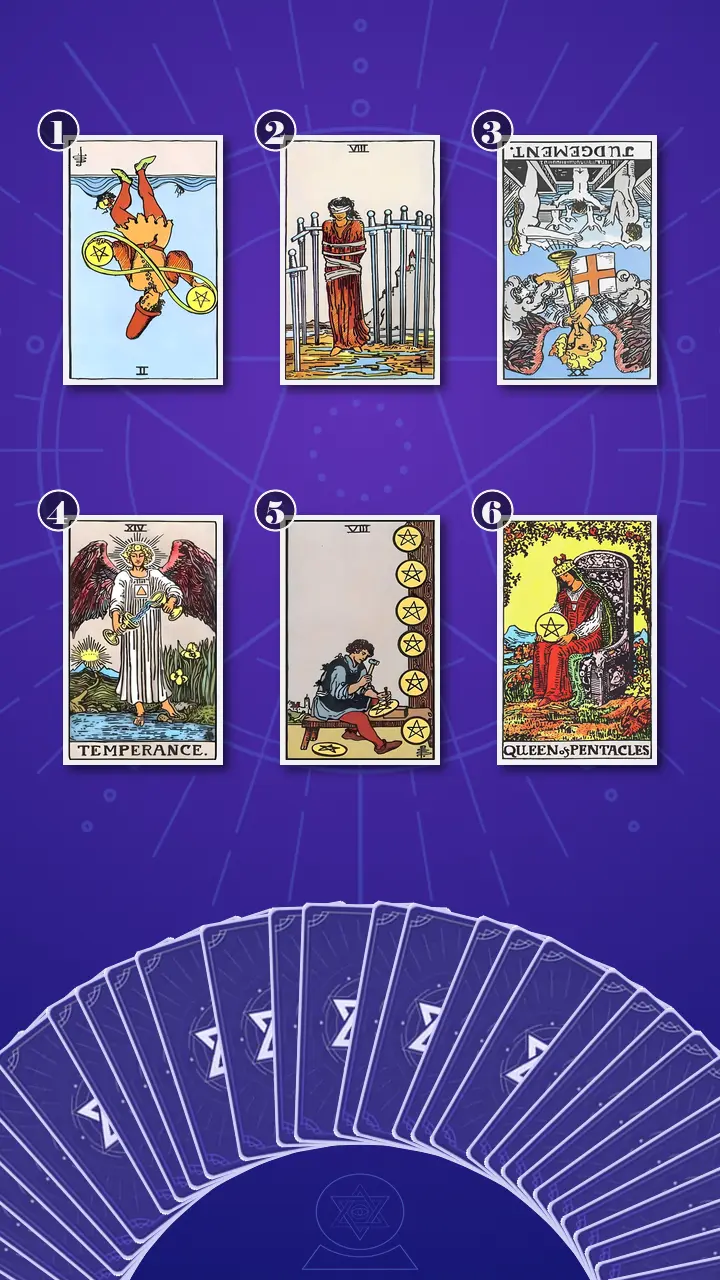
I chose the Transformation Path Grid · Context Edition, a 6-card tarot spread for household overwhelm, self-judgment, and cooking avoidance. This is how tarot works best in my practice: not as a promise of fate, but as structured pattern recognition. Card meanings in context matter more than generic definitions. A Past-Present-Future spread would flatten this into sequence. A Celtic Cross would add more context than Casey’s question needed. This grid is clean and practical: symptom, blockage, root script, turning point, action, integration.
I laid the cards in two rows of three, letting the top row diagnose the problem the way you might scan a cluttered counter, and the bottom row show the cleared prep line beneath it. The first card would show the visible pattern. The second would show the mental choke point. The third would uncover the self-judging root. Then everything would pivot at the fourth card—the antidote—before the fifth and sixth showed what repeatable change and real relief could look like.
Why the Sink Seemed to Guard the Stove
Position 1: The Juggle That Collapses at Dinnertime — Two of Pentacles Reversed
I turned the card representing the visible symptom: the specific behavior of leaving dishes until the kitchen feels too blocked to cook in.
The Two of Pentacles, reversed.
This was everyday life losing its footing. In Casey’s world, it looked exactly like that 6:45 p.m. sequence: tote down, one mug touched, fridge opened, phone checked, maybe one piece of mail shifted, none of it fully done. The actual workload was not enormous. The rapid switching was. Hunger, cleanup, decision fatigue, and end-of-day depletion were all being held at once until the juggling itself became the task.
In energy terms, this was disrupted earth: too much wobble, not enough landing. The card was not telling me Casey could not manage home life. It was showing that ordinary upkeep had tipped into unstable juggling, where one small household chore snowballed into a barrier to feeding themself.
Casey let out a short laugh with a bitter edge. “That’s annoyingly accurate,” they said. “So I’m not failing. I’m just… buffering?”
“Exactly,” I said. “And buffering burns energy too.”
Position 2: When One Next Move Turns Into the Whole Night — Eight of Swords Upright
Now I turned the card for the immediate blockage: the mental frame that merges dishes and cooking into one overwhelming task.
The Eight of Swords, upright.
This is the card that answers the question a lot of people type into search at the end of a workday: why do dishes make cooking feel impossible? The trap is not imaginary, but it is narrower than it feels. I described the scene back to Casey the way I saw it in the card: shoes still on, bag on the floor, fridge open, phone already half in hand. The mind goes, If I do the dishes, then I have to clear the counter, then wipe the stove, then make dinner, then somehow fix the whole night.
That is pure Eight of Swords blockage—constricted air, runaway thought, options shrinking before the body has even started. It is like turning two tiny to-dos into one giant parent task in a project-management app and feeling doomed before you click anything. The blindfold matters here. The loose bindings matter too. Casey’s brain was reading the whole kitchen as unavailable, even though one burner was still physically reachable.
I saw recognition arrive in their body before it reached their face. Their breathing paused for half a beat. Their fingers tightened once around their glass and then released. Then came the sharp nod. Not shame this time—pattern recognition.
Position 3: When the Kitchen Becomes a Courtroom — Judgement Reversed
Then I turned the card that uncovered the root driver: the deeper self-judging script and fear underneath the loop.
Judgement, reversed.
This was the deepest blockage in the spread, and I said so plainly. In Casey’s life, one plate knocking against a saucepan did not sound like information. It sounded like evidence. The cold light. The faint garlic-and-dish-soap smell from the night before. The sharp clink of ceramic. Suddenly the room was no longer being experienced as a kitchen. It was a courtroom.
The energy here was excess pressure in the inner narrator and a painful lack of mercy. Not There are six items here, but A functional adult would have kept up with this already. Dirty dishes had become proof of something much bigger than dishes. I looked straight at Casey and gave them the line I most wanted them to keep: “Dishes are a task, not a character reference.”
They went very still in a three-part sequence I know well. First, the jaw set. Then their eyes drifted past me, unfocused, as if replaying a Sunday night from the couch while TikTok served up somebody else’s reset reel. Then came the deeper breath—the kind that starts high in the chest and lands lower, almost unwillingly.
“That feels weirdly brutal,” they said quietly. “Like the sink is reading me.”
“Yes,” I said. “And that’s why avoidance gives short-term relief. Who wants to walk into a room that feels like a comment section in their own head?”
When Temperance Poured Between Two Cups
When I reached for the fourth card, even the call seemed to change temperature. The fridge behind Casey clicked off, and the small silence that followed gave the moment a cleaner edge. This was the pivot card—the turning point, the antidote, the place where the whole reading would either soften or stay stuck.
Position 4: The Card That Lowers the Threshold — Temperance Upright
I turned the card for the key shift: the mindset change that interrupts all-or-nothing buildup and lowers the threshold to begin.
Temperance, upright.
Casey was trapped in exactly the setup this card answers: they got home hungry, glanced at the sink, and their whole body reacted before logic could negotiate—shoulders heavy, stomach dropping, phone already halfway to hand, as if dinner had suddenly become an all-or-nothing cleaning-before-dinner event.
Stop treating a full sink as a stop sign, and start treating it like Temperance’s two cups: one small pour at a time is enough to make dinner possible.
I let that sit for a beat, then added, “You do not need to earn dinner by catching up first; one cleared corner is enough to restart care.”
Casey did not soften right away. First their breath caught. Then their mouth tightened in that quick flash of resistance that often comes right before relief. “But if usable counts,” they said, a little sharper now, “doesn’t that mean I’ve been making this way harder than it had to be?”
“No,” I said gently. “It means your apartment has been asking your nervous system to sort too many atmospheres at once.” My mind flashed to a perfume blotter overloaded with top notes, smoke, and resin—each one fine alone, muddy together. Years in fragrance taught me to notice when boundaries in the air collapse. I call this Spatial Boundary Scenting. In Casey’s space, work-brain, upkeep, hunger, and the fluorescent buzz were overlapping until the whole room felt hostile. It had a little Severance problem: the office never fully clocked out. Temperance doesn’t ask for purity. It asks for separation of notes. Not spotless, just usable. Not caught up, just started. A full sink is not a stop sign. Usable beats perfect on a weeknight.”
I watched the insight move through them in three clean beats. First came the freeze—eyes widening, hand suspended near their cheek. Then the inward replay—focus going soft as they revisited some recent evening, almost visibly editing the scene. Then the release—shoulders dropping, chin loosening, breath leaving in a faint, shaky laugh. There was relief in it, but also that lightheaded feeling people get when a locked door opens and now there is an actual choice to make. I asked, “With this new frame, was there a moment last week that could have felt different?”
Casey looked down toward the real sink behind their laptop. “Thursday,” they said. “I could’ve moved one pan, put water on for pasta, and just… started.”
That was the crossing right there: not from mess to perfection, but from dread-driven kitchen paralysis to grounded self-support around food and home care.
Position 5: The Boring Rhythm That Gives the Room Back — Eight of Pentacles Upright
Next I turned the card for the action path: the practical routine that translates the reframe into a repeatable behavior.
The Eight of Pentacles, upright.
I loved seeing this after the Eight of Swords. Same number, different job. Earlier, repetition trapped Casey inside the old loop. Here, repetition became skill. I described the shift exactly as I saw it: warm water running, one mug moved, one square of counter appearing, shoulders softening by maybe two percent. Then a tiny rhythm—loading three items while pasta cooks, resetting cups before bed, keeping one pan always ready. Nothing dramatic. That was the point.
The energy here was balanced earth: steady, embodied, low-drama. This card does not need a burst of guilt or a heroic late-night punish-clean. It asks a much better question: what little rep is boring enough to survive a Wednesday?
Casey smiled for the first time without flinching. “That I can do,” they said. “I do not need a personality transplant for that.”
Position 6: When the Room Stops Auditing You — Queen of Pentacles Upright
The final card showed the integration result: how daily life feels when the kitchen becomes supportive rather than accusatory.
The Queen of Pentacles, upright.
This was the outcome Casey actually wanted. Not a photo-ready apartment. Not clean-girl perfection. Just a Thursday night where the stove has a clear patch, a favorite bowl is within reach, and dinner gets made without the room acting like a moral exam. The energy here was grounded balance—care held close, warmth without performance.
As I said that, Casey glanced over their shoulder at the little kitchen behind them. The same background that had felt cramped at the start of the reading suddenly looked less like a judge’s bench and more like a place that could be negotiated with. That is what this Queen offers: home becomes a container for support, not proof that you have earned rest.
Clear Enough to Cook
By the time I reached the bottom of the spread, the story was coherent. The evening begins with unstable juggling. Then the mind fuses separate chores into one impossible project. Then self-judgment turns a practical backlog into a verdict. That is why a messy kitchen overwhelm after work can feel so personal so fast. But Temperance breaks the chain by separating cleanup from nourishment. From there, the Eight of Pentacles builds a tiny maintenance loop, and the Queen of Pentacles shows the result: a kitchen that helps instead of grades.
The blind spot was not laziness. It was task-merging plus self-verdict, intensified by a small apartment where work mode, recovery mode, and kitchen mode kept bleeding into each other. The transformation direction was simple and radical at once: care before catch-up. Clear the space dinner needs, not the space guilt demands.
Casey nodded, then brought in the real-world obstacle immediately. “Okay, but some nights I’m so fried I open DoorDash before I even think. Even three minutes can feel fake.”
“Then we lower the bar until your nervous system believes you,” I said. “Actionable advice only counts if it still works on a tired Tuesday.”
- The One-Burner ResetTonight, before deciding whether to cook, set a 3-minute timer and wash or load only the items blocking one burner or one cutting-board-sized patch of counter. Then stop and choose the easiest real meal that fits that space—eggs on toast, pasta, soup and bread, or a bagged salad with frozen protein.If 3 minutes feels too big, do 90 seconds. If your body gets tighter once the timer starts, eat something easy and count the visible opening as the win.
- Facts, Not VerdictsWhen you freeze at the sink, count what is actually there in plain language: two bowls, one pan, three forks. Then replace “I’m behind again” with “Tonight’s bottleneck is the sink, not my character.”Keep it mechanical on purpose. You are stopping the courtroom effect, not trying to sound inspirational.
- The 72-Hour Boundary CueWithin the next 72 hours, set one specific sensory trigger that marks work mode off and home-care mode on. This is my Physical Boundary Protocol: close the laptop, put the phone on its charger outside the kitchen, switch off the harsh overhead light if you can, wash your hands with the same citrus or rosemary soap, then load three items while water boils or the microwave runs.Use the exact same cue each time. Repetition teaches the boundary faster than motivation. If evenings are wrecked, move the ritual to morning coffee instead.
None of these steps are about becoming the kind of person who never has dishes. They are about giving your body repeatable proof that movement can return before the room is done. Small resets count even when the room is not finished.

A Week Later, the Room Had Softened
Four days later, Casey sent me a message: “Made pasta. Sink wasn’t empty. Cleared one burner, loaded three things while the water boiled, ate before 8.” Then a second text bubble appeared. “Still had the old ‘you should’ve kept up’ thought. It just didn’t get the final vote.”
I sat with that for a moment, smiling. Tarot had not washed a single dish for them. The Transformation Path Grid · Context Edition had done something better: it made the mechanism visible enough that Casey could choose differently inside it. That is the journey to clarity I care about most—not certainty, but ownership; not a perfect kitchen, but a kinder relationship to the next move.
When you stop at the kitchen door and feel your stomach drop, the hardest part is rarely the bowl in the sink alone; it is that flash of fear that even ordinary life might be slipping out of your hands. If tonight only needed one clear burner and one kinder sentence—maybe “usable beats perfect on a weeknight,” maybe “a full sink is not a stop sign”—what would feel just possible enough to begin?
Every reading at AceTarot is a Journey to connect with inner wisdom and empower next step.
Learn more about our Journey to Clarity.