From Open Loops to Small Containers: Reclaiming a Chosen Saturday

When the Quick Things Suddenly Get Loud
I know this flavor of overwhelm immediately: Friday evening, when the quick things suddenly get loud. Alex (name changed for privacy) sat across from me in Toronto and asked, almost apologetically, the question that had been following her all week: why do tiny errands pile up until they eat my whole Saturday?
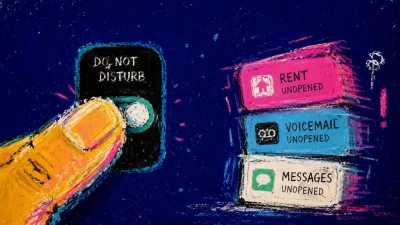
Then she gave me the scene. It was 9:18 p.m. on a Thursday, westbound on the TTC, wet winter coats giving off that faint metallic smell, her phone warm in her hand as she reopened the same Notes list for the third time: return package, refill prescription, buy garbage bags, email the condo manager. The overhead lights buzzed. Her jaw locked. Her shoulders crept upward. One part of her wanted to zone out with a commute podcast; another part was already pre-spending Saturday in her head.
By the time she got home, there was a Canada Post slip by the mailboxes, one unopened envelope, and a pharmacy text on her lock screen. She wanted Saturdays to feel open and restorative. Instead, she kept letting small practical tasks stay mentally open until they merged into a draining catch-up block. The overwhelm was not dramatic. It was like trying to relax while twelve browser tabs kept auto-refreshing in the back of her skull.
I nodded. “That makes sense,” I told her. “We’re not here to prove you should be better at adulting. We’re here to see the loop clearly, give it smaller containers, and give your Saturday back some choice.”

Choosing the Grid for a Life-Admin Backlog
I asked her to put both feet on the floor, take one slow breath, and hold the question in its plainest form. Then I shuffled until the rhythm in my hands settled. For me, that moment is not about theatrics. It is simply the mind crossing from swirl into focus.
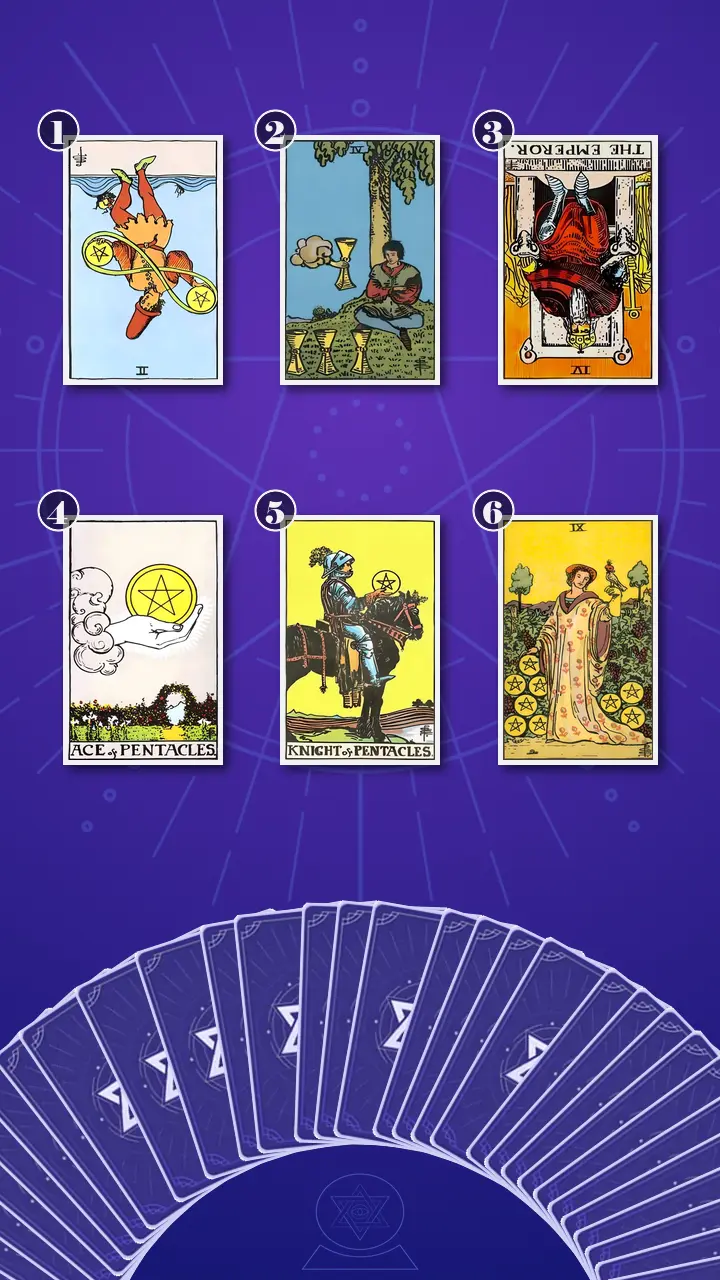
I chose a six-card spread I use for recurring practical overwhelm: the Transformation Path Grid · Context Edition. I reach for it when the problem is not one dramatic event, but a self-reinforcing loop. This spread lets me separate the visible symptom, the moment of deferral, the deeper control pattern, the turning point, the usable method, and the integrated outcome. That is how tarot works best for questions like this: not as a verdict, but as a clean structure for pattern recognition.
I told Alex I would read the top row as the machine that keeps a weekend getting swallowed by chores, and the bottom row as the repair path. The first card would show the surface symptom. The next two would reveal the friction and the deeper root. The fifth card, the action card, would tell us what kind of routine could actually hold her real life.
Reading the Machine That Eats a Saturday
Position 1: The List That Breeds
Now I turned the card showing the visible pattern from the diagnosis: small errands staying open until they merge into a draining Saturday backlog. It was the Two of Pentacles, reversed.
I pointed to the juggled coins and the rough water behind them. In Alex’s life, this looked exactly like the return bag by the door, the prescription refill, the bill, the condo email, the starred Gmail, all left mentally spinning through a meeting-heavy week. This card was not showing a huge workload. It was showing excess juggling and blocked completion. Like having twelve browser tabs open for things that each take three minutes, the laptop fan gets louder than the tasks deserve. Tiny tasks stay loud when they never get a container.
“You’re spending more energy keeping the motion going than finishing the thing,” I said. Alex gave a quick laugh that landed a little bitter. “That’s annoyingly accurate,” she said, rubbing her thumb along the edge of her phone. Once the pattern had a shape, it stopped masquerading as a character flaw.
Position 2: The Ugh, Not Now Reflex
The next card represented the immediate friction and defense strategy: the momentary not-now response that keeps tiny tasks unstarted. The Four of Cups appeared upright.
This is the card of the ignored cup, and in Alex’s modern life it was painfully specific: she gets home, sees the pharmacy text or package reminder at exactly the wrong moment, feels that flat internal drop, and opens Instagram in the elevator instead. The energy here was not dramatic avoidance; it was emotional withdrawal, a deficiency of willingness in the exact second the task asked to exist. This is not laziness. It is backlog plus decision drag.
I told her that in my work I call this Compensatory Routine Decoding. The scrolling, the playlist switching, even the rewriting of the list are not proof that she lacks discipline; they are small coping buffers her mind uses to avoid the sting of interruption. She let out a slow breath and looked down at the spread. “Yes,” she said. “It’s never that the task is impossible. It just lands like a mosquito in my evening.”
Position 3: The Inner Manager in Armor
The third card showed the deeper root pattern: the fear around control and the all-or-nothing relationship with being on top of life. It was The Emperor, reversed.
Whenever I see this card through a Jungian lens, I think of the inner manager who has put on armor. He thinks pressure equals structure. In Alex’s life, that looked like waiting for the perfect clear block, the perfect route, the perfect Saturday reset, as if one five-minute errand were secretly a performance review for adulthood. The Emperor reversed is excess control and blocked flexibility. It is like building a full Notion dashboard for a task that needed one plain email.
I traced the stone throne and the armor. “This is where the moral weight sneaks in,” I said. “A basic errand stops being basic. It becomes evidence.” Then I gave her the sentence the cards were building toward: your Saturday is paying interest on open loops.
She went very still. First her breath paused. Then her gaze slid off the cards as if she were replaying every lukewarm-coffee Saturday in her kitchen. Finally she said, quietly, “It weirdly feels like a competence issue even though I know it shouldn’t.” I nodded. “That’s the root. Not failure. A rigid inner standard turning upkeep into a test.”
Position 4: One Coin, One Real-World Move
The fourth card was the catalyst, the smallest concrete shift that interrupts the loop and starts moving errands out of mental space and into reality. It was the Ace of Pentacles, upright.
The whole spread visibly narrowed here: not many coins, not a kingdom, just one coin in one hand. I told Alex this was the moment her system stops speaking in pile language and starts speaking in objects. Not the whole Saturday. Not the whole backlog. Just the one real thing that moves. Book the pickup. Screenshot the return QR code. Put the envelope in the bag. Set the pharmacy reminder while standing in the kitchen. The energy of this card is grounded balance: one touchable step replacing a fantasy of total control.
Her shoulders dropped a fraction. The threat level in the room softened. “Okay,” she said, looking at the Ace, “one actual move does feel different from trying to become a new person by Saturday.” That was the turn.
When the Knight Asked for Less Drama
Position 5: The Steady Steward
When I turned the fifth card, the room changed. A streetcar groaned past outside, then the radiator clicked once and went quiet. This was the position that defines the repeatable mindset and behavior that turns the shift into a weekly system. The card was the Knight of Pentacles, upright.
In modern life, this Knight is not glamorous. He is the dependable operations partner replacing the harsh internal manager. Same evening. Same 15 minutes. Same mini checklist. Same stopping point. The still horse matters more than any dramatic charge, because nothing here requires a sprint. The energy is steadiness, patience, and respect for repetition. Boring reliability beats heroic catch-up.
Before I said anything else, I named the trap. She was still caught in that Thursday-night Notes app loop, rearranging bullets and promising herself a clean Saturday reset, which is exactly where the pile becomes heavier than the tasks.
Stop waiting for a perfect reset, choose the Knight's one-field-at-a-time pace, and the weekend stops carrying what routine can hold.
Then I added, gently but directly, “You do not need a perfect catch-up day. You need a small, repeatable rhythm that keeps tiny tasks tiny.”
I ran what I call a Psychological Bandwidth Audit over the week she had described. Before she touched a single errand, the open loops had already spent part of her energy budget: the return bag pinging from the chair, the unread envelope on the counter, the repeated re-deciding of when to do each tiny thing. The Knight’s gift is not motivation. It is reduced draw on the system. Let routine do the remembering so mood does not have to.
Her reaction came in layers. First, a physical freeze: her thumb stopped against the lip of her mug and even her blinking slowed. Then the thought landed deeper; her eyes lost focus for a beat as if she were replaying the TTC ride, the Notes app, the bag by the door. Then came the emotional release wearing a sharper face. “But doesn’t that mean I’ve been doing this wrong?” she asked, and there was a flicker of anger under it, the kind that shows up when relief arrives before pride has caught up.
“No,” I said. “It means you’ve been asking one future Saturday to hold what no structure was holding midweek. That was an understandable adaptation, not a character verdict. This is the shift from low-grade dread and weekend resentment toward steady self-trust. From heroic catch-up to steadier maintenance.”
I let the silence breathe, then asked, “With this lens, think back to last Thursday. Was there a moment when a smaller container would have changed how your body felt?”
She laughed again, softer this time, and the tension finally moved out of her jaw. “Honestly? If I’d just put the parcel by the door and set the pharmacy reminder, I probably would have stopped rehearsing Saturday in my head.” That was the breakthrough. Not certainty. Ownership.
Position 6: A Saturday That Feels Owned
The last card showed the felt integration state: practical calm, reclaimed Saturday space, and quieter self-trust. It was the Nine of Pentacles, upright.
I love this card because its luxury is not spectacle. It is containment. In Alex’s life it translated into a Saturday morning where the coffee stays hot, the apartment feels contained instead of accusatory, and rest no longer has to compete with unattended details. The energy here is mature balance: not hyper-productivity, not a perfectly optimized life, just a walled garden around time and attention. A well-kept life is quieter, not stricter.
She looked at the figure in the card and smiled in a completely different way than she had at the start—less braced, more curious. “I want that kind of Saturday,” she said. And because the Knight had come before it, the image did not feel like fantasy. It felt buildable.
From Open Loops to Small Containers
When I laid the full spread back down as one story, the logic was clear. The Two of Pentacles reversed showed the visible chaos of too many tiny tasks left mentally spinning. The Four of Cups showed the little wave of emotional refusal that made each one easy to defer. The Emperor reversed showed the blind spot underneath: Alex had been treating ordinary maintenance like a referendum on whether she was properly on top of life. That is why the pile felt heavier than the tasks themselves.
The transformation direction was equally clear. She did not need stricter self-command. She needed smaller containers. One real-world move to interrupt the spell. One repeatable midweek lane to keep tiny errands from snowballing. In other words: stop treating errands as background mental clutter and give them a brief, predictable place to land.
Because self-judgment had gotten braided into the backlog, I also gave her my Ego Unplugging Protocol. A missed slot is logistics, not identity. The routine only helps if it never becomes a worthiness scorecard.
- Pick one capture spot tonight Before bed, choose one home for every new errand—one Notes note, one Reminders list, or one index card by the door. Then move exactly one task from your head into reality: screenshot the return QR code, set the pharmacy alarm, or place the envelope in your bag. If resistance says you should do a full reset later, treat that sentence as your cue. The laughably small version still counts.
- Create a 15-minute life admin lane Put one recurring midweek block in your calendar this week, ideally after you get home and before you fully disappear into scroll mode. Use the same mini checklist each time: one payment, one email, one logistics task, then stop when the timer ends. Protect the stopping point. The goal is not to finish everything; it is to stop Saturday from becoming the emergency container.
- Use a good-enough rule, not a perfect one Pick one recurring errand and write a humane rule for it: Bills get paid, not optimized. Returns get dropped in one pass. If you miss a lane, use the Ego Unplugging Protocol—say, “My worth is not on trial”—and reschedule one item only. If you feel the urge to build a prettier system, cut the rule in half. Humane structure sticks better than strict structure.

A Week Later, the Coffee Was Still Hot
A week later, Alex sent me a screenshot of a recurring Wednesday block labeled Life Admin Lane. She had used it once. Not perfectly—one payment, one pharmacy reminder, one condo email, then she stopped when the timer did. The next Saturday she texted me a photo of coffee by the window and wrote, “I still woke up with the what-am-I-forgetting thought. I just didn’t let it run the whole morning.”
That is what I trust about a reading like this. The Transformation Path Grid · Context Edition did not rescue her with magic. It helped her see why tiny errands had been piling up until they swallowed her weekend, and it returned the authorship to her. Clarity arrived not as a dramatic reset, but as a modest rhythm she could actually live inside.
When basic life stuff keeps tapping you on the shoulder all week, it can feel strangely shameful how one return, one refill, and two emails can tighten your chest as if you are failing at something everyone else finds normal. I never read that as a personal flaw. I read it as too many open loops asking for a container.
So if nothing had to be perfectly reset first, what is one tiny task you would want to give the Knight’s one-field-at-a-time lane before next Saturday arrives?
Every reading at AceTarot is a Journey to connect with inner wisdom and empower next step.
Learn more about our Journey to Clarity.