Your Win, Their Fault?
See how self-serving bias shapes credit and blame, which tarot cards mirror it, and what surfaced across related reading insights.

Self-serving Bias
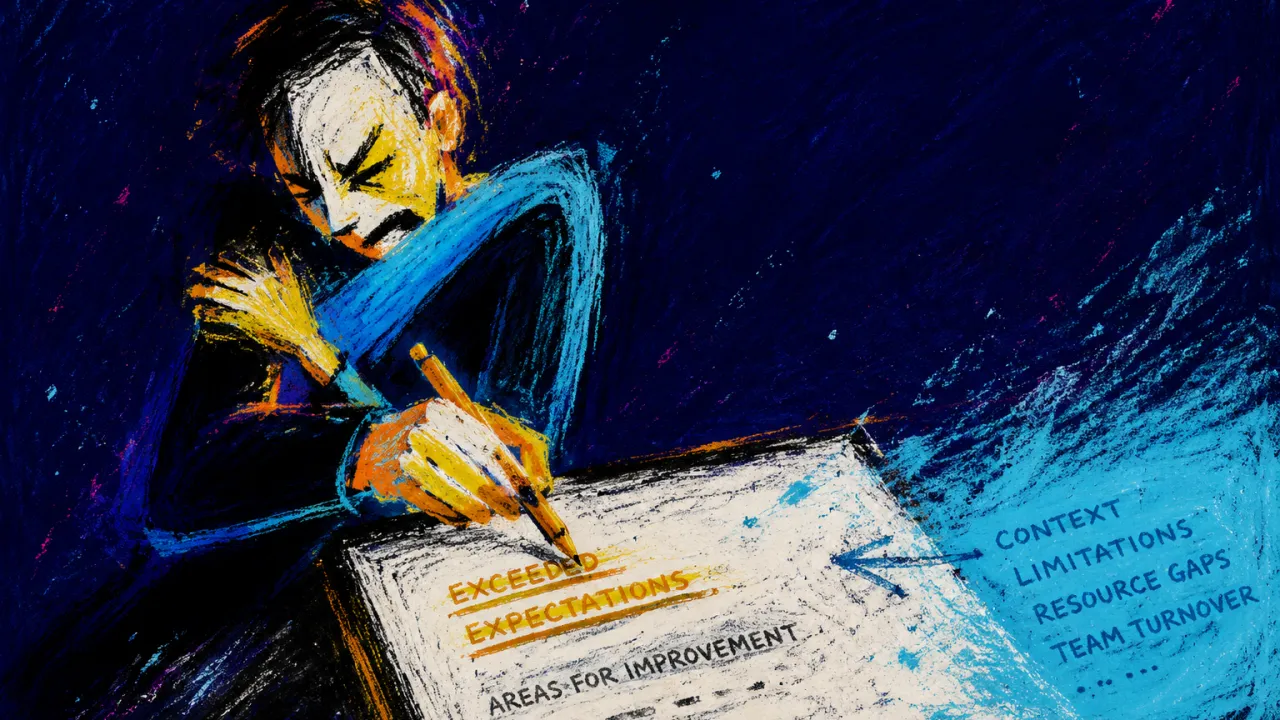
What is this really?
When something goes well, you reach first for the choices, skill, or effort that made it happen; when it goes badly, your attention moves quickly toward timing, unclear expectations, or someone else's decisions. You are trying to keep a steady sense that you are capable, especially in moments when being responsible for a poor result would feel exposing. Yet "I earned this" can land more easily than "I helped create that problem," so your chest settles as the difficult comment slides past, only for the same overlooked mistake to meet you in the next project, much like the figure in the Seven of Swords, carrying five swords while leaving two standing behind and glancing back at what was not taken.
Why did it happen?
Earlier, when a setback felt like a verdict on your overall ability, explaining it through circumstances helped you recover your footing and keep participating. Now the inner pattern may move before a fuller account arrives: praise brings a quick lift, criticism brings a tightening across the shoulders, and the unconscious loop can leave you mentally tired from holding one version of the event while another keeps returning.
How does it feel?
- After a presentation lands well, you sit a little taller, tap the slide with one finger, and say, "That framing worked." When a later deck misses the mark, you lean back and point to the late brief without naming your own edit. In that pause, your chest may lift at praise, then your shoulders rise and your jaw sets around criticism; you can let both sensations be present without deciding what they mean yet.
- When a friend says a comment hurt, your eyebrows lift for half a second, you quote the words you meant, and you scroll back to the message that shows your intention. As you hold out the screen, warmth may gather across your face and your fingers may press harder along the phone's edge; it is okay to notice the reaction before choosing a conclusion.
- After winning a match, you grin, point at the move you called, and replay it aloud; after a loss, your hand goes straight to the connection icon or the teammate's missed pass. The shift can arrive before you register it, with a quick pulse in your chest and your hand tightening around the controller; noticing it is enough for this moment.
- Reading written feedback alone, you underline "strong judgment" in amber, fold one arm across your chest, and pause with the pen hovering above "missed follow-through" before turning the page to the note about changing priorities. Your eyes may stay fixed on the underlined phrase while your shoulder holds slightly higher; the pause is allowed to remain unfinished.
- When dinner turns out well, you smooth the napkin beside the plate and mention the seasoning you adjusted; when it falls flat, you check the oven display twice and hold up the recipe. A small release may pass through your chest in one moment and a tight ache settle behind your eyes in the other; uncertainty can sit here without being solved immediately.
Self-serving Bias in Tarot Cards
Self-serving bias shows up in the quick shift from "my judgment worked" to "the situation caused this." You may recognize the pen hovering above "missed follow-through" while your shoulder holds slightly higher. Jungian archetypal theory offers a symbolic lens on the gap between the capable image you protect and the feedback left outside it. The Tarot Cards below mirror the unconscious dynamics beneath that reflex and trace its visible contours.
Self-serving Bias in Tarot Card Reading Insights
That quick shift from "my judgment worked" to "the situation caused this" also appears when others bring the same reflex into a card reading. The Tarot Reading Insights below show where these cards surfaced alongside it.

A Six-Paragraph Lesson Shrinks Into a Three-Sentence Repair Message
Topic:Introspection Tarot Reading
Struggle:Insight-Integration Gap
Context:Projected Mirror Loop