Stuck on the first signal?

A clear audit of anchoring bias, the tarot cards that mirror it, and reading insights where this fixed-point loop appears.

Anchoring Bias
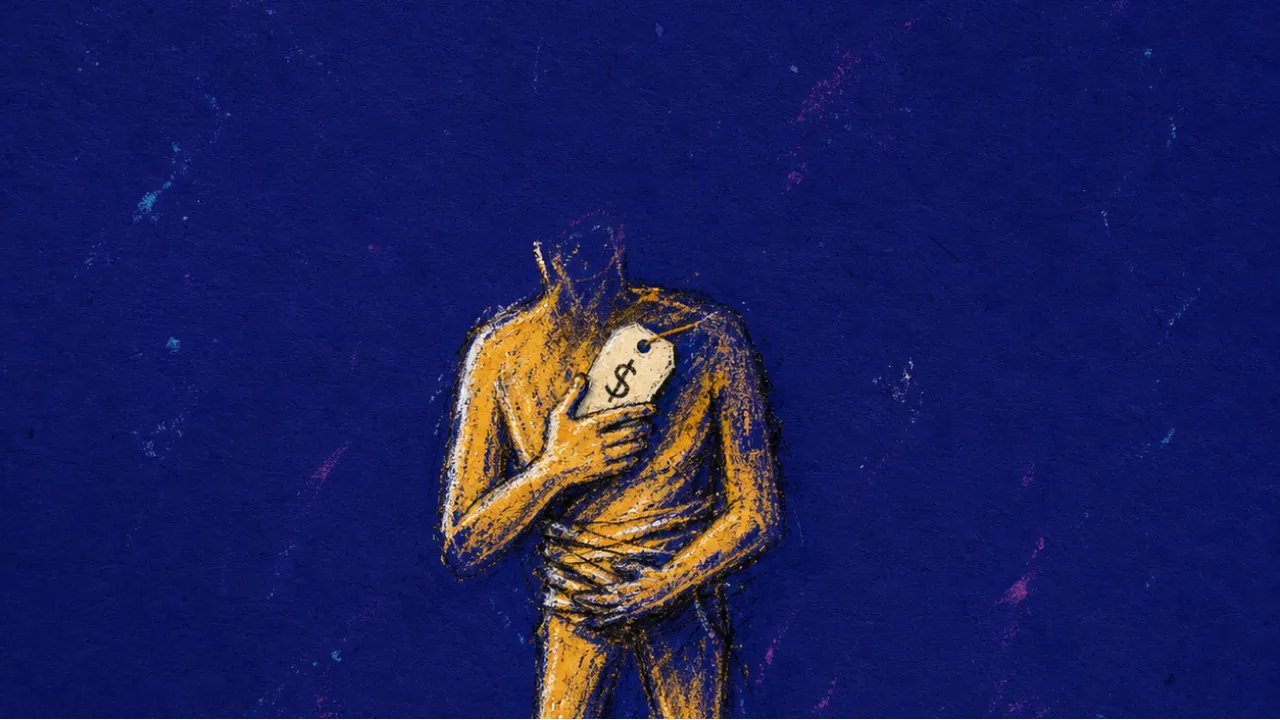
A figure presses a price tag to their chest, feet planted among scattered notes, amber lines splitting into cold blue

What is this really?

Anchoring Bias is when you let the first number, comment, offer, deadline, or impression become the reference point for everything that follows, even when better information arrives later. It often starts as a cognitive shortcut: your mind grabs the first solid thing in the room because uncertainty feels too wide, too slow, or too exposed to sit with for long. But the anchor that once gave you quick clarity can turn into a mental trap, leaving you circling the first mark while the present evidence waits outside your frame—much like the figure in the Four of Pentacles, gripping one coin to the chest, pinning another beneath each foot, and unable to move without loosening their hold.

Why did it happen?

At some point, choosing quickly may have helped you avoid the exposed feeling of not knowing where to start; the first clear signal became a handrail when everything else felt open-ended. Over time, that handrail can become an inner pattern: the first price, first reaction, or first piece of feedback locks into place before the rest of the room has had a chance to register. What once helped you move can now leave you mentally tired, scanning new information while your attention keeps getting pulled back to the same old starting point.

How does it feel?

  • You open a rent listing, spot the first price, and your cursor pauses there a beat longer than it needs to; every other option gets sorted around that number before you even notice you're doing it. In your body, the chest may feel slightly braced, like changing your mind would require pushing against a fixed shelf. Let the first number sit there without treating it as the whole room.
  • In a work chat, someone suggests a deadline, and you type your reply with one eyebrow tightened, using that first date as the invisible center of the conversation. A few minutes later, your stomach might feel compressed, even if the calendar technically has space. It's okay to notice the squeeze before you decide what the date means.
  • You meet someone new and latch onto one early comment, then catch yourself replaying it while they keep talking; your smile stays polite, but your attention keeps snapping back to that first detail. The sensation can feel like a small hook behind the eyes, pulling focus back to the same spot. You can let that hook be present without making it the final edit.
  • When shopping, you see the original price first, then skim the discount with a quick thumb scroll, already measuring the item against the first tag rather than what you actually need. Your jaw may set for a second, as if the decision has narrowed before your preference has arrived. Noticing that narrowing is enough for now.
  • Alone at night, you reread an old message or an early piece of feedback, holding your phone closer while newer evidence sits untouched below it. The body can go oddly still, with shallow breathing and a flat, locked-in feeling across the forehead. You don't have to force a new conclusion immediately; uncertainty can stay open for a moment.

Anchoring Bias in Tarot Cards

That reflex to let the first number, comment, or deadline become the invisible center is the core signal of anchoring bias. You may recognize it in the compressed stomach or the small hook behind the eyes when your focus keeps snapping back to the same spot. From a Jungian perspective, archetypal theory offers a way to read this as a pattern of fixation rather than a simple thinking error. The Tarot Cards below mirror the unconscious dynamics of holding onto the first fixed point while the rest of the picture keeps moving.

Justice
Reversed
The figure's scales, sword, pillars, and formal seat create a visual system for deciding what counts as valid evidence. Reversed, the system can keep the first identity story on the scale as if it were an established ruling, while later growth is reduced to evidence that must plead for recognition. You may find it difficult to revise the story about yourself because the first account now feels like an objective record rather than one early interpretation. That anchor protects continuity, but it can make genuine change appear inconsistent or undeserved; identifying how the verdict was formed allows the self-model to be updated on the basis of the whole record.
The Hanged Man
Reversed
The figure's upside-down body, bound foot, and halo create a scene built around a perspective that could be released but remains suspended. Reversed, the image depicts an old viewpoint being defended through prolonged stillness, allowing the first explanation to remain the hidden standard for what growth is supposed to look like. You may keep defending the first story about your potential, progress, or identity even after experience has complicated it. The pattern preserves coherence by refusing to update the reference point, but that coherence becomes a stall when every new direction is judged by an outdated frame; seeing the defended perspective makes revision a cognitive act rather than a loss of self.
The Tower
Reversed
Lightning tears through the crowned tower, flames appear inside it, and the figures are thrown from a structure that had seemed fixed. Reversed, the scene depicts new evidence pressing against an old self-model while the mind keeps trying to retain the original architecture as a stable reference. You may let an early judgment about your limits define what growth is allowed to count as, even after experiences contradict it. The anchor survives by treating change as an exception or disruption instead of revising the model itself; identifying the structure under pressure makes cognitive updating more deliberate and less identity-threatening.
The Moon
Upright
The moon lights a winding path without making its destination fully visible, while the dog, wolf, towers, and rising crayfish create multiple possible readings of the same terrain. The image gives an uncertain inner state a strong visual form, showing how the first emotionally charged interpretation can take over before the facts settle. You may treat one fear, sensation, or intrusive possibility as truth and then organize later self-observation around it. The anchor supplies a fast explanation for what you feel, but it can keep ambiguity active by repeatedly sending attention back to the same cue; recognizing fear as data rather than a verdict restores reflective range.
Four of Cups
Upright
The seated figure faces three known cups and withdraws from a fourth that appears at the edge of awareness. The image separates availability from integration, showing that new material can enter consciousness while the existing frame remains closed around an earlier conclusion. You may notice memories, emotions, or behavior that contradict an old belief about yourself and still dismiss them as unrepresentative. The first self-explanation feels coherent because it ended uncertainty quickly, not necessarily because it accounts for the whole record. Introspection becomes more accurate when contradictory evidence is allowed to participate before the original conclusion is repeated.
Six of Cups
Upright
A child offers a flower-filled cup while the second child receives it inside a preserved, almost untouched courtyard. The image gives the first emotional memory a sense of purity and authority, making it unusually capable of organizing later perceptions even when the present contains different evidence. You may let an old memory, first reaction, or formative comment outweigh what you now observe about yourself. The familiar reference reduces the ambiguity of inner experience, but it can also make current data feel less emotionally true than the remembered scene; holding both time points in view creates a more accurate internal record.
Four of Pentacles
Upright
The figure balances a pentacle at the head, grips one at the heart, and stands immobilized on two more. The same fixed reference has effectively occupied cognition, identity, and action, offering a precise image of an old self-definition that continues to govern development. You may measure every attempt at change against an early label such as undisciplined, gifted, difficult, or cautious. Even real growth is then interpreted as a temporary deviation from the original identity. Cognitive evolution becomes possible when that first description is located in its original context and no longer treated as the permanent zero point of who you can become.
Two of Swords
Upright
The blindfolded figure keeps both swords crossed at the same height, maintaining a controlled stillness while the dark water moves behind them. This is a visual model of attention defending a settled assumption by restricting the information allowed to alter it. You may notice new details about yourself while continuing to interpret them through the first story that made the situation feel understandable. The mental barrier limits immediate discomfort, but it can leave your private processing suspended around one assumption; recognizing the barrier is enough to begin separating evidence from the need for closure.
Eight of Swords
Upright
The wrapped figure stands among upright swords with vision restricted, while terrain beyond the enclosure shows that the immediate frame is not the whole environment. The image captures an old belief becoming a perceptual boundary: development is judged from inside the original conclusion, so evidence of expanded capacity remains difficult to locate. You may measure present growth against an early statement about what you are capable of, allowed to want, or likely to become. Each new attempt then appears constrained before its results exist, reinforcing the benchmark that produced the constraint. Cognitive growth begins when the old belief is dated, sourced, and compared with current behavior rather than accepted as the fixed perimeter of possibility.

Anchoring Bias in Tarot Card Reading Insights

For anyone who has watched the first number, comment, or deadline become the invisible center, others have brought the same pattern into readings. The cards shift from symbols into lived reading moments here. Below are Tarot Reading Insights where this fixed-point pattern shows up.
Psychological Patterns Related to Anchoring Bias