Summer Trip Timeline Panic and the Move From Proof to Quiet Growth

The 11:34 p.m. Group Chat Spiral
If you’re a late-20s London office person who can survive client chaos all day but feels your chest drop the second the group chat says “summer is booked,” this is probably your version of timeline panic.
Taylor (name changed for privacy) sat across from me with the kind of tired posture I see a lot in people who look functional from the outside and quietly overclocked within. She told me about the Tuesday night that tipped her over: 11:34 p.m. in her small Zone 2 flat, her laptop still throwing off that dull blue agency-work glow, a half-folded pile of laundry caving over a chair, the radiator clicking, her phone warm in her hand as WhatsApp filled with flight screenshots and hotel links.
“I know a trip is just a trip,” she said, looking down at the table, “so why does it feel like evidence?”
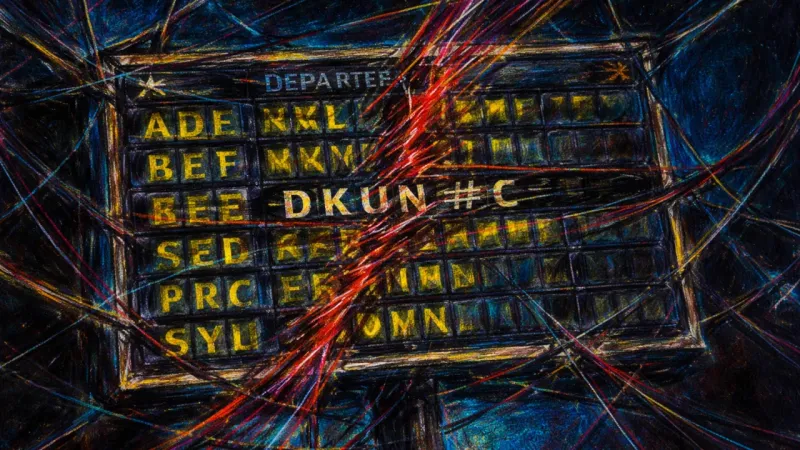
I could hear the whole mechanism in that one sentence. She didn’t answer the chat. She went from WhatsApp to Monzo to LinkedIn to old Notes app screenshots, trying to calculate money, annual leave, career progress, and whether she had somehow mishandled her twenties. The feeling in her body, as she described it, was not vague nerves. It was a tight chest, a dropped stomach, and that electrically restless late-night energy that feels like trying to fall asleep while your mind keeps opening fresh tabs by itself. Anxiety, in moments like this, is less like a mood and more like standing under an airport departures board while every gate number starts flashing as if you’ve personally missed them all.
What she wanted was simple and human: to trust her own timeline. What she feared was crueler and more public-feeling: that her friends booking summer trips meant she was visibly behind in money, freedom, adulthood, maybe even worth.
I leaned in a little and said, as gently and plainly as I could, “A booking confirmation is not a verdict.” Her eyes lifted. “You’re not broken for getting triggered by this. You’re reacting to pressure, comparison, and a story your nervous system has learned to tell very fast. Let’s not shame the spiral. Let’s map it. Our job today is to turn this fog into something you can actually see — and once you can see it, you get your power back.”
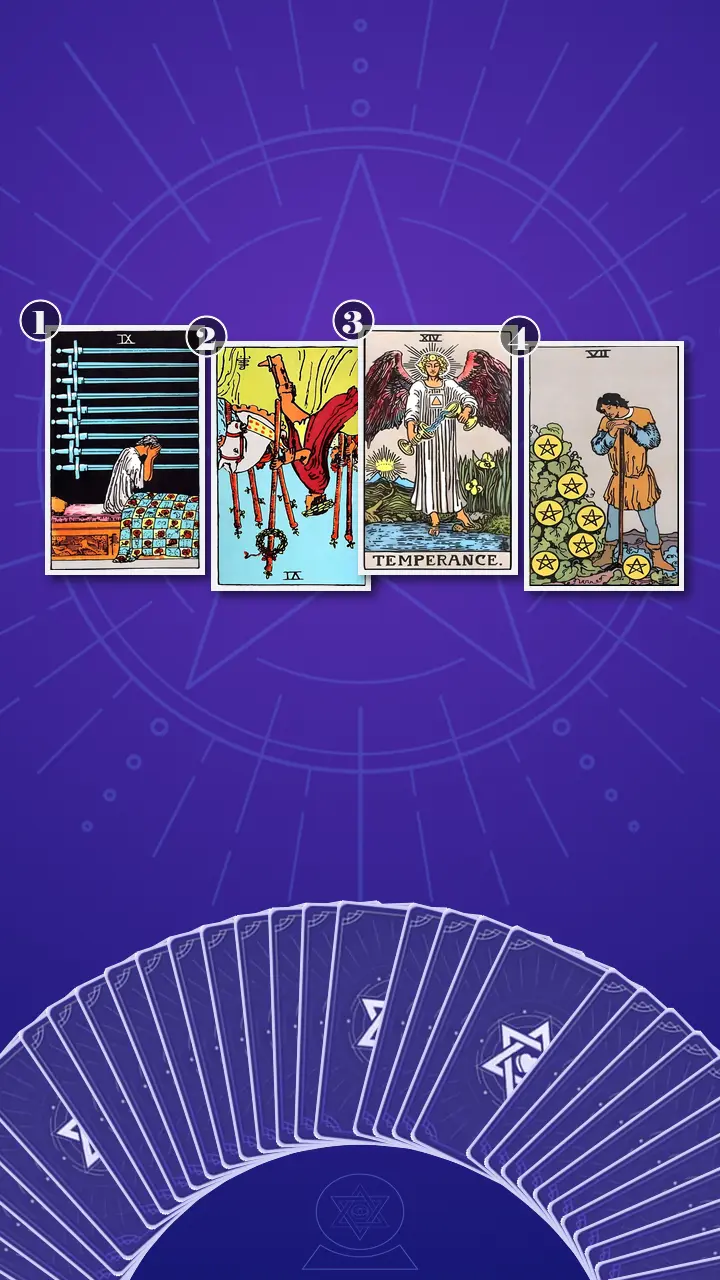
Choosing the Compass: A Spread for Feeling Behind When Friends Travel
I asked Taylor to place both feet on the floor and take one slow breath with an exhale longer than the inhale. Then I shuffled slowly and had her hold the question in its real form, not the polished one: Why do I spiral when friends book summer trips?
For this reading, I chose a Situation-Challenge-Advice-Outcome spread. When people ask me how tarot works for timeline panic and comparison anxiety, this is one of the cleanest answers I know: the cards do not invent meaning out of thin air. They give a chaotic inner experience structure. This issue didn’t need a dramatic ten-card maze. It needed four honest layers: the visible trigger, the hidden wound beneath it, the healing principle, and the grounded direction of growth.
I told her exactly what I’d be looking for. The first position would show the surface symptom — what happens in the first minute after the trigger lands. The second would reveal the underlying mechanism — the worth wound that turns other people’s plans into a referendum on timing. The third, and most important in this case, would point to the inner recalibration that replaces urgency with self-trusting pace. The fourth would show what integration looks like in real life: not a perfect new identity, but a saner way to measure progress.
She nodded once. The room had gone quieter by then; even the city noise outside the window felt farther away. That is often the moment I know the reading is ready to begin — not because anything mystical has taken over, but because someone has stopped fighting their own question long enough to hear it clearly.
The Tabs Above Her Head
Position 1: The Midnight Tribunal
I turned over the first card and said, “Now we’re looking at the position that presents the surface symptom from the diagnosis: the specific comparison spiral that starts when friends book summer trips.”
Nine of Swords, upright.
I told her this was exactly the card I would expect when a normal social update mutates into a midnight emergency. In modern life, it looks like 11:37 p.m., the laptop still warm from agency work, three flight screenshots landing in WhatsApp, and before you’ve answered, you’re already in Monzo, annual leave settings, LinkedIn jobs, and old Notes screenshots trying to find the one number that proves your twenties are not going off the rails. The suspended swords in the card become the stack of tabs, what-if scripts, and self-accusations hanging over any chance of rest.
This is excess Air. Too much thought, too fast, with no grounding signal coming back from the body. It was just a message, but your mind promotes it into evidence. The first minute matters here, because the script usually arrives before logic does: Everyone else is moving. Why am I not there yet? Why does this look so easy for them? Why am I opening nineteen tabs at 11:40 p.m. like one reply requires a forensic investigation of my life?
Taylor let out a short laugh, the kind that has a bruise under it. “That’s so accurate it’s actually a bit rude.” Her fingers, which had been picking at the sleeve of her jumper, went still.
I smiled. “Good. Not because I want to expose you, but because once a spiral has a shape, it stops being some all-powerful fog. We can work with a shape.”
Position 2: The Leaderboard You Never Agreed to Join
I turned over the second card. “This position reveals the underlying mechanism: the self-worth wound and need for visible validation that turn other people’s plans into a referendum on timing.”
Six of Wands, reversed.
“This,” I said, “is where the pain gets more honest.” A friend says the summer trip is booked, and suddenly the chat becomes a ranking system: who has more savings, more spontaneity, more romance, more momentum, more adult-looking ease. The rider elevated above the crowd in this card mirrors the way visible milestones get promoted to proof status in your mind, while quieter progress gets pushed out of frame. It’s like LinkedIn energy leaking into your friendships. A rooftop photo, an airport check-in, a holiday poll — all of it starts reading like live leaderboard data instead of random snapshots.
The energy here is blocked Fire. Not a lack of desire, but a lack of secure self-generated validation. The part of you that should know your worth from the inside is outsourcing the verdict to what looks publicly legible. And once that happens, leaderboard logic makes private growth look fake.
Her jaw tightened visibly. She looked away from the cards and toward the rain-blurred window. “So if I were really doing okay,” she said quietly, “this wouldn’t hit me like that.”
“No,” I said. “It means the hit is exposing the wound, not defining the truth. There’s a difference.”
At that point I used a lens from my own practice that I call Systemic Friction Auditing. I told her I wanted to separate what was hers from what the environment had been feeding her. London rent pressure, social media, visible travel culture, career timelines, those TikTok collisions of soft life fantasy and actual bank balance — all of that creates real friction. Hustle culture loves the fantasy that if you compare hard enough, optimize hard enough, or push hard enough, you can override every low tide and every structural pause. But some resistance is not a personal failure. Some of it is simply the strain of trying to make a human life look legible on demand.
Taylor took one slow inhale, then another. I watched the meaning reach her in layers: first the freeze, then the distant look as if replaying half a dozen old group chats, then the tiny exhale of recognition. “That feels horrible,” she said, “but also… true.”
When Temperance Poured Between Two Cups
Position 3: The Pace Her Nervous System Could Actually Keep
When I reached for the third card, the room changed. The radiator had stopped clicking. The rain against the window had softened to almost nothing. Those little shifts matter to me; sometimes the environment seems to conspire with the card, as if the world itself wants less noise around the truth.
I turned the card over and said, “This position identifies the key transformation: the inner recalibration that replaces urgency and comparison with self-trusting pacing.”
Temperance, upright.
I felt my whole attention sharpen. Whenever I see Temperance in a reading about self-worth and timing, I do not think first of mysticism. I think of orbital mechanics. Planets do not apologize for needing time to complete their arc, and low tide does not mean the sea has failed. This is where I naturally use what I call Macro-Cycle Phase Identification: I look for the season someone is actually in, rather than the season they think they should be performing. Taylor was not in a failure phase. She was in a recalibration phase — mentally stretched, financially aware, quietly building capacity, and then punishing herself because her life did not currently resemble someone else’s highlight-summer orbit.
Temperance in modern life looks like this: instead of panic-booking or panic-researching, Taylor pauses long enough to send one honest message — “I need to check dates properly, but I’d love to if it works.” Then she opens one note with two headings: what I want this summer, and what can wait. The shift is not less desire. It is less self-betrayal.
The energy here is balance. Not numbness. Not passivity. Balance. Water and fire mixed correctly, facts and feelings held at the same table. One foot on land, one in water. This card does not ask her to stop wanting things. It asks her to stop turning every visible milestone into an emergency.
I let her sit inside the setup for a second. “Picture it,” I said. “It’s 11:34 p.m., the laundry is still on the chair, three flight screenshots just landed in the chat, and you are already in your banking app, LinkedIn, and old notes like one reply somehow requires a full audit of your twenties.”
You do not need to race someone else’s summer; pour your energy between the two cups of what matters now and what can wait, and let your own rhythm become the path.
I left a beat of silence after that. Then I added, more softly, “Your panic is not proof that you’re behind. It’s what happens when someone else’s visible timing gets mistaken for the measure of your worth. And your nervous system cannot build a life while it’s busy scoring one.”
Her reaction came exactly the way real insight often does — not as instant serenity, but as a chain. First, a physical freeze: her breathing paused, and her thumb hovered against the edge of her phone as if she had been caught mid-scroll in memory. Then cognitive penetration: her eyes lost focus, not empty, but replaying something. “Last Tuesday,” she said. “I literally could have just said I’d check tomorrow.” Then came the emotional release, messy and layered. She swallowed hard, her shoulders dropped a full inch, and there was a flash of anger in her face before the softness arrived. “But does that mean I’ve been doing this wrong the whole time?”
I answered her immediately. “No. It means you’ve been using the ruler that was nearest to hand. Public timing. Visible proof. External legibility. We’re not condemning the old strategy; we’re retiring it because it doesn’t tell the truth.”
Her eyes shone then, but she smiled too — not because it was easy, but because it finally made sense. I invited her one step further. “Now, with this new perspective, think back to last week. Was there a moment this would have changed how you felt?”
She nodded. “If I’d had this,” she said, “I wouldn’t have turned one message into a whole court case.”
That was the crossing point. Not from confusion to perfection, but from leaderboard-driven worth auditing to grounded self-trust and garden-logic progress. It is a quieter kind of breakthrough, and in my experience, much more durable.
Position 4: What Quietly Compounds
I turned over the fourth card. “This position translates the transformation into integration: a grounded way to measure progress through steady cultivation rather than social comparison.”
Seven of Pentacles, upright.
I smiled when I saw it, because the reading had landed exactly where it needed to. After the ceiling-pressure of Nine of Swords and the public stage of the reversed Six of Wands, this card brings the eye down to soil. In modern terms, it looks like Sunday morning instead of midnight panic: Taylor looking at what has actually compounded this year — a small savings buffer, stronger client handling, one boundary finally kept, the fact that she recovers from hard weeks faster than she used to — instead of measuring herself against beach photos and airport Stories.
This is balanced Earth. No drama, no spectacle, just evidence. The pentacles growing on the vine are the non-photogenic gains that only register when you stop asking what looks impressive and start asking what is genuinely taking root. This is the movement from Six to Seven that I love so much in readings like this: from public recognition to private cultivation, from scoreboard logic to garden logic.
“Not everything real in your life is photogenic,” I told her.
She leaned back for the first time since we’d begun. The tension in her mouth softened. “That one hurts less,” she said, “but maybe because I know it’s true.”
“Exactly,” I said. “This outcome doesn’t promise that you’ll never get triggered again. It shows something better: a healthier metric. Progress measured by what is growing, not by who posted first.”
From Leaderboard Logic to Garden Logic
When I pulled the whole spread together for her, the story was clear. A simple social trigger hits the Nine of Swords and turns into a late-night life audit. Underneath that, the reversed Six of Wands shows the real wound: visible milestones have been standing in for worth, so other people’s plans start feeling like proof against her. Temperance interrupts the spiral by bringing regulation before analysis, asking her to separate what matters now from what can wait and to trust the phase she is actually in. Then the Seven of Pentacles grounds everything in a saner measure of progress: what is quietly, steadily growing in her real life.
I named the blind spot directly. “You’ve been mistaking visibility for value,” I said. “And you’ve been mistaking urgency for usefulness. That’s why more tabs feel productive even when they leave you less clear.”
Then I named the transformation direction just as clearly. “Your next step is not to become the kind of person who never gets triggered. It’s to stop auditing your worth against other people’s visible milestones and choose one personal measure of progress you can tend this week. You do not need a better panic. You need a gentler metric.”
Because cycles are a big part of how I work, I gave her a practical version of my Orbital Sync Protocol — a 72-hour reset designed to stop forced action and bring her expectations back into sync with her actual reality.
- Reply-Before-Audit Rule For the next 72 hours, whenever a trip screenshot lands in WhatsApp, put both feet on the floor, take one slow breath with a longer exhale, and send a simple holding reply within two minutes: “Looks fun — let me check dates properly tomorrow.” Do this before opening Monzo, LinkedIn, Notes, Hinge, or your calendar. If three breaths feels ridiculous or impossible, do one breath and put the phone face down for 60 seconds. This is not avoidance; it is regulation before analysis.
- One-Metric Week Choose one personal measure of progress for the next seven days — sleep before midnight, move £50 into savings, finish one portfolio slide, keep one low-cost plan with a friend, or send one honest message you’ve been avoiding. Pin that single measure in Notes, Notion, or on your lock screen and ask, when triggered, “Does this affect my one measure this week?” Pick one measure only. The moment you choose five, you rebuild the same pressure in prettier packaging.
- Quiet Growth Review On Sunday morning, make a note called “Quiet Growth.” List three things that have genuinely strengthened in the last year across money, work, boundaries, rest, friendship, or self-respect. Star one item that would never show up in an Instagram caption, then choose one 10-minute tending action linked to it. Treat this like data collection, not forced positivity. You are not trying to impress yourself. You are correcting the metric.

A Week Later, the Gate Was Still There — She Just Wasn’t Running
A week later, Taylor sent me a message from a café after work. She had used the holding reply, skipped the midnight Monzo-LinkedIn-Notes loop, and moved £50 into savings instead of into a panic purchase. She told me she’d slept properly — though the first thought on waking was still, “What if I’m behind?” This time, she laughed, made tea, and left the banking app closed.
That, to me, is what a real Journey to Clarity looks like. Not instant certainty. Not a magically fixed life. Just ownership returning to the person it belongs to. The cards did not decide her pace for her; they helped her see that her pace was never meant to be decided by the loudest boarding call in the room.
Sometimes the hardest part is not the trip at all — it’s that chest-tightening second when everyone else’s booking starts to feel like public proof that your life is still waiting at the gate.
If that moment lives in you too, and you stopped reading someone else’s boarding call as a verdict on your pace, what one quiet thing in your own life would you want to tend this week?
Every reading at AceTarot is a journey to connect with inner wisdom and empower your next step. The stories shared here are psychological mirrors, not private records—crafted to reflect universal emotional loops and help you find your own clarity. Learn more about our Journey to Clarity.