When Your Old Pay Decides

Explore the pressure of salary history questions, related tarot cards, and reading insights from pay negotiation sessions.

Salary History Disclosure Pressure
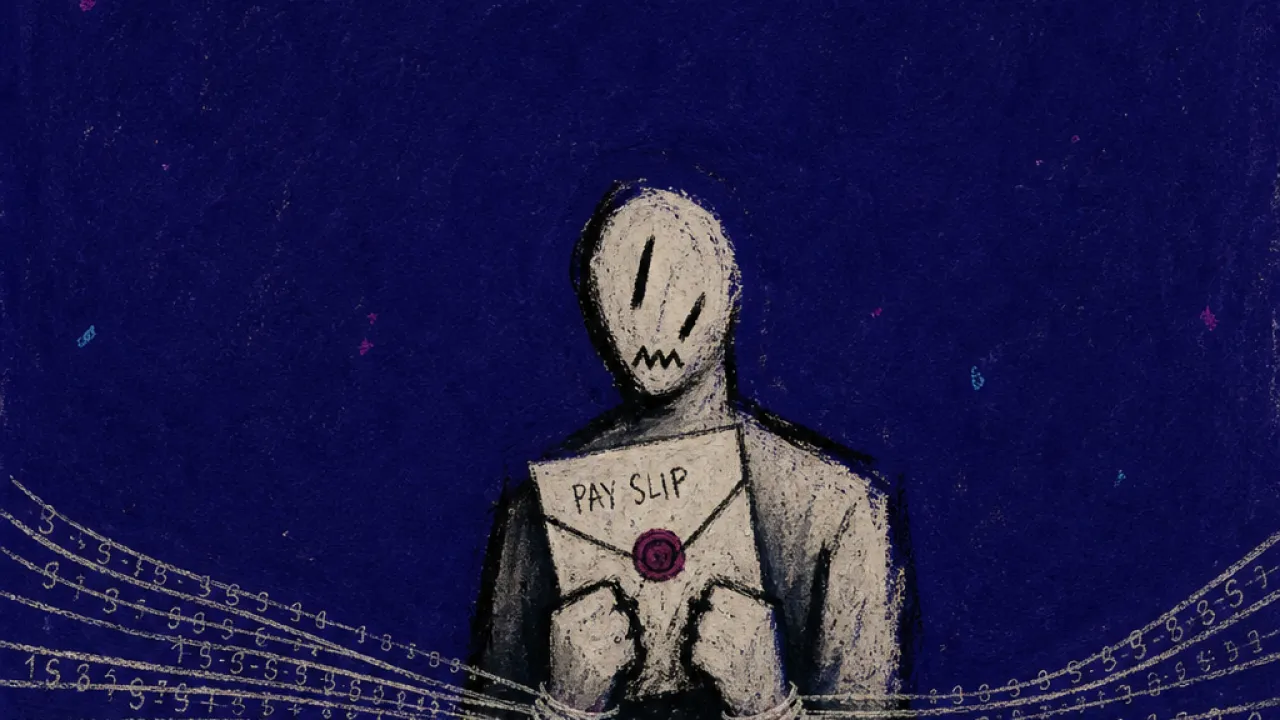
A solitary figure holds a pay slip as form fields pull numeric threads tightly around their wrists

What is this situation?

Salary History Disclosure Pressure begins the moment a job application, recruiter call, or interview form asks what you currently make before anyone has named the role's budget. You may be sitting at your kitchen table with twenty tabs open, trying to finish an application before midnight, when a required box blocks the next page until you enter a number. Or you may be on a screening call, hearing the recruiter shift into a friendly tone before asking, "So, what's your current salary?" as if your past paycheck should quietly decide your future one. The conversation stops being about the work, the scope, the market, or what the company can pay; it becomes a controlled exchange where your old number is pulled into the room and used as a ceiling you did not agree to build. If you were underpaid, changing industries, moving cities, returning after time away, or trying to catch up after years of low offers, the question carries all of that history into a negotiation that should be about the job in front of you. You find yourself editing your answer, adding context, deciding whether to redirect, wondering if leaving the field blank will get you filtered out, and feeling the heat rise under your collar because one number now seems to hold more power than your skills, portfolio, interviews, or experience. The pressure is not only in the question itself; it is in the way the hiring process makes disclosure feel mandatory while keeping the company's own range vague. By the end, you are not simply applying for a job — you are trying to keep your past compensation from becoming a locked door, much like the Two of Pentacles, where a figure balances two coins inside an endless loop while the ground beneath the negotiation keeps moving.

Why it's not you?

The issue is not that you are awkward about money or bad at advocating for yourself; the setup itself gives one side more room to protect information than the other. Mandatory salary fields, vague ranges, and casual recruiter questions can turn your past pay into leverage before the role has been fully discussed. That pressure belongs to the hiring structure, not to your worth.

Salary History Disclosure Pressure in Tarot Cards

Salary History Disclosure Pressure turns a job conversation into a narrow gate where your past pay is treated like evidence. The heat under your collar and the careful pause before answering are part of an environmental, structural dynamic built into the hiring process, not a private flaw. The cards below do not decide what you should disclose or demand; they reflect the shape of a setup where leverage is being pulled toward the employer. Here are the Tarot Cards that tend to mirror this kind of pressure.

The High Priestess
Reversed
The partly concealed scroll, the veil behind the throne, and the opposing pillars organise the scene around controlled access to information. Reversed, the privacy boundary becomes unevenly permeable: your compensation history is pulled into view while the employer's budget remains protected behind its own institutional veil. You are expected to make private data legible before the company makes its valuation framework legible. The reversed arrangement shows confidentiality operating as a privilege distributed by role, with the hiring organisation retaining secrecy while treating your non-disclosure as resistance or incompleteness.
Justice
Reversed
Justice's scales, upright sword, and position between institutional pillars present a process that claims to measure and decide according to consistent standards. Reversed, that structure loses balance when an employer prices a future role through the applicant's past pay while withholding the range that would make the comparison reciprocal. You may be evaluated through a number shaped by earlier underpayment, career interruption, geography, or a different industry rather than by the work now under discussion. The reversed image names a procedural fairness problem: the same hiring system that requests transparency from you does not necessarily expose its own standard of measurement.
The Hanged Man
Reversed
The figure's tied ankle, suspended body, and halo ordinarily distinguish a purposeful pause from simple immobility, but the reversed orientation turns suspension into a gate that produces no useful perspective. A required salary-history box can stop an application before the role's budget or scope appears, forcing time and attention into an old number without creating a fairer assessment. You are held at the wrong stage of the conversation: the process demands personal compensation data before supplying the information needed to interpret the opportunity. The reversed suspension shows timing power being withheld, with progress conditional on disclosure rather than on mutual clarity.
The Devil
Upright
The visible chains, loose collars, and raised pedestal show a power arrangement that becomes durable when its hierarchy is mistaken for a natural fact. Salary-history pressure encourages the belief that an old paycheck objectively defines what your work can command now, allowing an employer's anchoring tactic to enter the candidate's own model of professional value. You can see that the number is real data without treating it as a permanent identity or universal price. The upright image makes the attachment available for inspection: the hiring structure may use past pay as leverage, but the loose chains reveal the conceptual gap between compensation history, present capability, and the market value of a different role.
Two of Pentacles
Upright
The two pentacles circulate inside an infinity loop while ships rise and fall on rough water behind the juggler. The image mirrors a negotiation whose order keeps moving: current pay, desired pay, market rate, and an undisclosed employer budget are made to orbit one another before any stable baseline has been established. You are trying to judge when compensation history belongs in the conversation while the process treats immediate disclosure as routine. The upright rhythm keeps adjustment possible, but the waves make clear that timing is not neutral; whoever controls when each number enters the exchange gains leverage over how the next number is interpreted.
Reversed
The infinity loop, the unstable coins, and the wave-tossed ships become harder to coordinate in the reversed orientation, exposing a workload that the candidate is expected to absorb alone. You must simultaneously protect privacy, stay truthful, preserve access to the role, explain historical underpayment, estimate the hidden range, and avoid anchoring the offer too low. The employer's side of the exchange remains comparatively stable because its budget can stay offstage while your figures are kept in motion. The reversed pattern locates the imbalance in the hiring architecture: too many compensation risks have been transferred to the applicant before the company has contributed equivalent information.
Four of Pentacles
Upright
The pentacle held against the chest, the coin placed over the crown, and the two coins pinning the figure's feet make financial information both a protected asset and a restriction on movement. Salary-history pressure turns privacy into a high-stakes choice because retaining control of the number may protect negotiating leverage while also threatening access to the next application stage. You are deciding how much financial history the hiring process is entitled to hold before it has shown its own budget. The upright grip makes privacy materially visible, while the distant city shows the opportunity cost of remaining outside an exchange whose terms demand one-sided openness.
Six of Pentacles
Reversed
The scales hang in the standing figure's hand while coins are dispensed downward to two kneeling recipients, placing measurement, money, and access under one person's control. Reversed, the exchange becomes conditional and uneven: the employer can hold back its range while asking the applicant to supply a number that may determine how much is eventually offered. You are entering a compensation conversation where the party measuring fairness also controls distribution and the next hiring gate. The reversed hierarchy shows why disclosure can feel compulsory even when phrased casually; refusal carries a possible access cost, while compliance gives the better-resourced side an additional pricing advantage.
Two of Swords
Upright
The blindfolded figure holds two crossed swords while a broken shoreline and dark water sit behind her, presenting a decision made without a full view of the environment. The candidate is asked to choose between disclosure and resistance while the employer's salary range, decision rules, and likely response remain outside the visible frame. You are not choosing between two equally legible options; you are being asked to act while one side controls the missing information. The upright posture preserves a deliberate pause, showing that uncertainty is produced by the structure of the exchange rather than by an inherent inability to decide.
Five of Swords
Upright
One figure gathers three swords while two others retreat toward the water, and abandoned blades remain on the ground beneath a tense sky. The scene presents an exchange where one party's informational gain leaves the others with reduced leverage, closely matching a recruiter obtaining salary history before the company has exposed its own range. You may complete the application or screening call while sensing that the conversation has already been tilted toward a lower anchor. The upright scene keeps withdrawal and recognition visible, revealing that the deeper career friction is not ordinary negotiation but a process structured so that one side can win information before compensation is discussed on equal terms.
Six of Swords
Upright
The boat moves toward a different shore while six swords remain planted in its hull, turning the instruments of an earlier conflict into cargo for the crossing. A career changer, relocating worker, or returning applicant may be moving into a genuinely different labour market, yet salary-history disclosure carries the old compensation structure into the new journey. You may have changed skills, responsibilities, geography, or industry without being allowed to leave the old number behind. The destination remains reachable in the upright image, but the crossing is burdened by a hiring convention that mistakes transported history for a fair valuation of the role ahead.
Eight of Swords
Upright
The blindfold, loose bindings, and surrounding swords create a narrow enclosure in which the available exit cannot be clearly evaluated. A required salary field or recruiter ultimatum produces the same architecture: the application can technically be left, challenged, or redirected, but each route appears capable of ending the opportunity. You are facing both a real gate and uncertainty about how absolute that gate is. The upright image keeps the restrictions visible without pretending they are entirely self-created; the gaps between the swords show that the core task is distinguishing an employer-controlled barrier from the fear generated by opaque screening rules.
Nine of Swords
Upright
The figure sits upright in bed beneath nine horizontal swords, with the dark room turning a single moment into a repetitive private review. A required salary field at the end of a late application can trigger the same loop: whether to answer, how to explain underpayment, whether refusal will cause rejection, and whether one number will outweigh the rest of the application. You are processing an external information trap after the recruiter or form has disappeared from view. The upright image brings that hidden labour into the open, separating the real hiring uncertainty from the self-criticism that can accumulate when the system makes you responsible for predicting an opaque employer response.
Two of Wands
Upright
The globe in the figure's hand, the wand fixed to the battlement, and the open territory beyond the wall stage a conflict between an inherited anchor and a larger professional horizon. Historical salary functions like the fixed wand: one recorded number is treated as immovable even though the role, location, industry, and market ahead may be materially different. You are looking toward a career path that should be priced by its future scope while the hiring process keeps one hand attached to the past. The open landscape preserves the possibility of a wider direction, but the card makes the structural question visible: whether the next move will be evaluated as new territory or merely as a percentage increase on an old baseline.
Ten of Wands
Upright
The figure bends beneath ten bundled wands, his view of the road obscured even though the town is close. Salary-history disclosure bundles years of underpayment, career interruption, relocation, sector norms, and low initial offers into the present application, making the candidate carry explanatory labour that does not belong to the new role's actual scope. You may still reach the next stage, but only after hauling old compensation context into a process that should be assessing current capability and market value. The upright road remains passable, while the obstructed view shows the career cost of making one person account for every historical condition that shaped an earlier paycheck.

Salary History Disclosure Pressure in Tarot Card Reading Insights

Salary History Disclosure Pressure often follows people from the application form into the reading, especially when one required answer starts to feel like it could shrink the whole offer. Others have brought that same interview-room pause into sessions. Tarot Reading Insights from readings shaped by this kind of pay disclosure pressure.

Psychological Contexts Related to Salary History Disclosure Pressure