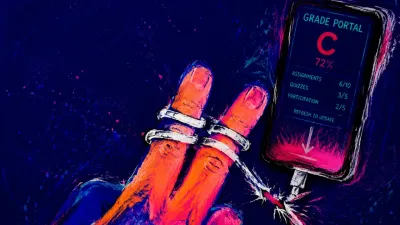
Three-Tab Submit Freeze: Turning Overchecking Into Handoff

The Three-Tab Freeze at 11:34
If your browser has the portal, the PDF, and the original doc open at the same time because letting the file stay editable feels safer than finishing, I already know the shape of the night. That is usually submit anxiety, not laziness.
When Maya (name changed for privacy) sat down with me from Toronto, I could see the whole scene before she finished describing it: 11:34 p.m. in a student apartment near St. George station, Canvas open in one tab, a freshly exported PDF in another, Google Docs in the third. She kept swapping 'significant' for 'important' and then changing it back. The laptop fan breathed warm air against her wrist. Her coffee smelled burnt and cold. Blue light glazed her hands, and her jaw was so tight she only noticed it when she forced it loose.
'It’s not unfinished,' she said. 'It’s that I can still fix it if I don’t send it.'
The paper was done, but the click had swollen into something larger than the assignment itself. She wanted the relief of being finished. She feared what the final click would make real. The dread in her body felt, to me, like trying to breathe through a scarf pulled wet and tight across the ribs—every breath available, none of them convincing.
I kept my voice warm. 'That makes sense. You’re not bad at finishing. You’re scared of the part where finishing becomes visible. Let me draw a map of this fog with you and see where your own authority has gone quiet.'
Choosing the Map: A Five-Card Cross for Submit Anxiety
I asked her to plant both feet on the floor and say the question once, plainly, while I shuffled. Nothing theatrical—just a useful pause, the sort that helps a nervous system step out of reacting and into noticing.
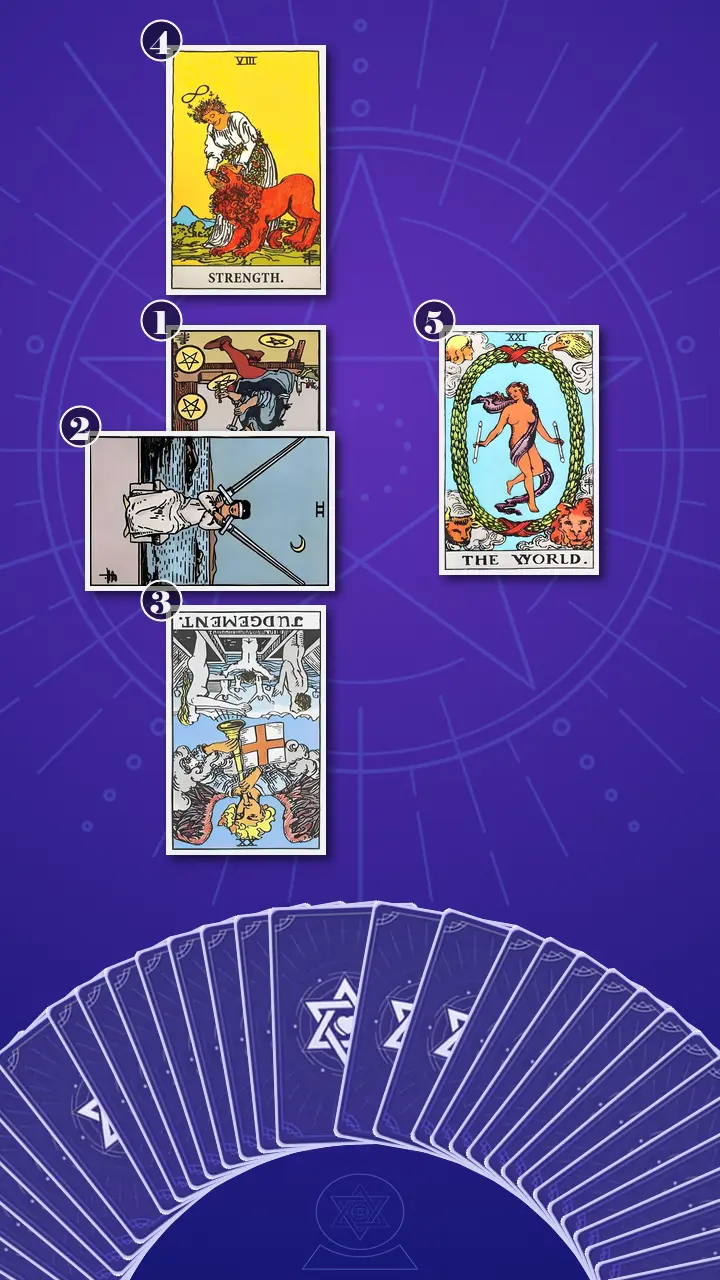
For this, I used my Five-Card Cross · Context Edition. When someone asks me why a paper is finished but they still cannot click Submit, I do not need prophecy so much as structure. Tarot works best here as a clear diagnostic tool: one card for the visible symptom, one for the active block, one for the buried fear beneath it, one for the antidote, and one for the next step that turns insight into practice.
I told her how the spread would work. The center card would show the exact deadline-night ritual: the upload portal, the rereading, the last-minute overchecking. The crossing card would show what makes one ordinary click feel like exposure. The card below would reveal the deeper belief feeding the fear. Above the center, I wanted the medicine. To the right, I wanted release—the concrete shape of a clean ending.
It is a spread I trust for perfectionism procrastination because the problem is compact but layered. Symptom at the center, pressure across it, root beneath, remedy above, and movement outward at the end. Clean architecture matters when the mind is muddy.
Reading the Knot on the Screen
Position 1: The Workmanship That Forgot How to Stop
Now I turned the card representing the observable symptom from the diagnosis: the finished paper, the open portal, and the compulsive last-minute tinkering before clicking Submit. The card was the Eight of Pentacles, reversed.
In modern life, this is 11:41 p.m. and Maya is no longer building the paper—she is circling it. She zooms in on a paragraph, fixes a hanging indent no one is likely to notice, swaps one phrase for another, then returns a sentence to the exact wording it had an hour ago. The repeating pentacles in the image feel to me like rubric boxes already met, pieces of work already completed, proof that enough labor has already happened. Reversed, though, that diligent Earth energy becomes excess. Effort compacts past usefulness. It stops serving the paper and starts serving the fear.
This is the three-tab submit freeze in its purest form. 'I know this is minor, but...' becomes the night’s operating system. One more citation check. One more Grammarly suggestion. One more glance at the PDF preview. It is like reopening the same Google Doc version history and mistaking movement for progress. The extra passes may soothe the body for a minute because the file stays editable, but they bring almost no real gain in quality.
She gave a short laugh that landed halfway between recognition and pain. 'That’s so accurate it’s honestly rude.'
'Good,' I said. 'That means we are nowhere near laziness. We’re looking at a precision instrument being used to avoid a feeling.' Then I added the sentence I knew she needed most: 'The paper is finished. What’s unfinished is your tolerance for being seen.'
Position 2: The Cursor Freeze
Next came the card representing the active block: the mental stalemate that turns one simple submission click into a high-stakes act of exposure and finality. The card was the Two of Swords, upright.
This is the exact moment of suspended choice. The portal asks for one practical action, yet her body treats it like a trapdoor. The class group chat says 'submitted lol,' the cursor waits, her hand hovers over the trackpad and then pulls back. She is not missing information. She is holding herself still so she does not have to feel what the click makes real.
Energetically, this is blocked Air. Thought is active, but movement has frozen. The blindfold is not ignorance; it is overthinking used as emotional numbing. The crossed swords over the chest tell the truth even more bluntly: self-protection dressed up as caution.
'Perfectionism loves the last five minutes because it can still pretend control is safety,' I said.
She stared at the card, then at her own hands. 'So the freeze isn’t because I actually need more time?'
'Not usually,' I told her. 'Usually it’s because clarity and exposure have been fused together. You already know enough to submit. What you do not yet want to feel is the work leaving your control.'
Position 3: The Courtroom Under the Deadline
Then I turned the card representing the root mechanism underneath the behavior: the underlying fear that evaluation of the paper will become evaluation of the self. Judgement, reversed.
This is where the reading dropped below the visible behavior and into the true engine. Underneath the delay sits a private trial scene. Maya imagines the professor opening the file, finding one weak paragraph, and silently downgrading not just the paper but her competence. Before any feedback exists, her mind is already rehearsing the worst interpretation. A routine comment becomes, in her inner life, something like a courtroom gavel.
I have spent years reading trench walls on archaeological digs, and the mistake that ruins a site is always the same: treating a fragment on the surface as if it tells the whole civilization. That is why I named what I saw here so quickly. A comment on a paragraph has been lifted out of context and filed as identity evidence. Judgement reversed is the Judge turned inward. Feedback on the work has been fused with a verdict on the self.
There are no Cups in this spread so far, and I told her why that mattered. 'Feeling is being routed into editing and analysis,' I said. 'A lot of high achievers never say, “I feel vulnerable.” They say, “I should check the citations again.”'
She went very still. First her breathing paused. Then her gaze drifted past me, as if she were replaying future comments before they had happened. When she finally spoke, her voice had gone quieter. 'That’s the real reason, isn’t it?'
When Strength Put a Hand on the Trackpad
Position 4: The Antidote
When I turned the fourth card, even the faint hiss from the radiator seemed to recede. This was the card representing the antidote from the transformation framework: the inner quality that can replace overcontrol with grounded courage and self-trust. Strength, upright.
On the surface, Strength can look almost unimpressive by modern standards. No domination. No dramatic conquest. Just a calm hand resting where fear has teeth. In Maya’s life, the translation is almost boring: both feet on the floor, one longer exhale, a three-item done list, one decisive click before the brain reopens the case. This is balance, not force. Fear is present. Fear is simply no longer in charge of the mouse.
At that point I used what I privately call Academic Stratigraphy, a habit born from Cambridge libraries and trench walls alike. When a problem looks like one solid slab of panic, I brush back the layers. At the top layer, Maya is changing commas and toggling tabs. Under that, she is frozen at the threshold. Under that, she is terrified that criticism will become biography. Strength reveals the deeper layer beneath all three: the self that can survive being seen without turning visibility into condemnation. Once that layer appears, the whole pattern stops looking like fate and starts looking like structure.
It was 11:56 p.m. in the world she had already described to me: portal open, PDF open, original doc open, one sentence touched three times already. Her whole body was braced because the paper was done, but done suddenly felt far too visible to tolerate.
The sentence that changed the air
This is not proof you are unready; it is your old fear roaring, and Strength asks you to place a calm hand on it and let the finished work leave your hands.
Done is not the moment fear disappears. Done is the moment you stop letting fear keep the file hostage.
For one beat, she froze completely—the kind of stillness where even the fingertips stop moving. Then her eyes went unfocused, not empty but turned inward, as if she were rewatching every 11:59 night at once: the reopened PDF, the group chat already moved on, the stomach drop disguised as being thorough. Her mouth tightened, and the first thing that came out was resistance. 'But if I click while I still feel like this, doesn’t that mean I’m being careless?' There it was, the old bargain in plain language. I shook my head. 'No. Carelessness is ignoring your criteria. Courage is honoring them while your body is still loud.' Something in her face softened at that. One shoulder dropped, then the other. She took a breath longer on the exhale than the inhale and let out a small, startled laugh. 'So I’ve been waiting to feel safe enough to do something that only becomes safe by doing it.' I nodded. 'Exactly. Now, with that in mind, think back to last week. Was there a moment this would have changed the night?' Her answer came fast. 'Yes. It wasn’t the intro. It was me not wanting the professor to have the last word on who I am.'
That was the hinge of the reading: not from panic to perfect calm, but from deadline dread and self-doubt to vulnerable completion and calmer self-trust. A modest change in language, perhaps. In lived experience, it is enormous.
The Wreath Around the Night
Position 5: The Practice of Completion
Finally, I turned the card representing the integrative next step: a concrete way to experience submission as completion of a cycle rather than an ongoing personal trial. The card was The World, upright.
The image is all boundary and movement: a wreath making an edge, a figure inside it still alive, still in motion, yet finished with this cycle. In modern life, that becomes beautifully ordinary. Confirmation screen. Screenshot receipt once. Close the tab. Close the PDF. Stand up. Feel the hallway air cooler than the room. Let the assignment belong to the night it was finished instead of dragging it into the next hour through rechecking.
Energetically, this is balanced completion. Not denial. Not pretending you do not care. Simply a clean container around what is already enough. The missing skill, the cards made clear, was never effort. It was closure.
'Submit is not a verdict,' I told her. 'It’s a handoff.'
She looked back down at The World and exhaled through her nose—the kind of exhale that tells me the body has started to believe something the mind is only just catching up to.
From Insight to Action: The Fear-Still-There Click
Seen together, the story of the spread was clean. The Eight of Pentacles reversed showed diligence swollen into compulsion. The Two of Swords showed the visible freeze. Judgement reversed revealed the buried fear: one flawed paragraph had become a threat to identity. Strength restored inner authority, and The World taught completion as a real-world skill. In my Research Bottleneck Analysis language, this was not a talent problem at all. It was a release bottleneck.
The cognitive blind spot was simple and brutal: Maya had started treating discomfort as evidence. If her body felt exposed, she assumed the paper was unsafe. But exposure is not proof of unreadiness. It is often just what the nervous system feels when finished work is about to become visible.
The transformation direction was equally clear: stop using last-minute polishing to postpone judgment, decide what done actually means, and let discomfort be part of completion rather than a veto on it. So I gave her a stripped-down version of my Thesis Stratigraphy Framework—not to rebuild the essay itself, but to rebuild the minute before submission.
- Make a 3-layer Enoughness Checklist Before your next essay upload, open Notes on your phone or laptop and list only three layers: 1) the paper answers the prompt, 2) the citations and evidence are present, 3) the PDF uploads correctly in Canvas, Brightspace, or Blackboard. Once those three are true, content editing stops. If your mind demands a fourth layer, ask whether it is a real requirement or just the old tribunal asking for one more dig.
- Use the Fear-Still-There Click When the checklist is met, set a five-minute timer, put both feet on the floor, let your exhale run slightly longer than your inhale once or twice, read the line 'This paper can be evaluated without my whole self being on trial,' and click Submit before the timer ends. If five minutes feels too intense, make it sixty seconds. This is self-trust under pressure, not a test of toughness.
- Build a Clean Ending Ritual After the confirmation screen appears, screenshot the receipt once, close the upload tab, close the PDF, stand up, and do one physical reset immediately—refill your water, wash the mug, stretch your back, or walk to the bathroom without your phone. For the next thirty minutes, do not reopen the file unless there is a genuine upload error. The urge to peek again is common. Keep the screenshot, not the tab. Closure is a skill, and tiny rituals teach it faster than lectures do.
Maya frowned at the timer idea. 'But what if I really do spot one last flaw in those five minutes?' I answered the way I do on a dig when someone wants to keep brushing a layer that has already yielded its truth. 'Then sort flaw from fear. Missing source? Reopen. Changing the same sentence twice? That is not quality control. That is the lion asking for the mouse.'
A Week Later: The Quiet Proof
A week later, a message from Maya lit up my phone: 'Submitted at 10:43. Took the screenshot, shut the laptop, washed my mug. I still woke up thinking, what if I missed something? But I laughed and went to class.' That was all. It was enough.
I have come to trust such small proofs. The cards did not remove her fear by magic, nor did they need to. They showed her where fear had been impersonating standards, and they handed the decision back to her. That is the real journey to clarity—not certainty, but ownership.
If tonight your jaw locks and your hand stalls over the trackpad even though the paper is finished, remember this: you are often not fighting the assignment anymore. You are fighting the fear that one imperfect thing could say something permanent about you.
So the next time the file is ready and the old lion starts roaring anyway, what might your own clean ending look like—one checklist, one longer exhale, one click, one closed tab?
Every reading at AceTarot is a journey to connect with inner wisdom and empower your next step. The stories shared here are psychological mirrors, not private records—crafted to reflect universal emotional loops and help you find your own clarity. Learn more about our Journey to Clarity.
Author Profile