Ghosting Groups Once They Remember Your Name: Staying One Beat Longer
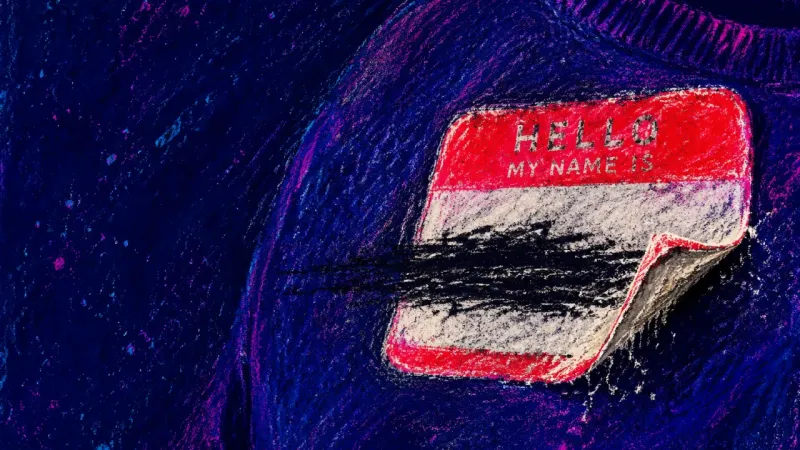
When the Group Chat Says Your Name
When Jordan (name changed for privacy), a 26-year-old junior UX designer in Toronto, sat down across from me, they brought the kind of question people often type into a search bar at 11 p.m.: why do I ghost new groups once people remember my name? I was already holding a sentence I hear from early-career city creatives all the time: you are not confused about first impressions; you are stuck on what happens when a group remembers you and continuity starts feeling like a performance review.
Over the warm smell of coffee, Jordan told me about 11:18 p.m. on a Tuesday in their west-end apartment: duvet half-kicked off, phone warm in their palm, blue light washing the blanket, a streetcar rattling past outside. The WhatsApp message from run club said, 'Jordan, you coming next week?' They had genuinely wanted that question right up until it arrived. 'The second my name is there,' they told me, 'it feels like I owe them a version of me.'
Then they gave me the line that made the whole pattern click. 'It's like a social version of Severance,' they said. 'One version of me can do the pilot episode. The recurring character is where I panic.'
I could hear the contradiction immediately: wanting belonging and ease in new groups, but fearing being seen, expected, and quietly judged the moment the connection becomes mutual. Jordan was good at first hellos. It was continuity that made their chest cinch tight, like a friendly lamp turning into a phone flashlight held too close to the face in a dark room.
I wrapped both hands around my mug and said the thing I needed them to hear early. 'You did not lose interest. The connection just stopped being anonymous.' Then I softened my voice. 'That doesn't make you flaky, and it doesn't mean the group was wrong for you. It means your nervous system is reading recognition as danger. Let me help you make a map for that fog, and see if we can find some real clarity.'

Choosing the Map: A Shadow Spread for Fear of Being Perceived
I asked Jordan to put both feet on the floor, take one long breath, and hold the question in mind while I shuffled. For me, that moment is never about theatre. It is a way to slow the inner scroll and let the body catch up with the mind.
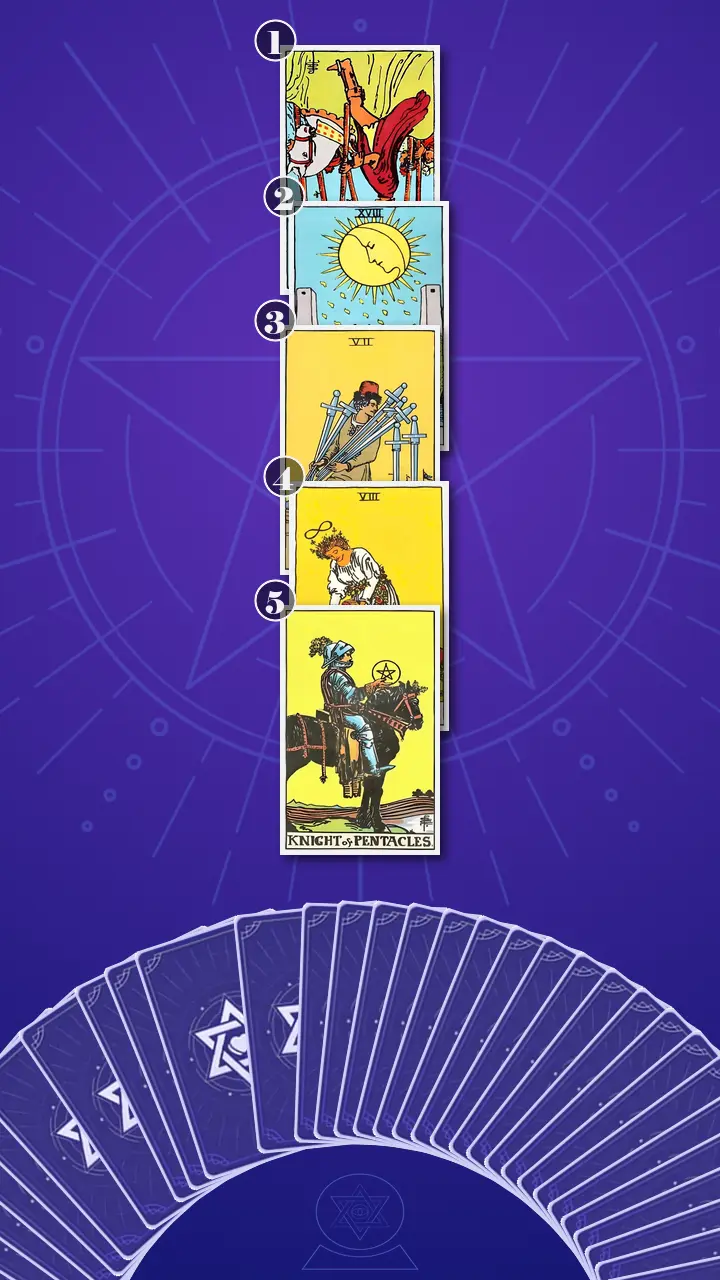
For this reading, I chose a five-card spread I trust when the real issue is not which group to choose, but why visibility itself makes someone want to disappear: The Shadow Spread · Context Edition. When readers ask me how tarot works for fear of being perceived in friendships, this is exactly the kind of structure I use. It moves in a clean line from symptom, to hidden fear, to defense, to antidote, to one grounded next step.
I explained it plainly. This case did not need a decision spread, because Jordan's problem was not whether the run club, the Discord, the workshop, or the meetup was the right fit. The real question was why a friendly follow-up felt like pressure instead of connection. Position 1 would show the visible pattern. Position 2 would name what being remembered activates underneath. Position 3 would reveal the protection strategy. Position 4, the key card, would show the antidote. Position 5 would give us a staying practice that could work in actual life, not just in theory.
The Cards That Named the Vanishing Point
Position 1: When Welcome Starts Feeling Like a Spotlight
I turned over the card for the presenting symptom, the moment Jordan pulls back when recognition in a new group starts to feel like a spotlight. It was the Six of Wands, in reversed position.
I showed Jordan what I meant by bringing it down into modern life. The first night at a Toronto run club or hobby Discord feels easy because you are just another person in the room. Two days later the chat pings, 'Jordan, you coming Thursday?' and the same friendliness suddenly feels like being pinned under a name tag you never agreed to wear. What felt warm on Tuesday reads like pressure by Wednesday.
Reversed, the Six of Wands is blocked Fire. Recognition is landing, but instead of warming confidence, it curdles into self-consciousness. A nice social mention feels like an annual review. The issue is not joining the group. The issue is the moment attention loops back and says, 'We saw you.' That is where Jordan's mind flips from 'Oh, they noticed me' to 'Now I have to get this right.'
Jordan gave a short laugh that had more salt in it than humor. 'Okay, wow,' they said, looking down at the card. 'That is accurate enough to be rude.' Their fingers tightened around the mug, then loosened. That bitter little laugh told me the card had landed exactly where it needed to: on the disappearing reflex itself.
Position 2: The Story the Mind Autocompletes in the Dark
Next I opened the card for the deeper trigger beneath the behavior, what being remembered activates underneath the surface. The card was The Moon, upright.
This is the part where a completely ordinary pause becomes a whole invisible jury. At 11:24 p.m., Jordan rereads a normal 'Hope you can make it!' and their brain autocompletes the worst possible meaning. Maybe I came off weird. Maybe they are being polite. Maybe next time I will disappoint them and prove I never really fit. The facts are minimal. The fear-story is loud.
The Moon is unstable Water. It does not invent everything from nothing, but it blurs what is happening with what is feared. A 27-minute reply gap turns into evidence. A typing bubble reads like a weather alert. Some people fear rejection. Some people fear recognition because rejection feels closer once they are known. That was the hidden trigger here. Jordan was not reacting to proof; they were reacting to imagined future disappointment wearing the mask of certainty.
When I said that, Jordan went very still. First their jaw set. Then their eyes unfocused for a beat, as if they were replaying half a dozen muted chats at once. Then came the long exhale. 'It really does feel like a Black Mirror plot my brain writes for free,' they said, and this time the smile was tired, not defensive.
Position 3: The Quiet Exit That Keeps You Orbiting
The third card mapped the defense strategy itself, the quiet withdrawal, the unread messages, and the slipping away before closeness can deepen. It was the Seven of Swords, upright.
After twenty years of listening to people untangle themselves over coffee, I have a very specific association with this card: the Notes app apology draft. The moment I saw it, I could practically picture the unsent line on Jordan's screen: 'sorry, work got hectic.' That, to me, is Seven of Swords in modern clothes. Not cruelty. Not indifference. Just stealth self-protection because invisibility feels safer than honest exposure.
In Jordan's life, this looked exactly like muting the Discord, switching off the notification badge, checking previews from the lock screen, and promising to jump back in later once they could do it casually. This is evasive Air. It lowers pressure fast, but it keeps the mind tethered from a distance, like leaving the party through the bathroom route and then watching everyone else's Stories on the ride home.
'I always tell myself I'll re-enter when I can sound normal,' Jordan said. I nodded. 'That makes sense,' I told them. 'But control and contact are not the same thing.' This was the hinge in the whole reading: Six of Wands reversed says being seen feels hot; Seven of Swords says disappearing cools it down. Relief arrives immediately. Belonging does not.
When Strength Put a Hand on the Lion
Position 4: The Antidote Is Not Better Performance
When I reached for the fourth card, the room seemed to quiet around us. The steam above our mugs had thinned. Outside, a streetcar bell clanged once and rolled away. This was the key card of the reading, the antidote. I turned it over: Strength, upright.
At 11:18 p.m., lying in bed with the group chat open and your name glowing back at you, you can want to go and still feel your stomach drop. That contradiction is not proof that you are broken. It is proof that the body alarm arrives faster than the interpretation.
Stop treating recognition like a spotlight you have to survive; place a steady hand on the inner lion and let being known become something you can hold.
I let that sit for a second before I added what Strength was saying in my own grounded language: recognition is not the exam. It is the first receipt that the room has started making space for you. Being remembered is not the same thing as being trapped.
This is where I brought in one of my own frameworks, something I call Obligation Decoupling. Jordan's nervous system had fused two separate events into one: someone saying their name, and some imaginary debt instantly becoming due. A tag had turned into a contract. A second invite had turned into a performance clause. Strength asks us to separate those wires. A message that says 'hope you come again' is contact, not conscription. The win is not sounding effortless; the win is regulating the first alarm and staying in contact one beat longer.
Jordan's reaction came in layers. First there was the freeze: breath paused halfway in, thumb suspended over the rim of the mug, shoulders held so high they looked borrowed. Then came the cognitive drop-through, that faraway look I know well, the one that means a person is replaying old scenes with a new caption under them. Then, finally, the release: a soft 'Oh.' Their shoulders fell. Their eyes brightened, not quite with tears, more with that strange lightheadedness that comes when a body sets down a bag it had mistaken for part of itself. Even then, the clarity had a fragile edge to it. Jordan looked at me and said, very quietly, 'So I don't actually need to feel socially perfect. I need to not obey the first alarm.'
'Exactly,' I said. 'Now use that lens and look back at last week. Was there a moment when this would have changed the feeling by even five percent?' Jordan nodded almost immediately: the run club thread, the Discord joke somebody remembered, the Partiful they nearly opened and then closed. This was the real shift of the reading, from exposure dread and stealth withdrawal toward steadier, repeated presence in community. Not instant ease. Not a personality transplant. Just a more honest kind of courage.
Position 5: The Boring Return That Makes Belonging Real
The final card was the embodied next step, one repeatable social action that helps Jordan stay in the group imperfectly instead of restarting somewhere new. It was the Knight of Pentacles, upright.
I smiled when I saw him. After Strength, this is my favorite kind of medicine: no drama, no social glow-up montage, just grounded Earth. In Jordan's world, it looks like adding the next meetup to Google Calendar, leaving the RSVP as a plain yes, taking the same TTC route, and letting one ordinary return count. Same cafe. Same faces. Same route. Same human being, even if that human being is only at 70 percent.
The Knight of Pentacles is balanced Earth. He is the opposite of the fresh-start cycle that feels good for a night and leaves you lonely a month later. Belonging gets built in boring repetitions, not dazzling entrances. It is closer to a Duolingo streak than a movie trailer. That is why this card matters so much for anyone asking why they like new friends until those friends expect them back, or why muting the chat once people know their name feels safer than staying. Community usually arrives looking unglamorous before it ever feels secure.
From Insight to Action: The One-Beat-Longer Practice
By the time I had all five cards in front of us, the story was clean. Jordan was not ghosting new groups because they did not care. They were going quiet after the second invite because recognition was creating pressure to perform and keep showing up. The Six of Wands reversed showed the social trigger: being noticed felt hot and exposing. The Moon showed the amplification point: the mind turned uncertainty into verdict. The Seven of Swords showed the protective move: quiet withdrawal, immediate relief, and no chance for trust to become ordinary. Strength interrupted that loop by teaching regulation instead of self-erasure. The Knight of Pentacles translated that inner shift into practice. This is exactly why I use a five-card Shadow Spread for fear of being perceived in groups: it gives the nervous system a map instead of a verdict.
I told Jordan the blind spot was simple and brutal: they had been treating recognition like obligation, and obligation like proof that they would eventually disappoint someone. That is why every second invite felt louder than it was. The direction of change was equally simple: treat recognition as early belonging, soothe the body alarm, and choose one boring return over dramatic re-entry.
I wrote down three next steps for Jordan, small enough to use this week and practical enough to survive real life:
- The 10-Minute Name-Tag ReplyTonight, save two low-pressure templates in your Notes app: 'Thanks for the tag — I saw this.' and 'I can't make this one, but thanks for thinking of me.' The next time a run club chat, Discord, or Partiful uses your name, put both feet on the floor, take one longer exhale, and send one plain reply within 10 minutes.If it feels robotic, good. That usually means you are interrupting perfectionism instead of feeding it. A plain reply is still contact. You do not owe anyone a polished return.
- Facts / Story, Two-Minute VersionAfter one triggering invite this week, open Notes, set a two-minute timer, and make two headings: Facts / Story. Write one literal fact from the message and one fear-story your mind added. Example: Fact = 'They said hope you come again.' Story = 'Now I have to be fun every time.'Stop at one line each. This is a clarity tool, not a courtroom. If you start writing paragraphs, close the app and take one breath.
- The VIP Section TestFor the next seven days, use my VIP Section Strategy. Choose one group to test for continuity this month, and treat your personal time as reservation only. Put the next event in Google Calendar with the transit route, start time, and a pre-decided exit point like 'leave after 30 minutes if needed.' Do not replace it with three brand-new socials where anonymity feels easier.The goal is not to become instantly close. The goal is one boring return: one RSVP, one appearance, or one honest no instead of silently drifting.

A Week Later, the Chat Was Still Unmuted
Four days later, Jordan sent me a screenshot. It was not dramatic. That was the whole point. The message they had sent to the run club chat read: 'Thanks for the tag — I saw this. I think I can make Thursday, will confirm tomorrow.' The next one came after the meetup: 'I stayed 35 minutes and left when I said I would. Nothing cinematic happened.' Then, after a beat: 'I still wanted to bail on the streetcar there. I just didn't let that decide everything.'
That is the kind of proof I trust. Not a personality transplant. Not a perfect new social life. Just a slightly steadier hand on the inner lion. In my work, that is what a real Journey to Clarity looks like: not becoming fearless, but becoming less ruled by the first wave of fear and more willing to let ordinary familiarity build.
When being welcomed makes your chest tighten instead of relax, it is often because part of you hears 'they remember me' as 'now do not mess this up.' If the next small sign of recognition felt a little less like a spotlight and a little more like the first reserved seat in the room, what would staying one beat longer look like for you?
Every reading at AceTarot is a Journey to connect with inner wisdom and empower next step.
Learn more about our Journey to Clarity.