Going Official While Waiting for the Drop, Then Learning to Stay

The 12:47 a.m. Scroll: Relationship Anxiety After Going Official
When Jordan (name changed for privacy) sat across from me, I knew I was looking at the kind of commitment-triggered self-sabotage after going official that almost never gets glamorized online. I see it most in bright, high-functioning city women who can manage tone for a brand all day and then lose an hour to rereading one perfectly normal iMessage after the DTR talk.
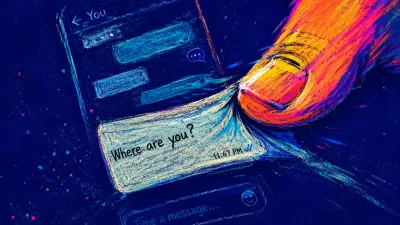
She told me about a Wednesday at 12:47 a.m. in her small downtown Toronto apartment: half under the duvet, phone inches from her face, blue screen glow across her cheek, the router blinking soft orange in the corner, the radiator clicking like a tiny metronome she could not turn off. She had typed, deleted, and retyped one simple message three times because she wanted it to sound interested, but not too interested. Her jaw had locked. Her chest had tightened. The whole room had that overlit, overawake feeling of a brain refusing to clock out.
Then she said the sentence that made the real question plain. “The minute it feels real, I start waiting for the drop.” She wanted the safety of an official relationship, but once she had it, she started expecting she would be the one to ruin it. She would reread messages for hidden mistakes, pull back after affectionate moments, and mentally script the breakup before any clear problem had even appeared.
As I listened, I could feel the shape of her dread exactly: not abstract anxiety, but the sensation of an elevator dropping one floor inside the ribs every time the typing bubbles disappeared. I told her gently that I did not think she needed a better exit plan. I thought she needed a map of what woke up in her when closeness became real. “Let’s walk this toward clarity,” I said. “Not by pretending the fear is small, but by seeing what it is actually doing.”

Choosing the Compass: The Shadow Spread · Context Edition
I asked her to put both feet on the floor and take one slow breath while I shuffled. That part of a reading is never theater for me. It is a threshold. It gives the nervous system something simple to do so the mind does not have to sprint ahead of the moment.
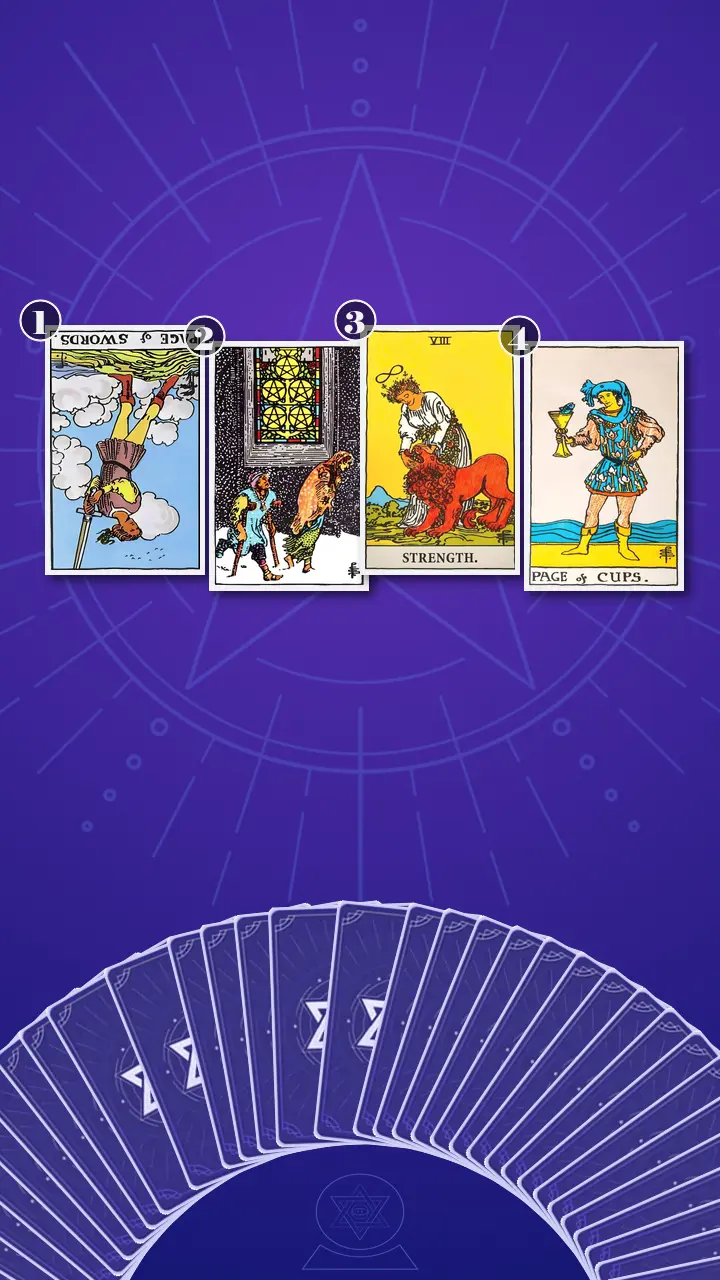
For her question, I used a four-card layout I call The Shadow Spread · Context Edition. It is one of the cleanest ways I know to show how tarot works for post-commitment relationship anxiety: not by predicting whether a partner will text back, but by mapping the chain from symptom to fear to medicine to action.
This spread fit because Jordan’s surface question sounded relational, but the real knot was internal. Once the relationship got a label, her fear-response took over. A classic four-card shadow spread gives me exactly the arc I need without clutter: the first card shows the conscious pattern, the second exposes the hidden fear underneath it, the third reveals the antidote, and the fourth turns insight into one embodied practice for the week ahead. Card meanings in context matter here more than generic keywords. I was not looking for fate. I was looking for the narrow bridge from mental surveillance to emotional presence.
I told her what I would be listening for as I laid the cards left to right: where her mind went on patrol, what official closeness seemed to put at risk, what inner shift could interrupt the spiral, and what one low-stakes relational experiment might help her stop pulling away after closeness. Once that structure was clear, the reading already felt less like doom and more like usable information.
Reading the Cold Side of the Story
Position 1: The Loop That Called Itself Caution
Now I turned over the card that shows the concrete post-label symptom: the overchecking, self-monitoring, and expectation of messing it up once the relationship turns official. Page of Swords, reversed.
I was not surprised. In real life, this looked exactly like Jordan turning a sweet new relationship into a self-surveillance loop the minute it became official: rereading the iMessage thread, checking whether she sounded too eager, screenshotting it into the group chat, and then sending a drier follow-up so she could feel less exposed. It was Only Murders in the Building evidence-board energy, except the “case” was one normal text with a period at the end.
Reversed, the Page’s air energy becomes blocked Air: too much scanning, too little settling. The raised sword becomes typing while mentally armed. The windswept sky becomes reading ordinary fluctuations as emotional instability. The sideways stance becomes that subtle internal lean toward the exit, even while saying, “No, I really like them.” This is what happens when discernment gets hijacked by defense. Closeness gets tense when every text becomes a risk assessment.
Jordan let out a short laugh that had a sting in it. “That is so accurate it’s honestly rude,” she said. Her fingers tightened around her tea, then loosened. I nodded. “That laugh,” I told her, “is usually the sound of shame realizing it has just been seen clearly.”
Position 2: The Fear of Being Outside Before Anything Is Wrong
Then I turned over the card that reveals the hidden fear beneath the pattern: what official closeness seems to put at risk around worth, belonging, and emotional safety. Five of Pentacles, upright.
This card moved us out of the phone screen and into the body. I told her I saw the image immediately in modern terms: a slower-than-usual reply after a really good date, and suddenly her whole system acts as if she has already been pushed outside the warm room. Not because anything has actually happened, but because her body is bracing for emotional exile before the evidence exists.
The energy here is deprived Earth: cold, exposed, scarcity-soaked. The stained-glass window glows with belonging, while the figures outside limp through the snow. That contrast told me the deeper wound was not simply, “What if I say the wrong thing?” It was, “What if being fully seen means I lose access to warmth?” The label did not create the danger; it turned up the volume on the fear.
I leaned in a little and said the part I knew she most needed to hear. “You are not ruining love in advance; you are trying to outrun the feeling of being left.” Her face changed on that line. First her mouth went still. Then her eyes dropped to the table, not away from me but deeper into herself. When I asked whether her body was reacting to this partner in the present or to an older expectation that closeness gets taken back, she answered so quietly I almost missed it. “It feels like access gets revoked,” she said. There it was—the real stake beneath the texting spiral.
When Strength Took the Keyboard
When I reached for the third card, the room changed. The radiator had gone quiet. A streetcar bell sounded outside, bright and brief, just as I turned the card over. This was the turning point of the whole reading.
Position 3: The Hand That Refuses the Emergency Brake
Now I turned over the card that identifies the key inner shift that can interrupt preemptive self-sabotage and challenge the belief that vulnerability automatically leads to loss. Strength, upright.
In Jordan’s life, this is the moment after a great date when the spiral starts, but instead of sending a strategically cool reply, she notices the tight chest, softens her jaw, puts both feet on the floor, and responds from the steadier part of herself. This is Fire in balance: not force, not fake chill, but enough warmth in the system to stay present while fear is loud.
Because sound is the language I naturally think in, I gave her one of my own frameworks. I call it Emotional BPM. Fear speeds the whole track up until a normal pause sounds like a disaster drop. Strength does not ask her to mute the song or become detached. It asks her to slow the tempo before she interprets the next beat. Looking at this card, I had a quick flash from my radio years: when a singer got too much panic in the headphones, the voice would sharpen and strain. I never fixed that by telling them to control harder. I changed the mix so they could hear themselves clearly again. This card felt exactly like that.
You know that moment when you get home from a great date, stare at the glowing chat thread in bed, and feel your whole body brace as if being chosen has made the stakes dangerous? That is the doorway into the real insight here.
Being official does not make you more dangerous to love. It makes your fear louder, and fear does better with steadiness than with obedience.
Stop treating love like a lion you must outsmart; Strength asks you to steady your hand, soften your grip, and let courage—not surveillance—lead the relationship.
Jordan reacted in three visible waves. First came the freeze: her breath caught, and her thumb stopped halfway along the rim of her mug. Then came the cognitive hit: her gaze slipped past the card toward the dark window, as if she were replaying the Queen West sidewalk, the goodbye kiss, the walk home, the cooler text. When she finally spoke, the first note was not relief but resistance. “But if I stop managing it,” she said, sharper than before, “doesn’t that mean I’m leaving it to chance?” I kept my voice soft. “No,” I said. “It means you stop letting panic cosplay as wisdom.” She gave one startled, almost angry laugh, and then a longer exhale from somewhere deeper than her throat. Her shoulders dropped. Her jaw unclenched. For a second she looked slightly unsteady, the way people do after setting down a box they have carried so long their arms forget what empty feels like. I asked her, with this new perspective, to think back to last week and find one moment when this insight could have changed how it felt in her body. She nodded slowly. “Friday night,” she said. “I thought I was being careful. I was just scared.” In that sentence, I could hear the shift from braced relationship surveillance to regulated vulnerability and self-trust begin.
Position 4: The Text That Sounds Like a Person Again
Finally, I turned over the card that grounds the transformation in one small relational practice for this week: the embodied action that begins integrating the insight into daily life. Page of Cups, upright.
This was beginner-level honesty, and I meant that as praise. In real life, it looked like Jordan sending a simple message such as, “I had a really good time tonight,” and leaving it there instead of adding “lol anyway,” shifting topics, or hiding behind a cooler tone so her inner PR team could feel safer. The water energy here is balanced: open, curious, proportionate, alive.
The fish rising out of the cup always reminds me that genuine feeling arrives awkwardly and suddenly, not as polished copy. That mattered. The reading had opened with a Page and closed with a Page, and to me that repeated beginner energy said something essential: going official was not exposing a fatal flaw in Jordan. It was asking her to learn a relationship skill she had not practiced enough yet. When I said that, she looked back at the card and gave me the smallest, most nervous smile. “That still scares me,” she said, “but I could probably try it once.”
From Surveillance to Presence: The Next 48 Hours
By the time I reached the end of the line of cards, the story was clean. The reversed Page of Swords showed a mind turning connection into a live dashboard. The Five of Pentacles showed why: underneath the analytics lived an older fear of being shut out of warmth. Strength interrupted the loop by asking Jordan to regulate first and interpret second. The Page of Cups turned that inner shift into one honest move. In music terms, she had been trying to save the song by muting every risky frequency, then wondering why the track felt flat.
The blind spot was not that she cared too much. It was that she had been mistaking self-protection for self-control, and activation for incompatibility. The real question in the spread was never whether love was safe in some absolute way. It was whether fear would get a weapon or a container. The transformation direction was simple and demanding: name the fear, do not obey it, and choose one grounded response. Security is not perfect tone control.
Because practical tarot should end with something you can actually do, I gave her three small experiments for the week. I framed them with two of my own tools: Emotional BPM, which asks her to notice the tempo of panic before she reads the message, and Memory Melody, which asks her to catch the lyric fear keeps repeating—usually some version of “here comes the drop”—before it turns into behavior.
- Emotional BPM CheckThe next time a reply is slower than usual, or a text lands after a really warm date, I told her to put both feet on the floor before answering on iMessage or WhatsApp, take one exhale longer than her inhale, and write herself one sentence in her Notes app: “Fear is loud right now, but I do not have to let it write the message.” Give it about 90 seconds.If breathwork makes your system feel louder, skip it and just unclench your jaw or lower your shoulders. The win is the gap between activation and action, not instant calm.
- Second-Draft SendOnce this week, after writing a reply to this person, I told her to edit it one time for clarity, send the second version, and not reopen the thread for 20 minutes. If the chat lives in a late-night spiral zone, she can mute notifications or leave the phone in another room while the timer runs.If 20 minutes feels impossible, start with 5. The discomfort spike after sending is not proof the message was wrong; it is what happens when the surveillance loop does not get fed.
- One Honest SignalAfter the next genuinely good date or warm exchange, I told her to send one clear sentence within 30 minutes: “I had a really good time tonight,” “I liked hearing that,” or “That made me smile.” No strategic cool-down line, no sudden topic switch, no emotional camouflage.Keep it warm and proportionate. This is not a grand confession; it is one sincere signal. Honesty is not overexposure.

A Week Later: The Quiet Proof
A week later, Jordan sent me a screenshot of a text she had actually sent: “I had a really good time tonight.” Nothing after it. No hedge. No “lol anyway.” A minute later she sent me another message: “Did second-draft send. Put my phone in the kitchen. Paced for seven minutes. He replied like a normal person.”
She told me she celebrated by sitting alone in a neighborhood cafe with her latte going cold, staring out at Dundas Street for ten quiet minutes. She still woke the next morning with a brief “what if I read this wrong?” in her throat—but this time she smiled at it instead of hiring it as her strategist.
That is why I reach for The Shadow Spread · Context Edition when someone asks me why they sabotage relationships when they get serious. I am not looking for a verdict on whether love is safe. I am listening for the moment fear grabs the mic—and for the steadier note underneath it. Jordan did not leave with certainty. She left with something more useful: one clearer way to stay.
Sometimes the loneliest part is not being single at all—it is feeling the warmth of being wanted and still having your chest lock, as if some old part of you is already standing outside the lit window.
If, this week, you did not have to prove you can do closeness perfectly, what small honest text, pause, or unedited sentence would you be willing to let land before your inner PR team edits it into safety?