Breakup-Journal Time-Travel in Dating—How to Stay Present in Texts
Finding Clarity in the 11:18 p.m. Drawer
If you’re the kind of 20-something in a major city who finds an old breakup journal while cleaning and suddenly your chest tightens like you’re back in it—welcome to repeating-relationship-pattern dread.
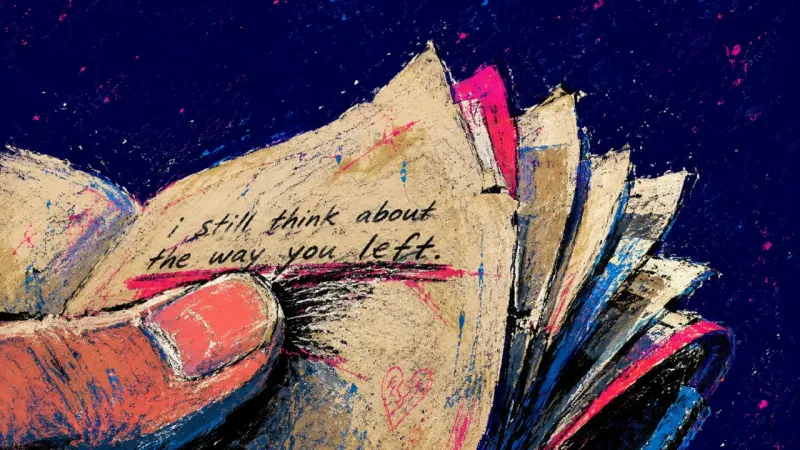
Taylor came to me from downtown Toronto, 28, a marketing coordinator with the kind of calendar that looks crisp all day and then collapses into quiet at night. She told me the moment was almost stupidly specific: 11:18 p.m., Monday, sitting on the edge of her bed with the journal open on her thighs. The paper was slightly rough under her fingers, and when she flipped a page the air shifted with that dry, dusty smell that only old drawers and old chapters have.
“I read one line I underlined years ago,” she said, swallowing like the words had edges. “And my chest tightened like it’s happening again. Then I opened iMessage. And I did the timestamp thing. I checked punctuation. I checked… how long it had been since I replied last.”
She pressed a palm lightly to her sternum, like she could physically hold herself in place. “I’m not trying to be dramatic,” she added fast. “I’m trying to not be blindsided again.”
What she wanted was simple and brutal: “I found my old breakup journal—what pattern am I repeating now?”
Underneath that question I could feel the contradiction humming: wanting a fresh start in love vs fearing you’ll relive the same heartbreak. And the unease wasn’t abstract—it sat in her body like a tight band around the ribs, plus that restless, keyed-up stomach you get right before turbulence on a flight.
I nodded and let my voice go warm and plain. “That makes so much sense. Your nervous system is trying to keep you safe. Let’s not argue with that.” I leaned in a little. “But we can give it something better than a spiral. We can make a map.”
Choosing the Compass: How Tarot Works with the Celtic Cross
I’m Luca Moreau—Paris-trained perfumer, and an intuitive consultant. Most people come to me for relationships, and they’re always surprised when I pull out both a tarot deck and scent strips. But memory and attachment live in the senses. If you’ve ever smelled someone’s cologne on a stranger and felt your stomach drop, you already understand the mechanism. The brain doesn’t only remember in words—it remembers in chemistry.
I asked Taylor to take one slow breath in through the nose and out through the mouth. Not as a ritual for “magic,” but as a clean transition: from reacting to observing. Then I shuffled slowly, the sound steady and ordinary, like cards were just cards and we were just two people telling the truth.
“For this,” I said, “I’m going to use the Celtic Cross spread.”
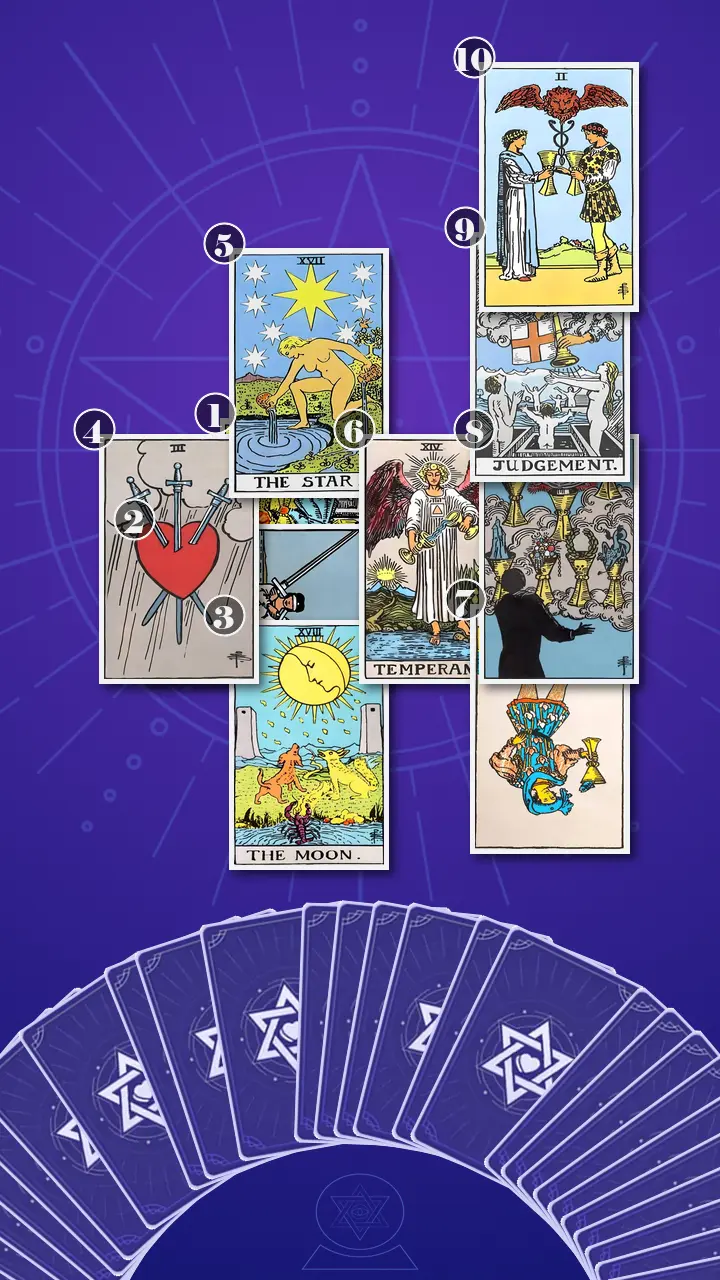
It’s a classic because it’s structured enough to hold messy emotions. This question isn’t really about predicting whether a new person will hurt her. It’s about identifying a repeating internal loop—how past meaning-making becomes present behavior. The Celtic Cross separates the present posture (where you are now), the immediate block (what’s in the way), and the deeper root (what’s actually driving it), before it moves into conscious intention and the likely direction if you work with the insight.
“Think of it like debugging,” I added, because Taylor’s eyes had the look of someone who lived in Notes app case files. “We’re not prosecuting you. We’re looking for the bug that keeps re-running.”
I pointed to the layout as I placed the cards: “The center shows your current emotional posture. The card crossing it shows what blocks you from responding to today like it’s today. The one beneath shows the unconscious driver. And later, there’s a card for hopes and fears—that’s often where the turning point lives.”
Reading the Map: From Rumination to a Real Next Step
Position 1 — The current emotional posture
“Now flipped over,” I said, “is the card that represents the current emotional posture: how the old journal is shaping your present-day relationship mindset and behavior.”
Six of Cups, reversed.
I watched Taylor’s face change before she spoke—her eyes narrowed slightly, like she recognized a screenshot from her own life.
“This is exactly that late-night moment,” I said, keeping it anchored in the real world. “You’re deep-cleaning your apartment after a long workday, find the breakup journal in a drawer, and tell yourself you’ll read one page for closure. Twenty minutes later you’re emotionally back in that relationship, and now you’re looking at your current dating thread like it’s already been labeled with the same chapter title—so every small uncertainty feels pre-decided.”
In tarot terms, the Six of Cups is memory, sweetness, nostalgia. Reversed, it’s not “bad”—it’s backward-facing water. The energy is blocked in the present, pulled into emotional time-travel. Comfort becomes bait.
“The flowers in the cup?” I added, tapping the image lightly. “That’s the sweet bait of memory. It’s comforting to open, but it’s not designed to steer adult choices.”
Taylor let out a small laugh that didn’t reach her eyes. “Okay,” she said, almost wincing. “That’s… too accurate. It’s kind of rude.”
“Fair,” I smiled, letting her have that. “But also: your brain isn’t doing this to hurt you. It’s doing it to keep you from being surprised.”
Position 2 — The immediate block
“Now we’re looking at the immediate block: what makes it hard to see the present clearly and respond differently.”
Two of Swords, upright.
“This is what the Six of Cups runs into,” I said. “You get a text that’s just ambiguous enough—‘busy week lol’—and instead of asking what you need, you freeze. You keep your feelings vague, reply neutral, and quietly watch to see if they chase—because being direct feels like risking rejection and losing control.”
Two of Swords is Air energy in a clamp: protection that becomes paralysis. Not choosing feels safer than choosing. Not asking feels safer than hearing an answer.
And because Taylor’s story was so modern, I let the interpretation echo land as a micro-scene, almost like thought bubbles:
“Don’t ask. Don’t need. Don’t show.”
“Send something neutral.”
“Wait. Watch. Measure.”
“If I stay in drafts, I can’t be rejected.”
I held her gaze. “This is ‘I’m safe, but I’m stuck.’ Control vs connection.”
Her shoulders lifted toward her ears in a tight little flinch, then she nodded once—small, hard. “Yep,” she said. “I literally do the timestamp thing. And then I tell myself I’m being mature.”
“I hear you,” I said. “But maturity isn’t silence. Maturity is clarity with boundaries.”
Position 3 — The unconscious driver
“Now we’re underneath the whole pattern,” I said. “This card represents the unconscious driver: the deeper fear or assumption that keeps the pattern running.”
The Moon, upright.
“A delayed reply hits,” I said gently, “and your mind writes a whole breakup script in real time: they’re losing interest, you’re missing signs, the ending is coming. Nothing concrete has happened, but your nervous system treats ambiguity like danger, so imagination becomes ‘evidence’ and you start acting on the story.”
The Moon isn’t a warning that something is secretly terrible. It’s a description of the lighting. Moonlight turns shadows into monsters. It’s uncertainty plus old fear plus too much screen glow at night.
“Uncertainty is where your brain starts writing endings,” I said, using the phrase the way I’d use a blotter strip—right under her nose, impossible to ignore. “And under The Moon, the task isn’t instant certainty. It’s small steps. Reality checks. Observables.”
Taylor’s eyes drifted for a second, unfocused, like she was replaying a Sunday-night spiral: couch, TV on, phone bright, stomach wanting to sprint. Then her lips pressed together. “I hate how fast it happens,” she said quietly. “It’s like… predictive text.”
“Exactly,” I said. “Your brain running predictive text on someone’s intentions with zero data.”
Position 4 — What formed the script
“This next card is what formed the script: the emotional imprint from the prior breakup that still influences expectations.”
Three of Swords, upright.
“One line in the journal still lands like a punch,” I said. “You reread it and your chest tightens the exact same way it did back then. That heartbreak became a template your brain reaches for whenever love gets unclear—like storm clouds rolling in on cue.”
This card is often where people get self-critical. I didn’t let that happen.
“This isn’t a character flaw,” I told her. “This is a pain memory. Your body learned: ‘love can turn fast.’ And it stored that lesson.”
She blinked a few times, eyes glassy but not spilling. Her fingers, which had been gripping her mug, loosened slightly around the handle—one tiny sign her system believed me.
Position 5 — What you think you should be doing
“Now,” I said, “this card shows what you think you should be doing: the conscious goal you’re aiming for.”
The Star, upright.
“You genuinely want dating to feel calmer—less decoding, more steadiness,” I said. “You’re craving the kind of hope that doesn’t require vigilance: being able to like someone and still feel grounded in yourself, not on high alert for the next shoe to drop.”
The Star is clear water. Honest water. It’s also repetition—steady pouring, not dramatic confessions.
“This tells me you’re not addicted to chaos,” I said. “You’re trying to heal. You want to trust yourself again.”
Taylor exhaled, almost relieved to be seen for that. “Yeah,” she said. “I’m tired of acting like I don’t care.”
Position 6 — Near-term movement
“This one is near-term movement: what shifts when you stop using the journal as a verdict and use it as information.”
Temperance, upright.
“Instead of swinging between oversharing to get certainty fast and going cold to protect yourself,” I said, “you try a middle path: one honest sentence, one clear ask, then you let time and consistency do their job.”
Temperance is the alchemy card. And because I’m a perfumer, the image always hits me in a very literal way: two liquids, one steady pour, a third thing created—balanced, wearable, real.
“This is blending,” I said. “Past lesson + present reality. Not erasing what happened. Not obeying it. Mixing it into wisdom.”
I used the echo technique exactly where it belonged—what it looks like on a phone screen, not as a spiritual concept:
“A middle-path reply is: one calm sentence, one clear ask. No testing. No disappearing.”
Taylor’s eyebrows lifted. The tiniest hint of surprise. “Wait,” she said. “That’s actually doable.”
Position 7 — Self-positioning
“Now we’re on the staff,” I explained. “This card represents self-positioning: how you’re showing up in dating right now—needs, boundaries, emotional availability.”
Page of Cups, reversed.
“You draft a sweet, clear message—your real feelings,” I said. “Then you edit it into something flat so you won’t look naive. After you send the ‘cool’ version, you feel unseen and anxious, and you start rereading your own text like you’re trying to manage how your heart is allowed to show up.”
Reversed Page of Cups is tenderness under supervision. Feeling, then self-censoring. It’s not that the heart isn’t there—it’s that it doesn’t feel safe to be seen.
Taylor’s face flushed slightly at the cheeks. “I do that,” she admitted. “I’ll type ‘I like you’ energy and then delete it. Like it could be used against me later.”
“That’s the journal talking,” I said. “Not because it’s evil—because it taught you to equate sincerity with risk.”
Position 8 — External reinforcement
“This card is external reinforcement: how modern dating dynamics, social media, and the people around you affect the pattern.”
Seven of Cups, upright.
“Your environment is full of noise,” I said. “Friends’ dating stories, TikTok hot takes, endless app options, Instagram highlight reels. Every input offers a new narrative, and the overload makes you second-guess what you want—so you keep looking for the ‘right’ answer instead of grounding in real values and real conversations.”
Seven of Cups is not “options are bad.” It’s overwhelm. The mind grabs images. The body needs reality checks.
“It’s so easy to let the algorithm decide your mood,” I added. “One vague text plus a TikTok ‘if he wanted to, he would’ video, and suddenly it feels like a season finale.”
Taylor gave me a look that was half pain, half laughter. “Okay, stop,” she said. “That’s literally my For You Page.”
Position 9 — Hope and fear at the same time (Key Card)
I touched the ninth card before turning it, and I felt the room go quieter—not mystical, just attentive. This is where the Celtic Cross often tells the truth people are circling but not naming.
“This card represents hope and fear at the same time: what you long to feel and what you dread.”
Judgement, upright.
“You read the journal and, instead of using it to punish yourself or predict doom, you use it like a wake-up call,” I said. “You name the repeating script and choose one new behavior right now—like asking directly for clarity or stating a boundary without apology. The fear is being judged—by yourself, by the past—but the invitation is to upgrade your blueprint.”
And here’s where my work as a perfumer becomes more than a cute detail. Scent is a pattern. Attraction has a pattern. We repeat what feels familiar, even when it hurts.
“Can I ask you something a little unusual?” I said. “When you read that journal, what did it smell like?”
Taylor blinked, surprised. “Dust,” she said. “Paper. Like… old drawer.”
“Exactly,” I said. “That’s a sensory cue. Your brain doesn’t just remember the relationship—it remembers the state. Tight chest. Restless stomach. Nighttime. Phone glow. Dusty paper.”
“In perfumery we call it a ‘trail’—what lingers after something leaves the room,” I continued. “Your breakup left a trail. And your nervous system keeps following it because it thinks it’s preventing danger.”
Her expression sharpened suddenly—an unexpected flare of anger, like she’d been polite too long. “But if this is Judgement,” she said, voice tight, “does that mean I was the problem? Like I should’ve known better? Because that’s what it feels like when I find the journal. Like… I’m guilty.”
I didn’t rush past it. “No,” I said firmly. “Judgement isn’t punishment. It’s review. It’s waking up. It’s self-forgiveness plus responsibility—without the shame spiral.”
Setup. I let the scene tighten into focus: “It’s 11 PM, you’ve got the journal open, and your thumb is hovering over a text like it’s a landmine. You’re trying to catch the pattern early so you won’t get hurt again.”
Delivery.
Stop treating the past like a permanent sentence—let it be a wake-up call, and answer it like Judgement: review, release, and rise into a new response.
I let that sit. No extra interpretation for a beat. Just air.
Reinforcement. Taylor’s reaction happened in layers—the kind you can’t fake.
First, a micro-freeze: her breath paused mid-inhale, and her fingers hovered above the table like she’d been about to pick up her mug and forgot the next step.
Then the cognitive seep: her eyes lost focus, not sleepy—more like she was seeing that journal line, then seeing herself on the TTC, then seeing her thumb hovering over iMessage. A fast internal replay.
Then the release: a long exhale that softened her jaw. Her shoulders dropped an inch, and she looked almost dizzy for half a second—like letting go of vigilance left a strange empty space behind it.
“Okay,” she whispered. “So… I don’t have to prove I’m ‘over it.’ I just have to choose differently now.”
“Yes,” I said. “Healing isn’t re-arguing the past—it’s choosing differently in the present.”
I slid a small notepad toward her. “Right now—set a 10-minute timer. Write: (1) three facts about your current situation, (2) one feeling in your body, (3) one direct question you could ask that would reduce guesswork. If you feel activated, you can stop at any point—no forcing. If it feels okay, send the question in one simple text and then put your phone face-down for 15 minutes.”
As she nodded, I named the shift out loud, so it could become a real hinge in her story: “This is you moving from uneasy contraction into grounded curiosity. From ‘I can’t trust myself’ into ‘I can give myself real information.’”
Position 10 — Integration direction
“Last card,” I said. “This is integration direction: what becomes possible if you work with the insight. Not fate—direction.”
Two of Cups, upright.
“The direction isn’t ‘find a perfect person,’” I said. “It’s building mutuality: clear check-ins, stated needs, and a two-way exchange where you don’t have to decode everything alone.”
Two of Cups is literal exchange. No more private tests. No more trying to be chosen without being seen.
“Ask one clean question,” I said softly. “Stop running private tests.”
Taylor’s eyes watered, but her voice was steadier than when she arrived. “That sounds… terrifying,” she admitted. “But also kind of like relief.”
The One-Page Reset: Actionable Advice for Breaking the Old Script
I leaned back and gave her the whole story the spread was telling, in one connected thread:
“You found the journal and it pulled you into emotional time-travel (Six of Cups reversed). To protect yourself, you froze—stayed vague, stayed in drafts (Two of Swords). Underneath, ambiguity triggers projection—your brain writes endings because not knowing feels dangerous (The Moon). And it makes sense, because you have a real heartbreak imprint stored in your body (Three of Swords). But your conscious desire is healing that’s steady and self-honest (The Star). The next shift is integration—pacing and ‘middle-path’ communication (Temperance). You’re currently editing your heart mid-sentence (Page of Cups reversed), in an environment overloaded with narratives (Seven of Cups). The breakthrough is Judgement: review without punishment, and answer the past with one new present-tense choice. And that opens Two of Cups: mutuality through clarity.”
“Your cognitive blind spot,” I added, “is that scanning for patterns feels like wisdom, but it often becomes control. It gives short-term relief and long-term distance.”
“The transformation direction is simple,” I said, meeting her eyes: “Shift from proof-reading your relationship for failure to practicing direct, present-tense communication and pacing that lets trust be built in real time.”
Then I gave her the smallest possible next steps—concrete enough to do on a tired Tuesday.
- Past-to-Present (20 minutes, once this week)Set a timer. In 3 bullet points, write: (1) one lesson you’re keeping from the old breakup, (2) one belief you’re retiring, (3) one boundary you’ll practice in your current dating life (ex: “If plans stay vague, I ask once; if it stays vague, I step back”).If you start spiraling, stop at bullet #1. “Partial credit” still rewires the pattern.
- The Moon Reset (3 facts + 1 feeling, then 15 minutes)When you catch yourself turning a delay into a storyline, write: Fact / Fact / Fact / Feeling. Example: “Fact: they haven’t replied in 4 hours. Fact: they said work is busy. Fact: we made tentative plans. Feeling: uneasy.” Then wait 15 minutes before texting.Say it out loud once. Hearing it breaks the ‘predictive text’ spell.
- Temperance Text (one honest sentence + one clear ask)The next time you feel triggered, send a middle-path message that reflects today, not then. Example: “I’m enjoying this, and I do better with plans—are we thinking this week or next?”Use the “no edits” rule: draft it in Notes, read it once out loud, send, then put your phone face-down for 10 minutes.
And because my work always includes the senses, I offered one additional support—my Heartbreak recovery with space-clearing techniques, simplified for a real apartment with real laundry piles:
“Put the journal in a box or envelope. Add a scent cue that says ‘past’—even just a cedar sachet. Then choose a different scent for ‘present’—something clean and bright. The goal isn’t to erase memories. It’s to stop your nervous system from getting yanked back by the same sensory trail every night.”
A Week Later: Ownership, Not Certainty
Eight days later, Taylor DM’d me a screenshot—not of a long confession, not of a dramatic conversation. One simple message she’d sent: “I’m enjoying this and I do better with plans—are we thinking this week or next?”
Under it she wrote: “My hands were shaking, but I did it. And he replied like a normal person. We picked Thursday. I slept a full night after.”
It wasn’t a fairytale ending. The next morning, she said her first thought was still, What if I’m wrong?—but this time she noticed it, breathed, and didn’t open the journal. She made coffee, stood by the window, and let the day be today.
That’s the Journey to Clarity I care about: not certainty, but a small loosening. Not a perfect relationship, but a nervous system that has real information to work with.
When you want a fresh start but your chest still tightens at every tiny pause, it’s not drama—it’s the fear that getting blindsided again would prove you can’t trust yourself in love.
If you let your past be information—not a sentence—what’s one direct, present-tense question you’d actually want to ask this week, just to give your nervous system something real to work with?