From Fridge Guilt to Flexible Nourishment: Plan for Wednesday You

Finding Clarity in the 6:18 Fridge Light
If you are a late-20s city worker who can do a full Sunday reset, stock the fridge like you are entering your disciplined era, and still end up on DoorDash by Wednesday after the TTC ride home, I know this pattern well. When Jordan (name changed for privacy) sat across from me, she wasn’t asking a simple food question. She was asking why she buys healthy groceries and still orders takeout by Wednesday—why all-or-nothing meal planning keeps collapsing under midweek decision fatigue and turning groceries into guilt.
I could picture her before she finished the first sentence: 6:18 p.m., small condo kitchen, laptop bag still on one shoulder, fridge door open with one hand and her phone warm in the other. The fridge light was sharp. A leftover container smelled faintly garlicky and tired. Outside, traffic hissed on wet pavement below the condo tower, and inside, her shoulders dropped before she even read the labels. “I can plan a better week than I can actually live,” she told me. “By Wednesday I’m not even hungry for takeout. I just can’t make one more decision.”
What she wanted was a nourishing week. What her body had by Wednesday was a battery icon blinking red. The frustration sat on her like a winter coat she couldn’t take off indoors—heavy in the shoulders, hot at the neck, embarrassing for no good reason. She kept buying groceries for the version of herself who looked great in a Notes app and on a Sunday reset reel, then meeting the version who arrived home after work feeling like her brain had twelve browser tabs open and none of them would load.
I nodded. “Takeout is not always a craving,” I said. “Sometimes it is a stop sign.” Then I softened my voice. “So let’s not make tonight about blame. Let’s make a map. I want to show you where the week starts asking for more than your real energy can give—and where clarity comes back.”

Choosing the Map: A 6-Card Tarot Spread for Self-Care Loops
I had her take one steady breath and hold the question in plain language: why do I shop for my ideal week, then order takeout by Wednesday? I shuffled slowly, not as theater, but as a way to move her out of the shame spiral and into attention.
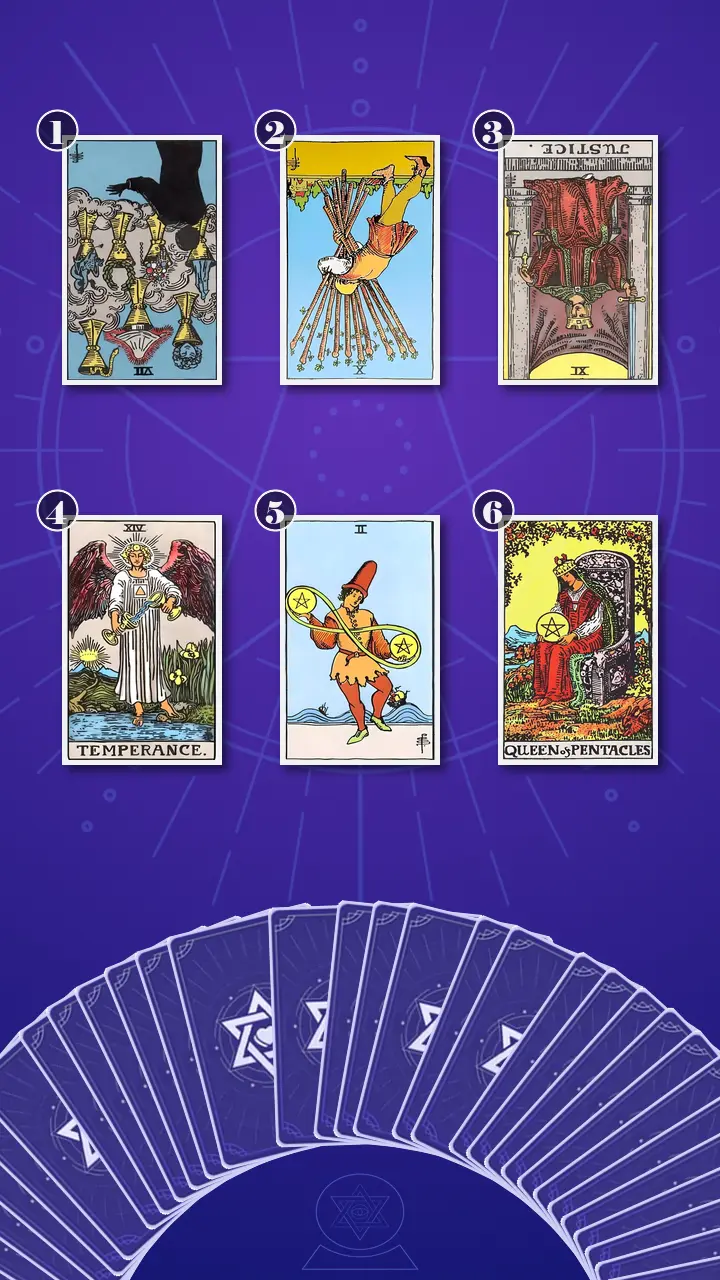
I chose my Transformation Path Grid · Context Edition, a 6-card tarot spread I use for self-care loops like this. For anyone who wonders how tarot works in a question like this, I use it the same way I once used structured analysis on a trading desk: not to predict whether she’d sauté the spinach, but to separate symptom, blockage, root cause, pivot, experiment, and integration. A linear spread would have made this sound like a neat before-and-after story. Her week wasn’t linear. It was a loop.
I told her what I was looking for. The first card would show the visible pattern—the overbuying and abandonment. The second and third would expose the pressure point and the deeper rule underneath it. Then the fourth card, the hinge, would tell us what breaks the pass-fail cycle. The last two would translate insight into a practical next step and the feeling of a calmer, more supportive kitchen.
Reading the Split-Screen of the Week
Position 1: The Fridge Full of Parallel Lives
The first card I turned over was the one representing the visible symptom: the idealized weekly food plan and the specific behavior of overbuying and then abandoning the groceries. It was the Seven of Cups, reversed.
In real life, this is Sunday afternoon with tote straps cutting into your palms, spinach, salmon, herbs, yogurt, and ingredients for three saved recipes in the basket, and that brief hit of control that whispers, this is the week. Reversed, the card shows excess possibility collapsing into blockage. Too many good intentions create too many entry points, so nothing gets started. It’s like keeping twelve dinner tabs open in your head until the fridge stops looking like support and starts looking like a gallery of parallel lives you now have to choose between.
Jordan let out a short laugh that had a bruise in it. “That’s so accurate it’s rude,” she said, looking down at the card. I watched her thumb rub the edge of her sleeve. Defensive humor first, then recognition. That told me we were in the real pattern already, not a polished story about it.
Position 2: The Unpaid Second Shift
The next card represented the immediate blockage: where weekday workload, decision fatigue, and low energy turn cooking into one task too many. It was the Ten of Wands, reversed.
This card showed me her body before it showed me her dinner. Screen-heavy day. Crowded TTC ride. Unread messages. Harsh overhead light. Raw ingredients on the counter. The energy here isn’t laziness; it’s overload tipping into collapse. The reversed Ten is what happens when the week assumes surplus capacity, but the person living it gets home already overdrawn. Cooking stops feeling like care and starts feeling like an unpaid second shift.
I told her, “This is the part most productivity advice misses. By the time you’re standing at the stove, the decision is half-made by what your nervous system has already carried through the door.” Her jaw unclenched a fraction. Outside, a streetcar bell rang and disappeared into the rain.
Position 3: The Internal Performance Review in Pajamas
The third card represented the underlying root: the internal scorekeeping and fear of losing control that make a realistic plan feel like failure. It was Justice, reversed.
Here the spread got painfully clean. One takeout order becomes evidence. A practical mismatch gets turned into a character verdict. In the picture, Justice holds scales and a sword; in Jordan’s week, that becomes an internal performance review happening in pajamas: You wasted money. You let produce rot. Normal adults can handle this. This is where all-or-nothing self-care hardens. The energy is excessive air—too much measurement, not enough mercy. Your fridge is not a report card.
When I see Justice reversed, I never think of cosmic punishment. I think of old compliance sheets from Wall Street—numbers that were meant to tell the truth, then weaponized into blame by someone anxious enough. “You’re reading neutral data like moral evidence,” I told her. “You aren’t just asking what dinner happened. You’re asking what dinner says about you.” She went still in a three-beat chain I’ve learned to trust: first the breath pause, then the unfocused stare of memory replay, then a tight laugh as her chest dropped. “Wow,” she said. “It really is like giving myself an annual review over noodles.”
By that point the top row of the spread had said it plainly, and I repeated it in plain language for her: this wasn’t a willpower defect. It was an all-or-nothing meal plan falling apart by Wednesday because overload was being mistaken for failure.
When Temperance Poured Between Two Cups
Position 4: The Hinge Between Ideal and Workable
Then I turned the card in the fourth position—the turning point, the core reframe that loosens the all-or-nothing cycle and reconnects intention with reality. The room got quieter in that small, ordinary way quiet gets louder: the fridge hum sharpened, and even Jordan’s grip on her coffee cup seemed to pause. The card was Temperance, upright.
I asked her to picture the Wednesday fridge moment again: cold light on the spinach, the delivery app already open, bag still on her shoulder, and that instant sting of, I bought all this food, so why does starting dinner feel impossible? She nodded before I finished. She was still trapped inside the old question: How do I do the week right?
Stop treating nourishment like a pass-fail test, and start blending ambition with your real energy the way Temperance pours water from one cup to the next.
Care that only works at your peak is performance.
The sentence didn’t soothe her right away. First her mouth set hard. Then her eyes went shiny, not with tears exactly, but with that bright, irritated recognition that comes when a truth arrives two inches from your face. “But doesn’t that mean I’ve been doing this wrong?” she asked. Her fingers froze around the cup. Then they loosened. Then her shoulders fell, all at once, as if her body had been waiting for permission to put something down.
“Not wrong,” I said. “Just expensive.” My old Wall Street reflex kicked in, and I named the lens I was using. “I call this Time-Asset Valuation. A plan is not good because it looks impressive on Sunday. It’s good if it still returns nourishment at 6:18 on Wednesday. Right now your grocery strategy has aspiration upside, but terrible midweek ROI.” She blinked, and then I saw the idea land. This was the shift from fridge guilt and pass-fail self-talk to flexible nourishment and adaptive self-trust. Not a better personality. A better design. Temperance was asking her to reroute like Google Maps in traffic, not insist the original route was morally superior.
I let the silence hold for a beat, then asked, “Now, using this new angle, was there a moment last week when this would have changed the feeling?” She looked past me toward her own memory. “Yeah,” she said slowly. “Wednesday. If I’d let myself do microwave rice, pre-cooked chicken, and sauce in a bowl, I probably would’ve eaten in ten minutes instead of spiraling for forty.” The anger left first. Then the shame. What stayed was responsibility, but it was lighter now—the kind you can actually carry.
Position 5: The Week Has Weather
The fifth card represented the practical move: the next repeatable adjustment that matches real midweek energy. It was the Two of Pentacles, upright.
This card doesn’t ask for stricter meal prep. It asks for rhythm. I showed Jordan the figure balancing two coins while ships rise and fall behind him. Some nights are calm water. Some nights are rough water. The skill is not forcing the same output in all conditions. It’s choosing the tier that fits tonight. In modern terms, this is an anchor-and-backup meal system: one meal you can repeat without thinking, one flexible option, and one absolute no-battery dinner that still counts. Plan for Wednesday you, not Sunday you.
As I said it, she had the smallest, most practical reaction of the whole session: she reached for her phone and opened Notes. That’s always a good sign. Not inspiration. Usability.
Position 6: The Kitchen That Feels Like Support
The sixth card represented the integration state: what embodied nourishment and self-trust feel like when care becomes sustainable. It was the Queen of Pentacles, upright.
I love this card in endings like this because it isn’t flashy. It is earthy, local, and unfussy. In Jordan’s life, it looked like fewer ingredients and more edible reality. A kitchen that holds bagged salad, eggs, soup, dumplings, wraps, or a ready-made protein without apology. A fridge that stops testifying against you and starts backing you up. The energy here is balanced earth—care made ordinary, repeatable, warm. Not proof. Support.
Jordan exhaled through her nose and smiled in a way I hadn’t seen from her yet. Smaller. Kinder. “That feels a lot more adult, actually,” she said. “Not in a smug meal-prep influencer way. In a way where I might actually eat.” That was the Queen of Pentacles perfectly translated.
From Insight to Action: Your Next 48 Hours
Once the full spread was on the table, the story was clean. The Seven of Cups reversed showed the fantasy cart: too many possible dinners, too many imagined selves. The Ten of Wands reversed showed the body arriving home over capacity. Justice reversed revealed the blind spot—she kept treating a capacity mismatch like character evidence. Then Temperance turned the whole system. The direction of change was simple and radical at the same time: shift from planning for your best-case self to designing for your tired midweek self.
I told her the real hidden cost was not just spoiled spinach or a delivery fee. It was the way ideal planning had become a form of avoidance. Every Sunday reset let her postpone admitting how depleted her actual week already was. So I gave her three actions, small enough to survive contact with a real Wednesday, and I folded in one of my own practical tools: Energy Portfolio Restructuring. When a week keeps failing, I don’t ask what to add first. I ask what friction to subtract.
- Build a Wednesday-First grocery list.Before your next grocery run, spend five minutes in your Notes app making two lists: good-energy dinners and Wednesday dinners. Shop the Wednesday list first, and cap the week at two actual cookable dinners plus one backup meal that takes under 10 minutes.If the old voice says this is lazy or not a proper week, answer it plainly: convenience still counts if it keeps care repeatable.
- Create a low-battery dinner shelf.Right after you unload groceries, put one visible shelf or bin at eye level with a ready-made base and backup items—microwave rice, soup, dumplings, eggs, wraps, bagged salad, or pre-cooked protein. The point is to reduce the threshold into starting when you walk in tired.If a full shelf feels like another project, start with one backup item only. One usable thing beats six aspirational ingredients.
- Use neutral dinner data and a 48-hour subtraction challenge.For the next seven nights, write one factual note after dinner: too tired to chop, used backup meal, needed hot food fast, had energy to cook. If you order takeout, add one neutral line only. Then, for the next 48 hours, cut one high-friction habit—doomscrolling recipe reels, debating dinner in the app for twenty minutes, or browsing meal plans you won’t use—and reinvest that time into one high-yield recovery block: setting out tomorrow’s backup meal, taking a shower, or going to bed earlier.Keep it boring. No essays, no shame recap, no self-improvement theater. Observation first, optimization later.
That, in plain terms, was the practical solution the cards were arguing for: planning for your tired Wednesday self with a smaller grocery plan, one anchor meal, and a low-effort backup. Actionable advice only matters if it still works when your phone battery and your social battery are both low.

A Week Later: The Quiet Proof
Five days later, Jordan sent me a photo taken under the same unforgiving fridge light that had haunted her. In the bowl were microwave rice, rotisserie chicken, cucumber, and a bottled sauce. “Six minutes,” she wrote. “My aspirational self is offended. My actual self is fed.” Then came a second message: “I still ordered takeout once. I just didn’t turn it into court.”
The next morning, she still had the reflexive thought—what if I slide again?—but this time she smiled, packed the leftover rice bowl, and left for work. That is what real change often looks like. Not a new identity. A quieter nervous system. A smaller plan you can trust.
That is why I keep coming back to the Transformation Path Grid · Context Edition when a routine starts acting like a referendum on someone’s character. Tarot did not rescue Jordan from Wednesday. It helped me show her where she had confused information with indictment, and where her own agency still lived. She was always the one steering. The cards just cleared the windshield.
When the cold fridge light lands on groceries you bought for a better version of the week, it can feel weirdly personal—as if a tired Wednesday is exposing some flaw in you. From where I sit, it usually means the plan was never built for your real energy.
So if that fridge light finds you this week, what is one true Wednesday dinner you can place at eye level and make easier to say yes to?
Every reading at AceTarot is a Journey to connect with inner wisdom and empower next step.
Learn more about our Journey to Clarity.