Caught in the LinkedIn Draft Loop—and How to Share the Work Plainly
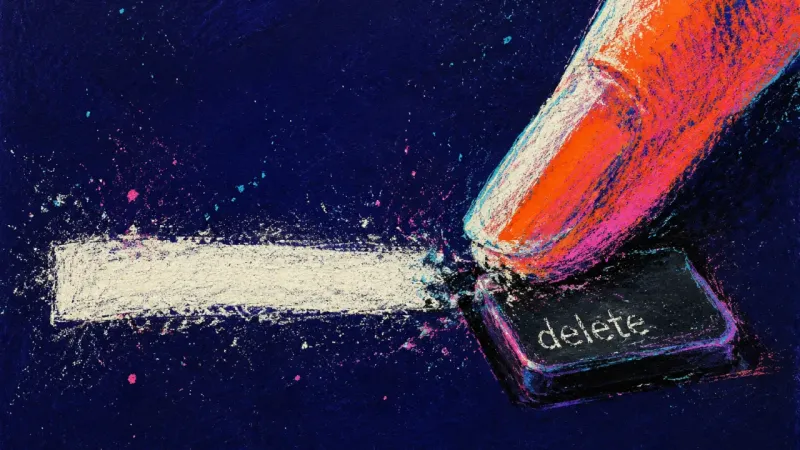
When a Side-Project Post on LinkedIn Starts Feeling Like a Verdict
When Jordan (name changed for privacy) sat down across from me, I recognized a question I hear constantly from thoughtful designers and tech workers: how do I post a side project on LinkedIn without sounding self-promotional? I told them, “If you can explain a design decision in a crit but freeze when LinkedIn asks you to talk about your own shipped work, that’s visibility anxiety, not a writing problem.”
They gave me the exact scene. Wednesday, 9:18 p.m. in their west-end Toronto condo kitchen. The dishwasher humming. Cold blue screen light washing over the counter. The plate from dinner still beside the laptop. They paste in a launch update, delete the sentence that sounds most alive, open two peer posts to compare tone, and hold one finger above Publish until their jaw sets hard. The project is already done, but visibility suddenly feels more dangerous than the work ever did.
“I know I’m allowed to post it,” they said, already half-annoyed with themself. “So why does it feel embarrassing?”
I watched the question land in their body before it landed in language. Their self-consciousness looked like a seatbelt locked mid-brake—tight across the chest, jaw clenched, motion stopped not by lack of fuel but by one sharp internal jolt. Underneath it, though, I could still feel the quieter truth: pride. “Good work can still feel dangerous once other people might see it,” I told them. “Let’s make a map of this and find the version of visibility that doesn’t put your worth on trial.”

Choosing the Compass: A Five-Card Tarot Spread for Visibility Anxiety
I asked Jordan to take one slow breath and focus on the exact moment their finger stopped above Publish. Then I shuffled until the cards lost their ordinary paper whisper and started to feel like a clear signal. For me, that moment is never about mystique. It is a psychological handoff—from endless internal commentary to focused attention.
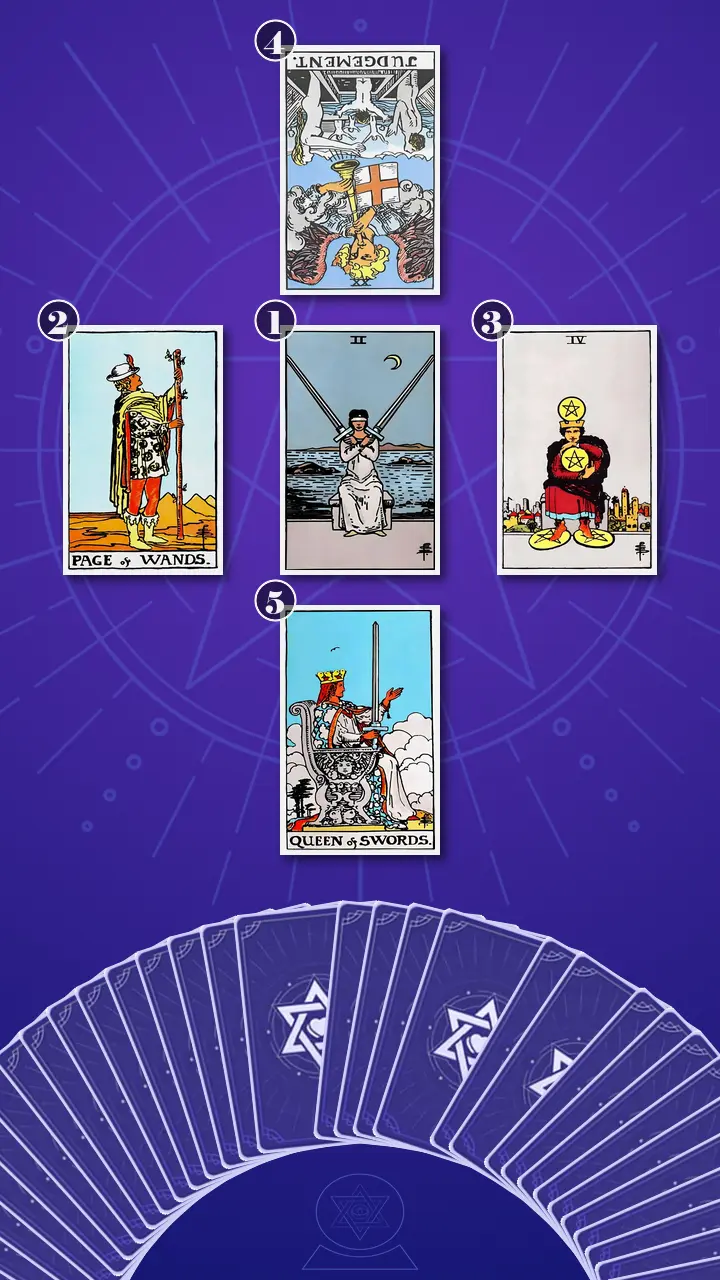
For this reading, I used the Decision Cross · Context Edition. I reach for this five-card spread when the surface question looks like a simple two-path choice—post it or keep it low-key—but the real weight lives underneath the choice itself. This is how tarot works best in a real-life career crossroads: not by predicting whether a post will “perform,” but by showing what each option means emotionally, where the fear is hiding, and what a grounded next step can look like.
I explained that the center card would show the visible stall itself. The card above it would reveal the hidden pressure hanging over the whole decision. The left and right cards would compare what public sharing serves and what privacy protects. The last card, placed below, would not be a verdict from above. It would be the path under Jordan’s feet.
After ten years of guiding strangers through sky maps under the dark dome of a Tokyo planetarium, I have learned that panic softens the moment a pattern becomes visible. This spread works the same way. It lays out the weather overhead, the crossroads at the center, and the ground below.
Reading the Weather Above the Crossroads
Position 1: The Stall Between the Draft and the Feed
I turned over the card showing the visible symptom in the present moment: the specific stall between posting the project and keeping it in drafts. It was the Two of Swords, upright.
This card could not have been more literal. I told Jordan, “This is you with the finished side project in one tab and the LinkedIn composer in another, cutting the caption down until it no longer sounds like a person.” In modern life, the Two of Swords is the draft-folder loop: trim, flatten, compare, save, close. The blindfold is the part of the mind pretending the problem is only wording. The crossed blades are the two equally defended edits: say less or say nothing.
Energetically, this is blocked air. Too much analysis. Too much imagined audience scanning. Not enough contact with the feeling underneath it. I took us back into that condo-kitchen scene and named the roll call I could feel running behind every sentence: coworker, ex-manager, polished stranger. Too much. Too vague. Too eager. The mind starts cross-examining each line until one short post feels like a loading spinner that never resolves because you keep feeding it new inputs.
Jordan let out one short laugh that carried a little bitterness. “That is painfully accurate,” they said. Their thumb rubbed the edge of their phone case, then stopped. I asked, “What feeling is the draft helping you postpone for ten more minutes?” and the room went quiet in a useful way.
Position 2: The Small Flare That Wants to Be Seen
Next I opened the card revealing what posting on LinkedIn is really trying to serve for Jordan beyond appearances. It was the Page of Wands, upright.
I loved this for them. At its healthiest, I said, posting is not a personal-brand performance. It is a small flare from the workshop: I shipped this thing I made outside client work, here’s what it explored, here’s what I learned. More maker field note than keynote speech. More devlog update than “I’m excited to share…” fatigue.
This is balanced fire—alive, curious, moving. The Page studies the wand instead of posing beside it, and that detail mattered. Jordan did not actually want applause. They wanted authorship. They wanted the work to count in public in a way that matched reality. For one second I had the familiar flash I sometimes get from the planetarium dome: a star does not send light because it has won permission; it sends light because light is what it does. I kept the thought simple and said, “There is a version of this post that is just a signal that you made something and it’s alive.”
Jordan’s shoulders dropped a fraction. “That sounds better than branding,” they said. I nodded. “Exactly. Curiosity, not campaign.”
Position 3: The Privacy That Protects and Pinches
Then I turned over the card showing what staying low-key is protecting for Jordan and what it may quietly limit. It was the Four of Pentacles, upright.
“This card isn’t wrong,” I said immediately, because I could feel its protective logic. Keeping the project close does protect something. In real life it looks like the link sitting in a private folder, the case study unpublished, the coworker hearing “just a little design thing” instead of the truth that a full side project shipped. The pentacle pressed to the chest is exactly that move: hold it close, control the meaning, avoid the reaction.
But this is excess earth—protection hardening into immobility. I told Jordan, “Privacy is a boundary when you choose it; invisibility is the side effect when fear chooses it for you.” The sentence landed. I could see it in the way their shoulders rose, then slowly released, like someone loosening their grip on a coffee cup they had been holding too tightly to feel the warmth.
“I do that in the office all the time,” they said. “I make it small before anyone else can.” Their mouth tightened after they said it, not from shame exactly, but from recognition.
Position 4: The Invisible Jury Above the Screen
Now I opened the card placed above the center—the one uncovering the deeper fear and self-judging lens that turns a normal post into a high-stakes emotional event. It was Judgement, reversed.
This was the pressure system hanging over the whole spread. I told Jordan that the moment they consider posting, an invisible audience starts loading in before the post even exists: coworkers, former bosses, strangers online with immaculate tone. The trumpet becomes the imagined notification loop. The whole thing has that eerie Black Mirror tension where the audience is barely visible, but their rating of you is already running in your head.
Energetically, this is blocked self-trust. Instead of answering an inner call, Jordan had been staging a phantom panel interview in their head. I have seen this pattern in career readings so often that I use a blunt sentence when it appears: “Don’t write for the imaginary jury.” Then I asked, “When your finger hovers over Publish, whose face shows up first?”
First their breathing paused. Then their gaze slipped past the cards as if a memory had started replaying on a screen only they could see. Then they exhaled through their nose and said, very quietly, “My old manager. Then a coworker. Then some random polished person I don’t even know.” Outside, a streetcar bell rang and faded, and the sound felt weirdly perfect—like a clear tone cutting through static. The fear was finally visible.
When the Queen of Swords Cut Through the Feed
Position 5: The Bridge Between Hiding and Hype
When I turned the final card—the one pointing to the clearest way to communicate the work without outsourcing self-worth to reactions—the room changed. Even the little radiator click beside the window seemed to pause. It was the Queen of Swords, upright.
In practical terms, I told Jordan, this card is release-note language. A concise, adult note: what shipped, what problem it explored, and what you learned. No irony. No apology. No inflation. Think release notes, not launch trailer.
I could feel the familiar late-evening scene around them again: the laptop still warm, LinkedIn open, the one honest sentence getting deleted because suddenly it feels safer to sound generic than real. They were still treating one short update like a public referendum on their value.
Not silence to stay safe and not hype to earn permission—use the Queen's raised sword to say exactly what you built and let clarity do the work.
I let the sentence sit between us for a beat. Then I added, gently, “A post can be a record, not a referendum.”
Jordan went very still. Their fingers froze halfway around the mug. Then their eyes lost focus, not blank but searching, like they were re-reading three abandoned drafts at once. When they finally spoke, there was resistance in it. “But if I write it that plainly,” they said, “doesn’t that mean I’ve been making this whole thing way too dramatic?”
“Not dramatic,” I said. “Protective.” Looking at the Queen, I had one of those fast inner flashes from the planetarium—orbital resonance, the point where two moving bodies stop wasting energy fighting each other and begin to move in a workable relationship. In workplace readings, I use that lens on purpose. I call it Orbital Resonance: when a message is aligned with its real job, it stops needing extra thrust. Your post’s real job is not to defend your worth or market your personality. Its job is to place one honest signal into the professional sky: this is what I built, this is why it mattered, this is what it taught me. That gives the Page of Wands enough fire, the Four of Pentacles enough safety, and your nervous system enough breathable structure.
I watched the idea move through Jordan in layers. First, the jaw unclenched. Then their shoulders dropped so suddenly that they laughed once, softly, as if the body had accepted the answer a second before the mind did. Then came the more vulnerable piece—a small, almost dizzy pause, the feeling people get when the burden lifts and responsibility arrives in the same breath. I asked, “Now, with this lens, think back to last week. Was there a moment when this would have changed how the post felt in your body?”
“Yeah,” they said, eyes brighter now. “I deleted ‘I shipped a side project this week.’ That was the sentence. If I’d left it alone, it would’ve just been true.” That was the shift I wanted for them: from self-conscious draft-looping and imagined judgment to selective visibility and clean self-trust. Not perfect confidence. Just breathable clarity.
From Crossroads to a Low-Drama Launch Note
I summarized the reading for Jordan this way: the problem was never really “Should I post or not?” The center card showed a stall that looked like a wording issue but was actually emotional traffic. The left card showed the honest wish to let the work exist in public as part of their career story. The right card showed how staying low-key protected them from immediate exposure while also locking the win inside a defensive posture. And above all of it, Judgement reversed revealed the real weather system: the invisible comment section running before the post even existed.
The blind spot, I told them, was subtle but decisive. They had been treating plain self-authorship as if it were the same thing as performative self-promotion. It isn’t. The transformation here is to stop trying to earn permission to be seen and start naming the work plainly. The feed does not need a performance costume. It needs a clean record.
Jordan looked back at the cards and said, “My main issue is that the moment I post, I start monitoring my pulse and the app at the same time.” I nodded. “Then we separate posting from watching. Small steps. Clean boundaries.”
- Write the Plain PostOpen Notes and write exactly three sentences: what shipped, why you built it, and one thing you learned. Then choose one factual screenshot, demo link, or image that shows the project without overexplaining it.If the clean version feels almost boring, you’re probably closer to the truth. If three sentences feels like too much tonight, make it two and save it as “plain post.”
- Choose Your Visibility FloorUse my career visualization via elevator movement: on your next elevator ride, or even standing in your condo lobby, decide which floor this update belongs on today—one trusted friend, portfolio update, small professional group, or LinkedIn. You only need to go up one floor, not to the penthouse of constant posting.This lowers the all-or-nothing pressure. Experimenting once does not sign you up to become a chronic poster.
- Post, Then Leave OrbitSet a 15-minute timer, paste the draft into LinkedIn, and stop editing when the timer ends. Before you publish, write “not writing to them” above the draft and name the three people whose opinions you are imagining. After posting, turn off LinkedIn push notifications for one hour and refill your water, take a short walk, shower, or text a friend about literally anything else.Your nervous system will want control through checking. That urge is the pattern, not proof that anything is wrong. Start with 15 minutes off if an hour feels too ambitious.
Those were not glamorous steps, and that was the point. Jordan did not need a better persona. They needed a boundary-first visibility practice—something emotionally manageable enough that the work could finally enter their professional story.

A Week Later: The Quiet Proof
A week later, I got a message from Jordan: “Posted the plain version at lunch. Three sentences. One screenshot. Closed the app and went to refill my water like you said.” Then another line, a minute later: “It still made my stomach flip, but it didn’t feel like I was auditioning anymore.”
That, to me, is what a real Journey to Clarity looks like. Not a total personality transplant. Not suddenly loving LinkedIn. Just one clean act of self-definition where the work is allowed to be seen without dragging worth into the witness box.
When a finished project still leaves your jaw tight and your finger hovering over Publish, it is usually not the post itself that scares you. It is the feeling that one visible sentence could turn your work into a verdict on whether you get to take up space.
If your next version only had to be the Queen’s clean record—not a defense, not a performance—what would you want it to say?