Why You Delete Photos Before Posting—and How to Drop the Scoreboard
Why You Delete Photos Before Posting: The 6:14 Streetcar Freeze
If you are a 20-something creative who can make a clean deck in Figma all day and still freeze over one Instagram post on the TTC because comparison fatigue hits the second the app opens, this is probably your loop.
When Zoe (name changed for privacy), a 24-year-old junior brand designer from Toronto, sat across from me, she twisted the cuff of her sweater and gave me that Fleabag-level half-smile people use when they care more than they want to admit. “I know it’s just a photo,” she said, “but it never feels like just a photo.”
As she described the ride home, I could almost hear the 504 brakes screeching. Winter air was still stuck in her coat sleeves. Her phone got warm in her hand while she uncropped and recropped the same mirror selfie. Somewhere outside, a streetcar bell knocked once through the evening; inside, her shoulders climbed toward her ears and her thumb hovered over Share like it had forgotten whose body it belonged to.
That was the moment I wanted to hold still with her: the exact second a fun night turns into a private audition. She wanted to be seen and share herself, and she was equally afraid that being seen imperfectly would confirm some old suspicion that she was not enough. Her shame had the texture of swallowing coffee that is much too hot and having nowhere graceful to put it: a tight throat, a hot face, a body trying to look casual while everything inside flares.
I told her gently, “Questions about why you delete photos before posting are almost never really about the photo. It stops being just a photo when your worth gets attached to it. We’re not here to shame that. We’re here to map it, so the next time the fog rolls in, we know where the road actually is.”
Choosing the Compass: The Shadow Spread for Fear of Being Perceived Online
I asked her to take one slower breath and hold the question in her mind without trying to solve it. Then I shuffled slowly, not as theatre, but as a way of helping both of us step out of the app-speed of the problem and into something steadier.
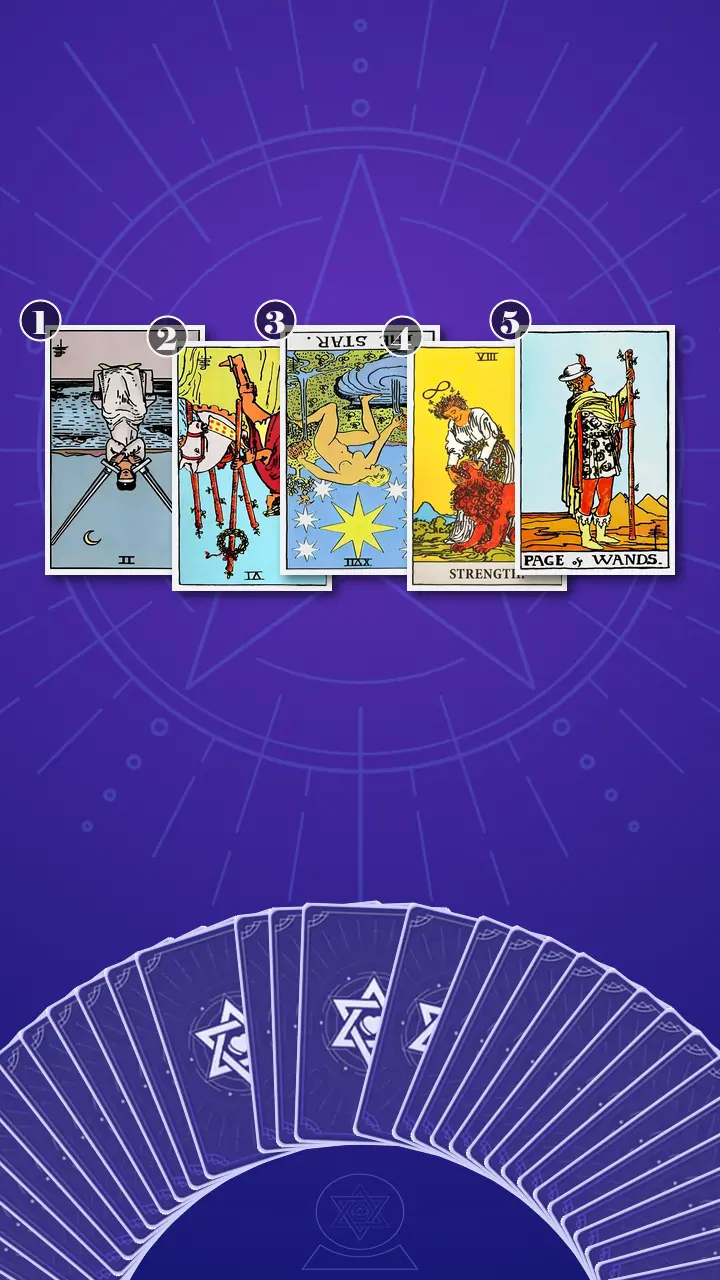
For this kind of draft-delete loop, I reached for a five-card Shadow Spread, my preferred tarot spread for fear of posting photos and the self-worth patterns hiding underneath them. When someone asks me why they delete every Instagram draft before posting, I do not need prediction. I need structure. This spread works because it moves cleanly from the visible behavior, to the hidden approval script under it, down into the deeper wound, and then back out through medicine and daily practice. That is how tarot works best here: not as fortune-telling, but as card meanings in context.
As I laid the cards left to right, I told her what I was looking for. The first would show the posting paralysis itself. The second would reveal the self-worth rule underneath it. The center card would name the deeper loss of self-trust that makes visibility feel unsafe unless optimized. The fourth card would be the antidote. The fifth would translate insight into one small, actionable next step.
Reading the Tunnel: Where the Post Becomes a Test
This is where a five-card Shadow Spread really earns its keep. Not by telling me whether she should post, but by showing me why the draft-delete loop keeps recruiting her body, not just her thoughts.
Position 1: The Hovering Thumb
Now I turned over the card representing the visible posting paralysis she had described so precisely. It was the Two of Swords, reversed.
I told Zoe I see this card whenever analysis takes over at the exact moment expression wants to move. The image matched her almost frame for frame: alone on the ride home or in bathroom mirror light, switching between four versions of the same photo, pinching to zoom into skin texture or posture, changing the crop back and forth, and freezing in the final seconds before posting. The issue is not that there is no photo. It is that choosing one has become emotionally loaded. The blindfold becomes tunnel vision from overanalysis; the crossed swords over the chest become self-protection turning into self-blocking right where sharing wants to happen.
In energy terms, this was Air in excess and feeling in deficiency. Too much scanning. Too little trust. It had the exact energy of having twelve tabs open for one tiny task and somehow getting less clear with each click. I asked her, “In the last ten seconds before you would post, what are you actually trying to prevent?”
She gave a short laugh that landed with a little salt in it. “Okay,” she said, looking down at the card. “That’s a little brutal. But yes. That is literally what I do. I’m not stuck because there are too many options. I’m stuck because one wrong angle feels exposing.” Her fingers tightened around her mug, then slowly loosened.
Position 2: When the Feed Becomes a Scoreboard
The next card, representing the self-worth rule beneath the behavior, was the Six of Wands, reversed.
This was the choke point in the spread. I told her the photo itself was not the real problem. Right before she posts, her mind creates an invisible audience panel: likes count, who will view it first, who will not react, whether the vibe lands, whether one specific person will scroll past without saying anything. The raised wand and the watching crowd on this card translate almost too cleanly into a social feed. A simple image stops feeling like participation and starts feeling like ranking. Fear of being perceived online gets mistaken for proof that the post is somehow wrong.
Whenever Six of Wands reversed appears, my mind flashes to All About Eve—that dangerous moment when applause starts pretending it is oxygen. Public response is a terrible place to store a soul. Here, the Fire of self-expression had been turned outward and handed to the audience. So I said it plainly: “You did not lose the caption. The post became a test.”
Her breath paused. Then her gaze slipped off the table as if she were replaying a dozen late-night drafts at once. “The likes aren’t even the point,” she said quietly. “But somehow they are.” There it was: the stomach drop, the hot face, the imagined silence. Like turning her main feed into a tiny Rotten Tomatoes page for her self-esteem.
Position 3: The Feed’s Glare, Your Light Dimming
The center card, the deeper wound feeding the whole pattern, was The Star, reversed.
I felt the room go quieter at that one. In real life, this card asks a question I hear constantly: why do I like a photo until I open Instagram? Zoe already knew the scene. Lunch break at her design studio. Figma tabs open on one screen, Instagram half-hidden under the desk, a nutty flat white going cool beside her. She likes her own photo just fine—until the app opens and three polished posts later her draft suddenly looks flat, try-hard, somehow less alive. It is like comparing your raw camera roll to other people’s color-graded final cut.
The Star reversed is not vanity. It is depleted faith. The naked figure on the card is honest self-expression; reversed, that honesty starts to feel too exposed to trust. Water should soothe here, but in reversal it leaks away as comparison fatigue. I told her, “This is the part underneath it. You can genuinely like a photo until the feed turns every other speaker in the room all the way up.”
She went still in a three-beat way I know well: first her breathing held, then her eyes unfocused as if some lunchtime memory had replayed in full, then a softer exhale left her chest. “Yeah,” she said. “That’s the worst part. I liked it until I saw everybody else.”
That was the wound. Deleting is relief in the short term and self-erasure in the long term. The body learns that pulling back feels safer than staying visible, and the hidden rule gets stronger every time: I can only be visible when optimized.
When Strength Put a Hand on the Lion
Position 4: The Antidote
When I turned over the fourth card, the atmosphere changed. Even the light beside us shifted; a strip of warmer gold slid across the table and caught the lion first. This was the medicine position, the card that interrupts the loop. It was Strength, upright.
I told Zoe to notice how undramatic the turning point actually is. Not glamorous. Not algorithm-proof. Just this: you are on the TTC with four almost identical selfies open, your thumb frozen because one angle suddenly feels embarrassing, and the memory starts turning into a verdict. That is not a silly little habit. That is the moment your nervous system thinks retreat is the only safe move.
You do not need to wrestle yourself into a flawless image; place a steady hand on the lion of self-judgment and let courage, not applause, be what presses post.
I let the sentence stay in the air for a moment. Then I said, more softly, “Visibility is not a referendum.”
The real shift is not making yourself more postable. It is learning to steady the part of you that treats visibility like a test of worth.
There are moments in a reading when my artist brain steps quietly forward. Looking at Strength, I had one of those private film-cut flashes: not the polished scene that makes the trailer, but the take between takes, when the actor drops the pose and becomes unmistakably human. That is the frame I trust most. So I used one of my favorite Einstein thought experiments with her—the kind where changing one variable reveals the hidden law underneath everything. “Imagine,” I said, “that this exact photo belonged to your closest friend. Same angle. Same lighting. Same tiny so-called flaw. Would you read it as proof that she was less worthy of being seen?”
She froze first—just for a beat. Then her eyes lifted to me, sharp with a flicker of resistance. “But if I stop grading it that hard,” she said, “doesn’t that mean I’ve been wrong this whole time?”
I shook my head. “No. It means you’ve been scared this whole time. That is different.”
Something in her face gave way in layers. The muscles around her mouth unclenched. Her shoulders dropped a full inch. She took one breath, then another, and on the second exhale there was that strange, tender dizziness people get when the burden starts sliding off but the ground beneath them is new. I asked, “Now, with this lens, can you remember a moment last week when the photo wasn’t actually the problem?”
She nodded slowly. “Sunday. I had the caption. I had the post. Then I imagined it getting ignored, and my whole body went hot.” She put her own hand to her chest without thinking. “It wasn’t that I hated the photo. I hated the feeling of waiting to see what it meant.”
Exactly. This was the crossing point from self-conscious shame and comparison-fueled freeze toward steadier self-trust and lighter visibility. Not confidence in the forced, internet-proof sense. Something better: regulated self-expression. The courage to stay with herself for one more breath before obeying the urge to disappear.
Position 5: The Beginner’s Fire
The final card, representing practical integration, was the Page of Wands, upright.
After Strength, this card felt like fresh air through a cracked window. I told her this is what the proof-to-expression shift looks like in real life: one smaller, more playful post this week. A Close Friends story. A photo-dump slide. A simple caption that says what the moment meant, and then the phone facedown while the kettle boils. Beginner energy, not brand management. Beta version, not full campaign launch.
In energy terms, this was Fire restored to balance. Not the approval-distorted Fire of the crowd, but inner heat returning to the body. The Page learns by trying in public, not by mastering in private forever. “Post as expression, not as evidence,” I said. “That’s this card.”
She smiled for the first time without apology. Not big. Just real. “A Close Friends rep sounds doable,” she said. “Main feed feels like the Met Gala. Close Friends feels like maybe sneakers and daylight.”
From Proof to Expression: Your Next 48 Hours
When I pulled the whole line together for her, the story was clean. First came the freeze: Two of Swords reversed, where a simple choice gets jammed by overanalysis. Then the hidden script: Six of Wands reversed, where audience reaction turns into a score for worth. At the center sat The Star reversed, the comparison wound that makes self-trust evaporate the moment the feed opens. Only then did Strength make sense as medicine: not push harder, but regulate first. And only after that could the Page of Wands do its job: help her practice being seen in smaller, repeatable ways.
I told her the blind spot was this: she kept treating the discomfort of exposure as evidence that something was wrong with the image, when it was usually evidence that the image was carrying far too much meaning. The direction of change was simple, if not easy—move from treating each post as proof of worth to treating it as one small act of self-expression.
Then I gave her a plan. I like plans that respect the nervous system, not plans that sound brilliant in a Notes app and die by Thursday.
- Body-Cue Post PauseBefore editing your next photo, stay in your camera roll for 20 seconds. Name three body cues out loud or in Notes—tight throat, hot face, clenched jaw, dropped stomach, buzzing chest—then place one hand on your upper chest and take one slower exhale. Only decide whether to post after that check-in, not in the middle of the spiral.If three cues feels like too much, name one. The point is not to feel transformed; it is to interrupt autopilot by five percent.
- 2-Minute Draft RuleSet a two-minute timer before opening the feed. Then use a tiny version of my Manuscript Mindmaps trick in Notes: write one sentence that begins, “I want to share this because…” Let that sentence choose the image, caption, or whether it belongs on Close Friends rather than your main feed.No scrolling other people’s posts before you choose. If two minutes feels intense, make it 60 seconds and pick between only two photos.
- Close Friends Courage RepOnce this week, post one photo to Close Friends, a finsta, or a low-stakes Story instead of the place that feels most exposed. Then put your phone on Do Not Disturb or face-down in your bag while you make tea, walk to the corner store, or finish one small task for three to ten minutes.This is not cheating. It is skill-building. The goal is repeatable courage, not maximum courage.
She winced at the last one. “The no-check window sounds small until it’s actually me,” she said. “At work I’d probably break it in ninety seconds.”
I smiled. “Then make it three minutes. We are not performing wellness for the cards. We are teaching your body that after you share, you do not have to sprint straight back into the courtroom.”
A Week Later: The Quiet Proof
A week later, she messaged me at 8:11 a.m. with a screenshot and one sentence: “Close Friends only, two-minute timer, no feed first—and I actually posted it.”
There was no movie-ending miracle attached. No instant immunity to comparison. She told me she still woke with the brief old thought—what if it was awkward?—but this time she laughed, made coffee, and left the post where it was. Clear, but still a little tender. That is usually how real change looks.
I sat with that for a moment and thought about what the cards had shown us: not how to become unbothered, but how to become less obedient to fear. From approval anxiety to self-trust. From comparison freeze to lighter participation. That is the journey to clarity I trust most—the one that makes room for a human nervous system instead of pretending you do not have one.
If you know that specific ache—the one where you want to join the conversation, feel your throat tighten, and delete yourself first so no one else gets the chance to do it for you—please know that noticing the loop already means you are no longer entirely inside it.
So if your next post did not have to prove anything about you, only carry one small spark from the Page of Wands and one steady hand from Strength, what would feel small enough and true enough to share anyway?