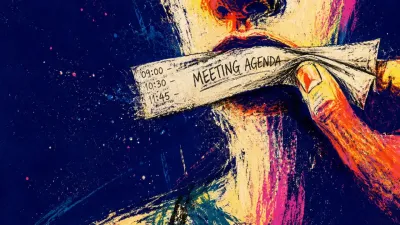
Saying It in Minute Two: From Kickoff Freeze to Visible Ownership

The 8:57 Kickoff Freeze
If your body goes tight the moment a manager asks, “Who wants to own this?” and someone else volunteers while you are still editing your sentence internally, I already know the texture of that room.
When Maya (name changed for privacy) sat down with me, she did not begin with a theory. She gave me a scene. It was 8:57 on a Tuesday in a glass meeting room near Old Street: the project brief glowing on her laptop, Slack flickering on a second screen, a phone note open to one line — Could lead first-draft messaging? The air-con hummed. Her coffee had gone lukewarm. The edge of her phone felt oddly warm in her hand. Then the kickoff began, her throat tightened, her shoulders lifted, and by the time she found the sentence she wanted, someone else had already taken the visible work.
“So I said I could keep the timeline moving,” she told me. “Again.” Then she gave me the line that cut right to the bone: “I know I can do more. I just never know how to say it without sounding arrogant.”
The feeling in her was not vague. It had a body. It felt, as she described it and as I could almost feel in my own throat listening to her, like trying to swallow a sentence made of tinfoil — sharp, hot, and impossible to smooth out before anyone notices.
I have read for young professionals in different cities and different accents, and this part is strangely universal: ambition changes clothes, but the body tells on the fear. The lifted shoulders. The hot face. The jaw that locks right before visibility. I nodded and said, “That makes sense. We are not here to make you into a louder person than you are. We are here to see what pattern keeps handing you the safe tasks, and what would help you claim a clearer one. Let’s make a map.”

Choosing the Runway: A Career Tarot Spread for Work Visibility
I asked Maya to take one slow breath and hold the actual question in her mind — not how to become impressive overnight, but how to stop waiting so long in kickoff meetings that the higher-visibility work disappears before she speaks. Then I shuffled slowly and let the pace of the room come down with my hands. For me, that moment is never about theatre. It is about helping the nervous system leave panic mode long enough to notice the truth.
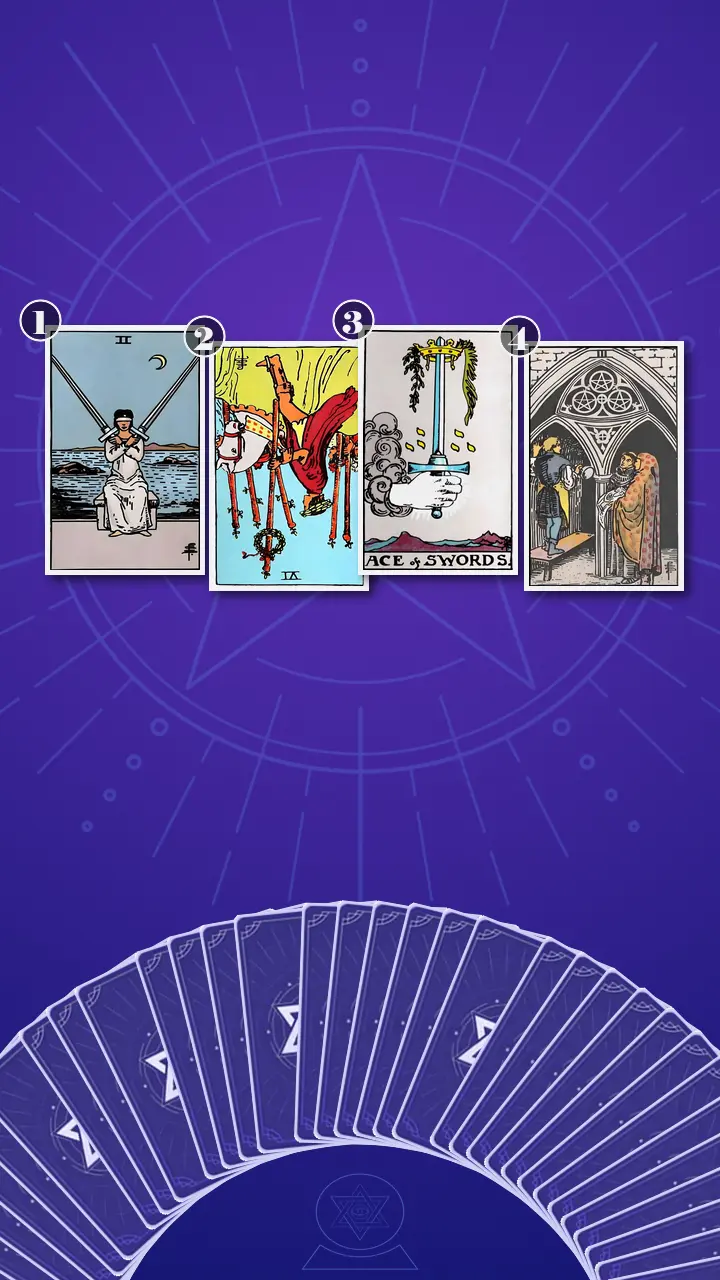
For her reading, I used a spread called Situation-Obstacle-Advice-Outcome · Context Edition. It is one of the cleanest career tarot spreads I know for workplace visibility and speaking up in meetings, especially when the surface problem looks tactical but the real knot is psychological. In plain terms: the first card shows the pattern as it is happening now, the second reveals the inner blocker underneath it, the third points to the shift that can actually change the script, and the fourth shows what the next kickoff cycle could look like if that shift is practiced.
This is also how tarot works best in a situation like this. It does not predict whether a coworker will jump in first on Tuesday. It shows the self-protective rulebook shaping how you enter the room, so you can stop mistaking that rulebook for fate.
I laid the four cards in a straight line from left to right, like a runway: guarded pattern, hidden blocker, clear claim, visible contribution. The whole layout read like a sentence trying to become a life.
The Draft Message That Chooses for You
Position 1: The Guarded Pattern in Plain Sight
I turned over the first card and said, “Now we are looking at the card that shows the observable kickoff-meeting pattern from the diagnosis: staying guarded until the visible work is claimed, then taking the low-risk tasks.”
It was the Two of Swords, upright.
I felt Maya recognize it before I finished the first sentence. This card is the exact shape of waiting too long to speak. Not because you have nothing to say, but because you are holding the sentence under such tight quality control that the room moves without you. It is like a perfectly decent Slack message left in draft while the channel decides your role for you. Wait, let me phrase it better. Wait, not yet. Wait, now it would be awkward. Wanting stretch work, but feeling you should only speak once it sounds bulletproof.
In energy terms, this is blocked Air. Your mind is active, even sharp, but the swords are crossed over the chest instead of used. The intelligence is there; expression is locked behind self-protection. The blindfold on the card matters here. It does not mean you are clueless. It means you are editing yourself before reality has even had a chance to answer back.
I looked at her and said the line I knew she needed to hear plainly: “Silence still chooses for you.” Then I asked, “In the last kickoff where this happened, what was the exact task you wanted — and what did you say instead once the moment had already passed?”
She let out a short laugh that had more ache than humor in it. “That’s annoyingly exact,” she said. Her fingers went to the paper cup between her palms. “I wanted first-draft messaging. I said I could coordinate actions and keep the timeline moving.”
“Right,” I said gently. “So the silence felt careful, but it functioned like a decision.”
When Visibility Feels Like a Verdict
Position 2: The Hidden Ranking Ceremony
I turned the second card. “This one reveals the deeper blocker from the psychological mechanics: the fear that visibility will expose worth or competence to public judgment.”
The card was the Six of Wands, reversed.
Here was the real knot. Not lack of talent. Not even lack of preparation. This card showed me that Maya’s nervous system had quietly turned an ordinary staffing question into something more like a live LinkedIn leaderboard for competence. A peer speaks first, sounds polished, and suddenly the room feels less like a team discussion and more like a ranking ceremony. If I say this and it lands badly, they will remember the stumble more than the attempt.
In reversed form, the fire of recognition gets distorted. Visibility stops feeling like a normal professional act and starts feeling like a public referendum on worth. That is why the safer tasks look emotionally smarter. Notes, QA, coordination, follow-ups — they keep you useful without putting your identity on the line.
“Visibility is not a verdict,” I told her. “It is where skill becomes legible.” Through a Jungian lens, this is what happens when the inner image of authority gets fused with judgment instead of collaboration. Your body hears ‘Who wants to own this?’ and translates it into ‘Prove you deserve to be here.’ No wonder your throat closes.
This is the point in a reading where I often begin what I call Imposter Syndrome Auditing. I do not ask whether the fear feels real — of course it does. I ask whether the fear is reporting facts, or merely reporting exposure. They are not the same thing.
Maya went very still. Her eyes moved off the cards and toward the window for a second. “I genuinely did not realise,” she said quietly, “that I was treating meetings like a verdict.”
When the Ace of Swords Entered the Room
Position 3: The One-Clean-Sentence Move
Before I turned the third card, the room changed in that small, unmistakable way it sometimes does. A thin strip of pale London light slid across the glass table between us, bright and clean as a blade. I said, “This is the key card. The turning point.”
I flipped it over. Ace of Swords, upright.
“This card points to the key shift in mindset and behavior,” I told her, “replacing perfect-readiness waiting with one clear, self-authored claim.” In real life, it looks almost disarmingly simple: before the next kickoff, you walk in with one line already chosen. Not a speech. Not a personal-brand monologue. Just: I’d like to own first-draft messaging. I can bring three routes by Thursday if I can get the client tone notes today.
You do not need a speech. You need a claim.
At 8:57 a.m., the brief is open, your line is sitting in Notes, Slack is already alive, and your throat has gone tight before anyone has even asked the question. This is where your mind tells you certainty must come first. This card says otherwise.
Stop treating silence as safety and start using clarity as your entry point. Let the Ace of Swords cut through the blindfold of playing small with one clean, claimed sentence.
I let that sit between us for a beat, then added, “Your career does not start moving when fear disappears. It starts moving when certainty stops being the entry fee for being seen.”
Imposter Syndrome Auditing, Applied
This was where I used my signature lens in full. I asked Maya to imagine two columns.
On the left: objective competence. Her manager trusts her. She keeps projects moving. She understands the work. She already knows which workstream she wants. She is not underperforming; she is under-claiming.
On the right: subconscious fear of exposure. If the first draft is imperfect, everyone will remember. If she asks for something visible, she will sound arrogant. If she struggles in public, it will reveal that her current credibility was a misunderstanding.
“The Ace of Swords is asking for an audit,” I said. “Which column has been running your behavior? Because the second one is loud, but it is not objective.”
She froze first. Her inhale stopped halfway and her thumb stayed pressed against the edge of the card as if she had forgotten she was touching it. Then her gaze drifted, unfocused, toward the glass wall, the way people look when memory suddenly starts replaying with better subtitles. When she finally looked back at me, the first emotion was not relief. It was resistance. “But if that’s true,” she said, and there was real heat in her voice now, “then I’ve basically been training them to give me the safe work.”
“Yes,” I said, calm and careful. “But not because there is something weak or fake about you. Because you built a protection strategy that made sense to your nervous system — and it worked too well. We do not need to shame the strategy. We need to update it.”
Her jaw loosened. One shoulder dropped, then the other. The next sound out of her was half laugh, half exhale. Her eyes had gone a little bright. There was relief there, but also that odd brief dizziness that comes when the old story stops feeling inevitable and the new one quietly hands responsibility back to you. “Okay,” she said. “That actually feels… try-able.”
I nodded. “Now, with this new perspective, think back to last week: was there a moment when this insight would have changed how you felt?”
She answered immediately. “The second I heard Sam volunteer, I thought, that’s it, I missed it. But if I’d had the sentence ready as a claim instead of a performance, I could’ve said it right after.”
That was the shift. Not from fear to fearlessness, but from approval-based silence and tight self-monitoring to clear self-authorization and visible collaborative contribution. A first move, not a final transformation — and exactly the right one.
The Workbench, Not the Sideline
Position 4: What the Team Can Actually See
I turned the final card and said, “This shows the near-term integration path in the next kickoff cycle: moving toward visible, collaborative ownership instead of only support work.”
It was the Three of Pentacles, upright.
I smiled when I saw it, because this is one of the healthiest career outcomes for someone in Maya’s position. Not a grand solo performance. Not a personality transplant. Just a visible workbench. A shared doc. A first draft with her name on it. Comments from teammates. A deliverable others can actually see her shape and build with. This is how reputation grows in real teams: not through private rehearsing, but through version history other people can witness.
In energy terms, the reading had moved into Earth. The air of overthinking had finally found a landing. Confidence can grow in public when the scope is clear enough to hold it. I told her, “Being reliable is valuable. It just cannot be your hiding place.”
I also marked this quietly, in my own internal language, as a small Authority Archetype Integration moment. Maya did not need to become the loudest person in the room. She needed to let a more visible part of her professional authority step forward and hold one defined piece of the work. That is how an individual contributor starts being seen as someone with leadership range.
Maya’s breathing had steadied by then. “That feels much less cringe than trying to become some hyper-confident meeting person,” she said. “I can picture this. One workstream. Shared. Visible.”
From Insight to Your Next Kickoff
When I pulled the whole reading together for her, the story was clean. The Two of Swords showed the surface pattern: a smart sentence trapped behind the teeth until the room closed around safer roles. The reversed Six of Wands showed the deeper blocker: visibility had become fused with worth, so every visible task felt like a public exam. The Ace of Swords cut straight through that old rulebook with a new one: claim one defined piece of work early, name the first step, and say what support you need. The Three of Pentacles grounded it in reality: credibility grows when your thinking becomes visible inside the team, not when you keep being brilliant in private.
The blind spot was not that Maya did not know how to speak up. The blind spot was that she kept treating readiness as total certainty. She thought the problem was wording. Really, the problem was the outdated internal contract that said she was only allowed to be seen once she could guarantee she would look flawless. She had been moving through meetings like Google Docs suggestion mode — useful, precise, slightly buffered — when what the moment needed was one clean line in the main text.
So I gave her a low-pressure plan. Small, behavioral, repeatable. No theatrics.
- The One-Clean-Sentence Move Before your next kickoff, spend three minutes in your phone notes writing one claim in this structure: ‘I’d like to own X. First step I can take is Y. I’d need Z from [person or team].’ Say it within the first five minutes of the meeting, before everyone gets sorted into their familiar lanes. If saying it aloud feels sticky, paste a shorter version into the chat as a backup. Tip: Do not aim for impressive. Aim for clear. Keep the scope mid-stretch, not heroic.
- The Competence Anchoring Exercise After the meeting, take two minutes and write four lines: what you wanted to claim, what you actually said, what happened in the room after someone spoke first, and three factual receipts of your competence from recent work. If you have a supportive manager, bring one of those receipts into your next one-to-one and say, ‘I want to practice taking on more visible workstreams in kickoffs. If I claim one next time, would you back the scope with me?’ Tip: Keep it behavioral, not moral. This exercise is for anchoring self-worth to verifiable evidence, not building a case against yourself.
- The Visible Workstream Reset This month, choose one defined deliverable you want your name attached to — first-draft messaging, a strategy section, a client synthesis, or another concrete workstream. Put it somewhere collaborative, like a shared doc, deck, or project section, and say out loud, ‘I’ll own the first draft and bring it back for feedback on Thursday.’ Tip: Do not overclaim to compensate for past silence. Choose something visible, shared, and time-bounded, then renegotiate scope early if it starts to sprawl.

A Week Later, Her Name Sat Somewhere New
A week later, Maya sent me a message after her next kickoff. It was short, which is often how I know something real happened: “Said it in minute two. Claimed first-draft messaging. Asked for tone notes from strategy. My face was on fire for about thirty seconds, but nobody died, and now I actually have the work.”
She added one more line a little later: “I still woke up this morning with a tiny ‘what if I sounded awkward?’ — but I laughed, made coffee, and opened the draft anyway.” That was my favorite part. Not perfection. Proof.
That is what a real journey to clarity looks like in career tarot. Not a magical personality makeover. Just the moment someone stops asking silence to protect their future, and starts letting skill become visible in the room where it matters.
There is a very specific loneliness in feeling a good sentence press against a tight throat, then watching the safer work land with your name on it again because being useful felt less dangerous than being visibly unfinished. If that loneliness is familiar, please know this: the moment you can name the pattern, the blindfold is already loosening.
If total certainty was not the price of being seen in your next kickoff, what is one piece of work you would want to name out loud — and what small bit of context or support would make that one clean sentence feel doable?
Every reading at AceTarot is a journey to connect with inner wisdom and empower your next step. The stories shared here are psychological mirrors, not private records—crafted to reflect universal emotional loops and help you find your own clarity. Learn more about our Journey to Clarity.
Author Profile