Registration Paralysis—and Choosing the Class You'll Actually Attend

Finding Clarity in the 11:58 p.m. Hover
If you've ever promised yourself this semester would be your reset, then froze on the portal because the 8 a.m. looked disciplined and the later class looked realistic, I knew Maya's exact flavor of course registration anxiety the second she appeared on my screen.
Maya (name changed for privacy) was calling me from her student bedroom in Toronto at 11:58 p.m. A desk lamp threw cold blue light across the course portal. Three calendar windows were open beside it. Yesterday's iced coffee had gone watery near her laptop, the radiator hummed through her mic, and every few seconds she tapped from the 8 a.m. section to the later one and back again, like one of them might blink first and tell her who to be.
She looked at me and said, 'I know which one I will actually show up to, and that is the problem.'
Her breath kept catching halfway down. Her stomach was pulled tight enough that she sat a little forward in her chair, and the cursor hovered over Enroll like a hand above a hot stove. It was just a class time, but it felt like a verdict. The whole decision had the texture of trying to type with cold hands underwater: technically simple, physically wrong. A timetable can be practical and still feel weirdly moralized in your body. What she was facing was class enrollment paralysis from treating an 8 a.m. versus later class choice like a test of character.
I wrapped my hands around my espresso, let her hear how unhurried my voice was, and said, 'You're not overreacting, and you're not lazy. You're caught between the version of you that looks more disciplined and the version of you your real life can actually sustain. Let's make a map for the fog instead of letting the portal act like a courtroom.'

Choosing the Compass: A Decision Cross for Course Registration Anxiety
I asked her to put both feet on the floor, take one breath with a longer exhale, and keep the enrollment page open without touching it. When I shuffled, I told her what I tell people in my café all the time: this part is not theatre. It is a pause. A way of taking the nervous system out of the group chat and bringing it back into the room.
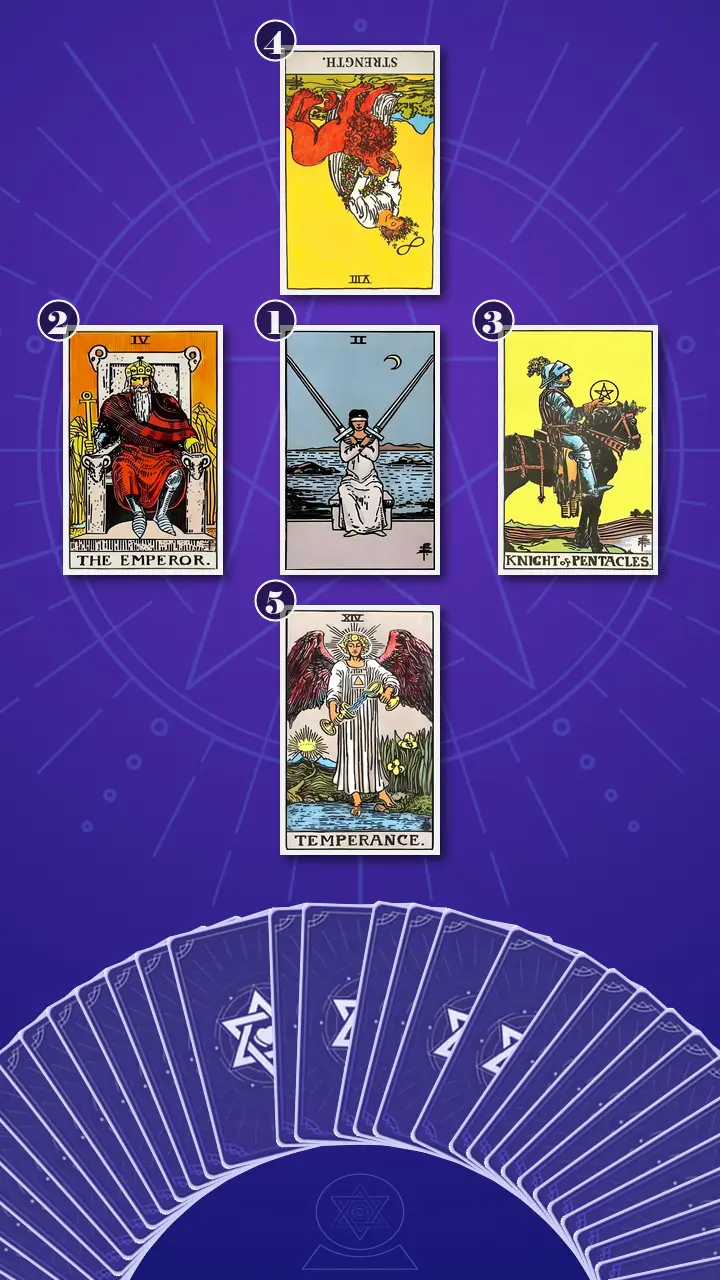
For her, I used the Decision Cross · Context Edition, a tarot spread I trust for choosing between two course sections when the visible decision has been wrapped in an identity story. It is a low-card, very clear structure. The middle card shows the decision knot itself. The left and right cards separate what each option offers. The upper card exposes the hidden pressure shaping the choice. The lower card gives the grounded principle that restores self-trust.
That matters here because Maya did not need more pros and cons. She already had those. She needed to see why the 8 a.m. had become morally charged, why the later section felt like a confession, and what kind of mindset would let her decide without self-betrayal. This is how tarot works best for me: not as fate, but as card meanings in context, laid out clearly enough that a practical next step becomes visible.
I showed her the cross on my table. The center would reveal why this simple schedule choice felt so emotionally loaded. The left would show what the 8 a.m. promised psychologically. The right would show what the class she would actually attend supported. Above, we would meet the fear about discipline and control. Below, we would look for the steadier rule she could live by.
Reading the Map in the Portal Glow
Position 1: The Hover That Pretends to Be Research
I turned over the card representing the visible decision knot: why this simple enrollment choice felt emotionally loaded and hard to act on. The Two of Swords, upright.
The picture matched her screen so exactly it almost made me laugh. Maya sat on the course portal with two sections open, her Notes app full of reasons, and still could not click because the real choice was no longer about class logistics. It had become a showdown between the version of herself that looked disciplined and the version whose routine she already knew. The blindfold was all the data she had about her sleep and energy, data she was trying not to fully admit. The crossed swords at the chest were the defensive self-talk keeping both truths suspended so neither one had to win.
In energy terms, this card is blockage, not confusion. It is like having six tabs open and calling it research when you're really avoiding the submit button. I asked her, 'When you look at the two sections, what hits harder for you: the start time itself, or what the later one seems to mean about you?' She gave a short laugh that landed bitter at the end.
'Okay,' she said. 'That is way too accurate.' Her fingers stopped on the trackpad, then curled inward. That little movement told me the card had named the freeze without shaming it.
Position 2: The 8 a.m. Halo
Then I turned the card showing what the 8 a.m. option promised psychologically, especially the appeal of structure, control, and the idealized disciplined self. The Emperor, upright.
This was not about the early class being bad. It was about what it symbolized. The 8 a.m. section felt sharp, adult, controlled. In her mind, one early lecture had started standing in for a whole identity upgrade: earlier mornings, cleaner habits, less chaos, finally becoming the student who is always ahead. It had that 'that girl' productivity-morning-routine energy, except applied to a course portal at midnight.
The Emperor's energy here was excess structure. The stone throne looked solid, but the armor beneath the robe told the deeper truth: this choice carried pressure under the polished surface. I have spent twenty years in my café watching students order the darkest roast because they want strength to taste like punishment. Every time, I think the same thing: bitterness is not proof. The 8 a.m. was offering her the aesthetic of discipline, not necessarily the infrastructure of discipline.
I asked, 'If you clicked the 8 a.m. tonight, what story would you hope to tell yourself tomorrow?' She glanced at her Google Calendar, all five colors of it, and said, 'That I finally have it together.' Her jaw tightened so slightly most people would have missed it. I did not.
Position 3: The Boring Playlist That Actually Gets You Through Midterms
Next I opened the card showing what the class she would actually attend supported, especially consistency, follow-through, and realistic pacing. The Knight of Pentacles, upright.
This card always changes the temperature of a reading. The later class was the one she could still picture attending in week six: after a rough sleep week, after a lab deadline, after a colder commute on Line 1 when September optimism had worn off and regular life had taken over. It did not promise a glow-up montage. It promised repeatability. The still horse, the pentacle held with care, the cultivated field ready to be worked again tomorrow all said the same thing: the class you can attend is not the lesser class.
In energy terms, this is grounded balance. Not glamorous. Not the screenshot you post when you're deep in Sunday-reset fantasies. Just the kind of steady rhythm that survives November. I told her, 'Discipline is follow-through, not aesthetic suffering. The real question is which class you won't have to renegotiate with yourself every Tuesday and Thursday at 7:05 a.m.'
Her shoulders lowered before she answered. It was small, but visible. 'It's not flashy,' she said, staring at the card, 'but I would actually keep doing it.' That was the first loosening in the whole reading.
Position 4: When Self-Control Starts Sounding Like Self-Attack
Then I turned the card revealing the hidden fear driving the comparison: what choosing the later class seemed to say about her character and self-control. Strength, reversed.
This was the pressure sitting over the entire spread. Underneath the scheduling math was a harsher sentence: if I choose the later class, it proves something bad about me. The moment she considered the realistic option, she reached for stricter tools in her head: more alarms, tighter plans, harsher self-talk, as if pressure could turn neutral information into virtue. It was like turning her own alarm app into a drill sergeant.
Reversed, Strength does not tell me she is weak. It tells me her self-trust is blocked, and force has started impersonating maturity. The lion's open mouth became the volume of that inner critic. The missing ease in the woman's hand showed the difference between guiding herself and dominating herself. I told her, softly but directly, 'You do not need to earn self-respect by booking the hardest-looking week.'
I asked, 'What are you afraid the later class would prove about you if you chose it and let that choice be visible to yourself?' Her breath stalled. One hand moved to the side of her neck. 'That I can't control myself,' she said. 'That I always take the easier route.' There it was. Not a timetable problem. A shame story.
When Temperance Poured Between Two Cups
Position 5: The Rule Beneath the Rule
When I reached for the final card, the room on both sides of the screen seemed to settle. The blue light on her face had the same cold stillness as the moonlit water in the Two of Swords. In my café kitchen, the last cup on the counter gave off one thin ribbon of steam. This was the card beneath the whole decision: the sustainable choice principle, the mindset that could blend ambition with honesty instead of making them fight. Temperance, upright.
At 11:58 p.m., with the portal open, three calendar versions glowing, and her cursor hovering like it owed her a better answer, she was still standing between two doors and treating the earlier one as the morally better door. Temperance came in to end that performance. This card does not ask which option looks stricter. It asks which option can carry sleep, commute, coursework, and human limits without making the rest of your life spill all over the floor.
Stop proving your worth through an extreme schedule, and start choosing the path that blends ambition with reality, the way Temperance pours between two cups without spilling either one.
I let the sentence sit there for a breath.
First her body froze. The fingers resting on the edge of her laptop stopped moving altogether. Then her eyes lost focus for a second, like she was replaying a private montage: setting three alarms, missing a bus in sleet, promising herself next week would be different, using one absence as evidence against herself. When the feeling finally reached her face, it did not arrive as instant relief. It arrived as resistance.
'But if I pick the later one,' she said, and there was a flash of anger under the embarrassment, 'doesn't that mean the stricter version was never real?'
I shook my head. 'No. It means the performance was louder than the pattern.' Then I gave her the most personal tool I had. In my café, I call it Focus Period Diagnosis. Coffee taught it to me long before tarot did: not every bean opens at the same minute, and if I force heat too hard, too early, I don't get strength—I get bitterness. Attention works the same way. Your best class time is not the hour that looks toughest on paper. It is the hour your mind can actually extract learning from without needing an extra shot of shame.'
Her mouth parted. A second later her shoulders lowered, almost as if someone had unhooked them from behind. The screen light caught the wet shine in her eyes. She gave one long exhale that sounded like surprise more than sadness. I asked her, 'With this view, can you think of a moment last term when this would have changed how you judged yourself?' She nodded immediately. 'Yeah,' she said. 'I kept calling myself lazy for dropping an early tutorial, but honestly I was going to sleep at 2 a.m. every week because of labs. I thought the problem was me. Maybe the schedule was built for a person I wasn't actually being.'
That was the bridge. Not from weakness to strength, but from self-judging course registration anxiety to steady self-trust built through follow-through. In plain language, a class time is not a character test. The wiser choice is the one your real week can keep showing up to. And with that, the blindfold of the Two of Swords finally loosened; the path in Temperance was there all along, waiting for shame to step aside.
Consistency-First Enrollment
When I gathered the reading back together, the story was clean. The Two of Swords showed the freeze: a basic enrollment choice had been turned into a self-worth referendum. The Emperor explained why the 8 a.m. felt so magnetic: it promised an image of control. The Knight of Pentacles quietly corrected that fantasy by redefining discipline as repeatability. Strength reversed named the real blind spot—Maya had been mistaking harshness for maturity, and self-criticism for structure. Temperance gave the transformation direction: choose the routine your real life can sustain, and let consistency define discipline.
I told her this was Consistency-First Enrollment: choose the section your real routine can sustain in week six, not the one that only looks disciplined on paper. Her cognitive blind spot was not lack of ambition. It was the habit of asking ambition to wear the costume of suffering. She did not need to become less serious about school. She needed to stop turning planning decisions into personality tests.
Then I gave her practical next steps—small enough to do before the seat disappeared, grounded enough to survive the semester.
- The Week-Six Reality CheckOpen one note only and write two headers: 'looks disciplined' and 'I would still attend in week six.' Put both class sections under both headers without explaining or defending yourself. This is my café version of the Latte Memory Technique: get the lesson out of the foam of your mind and onto one visible surface.If 10 minutes feels loaded, do the 3-minute version. The goal is clarity, not self-interrogation.
- The Three-Data-Point CheckSet a 10-minute timer and answer only three questions: What time do I realistically fall asleep during busy weeks? How long is the commute at that hour? Would I make this class after one rough night and a deadline? Use real phone timestamps, calendar history, or transit patterns if that helps.Keep the criteria practical, not moral. Reliable is not less ambitious.
- The Close-the-Extra-Tabs RuleRegister for the section that needs the least daily arguing, then close the extra tabs immediately. If the shame sentence shows up—'the later class means I'm taking the easy way out'—translate it once into neutral language: 'My energy and sleep pattern make this time more sustainable.'Before you click, lengthen your exhale or simply drop your shoulders. Tiny nervous-system moves still count.
Maya looked at me and said, 'So the later class isn't me giving up?'
'No,' I said. 'It's you choosing the schedule that supports learning instead of asking a timetable to certify your worth. Choose the schedule that needs the least daily arguing.'
Then I watched her move the cursor, this time without theatrics, and click the section she already knew her life could hold.

A Week Later, the Quiet Proof
A week later, a message from Maya appeared between my morning espresso orders. 'I picked the later section,' it said. 'Closed the other tabs. Went to the first class without having to stage a personality makeover first.' Then, after a beat: 'I still had the thought that the 8 a.m. would have looked better. But I actually showed up.'
I stood behind the café counter with that message in my hand and the smell of ground coffee rising warm around me. This is the part people miss about a Journey to Clarity: the win is rarely cinematic. Sometimes it is simply this—sleeping properly, making class, and not using one ordinary decision as evidence against yourself. Clearer does not mean perfectly certain. It means more honest, and therefore more free.
When a simple click starts feeling like a confession about who you are, your chest tightens because you're not just choosing a class time; you're trying not to disappoint your own idea of yourself. If you recognize yourself anywhere in this Decision Cross · Context Edition reading, then the blindfold has already shifted a little. The next time you find yourself between the fantasy routine and the real one, which option could your real week keep filled without spilling the rest of you?