Laptop Open on the Bed: Turning a Productivity Audit Into Real Recovery

Finding Clarity in the 10-Minute Break Timer
You set a 10-minute break timer, but you leave your laptop open because closing it feels like admitting you’re not disciplined (study break guilt).
Alex (name changed for privacy) said it on a video call from Toronto, like she was confessing to a crime that technically didn’t exist. Behind her, I could see the corner of a shared-bedroom setup: bed as “break space,” desk as “work space,” and a single glowing rectangle that made both spaces feel like the same place. The Canvas tab sat there in her peripheral vision—bright, waiting, a little accusatory—like a security camera with a syllabus.
“I’ll sit down to rest,” she told me, “and my chest just… clamps. And then my legs won’t stop. Like my body’s on a treadmill, but the speed is set by an invisible judge.”
I could hear her roommate’s muffled laughter somewhere offscreen, the ordinary sound of someone else not being on trial. Alex’s voice got smaller. “Rest feels like failing. And I don’t even know what the next step is, because I can’t relax unless I’ve done enough… but enough never happens.”
I let that land. I’ve spent ten years guiding people through a Tokyo planetarium—showing them that the sky isn’t chaos, it’s rhythm. But up close, in a young woman’s cramped room, the rhythm can disappear. It can turn into noise.
“Okay,” I said gently. “We’re not going to moralize your nervous system. We’re going to map it. Let’s make this a Journey to Clarity—so we can see what’s actually happening when you ‘rest,’ and what would make a break feel safe again.”

Choosing the Compass: The Transformation Path Grid (6)
I asked Alex to take one slow breath—not as a mystical ritual, just as a switch from panic-mode to observer-mode. While she breathed, I shuffled my deck at my small desk in Tokyo. Outside my window, the city was loud; inside, the cards made their soft paper-thrum, steady as a metronome.
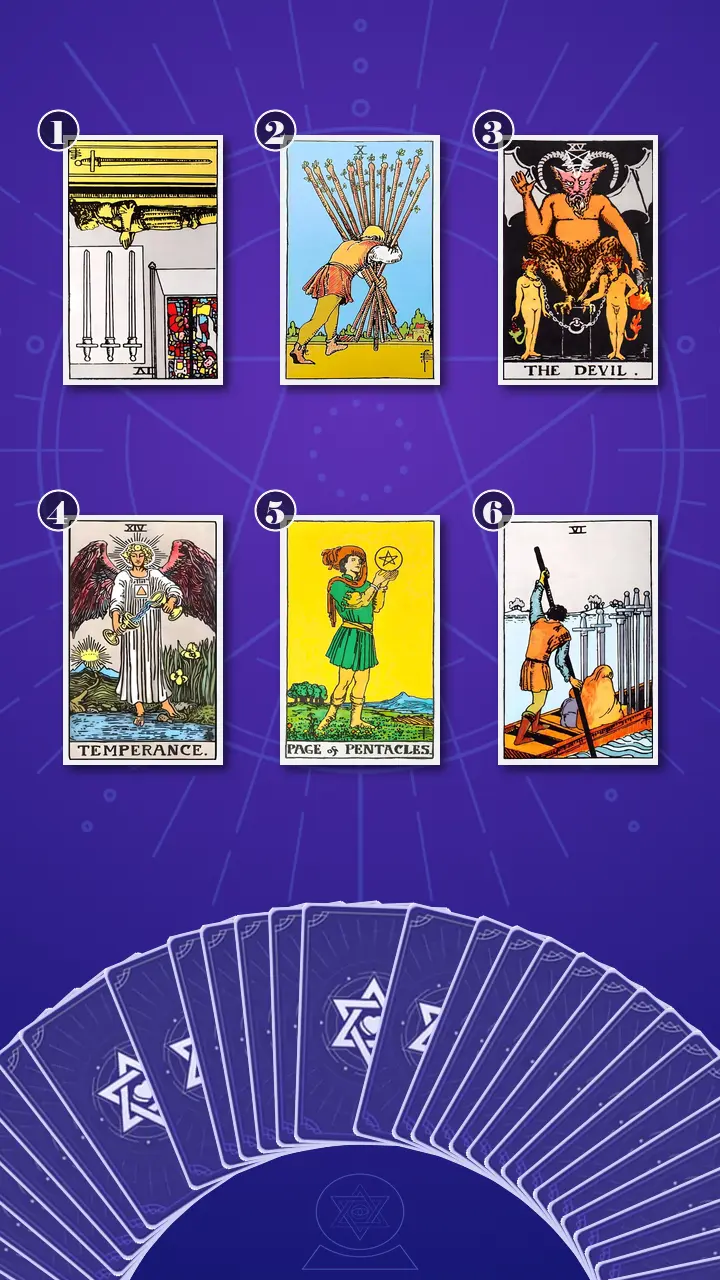
“Today,” I said, “I’m going to use a spread called the Transformation Path Grid (6) · Context Edition. It’s a 2×3 grid.”
For anyone reading who’s wondered how tarot works in situations like this: I’m not using the cards to predict whether Alex will ‘succeed’ or ‘fail.’ I’m using them like a structured mirror. This spread is perfect for rest feels like failing problems because it separates the symptom (what you do during breaks) from the pressure pattern (what makes breaks feel unsafe) and the deeper belief (why guilt sticks). Then it doesn’t stop at insight—it moves straight into a balancing pivot and a doable next step for the week.
“Top row,” I told Alex, “is the pressure system: symptom, blockage, root. Bottom row is the support system: key shift, next step, and what integration looks like when it’s working.”
As I laid the cards into a clean grid, I thought of something I say during planetarium shows: the sky looks random until you learn the patterns. This spread is the same kind of lesson—except the ‘sky’ is your study life, your body, your self-talk.
Reading the Pressure Row: Where Rest Turns Into a Courtroom
Position 1: When a Break Doesn’t Break (Four of Swords, Reversed)
“Now we turn over the card representing your presenting symptom: what your ‘study break guilt’ looks like in real time,” I said.
Four of Swords, in reversed position.
I nodded like, of course it’s you. “This is ‘rest that doesn’t rest.’”
And I made sure to say it in the most modern, painfully specific way, because the card asked for it: You call it a break, but you keep your laptop open on the edge of your bed and ‘accidentally’ re-open the same Anki/Quizlet deck. You’re not studying hard, but you’re also not resting—your brain is running a constant productivity audit, rehearsing how you’ll justify the pause if anyone (including you) asks.
Alex’s mouth twitched into a laugh that wasn’t funny. It was that slightly embarrassed, “you saw me” laugh. “That’s… rude,” she said, then swallowed. “But yeah. That’s exactly it.”
“A break where you’re still keeping score isn’t rest—it’s a productivity audit with snacks,” I said. “Your body pauses, but the inner critic stays standing, like a security guard who won’t clock out.”
Energetically, reversed Four of Swords is a blockage of recovery. The ‘off switch’ doesn’t fully flip. The mind keeps humming like a laptop fan that won’t stop—technically you closed the app, but the background process is still eating CPU.
Alex looked down and I watched her fingers do what so many students’ fingers do: hovering, itching, like they wanted to reach for a phone even when she wasn’t holding it.
Position 2: The Immediate Pressure Pattern (Ten of Wands, Upright)
“Now we turn over the card representing your primary blockage: the immediate pressure pattern that makes rest feel unsafe,” I said.
Ten of Wands, upright.
“This card always looks like someone trying to carry their entire semester in one trip,” I said. “And it matches your real life scenario: Your week is technically manageable, but you carry it like a crisis—extra readings, perfection-level notes, saying yes to more than you agreed to. By the time you reach for a break, your system is so overloaded that resting feels dangerous—like dropping the weight at the exact wrong moment.”
Ten of Wands is overload as a pressure posture: shoulders up, breath shallow, every task treated like a 5-alarm fire. It’s also overload as a digital posture: eighteen tabs open, Canvas notifications piling up like unread DMs, a Notion template screaming for a life you don’t have time to live.
Alex exhaled hard—one of those heavy exhales that sounds like someone putting down a bag they’ve been pretending isn’t heavy. Her shoulders dropped a fraction, then came back up as if her body didn’t trust the relief.
“I keep thinking if I slow down, something will slip,” she said. “And then it’ll snowball.”
“Right,” I said. “In this position, Ten of Wands isn’t saying you’re weak. It’s saying your system is overfilled. When the backpack is already packed to the zipper, even a normal human need—food, sleep, a walk—feels like sabotage.”
Position 3: The Root Belief That Makes Guilt Stick (The Devil, Upright)
“Now we turn over the card representing your underlying root: the deeper belief about worth, performance, or control that fuels guilt when you pause,” I said.
The Devil, upright.
I kept my voice calm here. The Devil doesn’t need dramatics. It needs honesty.
“Here’s the modern translation the card is asking us to name: Rest feels like failing because part of you treats productivity like a contract for worth: ‘If I’m not producing, I don’t deserve safety/pride/approval.’ You can feel the chain even when nobody is watching—hours, grades, and other students’ highlight reels become the lock on the door of your downtime.”
Alex went still. Not relaxed-still—more like her brain just stopped mid-scroll. Her eyes unfocused for a second, like she’d flashed to a TTC ride or a library break where Instagram opened by reflex and someone’s “grind never stops” story made her stomach drop.
“Guilt isn’t always a moral signal—sometimes it’s withdrawal from a productivity identity,” I said. “This card is the worth-contract. The chain is loose enough to remove… but you’ve worn it so long it feels like part of your neck.”
I let a beat of quiet sit between us. In the planetarium, silence is what makes the stars feel closer. On a call like this, silence is what makes the truth audible.
“Can I ask one pointed question?” I said. “Who benefits when you believe you can’t pause?”
Alex blinked and her throat worked, like she was swallowing something bitter. “Not me,” she said. “And honestly… not my grades either.”
When Temperance Poured Between Two Cups
Position 4: The Pivot From Guilt to Self-Trust (Temperance, Upright)
I touched the fourth card before I turned it, the way I sometimes touch the control panel before a planetarium show—checking what matters most. “We’re turning over the card representing your key transformation: the internal shift that changes how you relate to breaks,” I said. “This is the bridge.”
Temperance, upright.
Temperance always changes the air in the room. Even over Wi‑Fi, I felt it: the quiet steadiness of an angel pouring two cups into one flow, patient and precise.
You set the break timer. You sit down. Your chest tightens anyway—because your brain starts grading you the second you stop. That was the loop Alex came in with: breaks as a verdict, not a tool.
Then I gave her the turning-point sentence the card demanded—clean, direct, no spiritual fog.
Stop treating rest as a moral failure and start blending effort with recovery—like Temperance pouring two cups into one workable rhythm.
Alex’s reaction came in a chain, exactly the way real breakthroughs do.
First: a physical freeze—her breath caught, shoulders lifted, hands hovering offscreen as if she’d been interrupted mid-“just one more flashcard.”
Second: the cognitive seep—her eyes went slightly glassy, not tearful yet, more like she was rewatching all those “breaks” where she sat on her bed with her laptop still open, performing rest while her brain kept tallying points.
Third: the release—she exhaled, long and shaky, and her shoulders finally sank like they’d been holding a secret weight. “But if I stop treating it like a moral thing,” she said, voice tight with something between fear and relief, “then… what have I been doing this whole time? Like, was I just wrong?”
There it was—an unexpected spark of anger underneath the guilt. Not at me. At the time she’d spent inside a system that never let her win.
“You weren’t wrong,” I said. “You were using the only tool you thought worked: control. But it’s like gravity—useful until it becomes a trap.”
This is where I brought in my own lens—my signature way of diagnosing focus patterns. “In astrophysics, we talk about an event horizon—the boundary around a black hole. Once you cross it, you can’t get back out. I call this Black Hole Focus.”
“Your breaks don’t work because they don’t have an event horizon,” I continued. “You leave the laptop open. You keep the notes ‘just nearby.’ Your attention crosses the boundary every time—one check, one glance, one ‘just in case.’ And then the break collapses into the same gravity well as studying: scorekeeping.”
“Temperance is asking for a designed rhythm,” I said. “Not ambition or wellbeing. Both. Mixed on purpose.”
I watched Alex’s jaw unclench. She rubbed her sternum with the heel of her hand, like she was meeting her own body for the first time that week.
“Your next level isn’t more hours; it’s a sustainable mix of focus and recovery that you intentionally design,” I added, letting it sit as a second anchor. “Now—using this new angle—think back to last week. Was there a moment where you took a ‘break,’ felt guilty, and rushed back early? What would have changed if you measured that break by the quality of your next focus block instead of by how guilty you felt during it?”
Alex stared at the corner of her screen, doing the math in her head. “Tuesday,” she said quietly. “I… I came back more scrambled. I kept checking. If I’d actually stepped away, I think I would’ve remembered more.”
Her voice softened. Not confident yet. But workable. Like someone seeing a path in fog.
The Student With One Coin: Building a Plan That Doesn’t Need a Personality Transplant
Position 5: The Next Week’s Grounded Move (Page of Pentacles, Upright)
“Now we turn over the card representing your next step: one grounded, doable behavior for the next week,” I said.
Page of Pentacles, upright.
“This card is the antidote to ‘fix the whole semester tonight,’” I told her. “Here’s the scenario: Instead of trying to ‘fix the whole semester,’ you run a small, testable plan: one topic per session, one measurable output, one stopping point. You treat consistency as success, not intensity—so your brain starts trusting the process and your breaks stop feeling like sabotage.”
Energetically, Page of Pentacles is balance through structure. Not rigid rules. A simple container. One coin held at eye level: one thing at a time.
Alex nodded, slower now. The kind of nod that means, I hate that this sounds doable.
Position 6: What Integration Feels Like (Six of Swords, Upright)
“Now we turn over the card representing integration: what it looks like when the new approach is working,” I said.
Six of Swords, upright.
“This isn’t ‘everything is perfect and you never feel guilt again,’” I said. “It’s a mental transition.”
And again, I anchored it in the card’s modern-life truth: You notice an internal shift during breaks: fewer ‘I’m behind’ spirals, more ‘I have a plan’ steadiness. Your mind still carries thoughts (the swords come with you), but they stop attacking—breaks become a real transition into calmer focus instead of a guilt trap.
Alex’s legs stopped bouncing—just for a second. She looked surprised, like her body had made a decision without asking her perfectionism for permission.
“The win isn’t zero guilt,” I said. “The win is getting your brain to stop arguing and start navigating.”
The Two-Cup Rhythm, Turned Into Actionable Advice
I leaned back and looked at the whole 2×3 grid again—pressure system on top, support system underneath. “Here’s the story your cards told,” I said.
“Your symptom is pseudo-rest: you pause, but you keep checking, auditing, justifying. Your blockage is overload: you’re carrying your week like every assignment is equally urgent and equally moral. The root is the worth-contract: a part of you believes output is the price of safety and belonging.”
“And the solution isn’t ‘try harder.’ Temperance says the medicine is design: a sustainable mix of focus and recovery—the Two-Cup Rhythm—so your nervous system trusts the process. Page of Pentacles turns that into a minimum plan. Six of Swords promises something simple and real: calmer water because you have direction, not because you finished everything.”
“Your cognitive blind spot,” I added, “is that you’ve been treating guilt as evidence. Like: ‘I feel guilty, therefore I’m doing something wrong.’ But the spread shows guilt is often just the alarm system of the old contract.”
Then I gave her something concrete—because clarity without next steps is just another kind of spiral.
- Permissionless Break Protocol (15 minutes)Once per day for 7 days, schedule a 15-minute “no materials, no performance-checking” break. Close the laptop lid. Put your phone face-down or in another room. Pick one boring, non-comparison activity (walk to the end of the block and back, make tea, stretch, stare out a window).If your chest spikes and your hand reaches for notes, shorten it to 7 minutes. A smaller real break beats a longer fake one.
- One-Sentence Post-Break Data PointRight after the break, write exactly one sentence: “My focus after that break was ___/10 and my brain felt ___.” Treat it like data, not a verdict—no words like “lazy,” “good,” or “bad.”If you’re tempted to over-explain, use my Shooting Star Notes rule: 30 seconds only. Capture, then stop.
- Minimum Effective Study Plan (7-day MESP)Each day, choose (1) one topic, (2) one measurable output (10 flashcards, 1 practice set, 20 minutes outlining), and (3) one stopping time. Write the stopping time on a sticky note on your laptop: “Stop at 8:30. Break is part of the plan.”Miss a day? Don’t “make up” with an all-nighter. Just return to the next scheduled block—consistency builds trust faster than intensity.
Alex frowned slightly. “But I genuinely don’t have 15 minutes,” she said, and I could hear the familiar panic trying to take the mic. “Like if I stop, I’m going to lose the thread.”
“That makes sense,” I said. “Ten of Wands doesn’t want to put anything down. So we don’t negotiate with Ten of Wands. We design around it.”
“Start with 7 minutes. Make the boundary the event horizon: laptop closed means the break is real. And if you’re scared you’ll forget what to do next, we use a tiny bit of structure: before the break, set up the next ‘first step’—open the doc to the right page, write the first question you’ll answer. That’s Six of Swords: giving your brain a boat to come back to.”

A Week Later: Calmer Water (Not Perfect Water)
Six days later, I got a message from Alex: “Did the 7-minute version. Laptop closed. Walked to the end of the block and back. Came back and did one practice set without re-checking the syllabus. Focus was like… 7/10? Also I hated it at first lol.”
She followed it with something that felt like the real win: “The guilt showed up, but it was more like background noise. Not a verdict.”
She didn’t become a different person. She didn’t suddenly love resting. But she started trusting a rhythm—focus, recovery, return—like interval training for attention. And that’s what Temperance was offering: not permission to quit, but permission to pace.
Later that night, I pictured her sitting in a coffee shop alone after a study block, not celebrating, not collapsing—just breathing, letting the day be “enough” for once. Clear, but still a little tender around the edges.
When you finally sit down, and your chest tightens because your brain starts scoring you as “productive or lazy,” it makes sense that rest feels less like relief and more like a verdict.
If you treated rest as a planned ingredient—like part of the recipe, not a reward—what’s one tiny boundary you’d want to try this week so your break can actually be a break?