Thesis or Capstone at 11:47 p.m.—How a Rubric Makes It Doable

The Submit Button That Feels Like a Verdict
If the submit button feels irreversible—like choosing a track is secretly choosing your whole future—welcome to deadline-driven choice paralysis.
Jordan (name changed for privacy) appeared on my screen from a Boston apartment near campus, lit by the cold glow of two monitors. It was 11:47 p.m. The application portal sat open on the left; a “Thesis vs Capstone” spreadsheet stared back on the right like a judge. I could hear their laptop fan fighting for its life, and I watched their hand keep drifting toward their jaw—clench, unclench—like they were trying to massage a decision out of muscle.
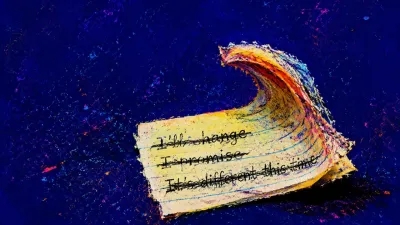
“I’m not stuck,” they said, with a laugh that didn’t reach their eyes. “I’m just trying to be responsible.” Their cursor hovered over the track selection drop-down. Then—almost on instinct—they alt-tabbed to a requirements FAQ. Then LinkedIn. Then back to Google Docs, where the first paragraph of their statement had been rewritten so many times it had its own little tragic arc in version history.
It wasn’t “anxiety” in the abstract. It was a tight jaw that made their words come out clipped. It was shoulders lifted like they were bracing for impact. It was that hollow, buzzy feeling in the chest you get when you’re racing a clock but the finish line keeps moving.
“We’re not here to predict your whole life,” I told them, my voice low and steady over the hum of my café’s espresso machine cooling down in the background. “We’re here to find clarity—enough clarity to choose a next step tonight without needing perfect certainty.”
Choosing the Compass: The Decision Cross Spread
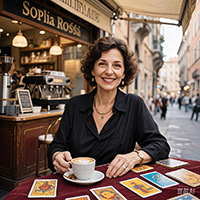
I asked Jordan to put both feet on the floor and take one slow breath—nothing mystical, just a clean transition from spiraling to focusing. While they inhaled, I shuffled on my side of the call, the cards making that familiar soft riffle sound like dry leaves. The scent of coffee lingered in my closed café; outside, the street had finally gone quiet.
“For a thesis track vs capstone decision under a deadline,” I said, “I like a simple structure that doesn’t create more noise.”
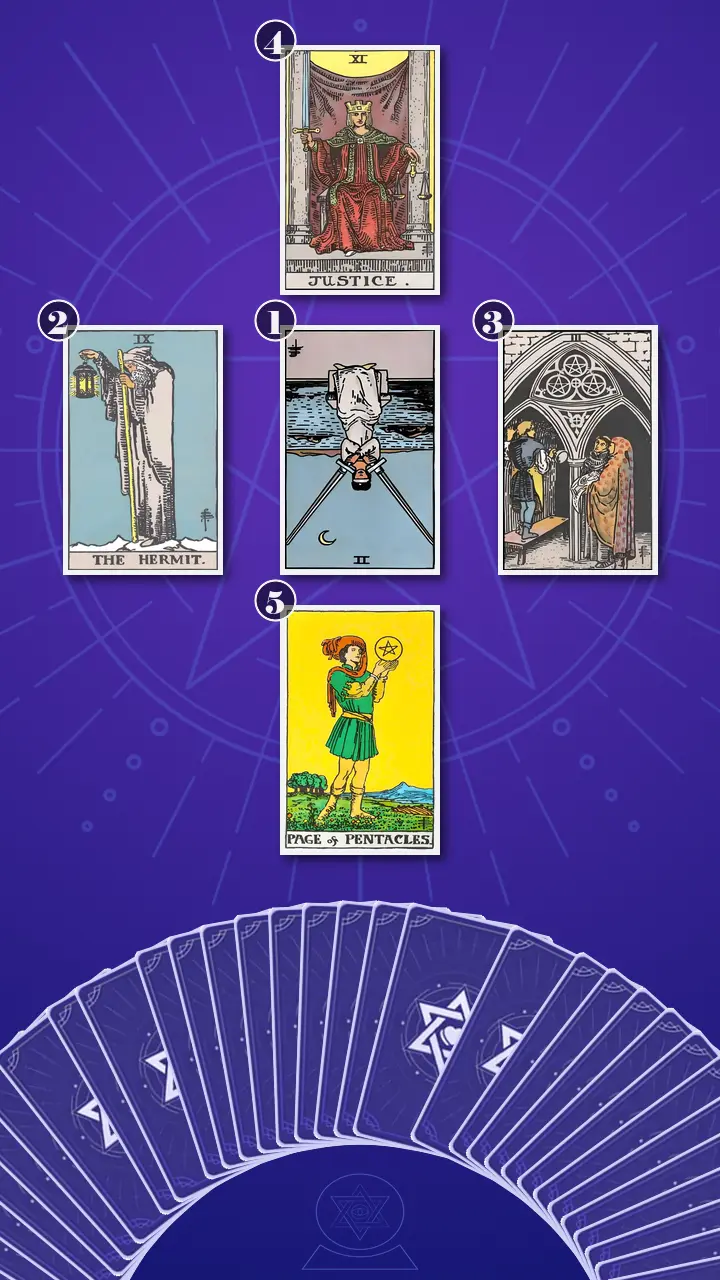
Today, I used a five-card layout called the Decision Cross. If you’re wondering how tarot works in a situation like this: I’m not using it to hand down fate. I’m using it as a mirror and a map—something that helps you name what’s driving the freeze, compare two real options, and turn insight into a doable action plan.
This spread is perfect for analysis paralysis because it externalizes the tug-of-war. Card 1 goes in the center: the stuck point you can actually see in real life. Card 2 on the left is Option A (here, the honors thesis). Card 3 on the right is Option B (the capstone). Card 4 above is your criteria—what you must weigh so the choice is fair to you, not to LinkedIn. Card 5 below is the next step that turns clarity into motion.
Reading the Map: Two Paths, One Deadline
Position 1: The present decision paralysis (what it looks like on your screen and in your body)
“Now flipped,” I said, “is the card representing the present decision paralysis and the most observable way it’s showing up as the deadline approaches.”
Two of Swords, reversed.
“Okay,” Jordan breathed out, and it came out sharp—half laugh, half wince. “That’s… rude.”
I nodded, because I could already feel how precise it was. The Two of Swords is the classic stalemate: two equal options held at the chest, a blindfold on, pretending that not choosing is neutral. Reversed, the energy isn’t balanced anymore—it’s blocked and leaking. The blindfold doesn’t stay snug. The tide behind you rises anyway. That’s the deadline pressure: the moment when your old coping strategy—‘I’ll decide when I’m 100% sure’—stops working.
And the modern-life scene couldn’t have been more exact: 11:47 p.m., two monitors, the portal on one side and the spreadsheet on the other, bouncing between tabs and polishing the first paragraph because the track-selection question feels like locking a door.
“More research isn’t always more clarity—sometimes it’s just a prettier form of avoidance,” I said, carefully, so it landed without shame. “Your brain is calling it ‘responsible.’ Your body is calling it ‘unsafe.’”
I mirrored the loop out loud—two tabs, one paragraph rewritten, the Reddit thread about thesis horror stories, the sudden stomach-drop when a classmate posts a lab photo. Then I offered the quiet contrast: the short-term safety of gathering more info versus the long-term freedom of making a committed choice.
Jordan’s shoulders didn’t relax yet, but their hand stopped reaching for the trackpad. They stared at the screen like they were seeing the loop as an object for the first time.
Position 2: Option A — the honors thesis track (what it asks of you, what it grows in you)
“Now flipped is the card representing Option A: the honors thesis track—what it asks of you and what it grows in you.”
The Hermit, upright.
I glanced at Jordan’s face as I spoke, because The Hermit can scare people who already feel isolated. “This isn’t a ‘go live in a cave’ card,” I said. “It’s a focused-beam card.”
The Hermit’s energy is balanced and concentrated: one lantern, one path, one question worth following. In modern terms, thesis looks like blocking off a weekly deep-work window, meeting with a supervisor, and choosing a research question that’s more about curiosity than optics. It’s quieter and narrower—less ‘prove yourself,’ more ‘follow the thread.’
“If you chose thesis,” I asked, “what question could you live with for months—even on the weeks you’re tired and not trying to impress anyone?”
Jordan swallowed. Their eyes shifted up and left—the way people look when they’re trying to remember what they wanted before comparison got involved. “I… do like the idea of going deep,” they admitted. “But I’m scared the solitude turns into me spiraling.”
That told me something important: The Hermit wasn’t the problem. The problem was the belief that being alone with the work would become a referendum on competence.
Position 3: Option B — the capstone (what it asks of you, what it grows in you)
“Now flipped is the card representing Option B: the capstone—what it asks of you and what it grows in you.”
Three of Pentacles, upright.
“This one is a workshop,” I said. “Blueprints. Roles. Feedback.” The Three of Pentacles is steady, supported energy—you learn by building, in public, with checkpoints that keep you honest.
In modern life, capstone looks like a structured project with milestones: proposal, quick feedback, revisions, a tangible deliverable you can show. You’re not alone with your thoughts; you’re in a system of accountability that turns ‘not sure’ into ‘we’ll test and refine.’
I watched Jordan’s shoulders shift down a fraction, like their body recognized the relief of a feedback loop. “That’s the thing,” they said. “When someone’s waiting on me, I actually do the work. But then I worry I’m choosing it because it feels safer, not because it’s meaningful.”
“Let’s name the truth without ranking it,” I said. “Thesis is solitary depth. Capstone is collaborative craftsmanship. Neither is morally better. And—say it with me—prestige is not a decision criterion unless you can still sleep.”
When Justice Spoke: Criteria Over Certainty
Position 4: The decision criteria (what’s fair to you, not what looks impressive)
I let the silence sit for one beat—the way it does when a question finally stops being theoretical.
“Now flipped,” I said, “is the card representing the decision criteria: what you must weigh to choose in a way that protects your capacity and aligns with your values.”
Justice, upright.
Justice is balanced and clarifying. It’s the opposite of doom-scrolling for proof. It asks for explicit standards: scales in one hand, sword in the other. In modern terms, it’s a grading rubric you write for your own life: you decide what counts, then you apply it consistently. Not a vibe check—an honesty check.
And because I’ve spent twenty years watching people try to outrun their own choices with “just one more,” I reached for my favorite lens—what I call Knowledge Filtration. “You know how a coffee filter works?” I asked Jordan. “It doesn’t give you more grounds. It gives you less noise. It keeps what nourishes you and leaves what makes you bitter.”
“Justice is that filter,” I continued. “Your job is not to drink every opinion on Reddit and LinkedIn. Your job is to decide what actually belongs in the cup.”
Jordan’s eyes narrowed—not in disagreement, but in recognition. I could almost see them wanting to grab a pen instead of another tab.
Setup: In that moment, they were trapped in the familiar late-night logic: If I just find the perfect feeling, I’ll know which track is correct. If I don’t feel sure, it means I’m not capable. Their jaw clenched again as if certainty could be forced by pressure.
Delivery:
Stop waiting behind the blindfold for a perfect feeling; choose by your criteria and let Justice’s scales and sword make the clean cut.
I didn’t rush past it. I let it hang in the air like the final note of a song you suddenly understand.
Reinforcement: Jordan’s reaction didn’t arrive as a tidy “aha.” It came in a small chain. First, a physiological freeze: their fingers stopped tapping the trackpad mid-air, hovering like they’d been caught in the act of spiraling. Second, the cognition seeped in: their gaze unfocused, not on the screen anymore but somewhere behind it, like they were replaying every advisor meeting where their voice stalled on the sentence, “I’m choosing ____.” Third, the release: a breath that finally reached their ribs. Their shoulders dropped, and with it, a flicker of anger showed up—brief, honest. “But if I choose by criteria,” they said, voice tight, “doesn’t that mean I could’ve done this all along? Like… I’ve wasted so much time.”
“No,” I said gently. “It means you’ve been trying to protect yourself. That’s different. Tonight we’re renegotiating the contract: competence isn’t proven by picking perfectly; it’s proven by choosing and following through.”
I invited them into the practical spell that isn’t mystical at all: “Set a 10-minute timer. Write three headers: (1) Energy this semester—hours plus stress, (2) Learning you actually want, (3) Future usefulness. Score thesis vs capstone 1–5—fast, no extra research. If your chest tightens, put both feet on the floor and score only #1. Stop when the timer ends, even if it feels unfinished.”
Then I asked, exactly as promised: “Now, with this new lens—criteria over certainty—can you think of a moment last week when you were hovering over Submit, and this would’ve changed how it felt in your body?”
Jordan blinked hard. “On the Green Line,” they said. “I was refreshing the requirements page like it was going to save me. If I had a rubric… I could’ve just… been done.”
That was the shift in plain terms: from deadline-driven choice paralysis and comparison-fueled self-doubt to criteria-based commitment and grounded follow-through. Not a personality transplant. A new decision structure.
Version 1 Is Allowed to Be Real
Position 5: The next supportive step (momentum without a perfect plan)
“Now flipped,” I said, “is the card representing the most supportive next step that converts clarity into motion for the application—without needing a perfect plan.”
Page of Pentacles, upright.
This Page is grounded and beginner-friendly. They don’t wait to feel confident. They build confidence by doing one real thing—holding the pentacle at eye level like, this is what’s actually in my hands.
In modern life, it’s Version 1 shipping: pick the track line, complete the remaining fields, attach the draft you already have, and submit. “Your ‘Version 1’ is allowed to be real,” I told Jordan. “Right now, rewriting the intro is control. Completing the remaining boxes is movement.”
Jordan’s mouth twitched into something like a smile—still tired, but less trapped. “So you’re saying I don’t need to be sure,” they said, “I need to be… consistent?”
“Yes,” I said. “Stop hunting for certainty. Write a rubric. And then act like your rubric counts.”
The One-Sheet Plan for the Next 48 Hours
Here’s the story the spread told, start to finish: You began in Air under strain—Two of Swords reversed—trying to think your way into emotional certainty, and getting louder noise instead. Then you saw the two legitimate work styles: The Hermit’s solitary depth versus the Three of Pentacles’ collaborative iteration. Justice stepped in as the turning point: not “Which is objectively best?” but “What’s fair to me?” And the Page of Pentacles landed the plane: one small, concrete action that turns a choice into a submission.
The cognitive blind spot was subtle but powerful: Jordan was treating the track choice like a verdict on their competence. In that frame, of course they kept comparing, rewriting, and outsourcing the decision—because committing felt like stepping into daylight without armor. The transformation direction was clear: move from certainty-seeking to criteria-setting, then commit in a time-boxed way.
Here are the next steps—actionable advice you can do even if it’s late and your brain wants to argue:
- Make the “Justice Rubric” (10 minutes)Open a note titled Justice Rubric. Write exactly three criteria: (1) time/energy this semester, (2) learning I actually want, (3) future usefulness. Score Thesis vs Capstone 1–5 under each—fast, no researching.If your brain calls it “too simplistic,” you’re doing it right. You’re filtering noise, like a coffee filter—grounds stay out of the cup. If anxiety spikes, score only criterion #1 and stop when the timer ends.
- Name one non-negotiable (60 seconds)Circle the one criterion you refuse to sacrifice this semester (sleep, part-time work hours, mental bandwidth). Let that be the boundary that breaks ties.Say it out loud once: “My rubric is my boundary.” It’s harder for comparison fatigue to argue with a spoken line.
- Do a Page-of-Pentacles “Version 1 Submit” sprint (25 minutes)Set a 25-minute timer. Fill every application field you can without rewriting. Upload the draft you already have. Any new research urge goes into a “Parking Lot” list—no new tabs.If you’re caffeine-sensitive late at night, don’t try to brute-force it with another coffee. A little water, a small snack, and a calmer drink can keep your hands steadier for the last three checkboxes.

Ownership, Not Certainty
Five days later, I got a message from Jordan: “I did the rubric on my Notes app. Capstone won on time/energy, thesis won on learning, but my non-negotiable was sleep. I filled the rest of the form in one sprint and hit submit. I slept, like… a real sleep.”
They added, almost as an afterthought: “I still woke up and thought, ‘What if I chose wrong?’—but I laughed a little. It didn’t feel like a life sentence anymore.”
That’s the Journey to Clarity I trust: not dramatic certainty, but grounded relief. A decision you can explain to yourself. A next step you can complete. A choice treated as a semester experiment, not a lifetime verdict.
When the deadline is loud and everyone else sounds certain, it’s easy to treat your choice like a verdict on your competence—so you keep thinking, rewriting, and comparing, because committing feels like stepping into daylight without armor.
If you trusted a simple rubric more than a perfect feeling, what would your “good-enough” next step look like in the next 24 hours—one sentence, one checkbox, one click?
Every reading at AceTarot is designed to connect you with your inner wisdom and empower your next step.
Learn more about our Journey to Clarity.