From Red-Ink Shame to Draft-First Momentum: A Postgrad Reset

The 10:32 p.m. Formatting Spiral
If you keep a photo of an old red-inked essay in your camera roll and somehow it becomes required viewing right before you draft anything important, you’re not alone—and yes, it fuels procrastination-by-polishing.
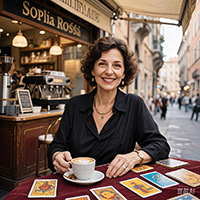
Maya (name changed for privacy) slid into the chair across from me in the back corner of my little Italian café, the one that still smells like espresso even after we’ve flipped the sign to closed. Outside, London did its usual late-night thing—wet pavement, bus brakes hissing, someone laughing too loudly on the corner—while inside the only sound was my old grinder settling down and her laptop fan spinning up like it had a grudge.
“It’s stupid,” she said, already opening her phone. “I’m trying to start this essay, and then I… I look at an old photo. Like, an actual photo of a marked-up page from undergrad. The margins are just… red.”
She tapped her camera roll and zoomed in, as if the ink could still bite. I watched her throat tighten, the way her shoulders crept up toward her ears. It wasn’t dramatic. It was automatic—like her body had learned this sequence by heart.
“Then I open the doc,” she continued, “and instead of writing, I fix headings. Or I do citations. Or I rewrite the first paragraph until it’s… not embarrassing. And then it’s 1 a.m., and I’ve done nothing.”
I’ve heard a thousand versions of this, but her detail was sharp in a way that made it hurt: a blank Google Doc, an old red-inked essay photo, and a brain that treats drafting like a high-stakes judgment. That’s not laziness. That’s a threat response wearing an academic hoodie.
What she was asking—without quite saying it yet—was: Why does old feedback make me procrastinate writing? And underneath that: How do I write when my inner critic is loud and sounds like my tutor?
Shame has a very specific texture. In Maya, it showed up like a tight, braced band across the chest—like she was sitting in front of a blank page with a red pen already hovering over it, waiting to strike.
“You’re not procrastinating—you’re bracing,” I told her gently. “And bracing makes sense when your brain thinks critique is a verdict. Let’s make a map of what’s actually happening, and then we’ll build you a way through it—one that doesn’t require you to become fearless overnight. Today is a Journey to Clarity, not a performance review.”

Choosing the Compass: The Transformation Path Grid (6) Spread
I asked Maya to take one slow breath with me—nothing mystical, just a clean transition from spiraling into observing. I shuffled my deck the way I’ve shuffled coffee beans for years: steady, practiced, like you’re letting the noise settle so you can taste what’s actually there.
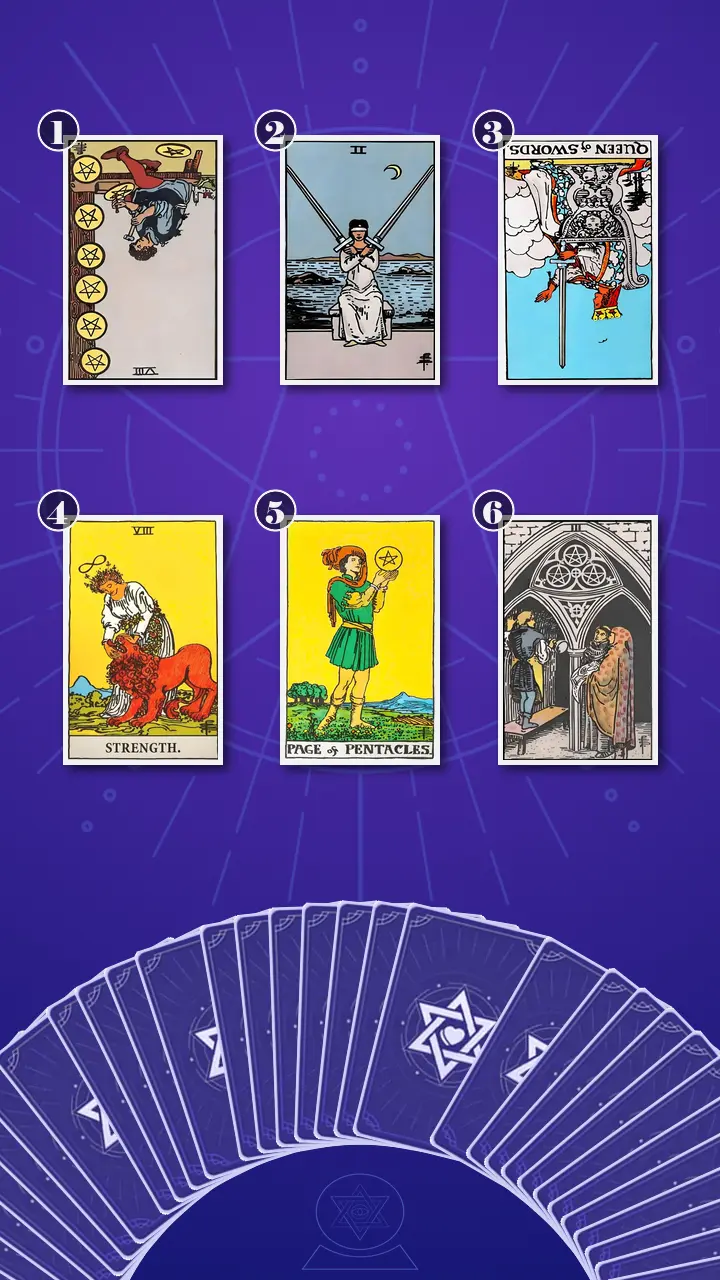
“We’re going to use a spread I call the Transformation Path Grid (6) · Context Edition,” I said, setting six cards into a simple 2×3 grid on the table. “It reads left-to-right like moving through a writing session.”
For you reading this: I chose this spread because it’s built for exactly this kind of problem—procrastination that isn’t about time management, but about an old evaluative imprint. It helps us link the visible loop (formatting, sources, rewriting the intro) to the exact freeze moment, then to the internalized message behind it, and finally into a concrete, low-stakes practice that rebuilds trust. It’s not about predicting external outcomes. It’s about converting insight into actionable advice.
“The first card shows your current procrastination pattern—what you’re doing instead of drafting,” I explained. “The second shows the immediate block: the moment your nervous system decides it’s safer to stall. The third goes deeper: the ‘red ink’ voice you internalized. Then we hit the pivot—the catalyst that changes your relationship to critique. The last two are your next steps and what integration looks like when feedback becomes craft notes instead of a character judgement.”
Maya nodded, but it was the kind of nod that says, Please just tell me there’s a way out of this that doesn’t involve hating myself into productivity.
Reading the Top Row: The Stuck Loop
Position 1 — What you’re doing instead of drafting: Eight of Pentacles (reversed)
I turned over the first card. “Now we open the card representing your current procrastination pattern around writing: what you’re doing instead of drafting.”
Eight of Pentacles, reversed.
This card is usually about steady craft—showing up, building skill coin by coin. Reversed, the repetition gets disrupted. Practice turns into over-fiddling. Work becomes… busywork.
And the modern-life scene landed almost too cleanly: It’s late, you’re at your desk with the essay doc open, and you’re doing immaculate ‘craft’—fixing headings, perfecting citations, adjusting spacing—because those tasks can’t be judged the way your ideas can. Hours pass, the page looks tidy, and you still haven’t written the argument. Procrastination is wearing a productivity outfit.
Maya gave a small sound—half laugh, half wince. Then she shook her head like she was annoyed at the accuracy. “That’s… actually rude,” she said, but there was relief in it too. Like being seen without being scolded.
I watched a three-step micro reaction ripple through her: her shoulders locked for a beat (freeze), her eyes flicked down to the card and went unfocused like she was replaying last night (recognition), and then the laugh escaped with a sharp exhale (release). That’s the body admitting the truth before the mind argues.
“Here’s the energy dynamic,” I said. “This is Earth energy—practical, grounded—blocked. Not because you don’t care, but because you’re demanding expert-level output from apprentice-level drafts. Your desk becomes a craftsperson’s bench, but the only coins you’re carving are headings and citations.”
“The document looks cleaner,” I added softly, “and the argument still doesn’t exist.”
Position 2 — The freeze moment: Two of Swords (upright)
I moved to the next card. “Now we open the card representing the immediate block: what the red-ink memory triggers in your nervous system right before you stall.”
Two of Swords, upright.
Blindfold. Crossed arms. Still water behind. This is the pause that feels like protection.
The modern-life scenario was exactly the moment she’d described: You open a blank doc, feel the tension spike, and then you start holding two impossible standards at once: ‘It has to be strong’ and ‘I can’t risk being wrong.’ So you pause, tab-switch, and stall. The session ends with no real text because not committing feels safer than being seen mid-thought.
“This is the cursor blinking,” I said. “Fingers hovering. Breath getting shallow. And then: ‘I’ll just… format. I’ll just… find one more source. Then I’ll start.’”
Two of Swords isn’t laziness. It’s a nervous system trying to stay out of danger by refusing to choose. Draft vs edit. Start vs stay safe. And as long as nothing is committed to the page, nothing can be judged.
I leaned in a little. “One of my simplest rules—because it stops this card from taking over—is: Drafting is for making. Editing is for judging. Mixing them is how you freeze.”
Maya nodded, slow and reluctant, like she could feel how true it was and also how hard it would be to stop blending the two.
Position 3 — The internalized red-ink voice: Queen of Swords (reversed)
I touched the third card. “Now we open the card representing the old feedback message you internalized: the critic voice or rule that formed from past evaluation.”
Queen of Swords, reversed.
Upright, she’s discernment—clean thinking, high standards, clear communication. Reversed, the blade doesn’t clarify. It cuts. It turns ‘standards’ into a punishment system.
The modern-life scenario was brutal in its familiarity: The old red-ink feedback isn’t just a memory—it’s now a voice that grades you in real time. Before you’ve even finished a paragraph, you can ‘hear’ the critique: sloppy, unclear, not rigorous. You delete sentences mid-creation and try to write in a ‘safe’ voice, which makes the work feel even more like a performance review.
“This card is Grammarly set to ‘roast mode,’” I said, a little wryly. “Technically correct. Emotionally violent.”
Then I used the analogy I’ve seen crack people open: “It’s like you have Track Changes in your brain. You haven’t even written the paragraph, and the Queen is already leaving margin comments.”
I let the inner monologue take shape out loud, because it’s always easier to hear it when someone else says it gently: “If they see this, they’ll think I don’t belong. If they mark it up again, it proves I didn’t learn. If the first page isn’t strong, the whole thing falls apart.”
Maya’s jaw tightened at the exact moment I said “don’t belong.” Her throat moved like she swallowed something sharp. That was the body cue the card was pointing to: discernment vs punishment, and the punishment arriving before creation.
“This is the major blockage,” I said plainly. “The red ink you fear isn’t only what was written back then. It’s the tone you now use on yourself while drafting.”
She stared at the Queen for a long second, then said quietly, “So… I’m doing it to myself.” It wasn’t self-blame. It was grief—like realizing you’ve been living with an always-on critic in your flat, and you forgot you were allowed to ask it to leave the room.
When Strength Spoke: Taming the Red Pen
Position 4 — The turning point (Key Card): Strength (upright)
Before I turned the next card, the café felt like it got quieter—not silent, just more focused. Even the street noise outside thinned into a soft hush, like the city was holding its breath with us.
“We’re flipping the turning point now,” I told her. “This is the card for the inner capacity that changes your relationship to critique so you can keep working even while uncomfortable.”
Strength, upright.
In Strength, the lion isn’t destroyed. It’s steadied. The hands are gentle, but they’re not weak. This card is regulated courage—staying present with intensity without letting it run the process.
I translated it into her exact life: You feel the familiar brace in your throat and shoulders, and instead of negotiating with it for an hour, you do one small regulating move—exhale longer than you inhale, drop your shoulders, set a timer. The inner critic is still there, but you don’t obey it. You let the draft exist first, then decide what to do with it later.
Then I slowed down, because this is where the whole reading pivots.
Setup. She was still trapped in that 10:30 p.m. scene—blank Google Doc, camera roll, the sensation that a marker was already in the room. In her mind, the only safe draft was a draft that couldn’t be criticized. Which meant: no draft. That’s the trap.
Delivery.
Not ‘fight the red pen’—practice taming it, like Strength’s calm hands on the lion, so your draft can exist before it’s evaluated.
I let it hang there for a beat, the way you let espresso bloom before you stir—so the real flavor has time to rise.
Reinforcement. Maya’s reaction didn’t arrive as instant relief. It arrived as resistance—honest, hot, and protective.
First, she went still. Breath paused halfway in. Her fingers hovered above the edge of her phone like she’d been caught doing something. Second, her eyes narrowed, not at me but at the idea—like her brain was running a quick audit: But if I’m not fighting it, doesn’t that mean I’m letting it win? Third, she exhaled sharply and her voice came out louder than before.
“But that sounds like… accepting that it’s there,” she said. “And if it’s there, doesn’t it mean the criticism is true? Like—what if I’m actually not good enough?”
That was the unexpected reaction, the one that matters: not tears, not softness—anger at the implication of changing the rules. Because part of her had survived by obeying the red pen early, hoping compliance would prevent humiliation later.
“I hear you,” I said, steady. “And I want to be really clear: Strength isn’t surrendering to the critic. It’s refusing to let the critic set the timing.”
Then I used one of my signature phrases because it’s the cleanest way I know to separate truth from terror: The red pen isn’t the problem. The timing is.
“Feedback can be useful,” I continued. “But feedback during drafting is like trying to run a coffee tasting while the beans are still green. You’re judging something that hasn’t even been roasted yet.”
This is where my café brain always kicks in—my own quiet flashback. I’ve watched people ruin perfectly good beans by over-correcting too early: grinding too fine because they’re afraid it’ll be weak, then choking the extraction and blaming themselves for ‘not knowing coffee.’ When I saw Strength, I thought: Same pattern. Same fix.
“Let me give you a tool from my world,” I said. “I call it Knowledge Filtration. A coffee filter doesn’t yell at the water for being messy. It simply separates later. Drafting is the pour. Editing is the filter. If you try to filter before you pour, you just… sit there holding a dry paper cone, feeling judged by it.”
Her face changed in tiny increments—forehead smoothing, lips parting slightly. The anger didn’t vanish, but it softened into something more workable.
“Okay,” she said, almost to herself. “So it’s not ‘be perfect so you won’t be hurt.’ It’s ‘make something first so feedback has something real to work on.’”
“Exactly,” I said. “That’s the key shift: from trying to pre-empt criticism with perfection to treating feedback as neutral data you can use after you’ve produced a full draft.”
I watched her shoulders drop, just a fraction. Then a deeper breath. The tightness in her chest didn’t magically disappear—but it loosened enough for movement.
“Now,” I asked, “with that perspective: think back to last week. Was there a moment—cursor blinking, tab-switching, camera roll open—where this would have changed how it felt in your body?”
She swallowed, then nodded once. “Tuesday night,” she said. “I was literally doing the red-ink thing. And I could’ve… just written the ugly version. Like, on purpose.”
That’s the emotional transformation in real time: from braced shame and evaluation dread to regulated courage and steady draft-first momentum. Not a personality transplant. A nervous system learning a new sequence.
The Learner’s Plan: Turning Courage into a Draft
Position 5 — The next step this week: Page of Pentacles (upright)
I turned over the fifth card. “Now we open the card representing your actionable next step for this week: a small, practical drafting experiment that rebuilds trust through repetition.”
Page of Pentacles, upright.
This is the student card. The apprentice. The one who’s allowed to be in training mode instead of verdict mode.
In modern life, it sounded like this: You pick a beginner-friendly goal for the week—thesis + three paragraphs, or a full rough draft—then treat it like training. You’re not trying to impress anyone on the first pass. You’re building something you can revise. The win is that you produced material that can be improved.
Maya let out a breath that was almost a laugh, but more skeptical than amused. “It feels too simple,” she said. “Like… that can’t be the fix.”
“That skepticism is normal,” I said. “Because your system is addicted to intensity. ‘Simple’ feels like ‘not serious.’ But Page of Pentacles is serious in a different way: measurable, boring, consistent.”
Then I brought in another one of my café diagnostics—the kind that makes studying and writing feel less like a moral trial and more like logistics. “Quick question,” I asked. “When do you usually try to write? And what’s your caffeine like?”
She blinked. “Late. Like… 10:30 p.m. And honestly? Coffee to survive.”
“Okay,” I said, and this is where my Focus Period Diagnosis clicks in. “Some people can do espresso at 9 p.m. and sleep like a saint. Some people get a caffeine spike that feels exactly like anxiety—tight chest, racing thoughts, harsher inner voice. If you’re caffeine-sensitive, late-night coffee can accidentally amplify your Two of Swords freeze and your Queen of Swords ‘roast mode.’”
“So I’m not broken,” she said slowly. “I’m just… trying to draft in a body state that feels like danger.”
“That’s a very sane way to put it,” I replied. “We can adjust the environment without changing your identity.”
Position 6 — Integration: Three of Pentacles (upright)
I turned over the last card. “Now we open the card representing integration: what a healthy feedback relationship looks like when critique stops being a verdict on your worth.”
Three of Pentacles, upright.
This is craft in community. Standards, yes—but also structure, collaboration, and stage-appropriate evaluation.
Modern-life translation: You share a draft at the right stage with the right person and ask for targeted feedback (flow, clarity, evidence). Comments become craft notes, not character judgements. You start experiencing evaluation as part of making good work—like a design review—rather than a personal takedown.
“This card is a shared Google Doc with ‘Comment only’ on,” I said. “Not a public roast. Not a verdict. A review of the work—at the right moment.”
Maya’s gaze stayed on the card as if she was trying to imagine a universe where feedback didn’t equal humiliation. “I think I always ask for ‘general thoughts,’” she admitted. “And then I spiral.”
“Three of Pentacles wants you to ask for one thing,” I said. “One targeted question. That’s how you keep feedback as data.”
From Insight to Action: The “Ugly Draft v0” Protocol for Finding Clarity
When I looked across all six cards, the story was painfully coherent. The Eight of Pentacles reversed showed the visible loop: productive procrastination—polishing coins instead of building the piece. The Two of Swords named the freeze: the moment your body decides words are too risky. The Queen of Swords reversed revealed the engine beneath it all: internalized criticism turning discernment into punishment, like Track Changes in your brain. And then Strength—the antidote—didn’t demand confidence. It taught regulation. Finally, the Page and Three of Pentacles grounded everything into practice and collaboration: small reps, then safe, stage-appropriate feedback.
The cognitive blind spot here is subtle but huge: you’ve been treating drafting like the place where you earn belonging. But drafting is not a verdict stage—it’s a material-gathering stage. When you try to earn worth in v0, you trigger shame, which triggers avoidance, which reinforces the belief that you “only work under pressure.”
So the transformation direction is simple and brave: finish first, evaluate later. Feedback becomes neutral data you can use after a complete rough draft exists.
I wrote Maya a practical plan on a café notepad—the kind that’s meant to survive real life, not just sound good in a session.
- Name the file (and the container)Create a document called “Essay — Ugly Draft v0”. Set a timer for 20 minutes. Write without touching backspace for anything except typos. If you feel the urge to perfect, type a placeholder like [FIX THIS LATER] and keep moving.Expect the inner critic to get louder at first. That’s normal—not a sign you’re doing it wrong. The win is producing text while braced.
- Bullet-first thesis (no intro allowed)Start with three bullets only: (1) a messy one-sentence thesis, (2) Point A + the source you’ll use, (3) Point B + the source you’ll use. No intro. No citation formatting. When the timer ends, stop on purpose.If your chest tightens, put one hand on your sternum, take 3 slow breaths, and choose the smallest next move: one more bullet—or close the laptop without self-punishment.
- Ask for “craft notes,” not a verdictShare your rough draft with one constructive person (tutor, classmate, writing centre) and ask for ONE specific feedback type: argument flow or clarity or evidence choice. Use “Comment only” settings and turn off notifications for two hours after sending if you tend to obsess-refresh.Don’t ask for “general thoughts” if you know that spirals you. Choose the right stage, the right audience, and one question.
Then, because I’m me, I added one more sensory anchor—something to replace the red-ink camera roll ritual with a kinder one. I pulled a cappuccino for her and used a spoon to drag a line through the foam, writing three words like a tiny spell for the nervous system:
Ugly Draft v0
“Take a photo of this,” I said. “Not for Instagram. For you. If your thumb is going to drift to the old red-ink picture, give it a new default. A different cue. A different beginning.”
It’s a version of my Latte Memory Technique—not because foam is magical, but because memory is. Your brain learns by association. We can give it a new association on purpose.
And if she wanted to get even more practical, I gave her an optional café-owner add-on: a simple Study Blend Aromas idea. “Pick one specific coffee or tea that equals ‘drafting mode’—and only drafting mode,” I suggested. “Not doom-scrolling. Not formatting. Your senses can become a boundary.”

A Week Later: Ownership, Not Certainty
Six days later, I got a message from Maya while I was stacking cups for the morning rush.
“I did the Ugly Draft v0 thing,” she wrote. “I hated the first five minutes. Then it got… normal? I got the thesis + two body paragraphs down. I sent it to my tutor with a specific question about argument flow. I didn’t die.”
Then she added: “I still woke up the next day thinking, ‘What if it’s wrong?’ But it was quieter. And I started again anyway.”
That’s what I mean by clarity. Not a thunderbolt. A small looseness. A jaw unclenching. A draft existing on the page—imperfect, real, and workable.
In our Journey to Clarity, the cards didn’t promise her a life without critique. They showed her something more useful: how tarot works as a mirror and a method. The method was an Air-to-Earth reset—moving from courtroom-like self-cross-examination into measurable practice, and then into collaborative feedback that treats writing as craft.
When you sit down to write and your chest goes tight like a red pen is already hovering over your first sentence, it’s not laziness—it’s your brain treating critique like a verdict on your worth.
If you didn’t have to earn your belonging in the first draft, what would you let yourself put on the page in the next 20 minutes—messy, real, and unfinished on purpose?