From 2 a.m. GPA Refreshing to Scheduled Check-Ins That Let You Sleep
Finding Clarity in the 2:03 a.m. Portal Glow
If you’ve ever told yourself “I’ll sleep right after I check my GPA” and then watched it become 2:00 a.m. anyway, you already know what compulsive checking feels like.
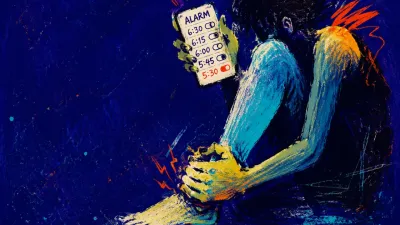
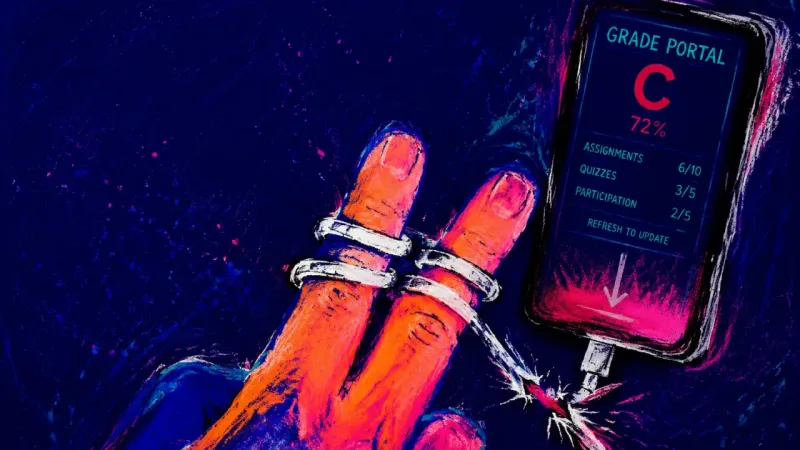
Taylor sat upright in bed like she’d been startled awake, even though she hadn’t slept yet. Her Toronto apartment was dark except for the phone glow on the lowest brightness, that washed-out blue reflecting off her duvet. The radiator clicked like it was keeping time. The charging cable was warm where it looped over her fingers.
Refresh. Pause. Refresh again.
Then she flipped to Notes and typed, If I get an 82 on the midterm, GPA becomes… like she could do the math fast enough to outrun the feeling in her chest.
It wasn’t just worry. It was that wired, sleepless restlessness—like her body was begging to power down while her brain kept hitting a “low battery” alert that wouldn’t stop popping up. Her jaw stayed clenched, the way you brace before impact.
“If I just know the number, I can finally sleep,” she said, almost embarrassed by how rehearsed it sounded.
I nodded, letting that sentence land without judging it. “That makes sense. But I want to name what I’m hearing really cleanly: you want reassurance by knowing your GPA right now, and you’re also afraid of seeing a lower number. That push-pull is the engine.”
She exhaled like she’d been holding air hostage. “I don’t even want to look,” she added, eyes on the screen. “But I can’t stop looking.”
“You’re not checking for info—you’re checking for safety,” I said. “And tonight, our goal is simple: we’re going to figure out what pattern is running you at 2 a.m.—and what your next, realistic step toward clarity could be, without turning your sleep into collateral damage.”

Choosing the Compass: The Celtic Cross Spread
I asked Taylor to put her phone face-down for a minute—not as a dramatic ritual, just a nervous-system reset—and to take one slower exhale than inhale. Then I shuffled while she held the question in her mind: After I refresh my GPA at 2 a.m., what pattern is running me?
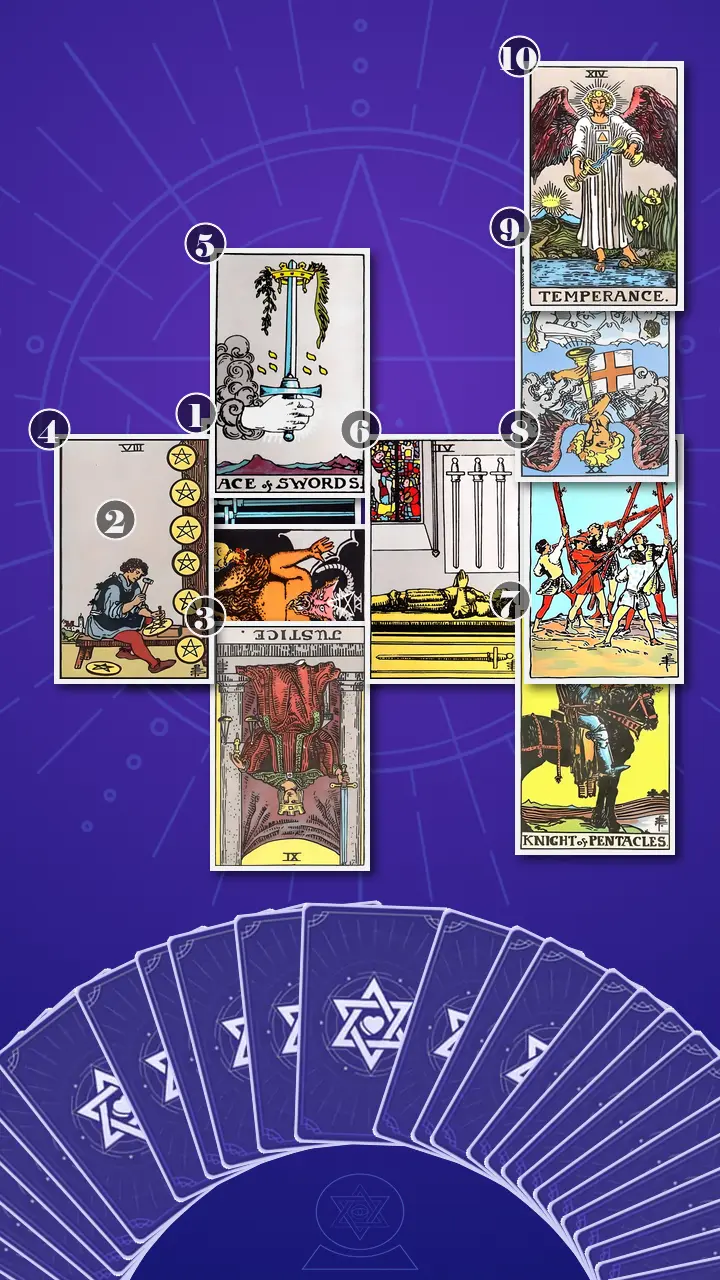
“Tonight we’ll use a classic: the Celtic Cross spread,” I told her. “It’s one of my favorites when someone feels stuck in a loop, because it maps the whole chain—what’s happening on the surface, what’s driving it underneath, what your environment is reinforcing, and what a real integration path looks like.”
For anyone reading along: this isn’t a yes/no problem and it’s not a timeline problem. It’s a pattern problem. A late-night GPA refresh spiral is usually the visible symptom of something deeper—worth-and-control getting tangled up with performance data. The Celtic Cross works because it gives us a coherent diagnostic: present distress → core driver → identity stance → social inputs → outcome direction. It’s how tarot works at its best: card meanings in context, translated into actionable advice and next steps.
“The first card,” I said, “will show the live 2 a.m. moment—how it feels in your body and mind. The crossing card will show what turns a check into compulsion. And the last card, the outcome position, won’t ‘predict your GPA’—it will show what changes when you start treating the number as information instead of a verdict.”
Reading the Map: From Loop to Ladder
Position 1 — The live pattern: what’s happening in the 2 a.m. moment
“Now we flip the card that represents the live pattern—what’s happening in the 2 a.m. moment and how it feels in your body and mind.”
Nine of Swords, upright.
“This is almost painfully literal,” I said softly. “2:04 a.m. in bed, half-sitting against your pillows, phone on low brightness, refreshing the portal while your brain runs worst-case headlines: ‘If it dropped, everything changes.’ You’re exhausted, but your mind is loud like it thinks staying awake is how it keeps you safe.”
In energy terms, this is Air (thought) in excess—the mind overriding the body’s need for rest. No new information is coming in, but the brain keeps producing new scenarios anyway, like a browser with 27 tabs open and the loudest one refuses to close.
Taylor gave a short laugh that sounded like it had a bruise under it. “Okay,” she said. “Rude. That’s literally my exact 2 a.m. brain.” She pressed her thumb into her palm like she was trying to ground herself.
Position 2 — The primary challenge: what turns checking into compulsion
“Now we flip the card that represents the primary challenge—what turns checking into compulsion and keeps the loop running.”
The Devil, upright.
“Here’s the hook,” I said. “You know the portal won’t magically update at 2 a.m., but your thumb keeps pulling-to-refresh because the act gives you a tiny hit of control. It’s not about curiosity anymore—it’s a ritual that temporarily numbs the discomfort of not knowing… and then demands you repeat it.”
The Devil is attachment energy in blockage. It turns a neutral tool—information—into an authority. The classic image is chains, but they’re loose. That matters. It means you’re not trapped; you’re trained.
“The way I see it,” I continued, “your phone became an app that’s free to download but charges you in sleep.” I glanced at her. “And the ‘payment’ is the part that makes you feel worse tomorrow, which makes you check again tomorrow night. That’s the loop.”
She swallowed and looked away from the cards, toward the dark window. “It’s like my thumb moves before I decide,” she said.
“Exactly,” I said. “That’s why we don’t fix this by ‘arguing with yourself’ at 2 a.m. We fix it by adding friction—tiny choice points. Loose chains mean you can create a pause.”
Position 3 — The root driver: the deeper belief underneath the behavior
“Now we flip the card that represents the root driver—the deeper belief or fear underneath the checking behavior.”
Justice, reversed.
“This is the inner courtroom,” I said, and I felt my voice shift into that calm analyst tone. “In your head, the GPA page becomes a witness stand. One grade is Exhibit A. And your inner voice is the judge who never calls recess.”
Justice reversed is measurement energy in imbalance: precision without compassion. It’s like your brain is running a trial with one piece of evidence and calling it “fair.”
“A GPA is data. Your worth isn’t a spreadsheet cell,” I said, plain as a railing you can grab. “But right now, the fairness system is malfunctioning. You treat a decimal shift like a character assessment, so you re-check not for data—but to see if you’re ‘still acceptable.’”
I couldn’t help the cinematic flash that hit me—maybe because I’m a New York artist and my brain stores symbols like film stills. Justice reversed always reminds me of 12 Angry Men, but set in a dorm room: fluorescent lights, one table, and the verdict already decided before anyone actually talks. That’s what makes it cruel. Not the facts—the rigged process.
Taylor’s shoulders rose, then dropped, then rose again—like her body didn’t know whether it was safe to agree. “I tell myself I’m being responsible,” she said. “But it feels like I’m… sentencing myself.”
“That’s the word,” I said. “Self-sentencing.”
Position 4 — The recent past: what intensified the need to monitor
“Now we flip the card that represents the recent past—what has intensified the need to monitor and re-check.”
Eight of Pentacles, upright.
“You’ve been grinding,” I said. “Rewriting paragraphs. Staying late. Doing the readings. Because you’ve worked so hard, your brain expects immediate feedback, like effort should instantly convert into safety. The portal becomes the proof-check for all that work.”
This card is Earth energy in balance—steady craft. But when it lives next to Justice reversed, the shadow is: you start believing you have to constantly verify your worth with receipts. Diligence turns into surveillance.
Taylor nodded, almost reluctantly. “I can do the work,” she said. “I’m not scared of work. I’m scared of the verdict.”
Position 5 — The conscious aim: what you think checking will give you
“Now we flip the card that represents your conscious aim—what you think checking will give you: clarity, reassurance, control.”
Ace of Swords, upright.
“This is the part of you that wants one clean, decisive answer,” I said. “A single number that feels like it will end uncertainty. Like clarity is a switch you can flip at midnight.”
The Ace of Swords is clarity energy in excess when it turns into urgency—when the mind believes truth must be immediate or it’s unsafe. The mountain range in the background matters: learning is long terrain, not a single snapshot.
“So the question your brain keeps asking is: What is my GPA right now?” I said. “But the question that actually helps you is: What’s my next actionable study move? One is a verdict hunt. One is a plan.”
She stared at the Ace like it offended her by being accurate.
Position 6 — The near-term shift: the next available interruption
“Now we flip the card that represents the near-term shift—the next available energy that can interrupt the habit loop in a realistic way.”
Four of Swords, upright.
The whole reading quieted here—like the radiator clicks got softer, like even her phone stopped buzzing out of respect.
“This is making night a protected space,” I said. “Phone in another room. Portal logged out. A simple shutdown routine your body can learn.”
Four of Swords is rest energy in deficiency right now—your system isn’t getting it. But it’s also the remedy: rest as an active strategy, not a reward you have to earn with a perfect number.
“You’re allowed to stop gathering evidence tonight,” I told her, and I meant it like a permission slip she didn’t have to deserve.
She blinked slowly, like her eyes were adjusting to a different kind of light. “But if I don’t check,” she said, “it feels like I’m being irresponsible.”
“That’s the Devil talking,” I said gently. “Responsibility isn’t the same thing as surveillance.”
Position 7 — The self-position: the role you keep playing
“Now we flip the card that represents you—how you’re identifying yourself in this story and what role you keep playing.”
Knight of Pentacles, upright.
“This is ‘the responsible one,’” I said, and Taylor’s mouth twitched like she’d been called out by name. “You submit on time. You follow plans. You show up. That’s real.”
Knight of Pentacles is steadiness in balance—until it becomes rigidity. The shadow is confusing monitoring with progress, like the only way to be steady is to keep checking the dashboard.
“The Knight’s gift,” I told her, “is consistency with an end point. Stability isn’t frantic. It’s allowed to stop.”
Position 8 — The environment: what culture and peers reinforce
“Now we flip the card that represents your environment—what the surrounding culture, peers, and systems reinforce about performance and comparison.”
Five of Wands, upright.
“This is the group chat energy,” I said. “The LinkedIn humblebrags. The casual ‘what did you get?’ that your nervous system hears as a ranking.”
Five of Wands is noise energy in excess: motion without resolution. Everyone swinging at once, no winner. It’s like being stuck in an arena you never agreed to enter—LinkedIn as the modern Five of Wands arena where everyone looks like they’re winning at once.
“Not every contest deserves your attention,” I said. “Especially not before bed.”
Taylor rubbed her eyes, like she could physically wipe off the comparison feed. “I tell myself I’m just staying informed,” she said. “But my body reacts like it’s an emergency.”
“Because it is—for your nervous system,” I said.
Position 9 — Hopes and fears: what you want the number to prove
“Now we flip the card that represents your hopes and fears—what you secretly want the number to prove, and what you dread it might prove.”
Judgement, reversed.
“You want the GPA to declare ‘you’re safe,’” I said, “and you dread it declaring the opposite. So you keep checking like the verdict might change if you look again, postponing self-acceptance until a metric grants permission.”
Judgement reversed is awakening energy in blockage. The trumpet becomes a notification that exists even when your phone is silent—an imagined call that pulls you out of rest and back into evaluation.
Taylor’s voice got quiet. “It’s never enough to do well,” she said. “I need proof.”
I held that with her for a beat, because that sentence is heavy. Not melodramatic—heavy.
Position 10 — Integration direction: relating to GPA as information, not a verdict
“Now we flip the card that represents the integration direction—what changes when you relate to the GPA as information rather than a verdict.”
Temperance, upright.
Even before I spoke, I felt the atmosphere shift. Like the reading had been building a case and now, finally, we were leaving the courtroom.
“Temperance is moderation, integration, and gentle structure,” I said. “It’s the antidote. It’s not denial. It’s not ‘stop caring.’ It’s a new rhythm.”
In modern life, this looks like a planned check-in, a fair interpretation, and protected nights. You treat the GPA like one ingredient in a bigger recipe—useful, real, but not the whole meal—so your sleep and self-respect don’t get traded for a midnight number.
The Aha Moment: The Steady Pour
Setup. It’s 2:00 a.m., the day is finally quiet, and your thumb is hovering over refresh like it’s the only thing standing between you and sleep. Your mind is trying to force certainty like it’s an emergency switch, because uncertainty feels like irresponsibility.
Delivery.
Stop treating the GPA like a midnight verdict and start treating it like one ingredient you can blend with care—Temperance asks for a steady pour, not a frantic refresh.
And then I let it hang there—no extra coaching, no rushing to soften it. Just the sentence, in the quiet.
Reinforcement. Taylor’s breath caught for a second—an actual freeze. Her fingers hovered mid-air, like her body forgot what the next move was. Then her gaze unfocused, as if her brain was replaying the last week in fast-forward: the portal tab, the Notes app, the same math in different outfits. Finally, her shoulders dropped in a slow, involuntary release, and her mouth opened on a sound that wasn’t quite a laugh and wasn’t quite a sob. Something like: “Oh.”
But the relief wasn’t clean. It came with a flash of anger—the protective kind. “But if I stop treating it like a verdict,” she said, voice tighter again, “does that mean I’ve been… doing this wrong the whole time?”
I shook my head. “No. It means your nervous system chose the fastest tool it could find. That’s not ‘wrong.’ That’s human.” I paused. “And here’s where my brain goes—this is one of my favorite ways to make a pattern visible: Einstein’s thought experiments.”
“Imagine two identical Tuesdays,” I said. “Same classes, same effort, same GPA page. In Universe A, you refresh at 2:03 a.m. and get thirty seconds of certainty. In Universe B, you don’t refresh—but you schedule a ten-minute check tomorrow afternoon, and you protect sleep tonight. Which universe produces better studying, clearer thinking, and more self-respect by Friday?”
Her eyes watered—not dramatic, just honest. “Universe B,” she whispered, like she’d always known it but needed permission to say it.
“Good,” I said. “Now, using this new lens, let me ask you: Now, with this new perspective, can you recall a moment from last week when this insight could’ve made you feel different?”
She stared at the Temperance card and nodded, small. “After my stats quiz,” she said. “I refreshed like… twenty times. If I’d just had a plan—like a steady pour—I think I could’ve put the phone down.”
I let her have that win. “Balance isn’t lowering your standards; it’s changing the rhythm,” I said, and watched her body believe it for half a second longer than before.
This wasn’t just about a decision. It was the first step of an emotional transformation: from wired dread and compulsive monitoring to a grounded steadiness where the number becomes information you use—not a verdict you serve.
Actionable Advice: The One-Page Rhythm That Breaks the Spell
I leaned back and threaded the whole story together, so it wasn’t ten separate card meanings—it was one map.
“Here’s the chain,” I said. “You’ve been working hard (Eight of Pentacles), so your brain craves a clean answer (Ace of Swords). At night, when things go quiet, the mind takes over the body (Nine of Swords). The portal becomes an authority you obey for a hit of safety (The Devil). Underneath it all is a fairness system that’s turned into self-sentencing (Justice reversed), and a fear that you can’t emotionally tolerate being ‘seen’ as less-than (Judgement reversed).”
“And the way out isn’t ‘care less.’ It’s Temperance: a steady rhythm where you’re allowed clarity—just not at 2 a.m. as a nervous-system emergency.”
The cognitive blind spot here is subtle but brutal: you keep treating real-time access like it equals real-time responsibility. As if not checking right now means you’re careless. But the cards are saying the opposite: at 2 a.m., your brain is the least fair judge in the building.
“So,” I said, “we’ll build a tiny structure that your Knight of Pentacles side can follow—without feeding the Devil.”
Taylor frowned. “But I literally don’t have time,” she said, defensive in that familiar way high-achievers get when they’re terrified of slipping. “Between classes and commuting and studying, I can’t add another routine.”
“Totally fair,” I said. “So we won’t add. We’ll swap. You’re already spending time—2 a.m. time. We’re just moving it into daylight and shrinking it.”
- Schedule the ‘Metrics Check’ (10 minutes)Pick one grades/GPA check window for this week (example: Tuesday + Friday at 4:30 p.m.) and put it in Google Calendar as Metrics Check (10 min). Check only during that window.If committing to two days feels like too much, start with one. The win is intentional checking, not perfect behavior.
- Write the 2-Line ‘Fairness Note’Immediately after your scheduled check, open Notes and write two lines: Facts I know: ___ / Stories I’m telling: ___. Date it. Close the app.If your brain wants to argue, don’t fix anything—just separate facts from stories. That’s Justice repaired.
- Build a Boring Night Boundary (add friction)At 11:30 p.m., log out of the portal and remove the shortcut from your home screen (or move it into a folder literally named Tomorrow). Put your phone on Do Not Disturb or Instagram Quiet Mode from 11 p.m.–8 a.m.Expect the first night to feel weird—like you’re being “irresponsible.” That discomfort is the habit losing control, not you failing.
- Do the 3-Minute Four of Swords ResetWhen the urge hits, phone face-down. One hand on your chest. Inhale for 4, exhale for 6, for three minutes. Label it: This is my brain asking for safety.Don’t debate the urge. Delay it by 5 minutes. Choice is the point.
- Try a ‘Manuscript Mindmap’ instead of GPA mathIf your brain keeps looping, grab a scrap of paper and do 2 minutes of mirror writing (write one messy sentence backwards) about what you’re afraid the GPA would “prove.” Then draw three quick bubbles: What I can control / What I can’t / What I’ll do tomorrow.This isn’t about pretty notes. Mirror writing is deliberate friction—your brain can’t sprint into panic math as easily when it has to slow down.
A Week Later: Ownership, Not Certainty
Six days later, I got a message from Taylor: “Did the calendar thing. Checked at 4:30 like a normal person. Wrote Facts vs Stories. And last night I moved the portal into a folder called ‘Tomorrow’—it made me laugh, but it worked.”
She told me she still felt the first spike of urge around midnight. But this time, she did the three-minute reset and didn’t negotiate with herself. She slept a full night—then woke up with the old thought, What if I’m wrong? Only now, she said, she noticed it… and smiled, a little, instead of obeying it.
This is what a Journey to Clarity actually looks like in real life: not a personality transplant. Just one boundary that proves you can care about your future without letting a number run your nervous system.
We’ve all had that moment where the room is finally quiet, your body is begging for sleep, and you’re still staring at a number like it’s about to decide whether you get to respect yourself.
If you didn’t need the 2 a.m. number-check to feel safe tonight, what tiny boundary would you be curious to try—just as an experiment, not a personality change?
Every reading at AceTarot is a Journey to connect with inner wisdom and empower next step.
Learn more about our Journey to Clarity.