The Victoria Line Proof Hunt: Choosing Reciprocity Over Fitting In

The Victoria Line Proof Hunt: Why She Felt Lonelier After Every Night Out
If you’re the one who replies first in the WhatsApp group, shows up on time, keeps the vibe easy, and still checks the chat after midnight for proof you mattered, that’s not just overthinking. When Taylor (name changed for privacy) sat down across from me, I recognized that pattern immediately.
She was 26, a junior account manager in London, still carrying the speed of the workweek in her shoulders. The room smelled of espresso and rain-damp coats. She told me about 11:52 p.m. on the Victoria line home from Oxford Circus: the train screeching into the next stop, harsh fluorescent light flattening everyone’s faces, stale beer drying on her coat sleeve, her phone warm in her hand while the group selfie had already made it to Instagram Stories. She had spent hours laughing, reacting, splitting the bill, staying socially switched on. Then the door closed on the carriage and her chest tightened anyway.
“I can have a full night of plans and still come home feeling weirdly empty,” she said. In plain language, she was socially surrounded but emotionally unseen. The contradiction was simple and painful: she wanted nights out with this friend group to feel connecting, yet she kept ending each night lonelier after hanging out with friends, then treating that ache like a personal failure.
To me, it felt like having full phone signal and no actual internet connection—everything looked connected, nothing truly loaded. A crowded table can still be the wrong kind of lonely.
I slid her coffee a little closer and said, “You’re not silly for caring this much. We don’t need to shame the feeling or make it dramatic. I want to help you map it. Let’s see where the night gives you company, where it gives you performance, and where your clarity has been getting drowned out by noise.”

Choosing the Compass: A Friendship Tarot Spread for Group Dynamics
I asked Taylor to take one slow breath, hold the question lightly—Why do I feel lonelier after going out with friends?—and shuffle until her hands felt less like antennae and more like hands again. For me, that pause matters. It isn’t about theatre. It’s the moment the nervous system stops sprinting and starts noticing.
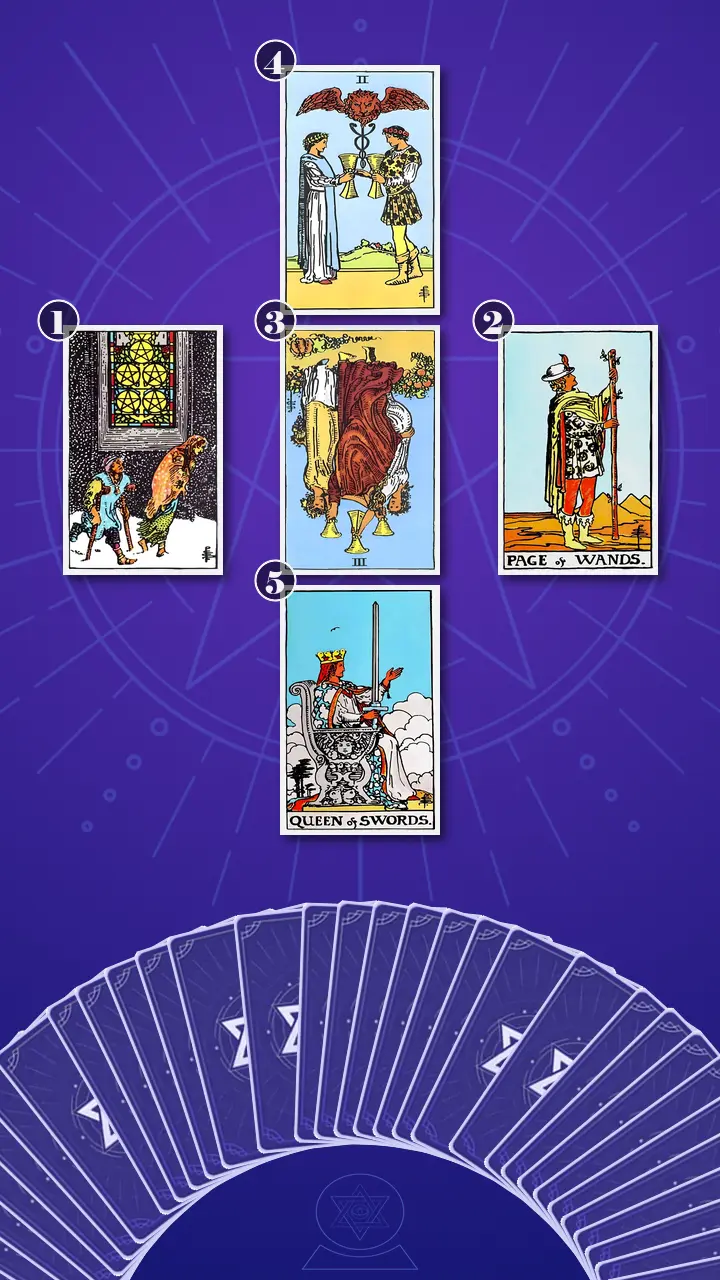
For this reading, I used the Relationship Spread · Context Edition, a five-card relationship spread for friend group dynamics. This is one of my favourite ways to show how tarot works in real life: not as a grand pronouncement, but as a clean structure for a messy pattern. This spread is ideal when someone feels included but not connected, because it traces the whole arc without burying the truth under too many cards.
I told her—and I’ll tell you the same—that the logic is simple: the first position shows what she brings into the room emotionally, the second reveals the group’s natural bonding style, the center card exposes the live dynamic between those two energies, the fourth card names the unmet need or missing truth, and the fifth gives the clearest next step. In other words: self-position, group-position, shared dynamic, hidden truth, constructive guidance.
The most important landmarks for this reading were clear from the start. I knew the first card would show the belonging bruise walking into the room before anyone even ordered a drink. I knew the center card would explain why a socially full night could still leave her emotionally underfed. And I knew the card above the spread would tell me what kind of connection she was actually hungry for underneath all the plans, photos, and proximity.
Reading the Loud Room, Card by Card
Position 1: The Cold Edge of the Table
The first card I turned over was the one representing what Taylor brings into the night emotionally—especially the belonging sensitivity that shapes how every interaction lands. It was the Five of Pentacles, upright.
In modern life, this card looks exactly like arriving at the table already doing social maths. Before the first drink lands, part of you is quietly scanning who hugs who first, who gets the deeper follow-up, who belongs naturally at the center of the booth, and whether you’re about to spend another evening close to warmth but not relaxed inside it. That is the Five of Pentacles in this position: contracted Earth, a deficiency state. Not “too needy.” Not “too much.” Just a nervous system that walks in slightly braced, already primed to notice lack.
I pointed to the card’s lit window and the figures still out in the cold. “This,” I told her, “is the difference between visible belonging and felt belonging. You can be at the table and still feel like your body is outside in the weather.”
Taylor let out a short laugh that carried more exhaustion than humour. “Wow,” she said. “That is accurate enough to be rude.”
I smiled. “Only useful, I hope. This card doesn’t say the night will go badly. It says you may enter it already hoping it will finally prove something—something about where you stand, whether you matter, whether you belong.” Her fingers tightened around the mug, then loosened. I watched the first layer of self-blame give way to recognition.
Position 2: The Group’s Sparkler Energy
The next card was the one revealing the friend group’s dominant style of bonding and the kind of energy the room naturally rewards. It was the Page of Wands, upright.
This friend group bonds like a live feed: quick jokes, spontaneous plans, high-energy banter, lots of movement, very little slowdown. It’s the kind of chemistry that feels fun and easy on the surface but doesn’t automatically pause long enough for emotional depth or careful noticing. In elemental terms, this is balanced Fire—bright, social, animated—but still Fire. A sparkler, not a fireplace.
So I told her, “The problem may not be that you’re hard to know. It may be that the room mostly rewards speed, availability, and staying light.”
She looked down at the card, then out through the café window where a bus hissed through the wet street. “Yes,” she said quietly. “They’re not mean. It’s just… nobody really slows down.” Her shoulders dropped a fraction. I felt the reading do what a good reading should do: remove shame without removing truth.
Position 3: When the Night Looks Full and Feels Empty
At the center of the spread sat the card showing the live dynamic between Taylor and the group—specifically why nights out amplified loneliness instead of easing it. It was the Three of Cups, reversed.
This is one of the clearest cards I know for group hangouts that feel empty afterward. The modern version is almost painfully specific: the night is objectively busy—birthday candles, shared Ubers, tagged Stories, everybody laughing—but the emotional center is off. You leave with proof that a social event happened, yet without one solid memory of being deeply received. That is blocked Water: stimulation without nourishment.
I described the scene back to her as the card showed it to me. “Sticky glasses in a Shoreditch wine bar. Two side conversations overlapping. Ice knocking against glass. Someone lining up the group selfie. You keep smiling, keep the energy moving, stay later than you want. Then the fluorescent Tube ride home, your phone bright in your hand, and the thought that lands is: I was there the whole time, so why do I feel more outside now?”
She stared at the reversed card. Then I asked the question that belongs to this position: “Think about the last night out. At what exact moment did you stop feeling present and start performing participation instead?”
Her reaction came in three quiet stages. First, her breath paused. Then her eyes lost focus, as if she were replaying the seating plan frame by frame. Then a long exhale left her chest. “When the inside-joke recap started,” she said. “I just got nicer. I started asking people questions so nobody would notice I’d checked out.”
There it was. Shape-shifting for safety. Matching the room so well that no one really met the real her. The card was blunt but kind: the loneliness wasn’t random, and it wasn’t proof that she had failed at friendship. It was the emotional hangover left by a format high on vibe and low on aftercare.
When the Two of Cups Cut Through the Noise
Position 4: The Smaller, Truer Thing She Needed
When I reached for the card above the center, the atmosphere changed. This was the position that uncovers the unmet relational need inside the pattern—the quiet truth, the antidote. I turned it over: the Two of Cups, upright.
I slowed down before I spoke. This was the hinge of the reading. I told her what I knew from years of listening to people say the same thing in different voices: the late-night commute is often where the truth arrives. The carriage is too bright. Your phone is warm in your hand. The group photo already looks fun. And your chest still feels tight because the night gave you contact, not somewhere to land.
I said, “The ache after these nights is not proof that you fail at friendship; it is your system noticing the difference between being included and being met.”
Stop treating a crowded table as proof of closeness, and start following the Two of Cups where eye contact, listening, and mutual effort are actually exchanged.
I let the sentence sit between us. Outside, a siren moved past and faded. Inside the café, even the milk steamer had gone quiet, as if the room itself understood this was the real turn.
Then I added, gently, “Your loneliness after the night out is data, not a defect. Being invited is not the same as being emotionally held.”
This was also the perfect place for one of my own tools, what I call Social Clutter Sorting. After twenty years of hearing stories unfold over coffee, I’ve learned that the loudest table is rarely the most intimate one. The real intimacy usually lives in smaller moments—the two untouched mugs because the conversation got honest, the person who turns fully toward you instead of scanning the room, the follow-up text the next day that asks a real question and waits for a real answer. So I sorted the wider network with her: not into good people and bad people, but into core nourishing and energy draining. The Two of Cups is clean Water, balanced and returned. It asks one practical question: who actually gives the cup back?
For a second, Taylor didn’t look relieved. She looked almost angry. “But doesn’t that mean I’ve been asking the wrong thing from the group?” Her voice thinned at the edges.
I shook my head. “No. It means you’ve been trying to get intimacy from a format that mostly runs on momentum. That is a very human mistake—especially in your twenties, especially in London, especially when the group chat and the Stories make the whole thing look warmer than it felt.”
Then I watched the insight land in her body. First she went still, thumb hovering over the rim of her cup, breath caught high in her chest. Then her gaze drifted sideways, unfocused, as if she were suddenly back on a walk to the Tube with the one woman who had once asked, “No, really, how are you?” and stayed for the answer. Then the release came. Her shoulders dropped. Her jaw unclenched. Her eyes brightened with that strange mix of relief and vulnerability that comes when clarity arrives a beat before you feel ready for it.
She gave a tiny, almost disbelieving laugh. “Oh,” she said. “That ten-minute conversation felt better than entire birthdays.”
I nodded. “Exactly. Not more people—more reciprocity. This is the step from post-night-out self-doubt and comparison fatigue toward steadier self-trust about where connection is genuinely returned.”
And because insight needs somewhere to go, I gave her one tiny assignment on the spot: within ten minutes of the next hangout, before opening the chat, write two lines in Notes—What felt warm? What felt performative? One line would do. No big friendship verdict required that night.
Then I asked, “Now, with this lens, think back to last week. Was there a moment when one real follow-up, one full turn of attention, would have changed how your whole body remembered the night?”
She answered immediately. “Yes,” she said. “And I know exactly who it would’ve been.”
Position 5: Clear, Not Cruel
The final card was the healthiest next step, especially around discernment, boundaries, and choosing more reciprocal connection. It was the Queen of Swords, upright.
Her message was mercifully straightforward. The healthiest move was not to blow up the friendship group, force herself not to care, or turn one lonely night into a total life verdict. It was to trust her clear read. In practical terms, this looks like hovering over the next invite, feeling the old reflex to type “sounds fun!”, and pausing long enough to ask whether the plan is likely to return energy or just consume it. This is balanced Air: clear, truthful, organised. Open hand, upright sword. Openness with standards.
I told her, “Clarity is kinder than forcing yourself through one more round.” Then I brought in another one of my tools: Obligation Decoupling. Together, we separated two things she had been welding together—declining a draining plan and betraying friendship. They are not the same act.
She looked back at me with the first real hint of backbone I’d seen all session. “I could probably do a pause,” she said. “A whole personality transplant feels unlikely. But a pause, yes.”
I laughed. “Good. Tarot does not need your personality transplant. It needs your honesty.”
Less Crowd, More Reciprocity
When I looked back over the full spread, the story was clean. Taylor walked into the night with Five of Pentacles sensitivity—already tracking warmth distribution before the first sip. The group itself was Page of Wands: lively, spontaneous, full of spark, not naturally built for depth. Put those together and the center becomes Three of Cups reversed: socially full nights with no emotional aftercare, the exact pattern of being included but not connected. Above it all, the Two of Cups named the missing truth: she was not actually starving for more access to people. She was starving for mutuality. And the Queen of Swords showed me how that feeling becomes language, discernment, and choice.
To me, the blind spot was simple and brutal: she had been counting invites, tags, chat activity, and headcount as proof of closeness, even when her body kept filing a different report. The transformation direction was just as clear: shift from chasing proof of inclusion in the group to choosing interactions that feel mutual, grounded, and emotionally real. Less crowd, more reciprocity.
I gave her actionable advice, not a dramatic verdict.
- The After-the-Night Reality CheckAfter your next hangout, open Notes before WhatsApp and write two lines: “What felt genuinely warm?” and “What felt performative?” Do it on the Tube, in the Uber, or by your front door. It takes under a minute.If even two lines feels like too much, record a 20-second voice note instead. The goal is data, not a dissertation.
- One Real Conversation RulePick one person from the wider circle who has ever asked a real follow-up question and send a low-pressure message this week: “Want to grab coffee or take a walk sometime?” If nobody in the group fits, try someone outside it who already feels easier in your body.Let their response be information, not a referendum on your worth. You are testing reciprocity, not auditioning.
- The VIP Section StrategyFor one week, treat your free time like a reservation-only section. For the next three invites, wait 20 minutes before replying. Check interest, energy, budget, and likelihood of real connection before you say yes. If the plan feels draining, send one clean, low-drama decline: “Not making it tonight, but hope you all have fun.”This is boundary-first, not cruel. If guilt gets loud, mute the chat for the evening and let your nervous system answer before FOMO does.
None of this was about becoming colder. It was about using an energy ROI filter before she typed yes to one more plan her body already knew would leave her hollow. That’s why I trust the Relationship Spread · Context Edition as a tarot spread for feeling left out in a friend group: it gives language to the gap between social access and emotional reciprocity, and then it hands the next step back to the person living it.

A Week Later, The Quiet Proof
A week later, on a rainy Thursday evening, Taylor messaged me. She had not quit the group chat or reinvented her social life. She had done something smaller and better. She waited before replying to Friday plans. She said no to one loud dinner. And she asked one woman from the wider circle if she wanted coffee before work.
They met for forty minutes near Liverpool Street. “It was weirdly calm,” she wrote. “I didn’t perform. I actually answered when she asked how I was.”
The bittersweet part mattered too. The next morning she still had the reflex to open WhatsApp first. She caught herself, smiled, put the kettle on, and left the chat unopened until after breakfast. Clear, but still human. That was enough.
When I thought back on the spread, I saw the whole progression again: cold Earth, sparkler Fire, distorted Water, clean Water, clear Air. That is what finding clarity often looks like in friendship readings. Not certainty. Ownership. Not more proof that you belong everywhere, but steadier self-trust about where you are genuinely met.
If tonight you recognize that very specific ache—the one where you laugh through the whole dinner and then feel your stomach drop somewhere between Oxford Circus and home because being included in the plan still didn’t let you relax into being known—please remember that simply noticing it means you are no longer at the very start of the pattern.
So if you stopped asking the group photo, the after-midnight chat, and the crowded table to prove you belong, which one conversation, softer no, or lower-pressure plan would feel most honest to follow next?
Every reading at AceTarot is a Journey to connect with inner wisdom and empower next step.
Learn more about our Journey to Clarity.