From Resume Shame Spirals to Shipping v1: A Draft-by-Draft Shift

Finding Clarity in the 9:46 p.m. Resume Tab
You’re an early-career professional in Toronto who can handle real work all day—but one half-finished resume file can trigger a full-on imposter syndrome spiral.
Jordan (name changed for privacy) said it like they were admitting a weird secret, even though their eyes told me they’d been carrying it for months.
“It’s always the same,” they told me. “9:46 p.m. on a Monday. Dim laptop screen. Cursor blinking in an empty Skills section like it’s judging me. The radiator clicks. My phone buzzes with a LinkedIn notification. And my jaw tightens because the page looks… thin.”
As they spoke, I watched their hand drift to their face—thumb pressed against the hinge of their jaw, like they were trying to physically keep the thoughts from spilling out.
“I want change,” Jordan said, voice a little sharper on the last word, “but I don’t want to be seen trying. And the second I open the doc, it’s like… my whole career can be judged in ten seconds.”
There’s a particular flavor to shame when it’s wrapped around something practical. It doesn’t announce itself. It tightens your chest like a drawstring. It makes the simplest task feel like you’re walking into a spotlight with no script.
I leaned forward across my little café table, the one by the window where the morning light hits the worn wood. “We’re not going to treat this like a character flaw,” I said. “We’re going to treat it like a pattern—something we can see clearly, name clearly, and work with.”
I let the sentence land, then softened my voice. “If your half-finished resume turns into a courtroom in your head, that’s not because you’re lazy. It’s because your nervous system thinks ‘visibility’ equals ‘danger.’ Our journey today is about finding clarity—enough clarity to take one next step without waiting to feel fearless.”

Choosing the Compass: The Transformation Path Grid (6) Tarot Spread
I slid a small tray between us—two demitasse cups and my well-worn tarot deck. The café wasn’t open yet, but the street already smelled like coffee; the kind of smell that makes a whole block feel more awake than it is.
“Before we read anything,” I said, “take one slow breath. Not to be mystical—just to help your brain stop sprinting. We’re going to ask one focused question: Why does my half-finished resume trigger imposter syndrome—and what’s the next step?”
I shuffled slowly, the way I do between pulling a perfect shot and wiping down the counter: steady hands, no drama. The goal is not to summon fate. The goal is to give your mind a structure when it’s been stuck in a loop.
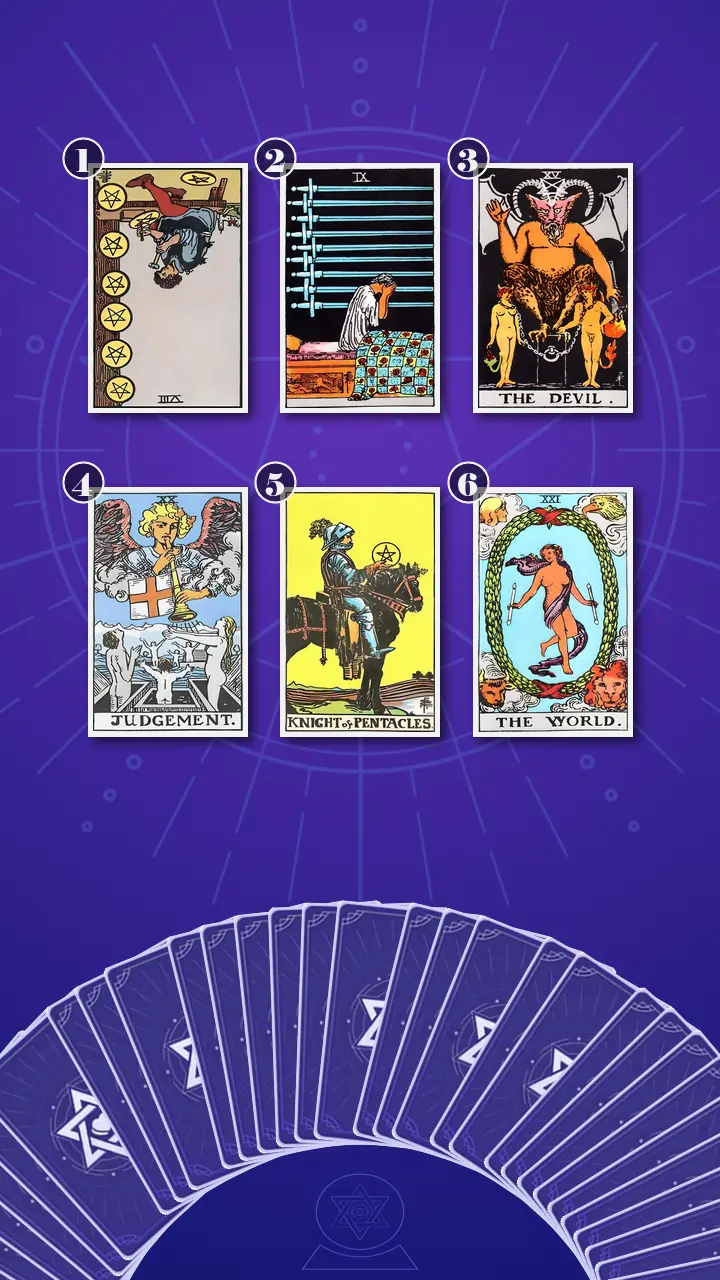
“Today, we’ll use a spread I designed for moments exactly like this,” I told them. “It’s called the Transformation Path Grid (6) · Context Edition.”
To you, reading along: this is the kind of tarot spread for resume anxiety and imposter syndrome that works because it behaves like a workflow. It’s a 2x3 grid you read left-to-right like a build plan: Present, Blockage, Root on the top row—then Catalyst, Action, Integration on the bottom row. We diagnose what’s happening, name why it keeps happening, and then translate insight into a grounded next step. No vague reassurance. Just a map.
I tapped two spots as I explained. “This first card will show the surface loop—what you do the moment you open the resume. This second card will pinpoint the real-time blockage—what spikes the spiral. And the fourth card is our pivot: the perspective shift that turns evaluation into growth.”
Reading the Map: When an Earth Task Gets Hijacked by Air Fear
Position 1: The safety move you make the moment you open the file
I turned over the first card. “Now we’re looking at the card that represents the surface symptom: the specific, observable ‘half-finished resume’ behavior loop in the present.”
Eight of Pentacles, reversed.
“This is the craftsman card,” I said, tracing the edge of the image with my fingertip. “Workbench. Repetition. Skill. And reversed, it’s not that you’re not working—it’s that your work isn’t turning into a finished artifact.”
I put it into Jordan’s real life, exactly where it lives: “It’s 9:30 p.m. and you’re at your desk in Toronto with your resume open. You spend 40 minutes tweaking spacing, swapping templates, and rewriting the first two bullets to sound ‘more senior’—but the sections that would actually prove your impact stay blank. You feel busy, yet weirdly stuck, like the work doesn’t count unless it looks flawless.”
I watched Jordan’s mouth pull into a quick, bitter little smile—half laugh, half wince.
“That’s… wow,” they said, letting out a short breath that wasn’t quite relief. “That’s too accurate. Even a little cruel.”
“I know,” I said gently. “And notice what that reaction tells us. You’re not failing at effort. You’re using effort as a shield. The reversed energy here is blocked Earth: the tangible task of writing proof gets replaced by ‘craft’ that never has to risk being seen.”
I leaned back. “If it has to be perfect to be shared, it will stay private forever.”
Position 2: The real-time blocker that spikes imposter syndrome
I turned over the next card. “Now we’re looking at the card that represents the primary blockage: what specifically spikes imposter syndrome and stops completion in real time.”
Nine of Swords, upright.
The café was quiet enough that I could hear the refrigerator hum behind the bar. That low, steady noise felt like the card: a dark room where the mind gets loud.
“This,” I said, “is the 1 a.m. mock trial.”
And I didn’t say it like a metaphor. I said it like an observation. “It’s after midnight and you’re in bed, laptop open, rereading one bullet like it’s evidence in court. Your chest is tight, your breathing is shallow, and you can practically hear an imaginary recruiter thinking, ‘They’re not qualified.’ Instead of writing the next bullet, you keep re-reading and re-phrasing to prevent a rejection that hasn’t even happened.”
I paused. “You’re not stuck on formatting—you’re stuck on exposure.”
Jordan swallowed, the kind of tight swallow that moves the whole throat. Their eyes flicked down to the card and then away, like it had called them out by name.
“Here’s the hidden step,” I said, keeping my tone clean and non-judgmental. “You’re not editing a document. You’re pre-writing the rejection email in your head.”
I asked the question that breaks Nine of Swords open: “If you had to write the exact sentence you fear a recruiter would conclude about you from this draft—what would it be, word for word?”
Jordan’s fingers clenched, then released. “Probably… ‘This person has nothing real.’”
“Good,” I said, and I meant it. “Not good that you fear it—good that it’s visible. Air fear loves fog. The moment you name the sentence, it loses some power.”
Position 3: The deeper chain underneath the spiral
I turned over the third card. “Now we’re looking at the card that represents the deep root: the underlying belief attachment driving the shame-and-comparison response to the resume.”
The Devil, upright.
Jordan’s shoulders rose a fraction. The Devil can feel like an insult if you read it literally. I never do.
“This isn’t ‘you’re bad,’” I said immediately. “This is ‘you’re bound.’ And the detail most people miss is the most important: the chains are loose.”
I translated it into the behaviors that look normal on the surface: “You catch yourself writing your resume like it’s a confession you have to defend—softening claims, over-explaining, trying to pre-empt every possible critique. You refresh LinkedIn for comparison, then edit again so you won’t feel ‘found out.’ The trap isn’t your skills; it’s how tightly you’ve tied being employable to being worthy.”
I kept my voice warm, because shame already thinks it deserves punishment. “When did ‘employable’ start meaning ‘worthy’?” I asked.
Jordan stared at the card, then at their hands. Their expression softened, like something unclenched behind their eyes.
“I don’t know,” they said quietly. “But it feels… true. Like if I don’t present it flawlessly, I’m not allowed to apply.”
“That’s The Devil as the Binder,” I said. “It tells you you’ll be safe if you’re impressive. But the cost is you never get to be real. And you never get feedback, because you never ship.”
I let the café’s coffee smell do what it does—grounding, ordinary, human. “A resume is a draftable artifact, not proof of your worth,” I said, and I watched Jordan’s shoulders drop a millimeter. Not solved. Just less alone.
When Judgement Spoke: The Courtroom-to-Call Reframe
Position 4: The catalyst shift that unlocks movement
Before I turned the fourth card, I felt the room go still in that particular way it does right before the espresso machine hits the right pressure—quiet, then ready.
“Now we’re looking at the card that represents the catalyst shift: the perspective change that loosens the pattern and reorients evaluation into growth,” I said. “This is the bridge.”
Judgement, upright.
The trumpet on the card looked almost loud against the soft café light.
“In modern life,” I told Jordan, “this is the moment you stop asking, ‘Am I good enough to apply?’ and you ask, ‘What’s the next role that would help me grow, and what evidence do I already have?’ You open an email and type: ‘Resume draft—could you review 3 bullets for clarity?’ It’s small. It’s bounded. It turns imagined judgment into real feedback.”
I saw Jordan’s face tighten for a second—like they wanted the relief without the risk.
Setup (the stuck moment):Jordan had been treating the resume like a final verdict. Every blank section felt like proof. Every bullet felt like it had to represent their entire career. They were waiting to feel qualified before writing—so the act of writing became a test they couldn’t pass without perfect confidence.
Delivery (the sentence that changes the room):
Stop treating the resume as a courtroom and start treating it as a trumpet call—respond with one honest draft and let it evolve.
I didn’t rush past the silence that followed. I let it echo the way a café does when you’ve just turned off the music and all that’s left is the hum of the building.
Reinforcement (what it looks like in the body, in real time): Jordan’s breath froze for a half beat—like they’d been bracing for impact. Their eyes lost focus, not in distraction, but in that strange way people look when they’re replaying a memory at double speed. Then their shoulders dropped, slow and involuntary, as if their body understood the message before their mind signed off on it. Their jaw loosened a fraction. They pressed their tongue to the back of their teeth, blinked hard once, and let out a visible exhale that made their whole chest soften.
“But if it’s a call…” they said, voice rougher than before, “then it doesn’t mean I was wrong about everything, right? It just means I’ve been… scared.”
“Exactly,” I said. “Judgement isn’t punishment. It’s recognition. It’s answering without needing a guarantee.”
And this is where I brought in one of my café-born tools—my own way of making timing feel tangible. “I use something I call Sacred Timing,” I told them. “In coffee, there’s a peak flavor window. If you wait too long for the ‘perfect moment,’ the shot goes flat. Your resume has a peak window too—not for perfection, for response. We’re going to use a tiny window so your nervous system doesn’t have time to put you on trial.”
“Here’s the practice,” I said, keeping it simple enough to be doable on a Tuesday night: “Set a 7-minute timer. Open your resume and add ONE ‘ugly-but-true’ bullet using: ‘Did X using Y to achieve Z.’ No formatting, no synonyms, no template changes. When the timer ends, stop—even if it’s imperfect. If your chest tightens or you feel yourself spiraling, close the file on purpose and write one line: ‘A draft is allowed to be awkward.’”
I met their eyes. “Now, with this ‘courtroom vs trumpet call’ lens—think back to last week. Was there a moment when you opened the file and froze, when this could have changed the next ten minutes?”
Jordan nodded, small and real. “Wednesday. I opened it, saw the blank section, and immediately started looking at Canva templates. If I’d treated it like a call… I could’ve just written one ugly bullet and been done.”
“That,” I said, “is the first step from shame-driven freeze to reality-based confidence. Not confidence as a mood. Confidence as evidence.”
Position 5: The grounded next step that actually works this week
I turned the fifth card. “Now we’re looking at the card that represents the actionable next step: the most grounded, repeatable behavior to complete and share a draft this week.”
Knight of Pentacles, upright.
“This is the anti-spiral card,” I said, and Jordan gave a tiny, surprised laugh—like they’d been waiting for permission to be boring.
“In your life, it looks like this,” I said. “You set one rule: one 25-minute session equals one completed subsection. No templates. No font tweaks. Just content. You write three ‘Did X using Y to achieve Z’ bullets, save, and stop. It feels almost boring—and that’s the point. The steadiness is what breaks the spiral.”
“Think of it like a Duolingo streak,” I added, a little wry. “Not a personality test. Process over mood.”
Jordan’s posture shifted—less curled inward, more forward. Their thumb was off their jaw now. Their hands were resting on the table like they belonged there.
Position 6: What “done” looks like when it’s not a verdict
I turned the final card. “Now we’re looking at the card that represents integration: what ‘done’ looks like internally—how to hold a coherent story without tying it to worth.”
The World, upright.
“This is completion as coherence,” I said. “Not ‘I’m perfect.’ Not ‘I’ve finished my whole career.’ Just: ‘This version holds together.’”
I gave Jordan the modern translation. “You save a dated version—‘Resume_April_v1’—and it finally reads like one connected arc instead of scattered scraps you’re apologizing for. You do a clarity pass, not a self-worth pass. Then you attach it to one application and hit submit, not because you feel invincible, but because the draft is complete enough to participate in the real world.”
Jordan stared at The World for a beat. “I like that,” they said. “A version. Not a verdict.”
The One-Page Plan: From Imposter Syndrome to Actionable Next Steps
Here’s the story your spread told, stitched into one thread: you’re doing an Earth task (a resume—proof on paper), but Air fear hijacks it (thought loops, imagined judgment). So your brain reaches for a defense that looks productive—templates, rewording, polishing—because it lets you avoid the real risk: being seen. Underneath that, The Devil shows the quiet attachment that keeps the loop alive: somewhere along the way, “employable” got fused with “worthy.”
Judgement breaks the spell by redefining evaluation. Not punishment, but response. Not “prove it,” but “try it.” Then the Knight of Pentacles takes that new meaning and turns it into a system. The World finishes it with versioning: ship v1, let real life give you data, and iterate.
Your cognitive blind spot is subtle but brutal: you’ve been assuming that feeling qualified is the prerequisite for writing. But this spread points to the opposite sequence—writing and sharing create the evidence that makes you feel more grounded.
Your transformation direction is clear: shift from treating the resume as proof of your worth to treating it as a draftable artifact that improves through small submissions and feedback.
I slid a napkin toward Jordan and wrote three moves—small enough to start, specific enough to matter. I’m writing them for you the same way.
- The 7-Minute “Ugly-but-True” Bullet (Sacred Timing)Tonight (or the next time your chest tightens at the file), set a 7-minute timer. Open your resume and add one bullet using: “Did X using Y to achieve Z.” No formatting, no synonyms, no template changes. Stop when the timer ends.If you feel the urge to “just fix the layout,” treat that as the cue you’re slipping into the courtroom. Close the doc on purpose and write one line in Notes: “A draft is allowed to be awkward.”
- No Templates Until Content Exists (72-hour rule)Put a sticky note on your laptop or a Notion banner that says: “No templates until content exists.” For the next 72 hours, you are not allowed to touch fonts, margins, or layouts until each role has at least 2 bullets.If you break the rule, don’t restart the whole resume. Just return to content with one “Did X using Y to achieve Z” line. Small course-corrections count.
- The 3-Bullets-for-Clarity Ask (Courtroom-to-Call)Within 48 hours, send one message to one trusted person: “Could you review 3 bullets for clarity? Not the whole resume—just these.” Copy/paste only the three bullets. That’s it.Choose someone who won’t turn it into a performance review. Your goal is data collection, not permission. If it helps, label the message: “v1 feedback.”
Before Jordan left, I offered one more small tool from my café life—because bodies remember scents faster than they remember pep talks. “If you want,” I said, “use Aroma Anchoring. Pick one smell—coffee, vanilla, even laundry detergent—and only use it during your 7-minute bullet sessions. Over a week, that scent becomes a signal: ‘We’re drafting, not proving.’”

A Week Later: The Quiet Proof
Six days later, I was wiping down the counter for closing—my usual energy-cleaning ritual, lights dimmer, chairs up, the soft clink of porcelain—when my phone buzzed.
Jordan had texted a screenshot. A file name, nothing glamorous: Resume_Jordan_Apr08_v1. Under it: three new bullets, plain language, measurable outcomes. Then one line: “Sent 3 bullets to my friend. Didn’t die. They said it was clear.”
In a second message, they added: “I still felt weird hitting send. But it wasn’t the full-body flinch. More like… nervous, but able.”
That’s what I mean when I say clarity doesn’t always arrive as certainty. Sometimes it arrives as a small loosening—jaw unclenched, chest less tight, one honest version attached to one application, submitted from a café table alone, with the city moving outside the window like it always does.
I thought of the spread as a whole: the courtroom dissolving into a call, the call turning into a routine, the routine turning into a version you can ship. A resume doesn’t have to prove you’re worthy. It just has to be clear enough to let the world respond.
When a half-finished resume makes your chest go tight, it’s not laziness—it’s the moment your brain turns a working document into a referendum on whether you’re allowed to be seen.
If your resume could be just “v1, honest and workable,” what’s one small line you’d be willing to add today—purely as a response, not a performance?