The 9:47 p.m. WhatsApp Glow—And the Boundary I Finally Sent Back

People-Pleasing in a Partner’s Family Group Chat: The 9:47 p.m. WhatsApp Glow
If you’ve ever typed a reply, deleted it, rewrote it in Notes, added “😂” and an exclamation point, and still felt like you might be “the weird one who ruins the vibe”—you’re not alone.
Taylor (name changed for privacy) arrived at my café in London looking put-together in the way only exhausted people can manage: hair pinned back, mascara still intact, phone already face-up on the table like it was part of the place setting. Outside, the street was damp with that particular London mist that doesn’t count as rain but still soaks your sleeves. Inside, my espresso machine hissed and clicked, and the warm smell of roasted beans sat heavy in the air—comforting, almost unfairly calm compared to the buzzing in her body.
“It’s stupid,” she said, and even that sounded like an apology. “I got added to my partner’s family chat. And now I’m… I don’t know. I’m on edge all the time.”
She described it the way people describe an allergy: the trigger hits, the reaction is immediate, and the logic comes later. Tuesday night, 9:47 p.m., sitting on the edge of her bed in a small flat, phone angled low so her partner wouldn’t see her spiralling. The radiator clicks. The screen glow feels too bright. The WhatsApp thread is flying. She types “sounds great!! 😂” then backspaces, opens Notes to draft a ‘safe’ version, copies it over, rereads it, then hits send and waits for reactions like she’s waiting for a verdict.
“My chest and throat just clamp,” she said, pressing her fingers lightly against her collarbone. “And my thumb… it hovers. Like I’m defusing something.”
She told me the core of it in one breathless run-on sentence: she wants to belong in their family chat, but she’s terrified that any boundary—any honest preference, any slower reply—will make her seem rude or unlikable. So she checks immediately, edits constantly, defaults to agreeable reactions, responds faster than she actually wants to, and then feels the quiet resentment bloom later when she’s rearranging her life to match what she just agreed to.
I watched the way her eyes kept flicking down to the phone, even though it wasn’t buzzing. It was like her nervous system had installed a “Seen” meter inside her ribs.
“It’s not a chat,” I said gently, letting the words land between the clink of cups behind the counter. “Your brain is treating it like an audition.”
Her mouth tightened, not quite a smile. “Yes. Exactly. I don’t want to be the weird one who ruins the vibe.”
Self-consciousness isn’t always a thought. Sometimes it’s a physical experience—like trying to drink coffee while someone’s holding the cup against your lips and timing you. You can swallow, but you can’t taste.
“Let’s make this a Journey to Clarity,” I told her. “Not clarity as in ‘the perfect thing to say,’ but clarity as in choice. We’re going to map what’s happening, and then we’ll pick one small, kind boundary you can actually try—without turning your whole life into a performance review.”

Choosing the Compass: The Relationship Spread
I asked Taylor to take one slow breath in through her nose—like smelling coffee before the first sip—and out through her mouth. Not as a mystical ritual. More like a nervous-system reset: a tiny, deliberate handoff from “react” to “observe.”
As I shuffled, the cards made that soft papery whisper that always reminds me of polishing the counter before opening: a simple action that says, we’re about to do something with care.
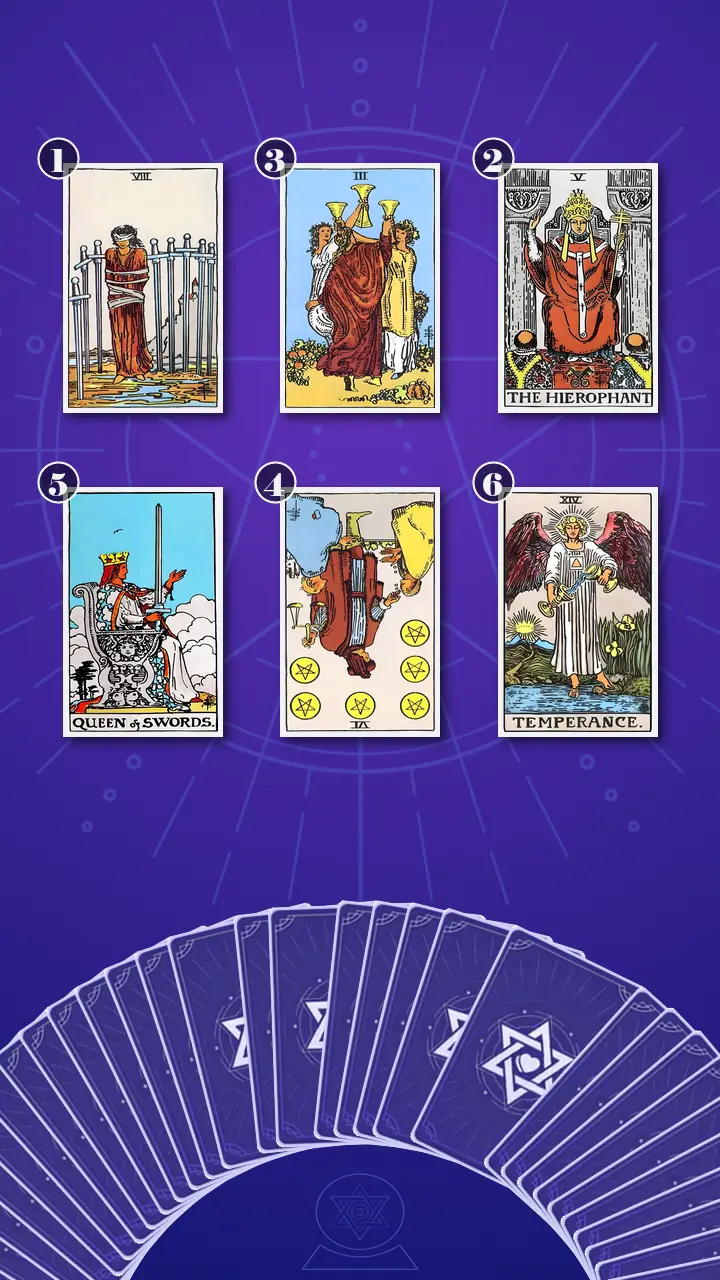
“Today I’m going to use a Relationship Spread,” I said. “It’s a classic, six-card map.”
And because people often wonder how tarot works in situations that feel this modern—WhatsApp, read receipts, the whole ‘typing… deleting… retyping’ freeze response—I spoke to the reader as much as to her: this spread is useful when the issue isn’t just your emotions, and it isn’t just the other people either. It’s the shared space between you—the system you stepped into—and the exact pressure point where your people-pleasing gets triggered.
It stays minimal while still giving us the full arc: you in the chat, their family culture, what the invitation actually means, where you start over-giving, the cleanest boundary-based “medicine,” and then the sustainable next step. It’s a self-exploration tool, not a prediction machine.
“Here’s what we’ll watch for,” I added, laying the positions out like a small bridge across the table. “The first card will show how you automatically show up—before you even choose. The fourth card will pinpoint the exact place it flips into over-giving. And the fifth will be our remedy: how to set boundaries without sounding rude over text.”
Reading the Map: Where the Audition Starts
Position 1: You in the family chat — Eight of Swords (upright)
“Now flipped over,” I said, “is the card that represents you in the family chat: how you show up and the specific people-pleasing behavior pattern that gets activated.”
Eight of Swords, upright.
I didn’t have to push this one. It arrived like a screenshot of her nervous system. “You see a new message in the family chat while you’re trying to unwind after work. Instead of answering like a normal person, you freeze and start editing your personality: type-delete, copy a draft from Notes, add a ‘safe’ emoji, re-read it three times, and still feel like the wrong tone could label you forever. You act like there’s one correct reply—and like everyone else can see your score.”
Her laugh came out sharp and small—more air than humor. “That’s… wow. That’s even a bit mean.”
“Accurate can feel mean,” I said. “But notice the energy here.” I tapped the image lightly. “This is Air energy under pressure—thoughts, rules, mind-reading. Not balance. Not clarity. It’s a blockage. It’s you acting like the exit doesn’t exist.”
I watched her swallow. Her throat moved like it had to push past something invisible.
“In my café language,” I said, leaning into my own way of diagnosing emotional states, “this is an espresso shot you didn’t order. High pressure, fast extraction, bitter adrenaline. Your body is reacting like the group chat ping is a tiny emergency.”
She nodded once, fast. A little stomach-drop nod. Like: Oh. I’m not trapped by them, I’m trapped by what I think will happen.
Position 2: Their family system — The Hierophant (upright)
“Now flipped over,” I said, “is the card that represents their family system in the chat: the culture, norms, and interpersonal style you’re stepping into.”
The Hierophant, upright.
“You treat the family chat like you’ve entered an established culture with unspoken rules,” I said, using the card’s modern translation exactly as it wanted to be spoken. “You scroll old messages to learn the ‘house style’—who jokes, who plans, what counts as polite, how quickly people respond—so you can blend in. It feels less like texting and more like joining an institution where you don’t want to mess up the ritual.”
That’s the thing about family systems: they have their own punctuation. Their own in-jokes. Their own unwritten rules about speed and teasing and who’s allowed to be quiet.
“This card isn’t saying they’re bad,” I clarified. “It’s saying the structure feels real. Your brain is taking it seriously—like you’re onboarding at a new job. And group chat dynamics can feel like a second workplace Slack channel: same urgency, same performance.”
Taylor’s fingers tightened around her mug. “Yes. I’m always trying to decode. Like… what emoji is safe? What if I miss something?”
“Exactly,” I said. “The Hierophant says: there are norms here. The keys in this card matter. Access isn’t earned by perfect performance; it’s about understanding the system and choosing your level of participation.”
Position 3: The invitation’s true meaning — Three of Cups (upright)
“Now flipped over,” I said, “is the card that represents the invitation’s true relational meaning: what the connection is actually asking for.”
Three of Cups, upright.
“Someone adds you to the chat and drops a friendly welcome, a photo, or a meme meant to pull you into the circle,” I said. “The energy is: ‘Come be part of this.’ But your nervous system converts it into: ‘Now prove you deserve it.’ This card is the moment you remember the invitation can be warm—not a trial.”
Her shoulders moved down a millimetre, like her body had been holding its breath for weeks and just got permission to exhale.
“So it might actually be… nice?” she said, sounding almost suspicious of hope.
“Yes,” I said. “This is welcome energy. Think of the inward-facing circle: belonging as participation, not perfection. One cup raised is enough.”
In the corner of the café, someone laughed at their friend’s story, and it softened the space around us. The room became a quiet ally—proof that groups can laugh without evaluating you.
Position 4: The pressure point — Six of Pentacles (reversed)
“Now flipped over,” I said, “is the card that represents the pressure point: where the imbalance starts and what triggers over-giving or self-erasure.”
Six of Pentacles, reversed.
“The chat asks for a preference or a plan and you automatically over-give: quick replies, extra reassurance, flexible scheduling, upbeat tone—like you’re paying for acceptance in small coins,” I said. “Then you feel resentment later because your real needs never entered the conversation. You’re keeping the social scales balanced by shortchanging yourself.”
Her lips pressed together. Her eyes got bright in that specific way they do when someone is trying not to look dramatic.
I kept it plain, the way you name a coffee order so it can actually be made. “Belonging isn’t a bill you pay with speed.”
She let out a breath that sounded like frustration finally being allowed to exist. “Yes. I’ll say yes to Friday dinner, and then I’m literally on my calendar doing mental maths. Like I volunteered myself without asking myself.”
“That resentment-embarrassment combo?” I said. “That’s the body keeping score. The reversed Six of Pentacles is transactional energy—niceness as currency.”
In my mind, I saw the coffee grounds at the bottom of a cup: all the tiny, unspoken feelings that settle when you stop stirring. When you’re always ‘easy,’ the grounds never settle. You keep shaking the cup so nobody sees what’s really in it.
“Your nervous system has built an invisible spreadsheet,” I said, “and one of the columns is: ‘I was easy, so I’m safe.’”
She blinked hard once, then looked away toward the window, like she needed a second not to be looked at.
When the Queen of Swords Spoke: One Clean Sentence
Position 5 (Key Card): Boundary and communication medicine — Queen of Swords (upright)
“We’re about to turn over the most important card in this spread,” I said. The café noise didn’t change, but the air at our table did—like the moment before you taste a strong espresso and you already know it’s going to wake you up.
“Now flipped over,” I said, “is the card that represents boundary and communication medicine: the clearest self-respecting way to participate without performing.”
Queen of Swords, upright.
“You send a clean, direct message: ‘I can’t do Friday, but hope you all have fun.’ You don’t add three paragraphs. You don’t apologise for having a life. You let the sentence stand and tolerate the discomfort of not smoothing every edge. It’s still kind—just not performative.”
She stared at the card. Her pupils looked slightly wider, like the word direct had brightness to it.
“That feels… terrifying,” she admitted. “Like—if I don’t soften it, they’ll think I’m cold.”
“Less performance doesn’t have to mean more coldness,” I said. “This Queen is warmth with structure. She’s not cruel. She’s clear.”
And then I brought in my signature lens—the one I use when people are stuck between longing and fear. “In my Relationship Stage Diagnosis,” I told her, “people-pleasing in a group chat is usually an espresso stage: fast, pressured, intense, and over too soon. The Queen of Swords is an Americano stage. Still strong. Still you. But with breathing room. Clean. Drinkable. Sustainable.”
Her mouth twisted with a half-smile. “So… I’m basically chugging anxiety espresso all day.”
“Exactly.” I tapped the Queen’s upright sword. “This is one clean line. No foam art. No extra sugar to make everyone approve. Just truth, said kindly.”
The Aha Moment
Setup: You know that moment when the chat pings, you draft in Notes, add a laughing emoji to sound easygoing, and still feel your chest tighten while you wait for reactions?
Delivery:
Stop auditioning for approval—lift one clean sword of truth, and let that clarity protect your time and your self-respect.
Reinforcement: Taylor’s reaction moved in a chain, not a single beat.
First, a tiny freeze: her breath paused halfway in, and her hand hovered over her phone without touching it—like she was holding back the reflex to fix something that didn’t exist yet.
Second, the cognition seeped in: her eyes unfocused for a second, as if replaying a dozen moments—Notes drafts, “Seen” anxiety, the compulsion to add one more line, one more emoji, one more reassurance so nobody could possibly misunderstand her.
Third, the release: she exhaled from deep in her chest, shoulders dropping with that slow, stunned heaviness of someone realizing they’ve been carrying a weight they never agreed to pick up. Then her face tightened again—new vulnerability. Not confusion this time. Responsibility. “But if I send it clean… and they think I’m rude… I won’t be able to take it back,” she said, voice a little raw.
“That’s the real fear,” I said softly. “Not that you’ll be rude. That you won’t be able to control their feelings.”
I slid her mug slightly closer. The crema had thinned. The coffee was settling. “Try this once in the next 24 hours: write a one-sentence reply that states your availability or preference—no apology, no extra justification. Read it out loud once. If your body spikes—tight throat, tight chest—set a five-minute timer and wait before sending. You can stop at any point. This is an experiment, not a test.”
Then I asked her the question that makes the insight usable: “Now, with this new lens, can you think of one moment last week when this could have changed how you felt?”
She swallowed, slower this time. “Sunday,” she said. “They asked about a last-minute plan. I said yes immediately and then hated myself for it. I could have said… ‘Not sure yet—will confirm tomorrow.’ And that would’ve been… normal.”
“That’s the shift,” I told her. “From self-conscious, audition-like hypervigilance to steadier self-trust and calmer, more genuine connection. Not overnight. But right there—one honest sentence.”
Position 6: Integration — Temperance (upright)
“Now flipped over,” I said, “is the card that represents integration: a sustainable next step for staying connected while stopping people-pleasing.”
Temperance, upright.
“You build a sustainable rhythm: you mute the chat during work blocks, you reply when you actually have capacity, and you stay consistent without guilt,” I said. “Warmth and clarity start mixing into a style that feels like you. The group chat stops hijacking your nervous system because you’re no longer treating every ping like an emergency.”
This is where my café brain always nods. Temperance is what happens when you stop over-steaming the milk. When you pour slowly. When you let the drink become what it’s meant to be.
“You’re allowed to build a reply rhythm that matches your actual life,” I told her. “Temperance is your long game: one foot on land, one in water—grounded, but still connected.”
The One-Clean-Sentence Practice: Actionable Advice for Your Next 48 Hours
Here’s the story the cards told, in one line: you walked into an established family system (The Hierophant) and your brain responded by putting you in a mental cage of ‘right answers’ (Eight of Swords). The invitation itself was warm (Three of Cups), but the pressure point was where you started paying for belonging with speed, flexibility, and upbeat tone (Six of Pentacles reversed). The remedy wasn’t becoming colder—it was becoming clearer (Queen of Swords), and then building a repeatable pace so your nervous system stops living on-call (Temperance).
The cognitive blind spot was subtle but brutal: you’ve been acting like their acceptance is earned by your performance, and like any boundary equals rejection. That turns connection into a transaction. The transformation direction is the opposite: from chasing approval through constant niceness to practicing clear, kind communication—and tolerating the normal discomfort of not managing everyone’s feelings.
When I teach this in my café, I use a technique I call Conflict Sedimentation: after you set a boundary, you don’t stir the cup. You let the grounds settle. In real life, that means you don’t send the follow-up apology. You don’t hover for reactions. You let the message stand long enough to give your body new data: nothing collapses.
Here are your small, specific next steps—pulled directly from this Relationship Spread tarot reading for people-pleasing and boundaries in a partner’s family group chat:
- The One Answer + One Friendly Line ReplyPick one thread this week and respond in this exact format: answer plainly, then add one friendly line. Example: “Can’t do Friday, but hope you all have a great time.” Send it, then put your phone face-down.Set a 10-minute timer immediately after sending. Your job is to let the discomfort rise and pass without ‘fixing’ it.
- The Response Window (Not Being On-Call)Choose two daily check-in windows (for example, 12:00–12:15 and 7:00–7:15). Outside those windows, mute the chat—on purpose—so you’re not replying from adrenaline.Start with a tiny version if needed: one 30-minute mute during your busiest work block. Build from there.
- Three Neutral Scripts in NotesWrite three pre-made boundary phrases in Notes or Notion so you’re not inventing them under pressure: “Not sure yet—will confirm tomorrow.” “I can’t make it, but have fun.” “I’m slammed today, will catch up later.”If you feel the urge to over-explain, write the explanation in Notes and don’t send it unless someone directly asks.

A Week Later: The Quiet Proof
A week after our reading, I got a message from Taylor while I was wiping down the counter before the lunch rush.
“I did it,” she wrote. “They asked about dinner. I sent: ‘Can’t do Friday, but hope you all have fun.’ No emoji. No apology. Then I did a ten-minute timer like you said. My chest went nuts. But… nobody freaked out. Someone just said, ‘No worries!’”
Her follow-up was the part that mattered most. “I still felt shaky,” she added. “But I didn’t spiral. I went back to what I was doing.”
That’s what clarity looks like in real life: not a dramatic personality rewrite, but one clean sentence and the courage to let it stand. In this Journey to Clarity, the win wasn’t controlling the chat—it was stepping out of the audition and back into yourself.
When your phone buzzes and your chest tightens, it can feel like belonging is something you have to ‘pay for’ in perfect tone and fast replies—so you disappear a little to keep the vibe smooth.
If you didn’t have to manage anyone’s feelings to earn your place, what would one honest, kind sentence from you sound like this week?
Every reading at AceTarot is a Journey to connect with inner wisdom and empower next step.
Learn more about our Journey to Clarity.