From Checkout Freeze to Calm Follow-Through: Booking Flights Once
Finding Clarity in the Checkout Hover
You open Google Flights like it’s breaking news, watch the price jump by $40, and suddenly booking feels like an intelligence test instead of a plane ticket.
Jordan (name changed for privacy) said that to me like it was a confession she’d been carrying in her tote bag all week. She was 29, a marketing specialist in Toronto, the kind of person who can ship a campaign deck in a day—yet her personal life could get stuck on a single button.
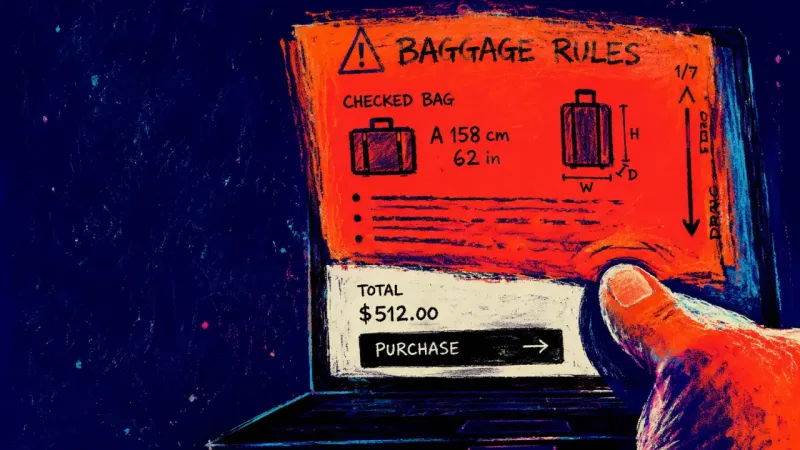
She described an evening so specific I could practically hear it: 8:47 PM, condo living room, dishwasher humming, city glow leaking through the blinds. Laptop on her knees. That faint, maddening buzz from an overhead light. The checkout page warmed her palms like a tiny space heater. Her shoulders had crept up without permission, and her jaw was tight in the way it gets when you’re trying not to show you’re scared.
“I just want to book it,” she said, eyes still on the invisible screen in her mind, “but I don’t want to book it wrong. If I commit and it’s a bad deal, that’s on me.”
Indecision, for her, wasn’t a thought—it was a posture. Like her whole upper body was bracing for impact while her cursor hovered over Purchase.
I nodded, keeping my voice gentle and plain. “If you keep stalling at checkout, it’s not laziness—it’s a safety strategy that got too expensive. Let’s try to map what your mind is protecting you from—and how to get you moving with clarity.”
Choosing the Compass: How Tarot Works as a Pattern Tool
I asked Jordan to take one slow breath—not as a mystical ritual, but as a clean transition. A way to bring her nervous system into the room instead of leaving it back on the checkout screen. I shuffled while she held the question in mind: They want to book flights—what past pattern makes me stall?
“Today,” I told her, “we’ll use a spread called the Four-Layer Insight Ladder · Context Edition.”
For readers who wonder how tarot works in a situation this practical: I use tarot less like a fortune-telling device and more like a structured interview with your own patterning. This spread is built for moments of decision fatigue—when you’re not lacking information, you’re lacking an internal handoff from research to commitment.
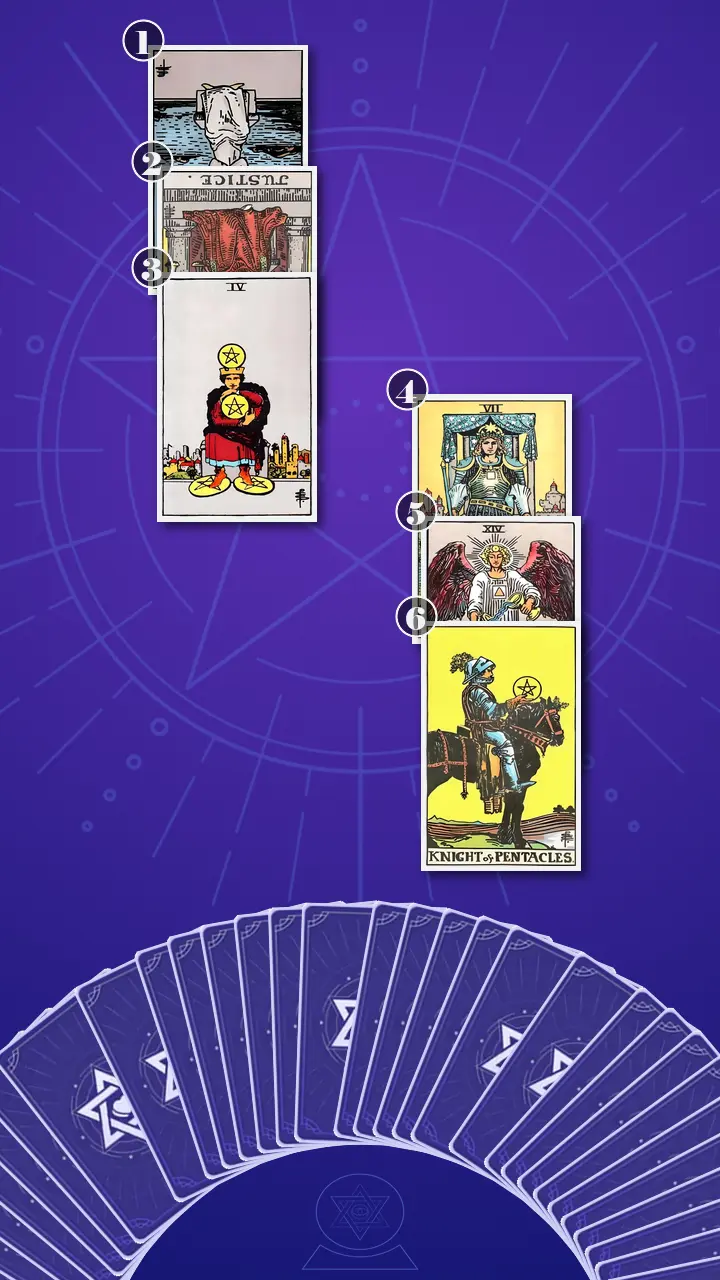
The rationale is simple: keep it minimal (six cards), but separate the layers. Position 1 shows the visible stall. Position 2 goes backward—where the script was learned. Position 3 names the hidden driver (usually control, money, or fear of regret). Position 4 is the pivot. Positions 5 and 6 turn insight into regulation and next steps, so you leave with actionable advice, not vibes.
“We’ll climb down,” I said, laying them in a ladder, “and then step onto a path forward.”
Reading the Map: Ten Tabs, Still No Ticket
Position 1 — What the stalling looks like right now
“Now turning over,” I said, “is the card representing what the stalling looks like right now in concrete behavior when trying to book flights.”
Two of Swords, reversed.
Jordan let out a small laugh that was more bitter than amused. “Okay. That’s… rude.”
I didn’t rush to reassure her. I stayed with the accuracy. “This card is painfully modern,” I said. “It’s 10:06 PM, and you’re still on the checkout screen with your card saved—yet you’re toggling between three departure times, two airports, and a baggage policy FAQ like it’s going to reveal a secret ‘right answer.’ You’re not pausing; you’re spiraling.”
I could see the scene as if it were projected on the wall: laptop glow, the cursor hovering, the inner monologue clicking like a metronome—one more check → one more exception → one more screenshot—until the moment the purchase becomes irreversible and the laptop closes. Tons of activity, no movement. Like having fourteen tabs open and your laptop fan screaming.
Reversed, the Two of Swords is a blocked Air energy—thinking that can’t land. The blindfold isn’t ignorance; it’s “I have information but I don’t trust my own read.” The crossed swords over the chest aren’t logic; they’re self-protection.
Jordan’s fingers tightened around her water glass, then loosened. A sharp nod. The kind that says, ugh, yes without needing the words.
Position 2 — The past pattern that trained you to hesitate
“Now turning over,” I said, “is the card representing the past pattern that trained you to hesitate or over-justify before committing.”
Justice, reversed.
I felt Jordan go still—like her body recognized this before her mind did.
“You’re not booking a flight—you’re running an internal courtroom case,” I said, letting the phrase sit between us. “Justice reversed is the part of you that tries to make every decision defensible. Not workable. Defensible.”
The modern translation is almost too on-the-nose: you treat past travel decisions like evidence in a private court case—change fee becomes Exhibit A, missing a better deal becomes Exhibit B. Then you build a bulletproof defense (screenshots, price history, policy deep-dives) so Future You can’t accuse Present You.
Reversed, Justice is an excess of judgment with a shortage of mercy. The scales become endless weighing. The sword becomes a self-verdict. The stone throne becomes the rigid standard you feel you must meet to be “responsible.”
In my own work as an archaeologist, I’ve spent years reading layers—soil, ash, pottery, bone—to understand what happened over time. That’s the lens I call Emotional Historiography: we don’t just ask “what are you doing?” We ask “what era of your life taught you that doing it wrong would cost you?”
Jordan swallowed and stared at the card like it had turned into a mirror. “I had a trip a couple years ago,” she said quietly, “where I changed the flight last minute and it was… expensive. And humiliating. I felt like an idiot.”
“So the script became: don’t be caught wrong again,” I said. “But learning isn’t the same as sentencing.”
Position 3 — The core fear behind the stall
“Now turning over,” I said, “is the card representing the core fear behind the stall, especially around control, money, and regret.”
Four of Pentacles, upright.
“This is the clenched fist,” I said. “Under the tab chaos is a tight-fisted fear: if you spend the money and commit the dates, you lose control. So you keep your options ‘unspent’—as if keeping the money in your account and the trip unbooked means you’re safer.”
Upright, the Four of Pentacles is Earth energy in excess—security taken so far it turns into rigidity. Control as clenching. Like holding your breath to feel in control, even though it makes you more tense.
Jordan’s jaw worked once, like she wanted to argue—and then couldn’t, because it was true. “It’s not even that I don’t have the money,” she admitted. “It’s… if I spend it and it’s wrong, I can’t undo the feeling.”
“Exactly,” I said. “The money is the symbol. The fear is: if this goes badly, it proves you can’t be trusted with your own life.”
When The Chariot Took the Driver’s Seat
Position 4 — The most direct pivot from hesitation to self-leadership (Key Card)
I held the next card a fraction longer than the others. The room felt quieter, as if even the dishwasher had decided to listen. “We’re turning over the pivot,” I said, “the card that shows the most direct shift from hesitation to self-led decision-making.”
The Chariot, upright.
Jordan’s eyes flicked to my hands, then to the card. It was late in her mind again—laptop open, checkout page waiting—while her brain ran twelve versions of regret like trailers she didn’t ask to watch.
Stop waiting for the perfect sign; pick a lane and drive it like The Chariot—forward, protected, and decided.
She froze in a precise sequence: first her breath caught; then her gaze went slightly unfocused, like she was replaying a week of checkout hovers; then her shoulders dropped on a slow exhale she didn’t know she’d been holding. Her mouth opened, closed, and opened again.
“But—” she started, and there it was: a flash of anger under the fear. “If I do that… doesn’t that mean I was wrong all those nights? Like I wasted so much time?”
I kept my tone steady. “It means you were protecting yourself with the tools you had. The Chariot isn’t here to shame the past. It’s here to end the court case.”
“Certainty isn’t the requirement. Leadership is.” I watched that land in her body more than her face—her hands unclenched, then curled loosely in her lap, like she was practicing a different grip on control.
“Here’s what I see,” I continued. “Those two sphinxes pulling the chariot? That’s you: best deal pulling one way, peace of mind pulling the other. The trick isn’t to eliminate either one. It’s to hold the reins—define your lane, then protect it.”
I leaned in with the practical part, the part that turns insight into motion. “Now, use this new lens and think back to last week: was there a moment—hovering over Purchase, re-checking baggage rules for the third time—when ‘pick a lane’ would have changed how you felt?”
Jordan blinked fast. “Tuesday,” she said. “I literally had one flight in the cart. I closed the laptop because I thought, ‘What if it drops tomorrow and I look stupid.’ And I felt… guilty for wanting the trip.”
“That’s the crossing,” I said. “From mental gridlock and self-prosecution to calm self-leadership. Not because you found better data—but because you stopped treating the booking as a referendum on your intelligence.”
Position 5 — What helps you choose ‘good enough’ and stop reopening the debate
“Now turning over,” I said, “is the card representing what helps you choose ‘good enough’ criteria and regulate the urge to reopen the decision.”
Temperance, upright.
Temperance always makes me think of excavated amphorae—those clay vessels used to carry wine and oil across the Mediterranean. What mattered wasn’t the perfect liquid; it was the ratio. A stable blend that could survive the journey.
“This is your decision recipe,” I told her. “Instead of swinging between obsessive research and impulsive booking, you blend priorities into something livable: price you can live with, timing that won’t wreck your week, and one comfort need.”
Upright Temperance is balanced integration. It’s the resource that softens your nervous system after you choose, so you don’t reopen the tab to re-litigate your decision.
Jordan’s face changed in a small way—less defended. Her jaw loosened like it had finally gotten permission. “I like that,” she said. “A recipe. Not… a trial.”
“That’s the point,” I said. “And it matches one of my own tools: Amphora Balance. Equal partnership between your needs—money, time, and your nervous system—so no single one becomes a dictator.”
Position 6 — The grounded next step that builds self-trust
“Now turning over,” I said, “is the card representing a concrete, doable next step for booking that builds self-trust through follow-through.”
Knight of Pentacles, upright.
“This one is wonderfully boring,” I said. “You treat booking like a simple execution checklist: pay, get the confirmation email, save it, put it in your calendar, close the tabs.”
Upright, the Knight of Pentacles is Earth energy in balance—not clenched, not frantic. It’s the part of you that proves you’re reliable by following through once you’ve chosen, even if the option wasn’t mathematically perfect.
Jordan gave a small, relieved smile. “So… I don’t have to feel brave. I just have to do it in order.”
“Exactly,” I said. “Motion doesn’t have to be loud to be real.”
The One-Page Exit from the Internal Courtroom
I looked at the ladder as a whole and told Jordan the story it was telling: “First, your mind goes into Air—tabs, comparisons, hypotheticals—because the moment you approach commitment, the old Justice script opens a case against you. Underneath, Four of Pentacles tightens around money and control like a fist. The way out isn’t more evidence. It’s The Chariot: steering instead of clenching. Temperance keeps the steering sustainable, and the Knight makes the follow-through calm.”
“Your cognitive blind spot,” I added, “is that you keep trying to buy immunity from regret. But regret isn’t eliminated by perfect research—it’s reduced by a fair process and a clean follow-through. The transformation direction here is clear: shift from guaranteeing the perfect deal to choosing a clear set of good-enough criteria and committing once.”
Then I gave her the next steps—small enough to actually do on a weeknight, specific enough to cut through choice paralysis travel planning perfectionism.
- Build the “Good-Enough Criteria Contract”In your Notes app, write three criteria: (1) a price cap you can live with, (2) an arrival window, (3) one comfort need (for example: nonstop, or not arriving after 11 PM, or seat selection). Read it once before you open a single flight tab.If your brain starts demanding “one more check,” label it: “old courtroom.” You’re choosing a workable flight, not trying to win a case.
- Run the 20-Minute Booking TimerSet a 20-minute timer. Search flights once. The first option that meets your three criteria—buy it. No extra tabs, no switching airports mid-stream.When your jaw clenches, put one hand on your chest for 10 seconds and take one slow breath. Regulation first, then click.
- Make a Covenant (and Protect It)Create a “One-Reopen Rule”: after purchase, you do not reopen flight searches for 48 hours unless a real constraint changes (work dates, budget cap, health, emergency). Decide once, then protect the decision like it matters.This is my Covenant Evolution strategy: commitments are living agreements, not prison sentences—but they only evolve for objective reasons, not for anxiety.
- Do the Receipt RitualImmediately after booking: save the confirmation email/PDF, screenshot the booking code, file it in a “Travel” folder, add the flight (and “leave for airport” buffer) to your calendar, then close every comparison tab.Make follow-through boring on purpose. A ‘good enough’ flight that you actually book beats a perfect flight you never buy.

A Week Later: The Quiet Proof
Six days later, Jordan sent me a message at 7:18 PM. One sentence: “Timer set, three criteria written, booked it. I closed all the tabs.”
She added, almost as an afterthought: “I still had the ‘what if there’s a better option’ spike the next morning… but I didn’t reopen. I just looked at the confirmation and went to work.”
It wasn’t a fireworks ending. It was something better: a tiny, sturdy proof that her life could move again without a trial attached.
That’s the real Journey to Clarity I see, again and again: not the disappearance of uncertainty, but the return of self-leadership—choosing one workable lane, then letting your nervous system learn it survived.
When you’re hovering over “Purchase” with tight shoulders and a clenched jaw, it’s not the flight you’re afraid of—it’s the feeling that one wrong choice could expose you as someone who can’t be trusted with her own life.
If you didn’t need this choice to prove you’re smart or responsible, what would your “good enough” criteria be—and what might it feel like to stand by that decision just once?