When a Student Loan Balance Feels Like a Verdict, Go Facts-Only First
Finding Clarity in the 9:17 PM Radiator Hiss
You’re a 20-something NYC early-career professional who can handle rent and groceries, but a student loan statement turns your body into a siren before your brain even catches up.
Taylor (name changed for privacy) said that to me like it was a confession she’d been practicing on the walk over—eyes a little too bright, shoulders held up like she was bracing for impact. We were at my café after the dinner rush, when the street finally gets quiet enough that you can hear the espresso machine cooling down and the soft clink of saucers as I stack them.
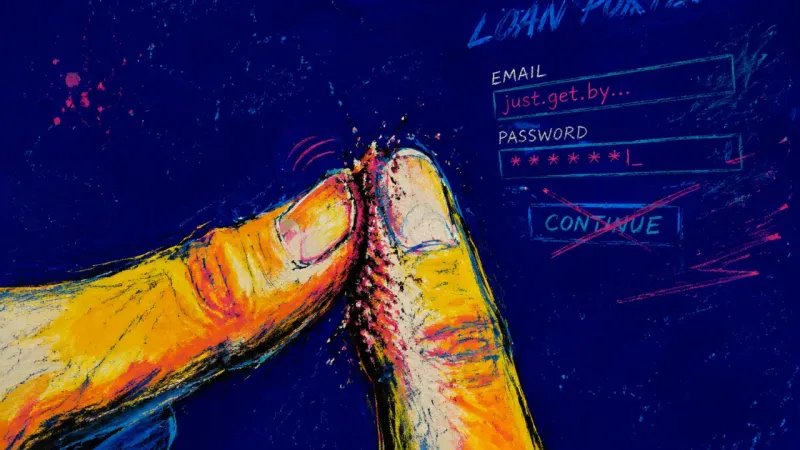
She described the scene that keeps replaying: Tuesday night, her apartment radiator hissing like it had an opinion. Laptop open. Loan portal login page staring back. Fingers hovering over the trackpad. The room smelling faintly like takeout cartons and old heat. “I log in,” she said, “my eyes snap to the total, and I close the tab fast—like I touched a hot pan. Then I open Instagram. Immediately. I hate that I do that.”
As she spoke, I watched her jaw set—tight, square—and the way her hand kept rubbing at the side of her thumb, like she was trying to erase a sensation from her own skin. Panic isn’t abstract in the room with me; it’s a tight chest that refuses to fully inflate, a sinking stomach the moment the subject line shows up, a body that reacts before the mind can even form a sentence.
“I want financial clarity,” she said, voice smaller, “but I’m scared the clarity will prove I’m failing at adulthood.”
Her panic had a flavor to it—like coffee that’s been over-extracted: too much contact time, too much bitterness pulled out of something that could’ve been straightforward. Numbers become moral. Information becomes a verdict. And then the only relief is to shut the whole thing down.
I leaned my elbows onto the small marble table we use for quiet conversations and lowered my voice like we were protecting something tender. “Okay,” I told her. “We’re not here to force you to feel calm. We’re here to get you one grounded next step—something your nervous system can actually tolerate. Let’s try to give this fog a map. Let’s do a Journey to Clarity—one honest card at a time.”

Choosing the Compass: A Shadow Spread Tarot Reading for Money-Trigger Panic
I slid a cup of coffee toward her—not as a cure, just as a familiar anchor. “Before we pull cards,” I said, “let’s do one thing that tells your body it’s safe enough to be here.”
I asked her to take one slow inhale over the cup, like she was smelling fresh ground beans. Not mystical—just sensory. A way to come back into the room. My regulars call it my café therapy trick. Italians have a word, riposo—rest—not as quitting, but as a deliberate pause that keeps you functional. Money anxiety loves to steal that pause. We steal it back.
“Today,” I said, “we’ll use a spread called the Shadow Spread.”
For readers who’ve wondered how tarot works in moments like this: I don’t use it to predict a winning lottery number or deliver a dramatic prophecy. I use it like a psychological map. This specific spread is built for inner work—when the problem isn’t a lack of intelligence, but a nervous system reaction and an inherited story running in the background.
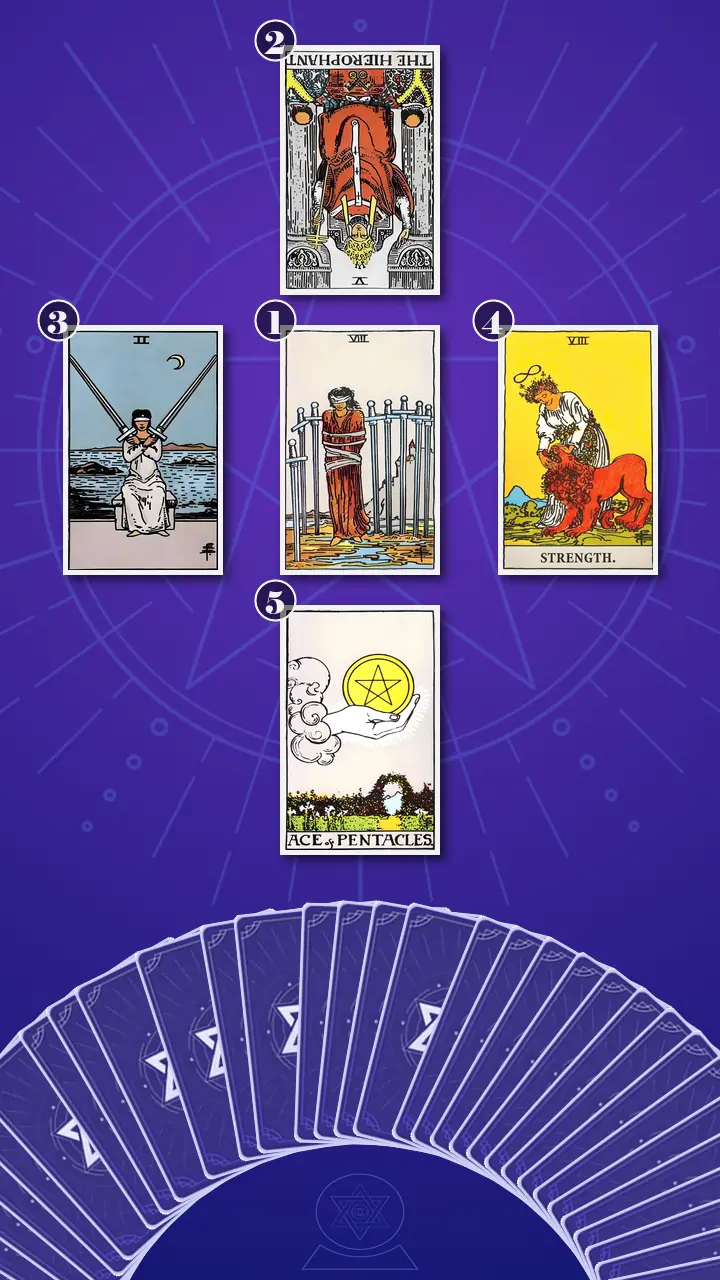
The Shadow Spread is simple on purpose: one card for the visible trigger, one for the hidden influence, one for the coping move, one for the medicine, and one for the smallest next action. It keeps us from drowning in analysis—because in money anxiety, “more research” can become just another way to avoid.
“Here’s what we’re looking for,” I told her, tapping the table where the cards would go. “Card 1 shows the panic moment—what happens in your body and on your screen. Card 2 shows the old rulebook hovering over it—the inherited money story, the ‘approved adult’ checklist. Card 4 is the antidote—what helps you stay present without spiraling. And the last card will be your one step. Not a life overhaul. One step.”
Reading the Map: When the Screen Becomes a Courtroom
Position 1: The observable panic moment
“Now flipping,” I said, “is the card that represents the observable panic moment: what happens in your mind/body when the student loan statement shows up.”
Eight of Swords, upright.
“This is like,” I said, keeping my voice plain, “you’re staring at your laptop in your NYC apartment, logged into the loan portal, and your eyes snap to the total balance like it’s a final grade. Your chest tightens, your jaw locks, and your brain starts looping: ‘If I look closely, I’ll see proof I’m behind.’ You close the tab fast—relieved for three seconds—then spend the next hour bouncing between Instagram and your bank app. Still trapped, just with the blindfold back on.”
In the Eight of Swords, the bindings look serious until you notice they’re loose. The cage looks real until you notice there’s space to step out. That’s the energy here: contraction, driven by interpretation, not immediate danger. It’s student loan statement panic dressed up as “I’m being careful.”
I paused and added the reframe I use like a sugar packet on a bitter shot: “The balance isn’t a verdict. It’s information.”
Taylor let out a quick, bitter little laugh—one sharp breath through her nose. “That’s… actually brutal,” she said. “Like, it’s exactly what I do.”
“Not brutal,” I said gently. “Accurate. There’s a difference. And accurate is useful.”
Then I gave her the split-screen I could see in my head, like two tabs open side-by-side:
Screen A: Hover over the login, eyes flick to the total, jaw clenches. Screen B: Close the tab ‘for now’ and instantly switch to Instagram Reels like pulling a blanket over your head.
“The inner line that keeps the loop going,” I said, “is: If I don’t look, it can’t hurt me… but if I don’t look, it never stops chasing me.”
She nodded once, slow. A quiet exhale—like she’d been holding her breath for longer than she realized.
Position 2: The old money story
“Now flipping,” I said, “is the card that represents the old money story: inherited beliefs and institutional ‘rules’ that shape your reaction.”
The Hierophant, reversed.
“This is the invisible rulebook,” I told her. “The statement isn’t just a bill—it becomes a silent ranking system in your head. You can almost hear an inherited voice: ‘Real adults don’t have this much debt. Successful people don’t flinch at numbers.’ It’s like you’re trying to pass an invisible ‘approved adulthood’ checklist written for someone with a totally different class reality, and every login feels like walking into a ceremony where you might be judged.”
Reversed, The Hierophant doesn’t mean “tradition is evil.” It means tradition can become pressure—especially when you’re living a life the old rules were never designed to support. NYC rent doesn’t care what the rulebook says. Your nervous system doesn’t either.
I pointed to the card’s structure—the pillars, the authority posture. “This is the part of you that treats the loan portal like a courtroom,” I said. “Not a website.”
She pressed her lips together, and I saw heat rise in her face the way it does when someone recognizes a voice they didn’t choose. “It’s… my dad,” she said quietly. “Not even in a direct way. Just like—money equals being safe. Money equals being respectable.”
“Old rules can be loud,” I said. “You don’t have to obey them to be responsible.”
Then I gave her a tiny micro-scene—something she could do without turning it into a full emotional excavation. “Open your Notes app,” I said. “Write one sentence: I was taught that money means… Don’t perfect it.”
She mimed typing with her thumb on the table, like she could already feel the cringe. That was the Hierophant reversed: the discomfort of rewriting a script you didn’t know you were still reciting.
Position 3: Your protection move
“Now flipping,” I said, “is the card that represents your protection move: the specific coping behavior you default to that maintains the loop.”
Two of Swords, upright.
“This is ‘Airplane Mode’ coping,” I told her. “You tell yourself you’re being calm and responsible—but your version of calm is numb. You don’t write down the due date, you don’t choose a next step, you keep the situation suspended. You refresh your bank app, skim Reddit threads about repayment plans, and avoid any yes/no decision because deciding feels like admitting vulnerability.”
The Two of Swords is protection through shutting off input. Energetically it’s a blockage: not a lack of intelligence, but a refusal to let information land in the body.
“You know what this reminds me of?” I said, and she glanced up. “Keeping a task in your notifications tray. It’s technically there, so you tell yourself you’re on top of it—but it’s also never resolved. It just hangs over you.”
She swallowed. Her shoulders crept up, then dropped a millimeter, like her body was conceding the point against its will.
When Strength Met the Lion: The Medicine for the Freeze
Position 4: The reframe/medicine
When I reached for the next card, I felt the room get quieter—the way it does right before the espresso machine releases its first hiss in the morning. Some cards don’t land like ideas; they land like physics.
“Now flipping,” I said, “is the card that represents the reframe—the medicine: what helps you stay with discomfort without spiraling.”
Strength, upright.
“This is you opening the statement, feeling the surge—tight chest, sinking stomach—and instead of snapping the laptop shut, naming it: ‘This is a fear moment.’ You take a slower breath, soften your jaw, and speak to yourself like you would to a friend: kind, firm, not dramatic.”
Strength is not force. It’s steady contact. The lion isn’t defeated; it’s met.
And this is where my café brain kicked in—my Stress Flavor Profile way of seeing things. “Taylor,” I said, “you’re over-extracting the meaning of that number.”
She blinked.
“Like coffee,” I continued. “The number is a simple thing. But when you leave it in contact with your worth for too long, you pull out bitterness that was never meant to be there. You’re not bad with money. Your nervous system is reacting to an inherited ‘approval’ story, and your mind is trying to protect you by slamming the door.”
The Aha Moment
Setup: You know that moment when the email subject line mentions your loan and your stomach drops—like your whole body decides it’s danger before you’ve even clicked. That’s the exact moment you’ve been trying to outrun by closing tabs, scrolling, and promising yourself you’ll face it when you feel “ready.”
Stop treating the statement like a predator you must defeat; meet it like Strength meets the lion—steady breath, gentle grip, and one calm action at a time.
Reinforcement: The words hit her in a sequence I’ve seen a hundred times—because shame always wears the same disguises. First, a brief freeze: her breathing paused, her fingers went still on the cup. Then the cognition seeped in: her eyes lost focus for a second, like she was replaying last Tuesday night in her head—the hot-pan tab close, the Instagram blanket. Then the emotion moved: her jaw unclenched visibly, the muscles at her temples softened, and she let out a long breath that sounded almost like a laugh that didn’t quite make it to joy. Her shoulders dropped, and with them, something else dropped too—the idea that she needed to be fearless before she could be responsible.
She shook her head once, small. “But… if I’m gentle,” she said, and there was a flash of irritation there, “isn’t that just letting myself off the hook?”
I didn’t flinch. “No,” I said. “Gentle isn’t a free pass. Gentle is how you stay present long enough to do the thing. Your body is having a fear moment—not a money emergency. Strength is responsibility without self-punishment.”
I leaned in. “Now, with this new lens, can you think back to last week—was there a moment when this insight could’ve let you feel different?”
Her gaze flicked down and left—memory. “Monday on the subway,” she said. “I swiped the email away and spent the whole day tense. If I’d just… met it like information, not a trial… I could’ve at least noted the due date. It wouldn’t have followed me around like a ghost.”
That was the shift happening in real time: from shame-driven panic and avoidance to grounded self-respect under pressure. Not the end of debt—just the beginning of self-trust.
Position 5: One step
“Now flipping,” I said, “is the card that represents one step: the smallest concrete action to take this week that builds safety and self-trust with money.”
Ace of Pentacles, upright.
“This is the offered coin,” I told her. “Not a whole garden you have to manage tonight—just one thing you can hold.”
“Instead of trying to ‘solve debt,’” I said, “you create a tiny container. One note in your phone titled ‘Loans — basics.’ You write down only: minimum payment, due date, and where autopay lives. Then you set one calendar reminder. It’s not glamorous, but it turns the vague monster into a path you can actually walk.”
And I added the line I’ve learned people need to hear like a permission slip: “A 7-minute plan beats a 2-hour spiral.”
Her mouth twitched—half relief, half disbelief. “That actually feels… possible,” she said, like she didn’t trust possible things around money yet.
The One Small Container: Actionable Advice for Student Loan Statement Anxiety
I looked at the full cross of cards and threaded it into one story—the kind your nervous system can understand.
“Here’s the logic,” I said. “When the statement hits, Eight of Swords is your body and mind bracing like you’re trapped. The Hierophant reversed is the inherited money rulebook—old money vs. my money—turning a neutral number into a status test. Two of Swords is your protection move: you shut off input so you don’t have to feel exposed. Strength is the bridge: you don’t eliminate fear first; you meet fear with steady self-respect. And Ace of Pentacles is where it all becomes real: a small, trackable action that proves to your brain you can handle the moment.”
The cognitive blind spot was clean and painful: she’d been treating the number like a verdict, so every glance felt like sentencing. Of course she avoided it. Who willingly walks into a courtroom when they think they’re guilty?
“Your transformation direction,” I told her, “is moving from the number is a verdict on me to the number is information I can meet with a 10–15 minute plan. Not perfection. Consistency.”
Then I gave her the next steps in a way her brain could trust—contained, timed, and specific. I even used my café-owner strategy brain: I schedule maintenance on an espresso machine before it breaks, not after. Money routines work the same way. We don’t wait until you feel ‘ready.’ We make a small ritual that makes readiness less relevant.
- The “Loans — basics” noteOpen your phone Notes app tonight or tomorrow morning. Create one note titled “Loans — basics”. Write only: (1) due date, (2) minimum payment, (3) where autopay lives (or the login URL/app name).Make it comically small on purpose. The win condition is facts captured—not feeling calm.
- The 7-minute “Lion Tamer” facts-only checkSet a timer for 7 minutes. Open the loan portal. Put one hand on your chest, take three slower breaths, and look for the due date first. Then write the three facts into your note and close the tab.If your body spikes, you’re allowed to pause and come back later—no forcing, no punishment. A partial rep still counts.
- A one-minute rulebook auditIn the same note, add two lines: “I was taught that money means ____.” and “I choose to define security as ____.” Circle the word that makes your jaw clench (like “behind” or “real adult”) and swap it for a neutral word (like “in process” or “building”).Do it like editing a caption, not like rewriting your entire life story. Neutral is enough for now.
Before she left, I layered in one last tool from my café life—my Alertness Scheduling. “Pick a time when your body is naturally more resourced,” I said. “For a lot of people, it’s after the first coffee and before the inbox chaos. Not 11:38 PM in bed with five tabs open. We’re not doing money tasks in the doom-scroll zone.”

A Week Later: Ownership, Not Certainty
Six days later, between a lunch rush and a delivery of fresh beans, I got a message from Taylor.
“Did the 7-minute thing,” it read. “I wrote down the due date + minimum + autopay. I still hated seeing the total, but I didn’t spiral. Also… it’s weirdly calming to have the facts in one place.”
It wasn’t a dramatic before-and-after. It was something better: proof. The smallest coin in the palm. Consistency is the new flex—quiet, boring, effective.
She told me the bittersweet part too: she slept a full night after doing it, but the next morning her first thought was still, What if I’m behind forever? Then she caught herself, breathed, and added, Facts first. Not certainty—ownership.
That’s what this Journey to Clarity looked like from my side of the table: not “debt-free overnight,” but a shift from verdict-thinking to information-thinking, from self-attack to self-respect, from an inherited rulebook to an inner steadiness that can handle one small task at a time.
When money shows up in your inbox, it can feel like your whole body is bracing for a verdict—like one number might decide whether you’re safe, competent, or “behind” as a person.
If you treated the next statement like information—not a trial—what’s the smallest fact you’d be willing to write down first?