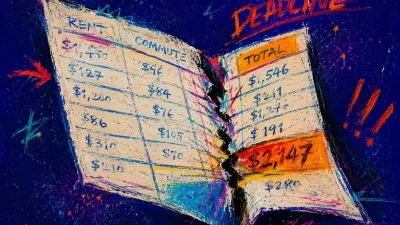
From Renewal-Email Overwhelm to Steady Action: A One-Step Reset

Finding Clarity in the “Renewal Notice” Subject Line
You’re an early-career London office worker who can manage complex tasks all day—until a “Renewal Notice” email hits and suddenly your brain turns it into a full life audit (Sunday Scaries energy, but in your inbox).
Jordan (name changed for privacy) said it before they even sat down properly: “It’s just an email, but it feels like my entire life is due at once.”
I could picture it immediately because they described it with the kind of specificity you only get when someone’s been living inside the loop all week: 6:34 PM on the Central line heading home, phone warm in their hand, the carriage smelling faintly metallic and someone’s aftershave. They open the email, skim the deadline, screenshot it, and start a Notes list titled Renewal Options—like naming it will contain it.
But the body doesn’t lie. Their jaw was set like they were bracing for impact. Their hands kept doing that restless, buzzy thing—half reaching for the next thought, half trying to swat it away. Overwhelm, in Jordan’s system, wasn’t an abstract feeling. It was like being strapped into a spinning office chair while someone kept adding sticky notes to the walls—faster than their eyes could track.
“You want to feel on top of your adult responsibilities,” I reflected, “and finally be done with it. But you’re also scared that one wrong reply will lock you into something expensive and draining, something you can’t easily undo.”
They nodded, sharp and tired at the same time. “I don’t want advice. I want one clean next step.”
I leaned in, voice soft but steady. “Then that’s our journey today—finding clarity that comes from one doable move, not from thinking yourself into a perfect plan.”

Choosing the Compass: The Horseshoe Spread for Decision Overwhelm
I asked Jordan to take one slow breath with me—not as a ritual for mystery, but as a gear shift. The kind you do before you open a difficult Slack thread at work: you’re not changing reality, you’re changing your nervous system’s access to reality.
As I shuffled, I explained what I was doing in plain language: “Tarot doesn’t have to predict your future to be useful. It can show you the pattern you’re stuck in—how it starts, what keeps it going, and where to place one small lever for change.”
For this question, I chose the Horseshoe Spread. It’s a classic seven-card arc that’s perfect when one admin trigger is spilling into everything. It moves from past load, to present freeze, to hidden driver, to the main blockage—then it separates your inner stance from external pressures and ends with one supportive next step.
In other words: it maps why a renewal notice email can feel like a referendum on your competence, and it points to one practical move that restores momentum.
“We’ll start with what’s been quietly building your load,” I told them, “then we’ll name the exact freeze moment. We’ll look at what fear is actually underneath this. And we’ll end with one step you can take in the next 24 hours that creates clarity—without you having to commit to your whole future tonight.”
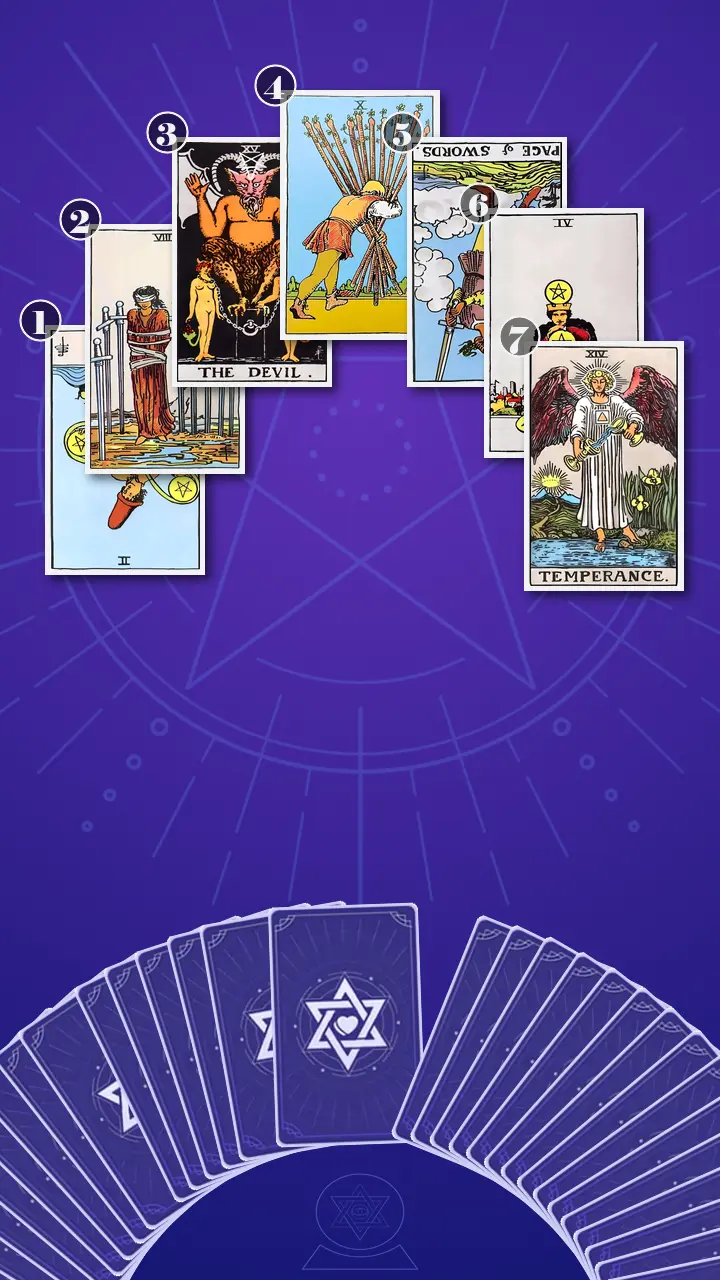
Reading the Arc: From Tab-Switching to One Real Decision
Position 1 — What’s been quietly building the load
“Now I’m turning over the card that represents what in your recent life pattern has been quietly building the load, so this renewal email hits harder than it ‘should.’”
Two of Pentacles, reversed.
This card’s modern life translation is brutally accurate for London life: you’ve been keeping everything afloat through constant micro-adjustments—shifting spending, pushing admin to “later,” squeezing errands into depleted evenings. So when a renewal notice lands, it isn’t one task; it becomes one more plate in a routine that’s already wobbling. The tell is you end the night with more tabs than actions.
Reversed, the Two of Pentacles isn’t “you’re bad at juggling.” It’s “your balance strategy finally hit its limit.” The energy is blocked—not because you lack capability, but because your life has been running on improvisation rather than rhythm.
Jordan let out a short laugh that wasn’t amused. “That’s… yeah. That’s actually kind of brutal.” Their eyes flicked down to the table like the card had called them out by name.
I kept my tone warm. “It’s not a character flaw. It’s an overload pattern. And patterns can be changed.”
Position 2 — The present-day freeze moment
“Now I’m turning over the card that represents the present-day overwhelm behavior—the specific way this renewal email is freezing your decision-making.”
Eight of Swords, upright.
The Eight of Swords is the most familiar card for decision paralysis: the blindfold, the loose bindings, the swords forming a cage that isn’t even fully closed. In Jordan’s life, it shows up like this: you open the email and instantly imagine ten futures—each one containing regret. Options exist, but your body doesn’t feel permission to choose.
I spoke it as an inner-monologue ladder, because this is how it actually sounds inside the spiral: “If I reply, I commit. If I commit, I’m stuck. If I’m stuck, I’ve failed.”
Then I anchored it in the scene Jordan had described: Gmail open, the cursor blinking, drafts started and abandoned. Tabs multiplying—Rightmove, Monzo, a Reddit thread that starts helpful and ends in panic—while the one draft that could reduce pressure sits untouched.
The energy here is restriction. Not always from the outside world—though money and housing are real stakes—but from the rule your nervous system is enforcing: “I must be 100% sure before I move.”
Jordan gave me that quiet, slightly uncomfortable nod people do when they feel seen a little too precisely. Their shoulders dropped by maybe half an inch, and they exhaled like they’d been holding their breath since the Tube.
Position 3 — The hidden driver underneath the admin
“Now I’m turning over the card that represents the hidden driver—the deeper attachment or fear that makes this feel like more than admin.”
The Devil, upright.
In the Rider-Waite deck, The Devil isn’t about evil. It’s about bondage—especially the kind where the chains are persuasive, not physically locked. The modern version is simple: the renewal notice hooks the part of you that equates control with safety. The email becomes a test, and your self-worth gets welded to “getting it right.”
I told Jordan what I often tell people on cruise ships when the ocean turns and everyone suddenly wants guarantees: “It’s not the email. It’s what you think the email proves about you.”
And then I made it literal, because the symbolism wants to be felt: “That subject line—Renewal Notice — Action Required—it’s like a chain around your neck. And the caption on the chain is a belief: If I mess this up, it proves I’m not in control.”
I watched their throat move as they swallowed. Their fingers—still buzzing earlier—went still against their mug. Sting of truth first. Then the relief that comes when the real hook is named.
“So… it’s me,” they said, but not in a blaming way—more like they’d just located the origin point on a map.
“It’s a part of you,” I corrected gently, “and parts can renegotiate.”
Position 4 — The real obstacle (it’s not stupidity; it’s load)
“Now I’m turning over the card that represents the main blockage—what’s actually making this hard to complete as a single task.”
Ten of Wands, upright.
The Ten of Wands is responsibility carried without breathing room. The image is someone leaning forward under a bundle so big they can’t even see where they’re going. In real life, it’s you trying to unlock your front door with an elbow because your arms are full—grocery bags + laptop + tote + phone—and you refuse to take a second trip.
I used the stacking sentence structure because that’s how the burden feels: “It’s not just the renewal email; it’s the renewal email plus work deadlines plus money maths plus the friend you still haven’t replied to plus the background hum of London cost-of-living anxiety.”
The energy here is excess. Too much fire, too much push, too much “I’ll just handle it.” And that posture—physically and mentally—is what steals your perspective.
Jordan’s face softened in a way I recognized: shame loosening its grip. “So it’s not that I’m bad at adulting,” they said slowly, “I’m overloaded.”
“Exactly,” I said. “This is load management, not a morality test.”
Position 5 — Your internal stance (information as stimulation)
“Now I’m turning over the card that represents your internal stance—the mental and emotional posture you bring to this renewal, and honestly, to life logistics right now.”
Page of Swords, reversed.
This is the Watcher-in-the-Wind energy: vigilance, scanning, tone-checking—until information becomes stimulation rather than discernment. The modern version is painfully familiar: rereading the email, checking tiny wording, scanning advice threads, comparing scripts, rehearsing how you might be judged.
I described it as a split-screen because that’s what it feels like:
Left screen: Rightmove listings, Reddit threads, bank balance, a rewritten email draft—your phone warm, eyes dry from blue light, jaw tight.
Right screen: one window, one draft, one send.
I looked Jordan straight in the eye and said the line I wanted them to keep: “More tabs won’t turn into certainty.”
Jordan half-laughed—an “okay, I’m called out” sound—and rubbed their forehead like they could physically wipe the mental noise away.
Position 6 — The external context (scarcity is real)
“Now I’m turning over the card that represents the external context—the practical pressures shaping your response.”
Four of Pentacles, upright.
This card is a clench. Coin held to the chest, coins under the feet, a walled city behind. It’s the atmosphere of scarcity where every decision feels like it could shrink your freedom for months.
I was careful here, because this is where a lot of people get gaslit by themselves: “Some of your hesitation isn’t irrational,” I told Jordan. “London is expensive. The margin can be thin. Your system is reacting to real stakes.”
The energy is protective—but protection can become a freeze if it’s all grip and no movement. This is where I bring in my own lens as a Jungian psychologist: the clench is often the body’s way of saying, “I don’t feel resourced enough to risk anything.”
Jordan nodded, slower this time. “That’s… yeah. It’s like my body does the rent maths before I even know the terms.”
When Temperance Poured Between Two Cups
Position 7 — The most supportive one step
I turned the final card over more slowly. Not for drama—because I felt Jordan’s whole system leaning toward it like someone waiting for exam results.
“Now I’m turning over the card that represents the most supportive one step—the next action or mindset shift that reduces overwhelm and restores momentum.”
Temperance, upright.
This is the antidote to everything we’ve seen: not brute force, not perfect certainty, not an all-night Notion ‘life rebrand’ project. Temperance is regulated process. One foot on land, one in water. Measured pouring between two cups—action and information blended in a pace you can sustain.
Setup: Jordan was caught in that Tube-moment loop: open “Renewal Notice,” screenshot the deadline, start a Notes list… and suddenly it feels like their whole life needs a strategy deck before they can type “Hi.” Their brain kept trying to earn safety through planning, while their body kept treating choosing as danger.
Not a perfect plan—just one steady pour: trade the frantic rewrite-and-research loop for a Temperance-level message that moves the situation forward.
Reinforcement: Jordan’s reaction didn’t start with peace. It started with a three-part micro-freeze I’ve seen thousands of times—on ships, in clinics, in cramped London flats where the email is open and the deadline screenshot sits in your camera roll like a threat.
First: their breath caught, almost inaudible, like their ribs forgot how to expand. Second: their eyes unfocused for a moment, as if their brain replayed every abandoned draft and every “tomorrow.” Third: the emotion arrived—half irritation, half grief. “So what,” they said, voice sharpening, “this whole week was pointless? All that researching was… nothing?”
I kept my voice steady. “It wasn’t nothing. It was your nervous system trying to protect you with the only tool it had: more thinking. But clarity isn’t something you earn by thinking harder—it’s something you build by sending one steady, bounded move.”
And then I brought in my signature diagnostic lens—the part of my work that’s as practical as it is symbolic. “Before we even talk words,” I said, “notice your shoulders. They’re up. Your jaw is tight. That’s an energy blockage pattern I see constantly with screen-induced exhaustion and decision fatigue. Your body is bracing like you’re about to be judged.”
I guided them through a non-medical, three-minute reset I’ve taught on transoceanic voyages between meetings and meals: one hand on the sternum, three slow breaths, shoulders down and back as if you’re letting a heavy tote slide off the strap. “We’re telling your system,” I said, “this is admin, not an emergency.”
When Jordan inhaled again, it was deeper. Their shoulders dropped fully this time, and there was a strange, light dizziness on their face—the feeling of letting go of a grip you didn’t realize you were holding.
I asked the question that turns insight into lived proof: “Now, with that new lens—one steady pour—can you remember a moment last week when this could’ve helped? A time you were hovering over the send button?”
Jordan’s mouth twisted into a small, honest smile. “Tuesday night,” they said. “I had the draft open. And I just… kept switching tabs like it counted.”
“That’s the shift,” I told them. “From flooded urgency and perfection-driven freeze to paced self-regulation and good-enough forward motion. Not perfect. But real.”
The Temperance Draft: Actionable Advice for the Next 24 Hours
Here’s the story your spread told, start to finish: you’ve been juggling life through constant micro-adjustments (Two of Pentacles reversed) until your balance broke. The renewal email became the moment your nervous system decided it needed absolute certainty before it could move (Eight of Swords). Underneath, the email got fused with self-worth and control (The Devil), while you were already carrying too much to see clearly (Ten of Wands). So your mind defaulted to restless scanning—more tabs, more scripts, more drafts—mistaking stimulation for clarity (Page of Swords reversed), all inside a real-world scarcity atmosphere that makes commitment feel risky (Four of Pentacles). Temperance offers the way out: regulate pace, make one bounded move, and let clarity be built through follow-through.
Your cognitive blind spot is this: you’ve been treating a solvable admin task like a verdict on whether you’re “adult enough.” That’s why the stakes feel infinite. The transformation direction is simple but powerful: from “I need total certainty before I act” to “I can take one small, time-boxed action that creates clarity.”
To make this concrete, I gave Jordan a plan that works with real London life—commutes, deadlines, depleted evenings—without pretending you have unlimited energy.
- One Decision Only Timer (20 minutes)Set a 20-minute timer. Open the renewal email and write one sentence naming the single decision required right now: “I need to say yes/no,” or “I need to ask one clarifying question.” Stop when the timer ends—messy is fine.If you feel the tab-opening urge, put a sticky note on your laptop that says “tabs later.” One window only.
- The Three-Bullet Temperance Draft (10 minutes)Set a 10-minute timer and draft a plain email in three bullets: (1) what you understood from the renewal notice, (2) your one question OR your yes/no, (3) the next step you propose (confirm dates/ask for terms/book a call).If your chest tightens or you feel buzzy, pause with one hand on your sternum and take 3 slow breaths. End early if needed—the point is regulation, not forcing.
- One-Lane Reply + Read-Once Send BoundaryChoose one communication lane for this issue (email only). Close everything else. Read your draft once—then send. Not zero times, not five times: once.If you worry about tone, let it be a little plain. Plain is professional. Good-enough isn’t sloppy. It’s sustainable.
I also added my Venetian Aqua Wisdom twist—because I’ve watched how water teaches the nervous system: it moves through channels, not through force. “After you hit send,” I told Jordan, “do one small ‘circulation marker’ so your body learns the task is closed for now: drink a full glass of water, open a window, or take a two-minute walk to the corner shop. You’re letting the energy move on instead of stagnating in your shoulders.”

A Week Later: Ownership, Not Certainty
Five days later, I got a message from Jordan. Just one line: “Sent it after one read. They replied with the terms. I didn’t die.”
The win wasn’t that their housing situation magically became perfect. It was smaller and more important: the email stopped being a prophecy. They treated it like admin, and their body learned it didn’t have to go to war to survive a decision.
Jordan told me they sent it on the commute, phone balanced on their tote, rain tapping the carriage window. They didn’t feel triumphant. They felt oddly quiet—then a little lonely, like they’d stepped out of a noisy room and realized how loud it had been. The next morning, their first thought was still, “What if I chose wrong?”—but this time they exhaled and thought, “I can take the next step when I have the next info.”
That’s what a real Journey to Clarity looks like in adult life: not certainty, but ownership—one steady pour at a time.
When one “Renewal Notice” subject line makes your chest go tight, it’s not because you’re bad at life—it’s because you’re trying to make a single reply prove you’re in control of everything at once.
If you didn’t need total certainty tonight—just one steady pour—what’s the smallest message you could send that would create your next piece of clarity?