From Camera-Off Shame to Time-Boxed Presence in Zoom Meetings

Finding Clarity in the 8:56 a.m. Self‑View Pop‑Up
You join the recurring Zoom with your camera off, then immediately type a pre-emptive excuse in chat—classic camera-off shame + Sunday Scaries energy, just on a Tuesday.
That was the first line Jordan (name changed for privacy) offered me, almost like a confession and a joke at the same time. They were in London, 27, early-career, smart as a whip—and on my screen they were, for now, a neat black square with their name centered in white letters. No face. No room. No “proof.”
“What’s your go-to line?” I asked, keeping my voice light on purpose. “Wi‑Fi? Lighting? ‘Not feeling well’?”
A pause, then their chat bubble appeared: lol. ‘Camera’s being weird today.’ I type it before anyone even asks.
I pictured the scene because it’s a London scene I’ve heard a hundred variations of: 8:56 a.m. in a flat where the grey light through the window feels flat and unforgiving. The laptop fan already warm against the desk. Zoom opening straight into your own face by default—like a mirror you didn’t consent to. Shoulders creeping up toward your ears while your cursor hovers near the camera icon, and then—click—off anyway.
Jordan said it in a rush, like they were trying to outrun the feeling. “It’s not that I can’t do the work. I can do the work. I just don’t want to be looked at while I do it.”
What I heard underneath was the real contradiction: they wanted to be seen as capable and connected, and at the exact same time they were trying not to be seen at all—because being visible felt like inviting judgment.
The shame didn’t show up as a dramatic sob. It showed up like a tight gate in the throat, the jaw clamping as if it could hold everything in place, the subtle urge to shrink back in the chair when attention turned their way. Shame as a body posture: smaller, quieter, safer.
“I’m not here to take the black square away from you,” I said. “The camera-off move is protection, not laziness. But protection always has a price. If you’re willing, we can map what it’s protecting you from—and find one step that teaches your nervous system something new. A journey to clarity, not a trial.”

Choosing the Compass: The Transformation Path Grid (6)
I invited Jordan to take one breath with me—not as a ritual to summon anything, but as a clean handover from work-mode into awareness-mode. “In for four,” I said, “out for six. Let your jaw soften on the exhale, even by one millimeter.”
While they breathed, I shuffled slowly. The sound of cards is small and steady—paper against paper—like rain that doesn’t demand attention but changes the air in a room. It gives the mind something simple to hold.
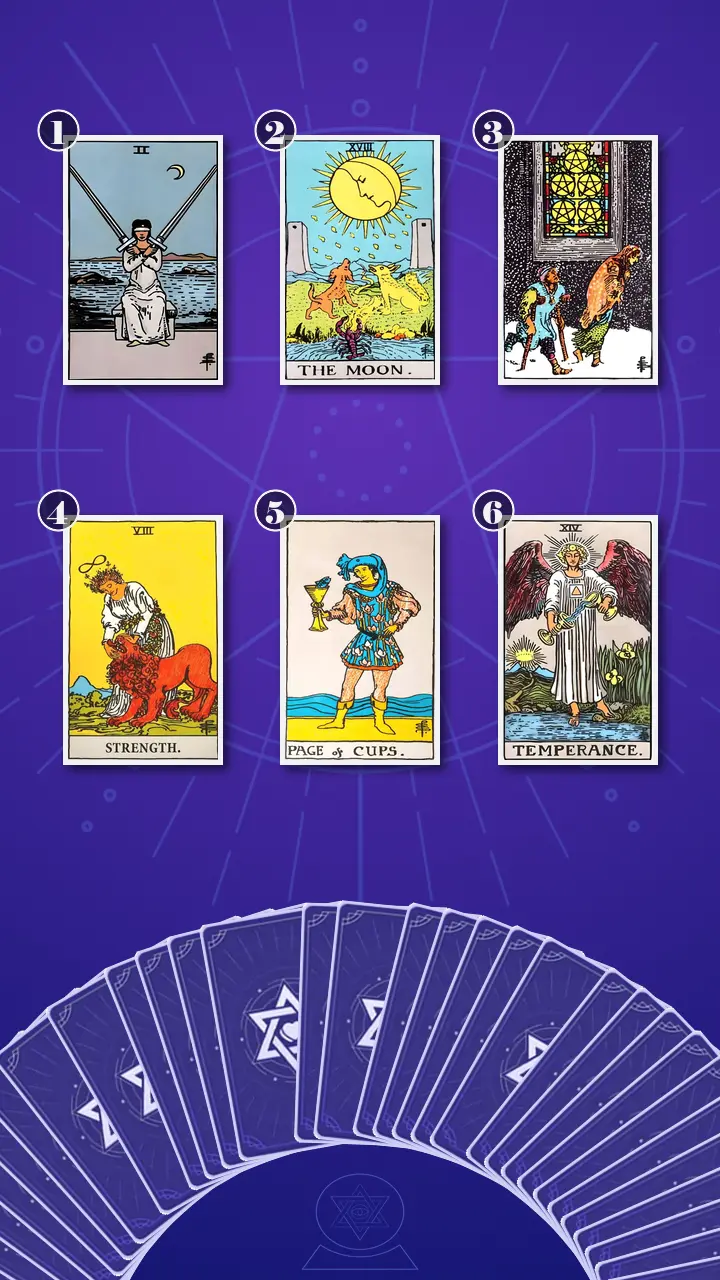
“Today I’m going to use something called the Transformation Path Grid (6) · Context Edition,” I explained. “It’s built for questions exactly like yours: shame patterns, visibility anxiety, and one practical step. Not a big predictive story—more like a clean chain of cause and effect.”
For you reading this: the reason this spread works so well for camera-off shame in Zoom meetings is that it doesn’t get lost in symbolism or destiny. It moves like a practical map: surface habit → immediate blockage → deeper root belief → inner resource → one-step experiment → integration into routine. It’s structured enough to be actionable advice, but deep enough to name the belonging wound that keeps the habit stuck.
“The top row,” I told Jordan, “is diagnosis: what you do, what blocks you, and what the block is protecting. The bottom row is rebuild: the inner catalyst, the one step, and how to stabilize it.”
Even over a call—camera off, black square—I could feel their attention land. In my experience, when shame is running the meeting, structure is kindness.
Reading the Map: From Black Square to Moonlight
Position 1 — Surface Pattern: What the Camera-Off Habit Is Doing for You
“Now flipped over,” I said, “is the card that represents the surface pattern: the concrete camera-off behavior and what it’s trying to accomplish in the moment.”
Two of Swords, upright.
I let Jordan sit with the image for a beat—the blindfold, the crossed arms, the still water behind the figure.
“This is like staying in draft mode forever,” I said, and I watched for how the words landed. “Nothing can be criticized—but nothing can connect.”
And I used the exact real-life scene the card kept offering: five minutes before the recurring team sync, opening Zoom settings like it’s a pre-flight checklist. Tilting the laptop, testing the light, deciding it’s ‘not good enough.’ Camera stays off. Notes doc open like a second-screen safety blanket. Present as output, absent as a person—safe, but also braced.
“The energy here is Air—mind-led control,” I explained. “In balance, Air helps you communicate clearly. But in excess, Air tries to solve a fear problem with settings, scripts, and strategy. The crossed swords aren’t indecision so much as a protective lock: ‘If I don’t let anything in, nothing can hurt me.’”
I asked, “In the first ten seconds of a meeting, what are you trying to prevent by staying a black square—someone seeing your face, your space, your reaction, or your ‘not-ready’ energy?”
Jordan’s response wasn’t a nod. It was an unexpected little laugh—short, bitter, like a cough that tries to pass as humor.
“That’s… too accurate,” they typed. “Even a bit cruel.”
I held that gently. “Not cruel,” I said. “Honest. And honest means we can work with it.”
This was where my family’s old way and modern psychology meet: I practice what I call Body Signal Interpretation. The body is always telling the truth before the story forms. “When you’re about to join,” I asked, “what happens first—throat, jaw, shoulders?”
“Jaw,” they replied. “Then throat. Like it narrows.”
“That’s the Two of Swords in your muscles,” I said. “Crossed. Guarded. The habit works in the moment. It gives you relief. And it also keeps you from the small micro-moments that build trust.”
“The black square is safety—and it’s also solitude,” I added, letting the sentence stand on its own.
Position 2 — Primary Blockage: The Projection Loop in Blurry Cues
“Now flipped over,” I said, “is the card that represents the primary blockage: the immediate internal friction that makes camera-on feel unsafe.”
The Moon, upright.
“This card is not ‘you’re irrational,’” I told Jordan quickly. “It’s ‘your environment is ambiguous.’ Video calls are full of partial information. And the brain hates partial information.”
I used the scenario exactly as it came: mid-call, a colleague’s face is neutral, someone pauses before replying. Maybe the connection freezes for half a second; maybe someone’s looking down at notes. And Jordan’s mind turns it into a verdict—they think I’m awkward / not sharp / not one of them. From there, they start managing an imagined judgement instead of the actual agenda.
“Think of it like bad Wi‑Fi,” I said. “When everyone is slightly pixelated, your brain fills in the missing detail. And it doesn’t fill it with kindness—it fills it with threat.”
Then I gave them the inner monologue structure, simple and concrete:
“I notice X: a two-second pause. My brain says Y: ‘They hated that.’ My body reacts Z: stomach drops, throat tightens, you go quiet.”
I drew a line down the middle, the way I’d do on paper. “On the left: what you can verify. On the right: what you’re guessing.”
And then I said the phrase that often gives people a little space from their own self-blame:
“Ambiguity is where your brain writes fanfic about rejection.”
Jordan didn’t answer right away. Their black square stayed perfectly still, but something softened in the rhythm of the chat—like their hands had paused above the keyboard, considering.
Oh. That was all they wrote. Just: oh.
It was exactly the response I hoped for: not shame at the shame, but recognition. The Moon isn’t a moral failing; it’s a distortion layer.
Position 3 — Root Shame Belief: The Belonging Wound Underneath the Settings
“Now flipped over,” I said, “is the card that represents the root shame belief: the belonging/worth story underneath the behavior.”
Five of Pentacles, upright.
There are cards that feel like weather. This one feels like stepping outside without a coat. Cold street. Snow. And a window lit warm with stained glass—support you can almost touch, but not quite.
“This is the part that hurts,” I said quietly. “Because the camera-off habit isn’t just about looking ‘professional.’ It’s about belonging.”
I stayed concrete, the way shame requires. “It’s not that you think you’ll mess up the agenda,” I told them. “It’s that you think your face will confirm you’re not one of them.”
The modern version appeared instantly: watching polished coworkers on camera—good lighting, curated background, effortless smile—then doing belonging math at speed: They belong here. I’m borrowing a seat. So the black square becomes a way to avoid collecting ‘proof’ that you don’t fit.
Jordan typed, then deleted, then typed again. “Yeah,” they finally wrote. “It’s like… I’m in the invite but socially unsubscribed.”
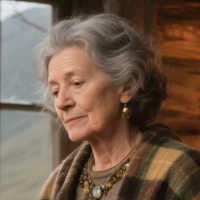
My chest tightened in sympathy. I’ve seen that particular loneliness in so many forms. In the Highlands, we talk about storms like they’re living things—because they are, in their own way. Shame is like that too: it moves through a nervous system and convinces you the only safe place is outside the warmth.
“The hard truth,” I said, “is that the window might be open—and shame keeps you on the pavement anyway.”
When Strength Softened the Lion (and the Zoom Settings)
Before I turned the fourth card, the room went quieter in that particular way it does when something true is about to be named. Even through a screen, I felt Jordan’s attention narrow, as if they were leaning in without moving.
“We’re flipping the card that represents your catalyst resource: the inner quality that can soften shame without forcing a performance,” I said.
Strength, upright.
In the Rider-Waite image, the figure doesn’t wrestle the lion. They don’t dominate it. They soothe it. The grip is relaxed. The courage is intimate.
“This is Fire,” I said, “but not wildfire. It’s a hearth. It’s regulated.”
And here is where my Elemental Balance lens becomes a lever: “Your spread begins in Air and Water—control and projection. Then it drops into Earth—the wound of not belonging. Strength is the moment Fire arrives. Not as performance, but as self-leadership.”
I brought it right back to their body, because that’s where shame lives. “When your jaw locks and your throat narrows,” I told them, “that’s not proof you’re weak. It’s a message. The lion is loud. The notification is blaring. Strength says: we don’t have to defeat the fear to lead the meeting; we just have to stop letting fear run the settings.”
Setup. I named the exact moment: “You know that moment when the meeting opens, your self-view pops up, and your body does that tiny flinch—jaw tight, shoulders up—like your face is about to get graded before you’ve even spoken.”
Delivery.
Stop treating your fear like proof you should hide, and start treating it like a lion you can calm—then choose one small moment of being seen.
I let the sentence hang. One breath. Another.
Reinforcement. Jordan’s reaction came in layers, almost like a tide turning. First: a freeze. The chat cursor stopped blinking for a second too long, as if their hands were hovering above the keys and didn’t trust themselves to move. Then: the cognition seeped in. They wrote but if I’m scared doesn’t that mean— and deleted it. Their next message was slower, smaller: So I don’t have to… fix myself before I show up?
“No,” I said, and my voice softened around the word. “You soothe first. Then you choose one tiny, time-bound exposure. Gentle courage is a timer, not a personality trait.”
In my mind, I could see the tactile detail they’d described earlier: fingers hovering over the camera icon, the warm hum of the laptop fan, the heartbeat pushing at the throat like it wanted out. And then I could almost feel the exhale—the shoulders dropping a fraction, the jaw unclenching by one notch, the nervous system realizing it didn’t have to sprint.
“Right now,” I asked, “with this new lens—can you think of one moment from last week when you felt that flinch? A meeting invite? A manager saying your name? And imagine, just for a second, what would have changed if you’d treated that body reaction as a cue to soothe instead of a verdict to hide?”
Jordan replied: Yesterday. 9:17. Someone asked ‘quick thoughts’ and I basically left my body.
“That’s the doorway,” I said. “Not to instant confidence—but to a different relationship with yourself. This is the step from shame-driven shrinking in video calls toward regulated, time-bound visibility and steadier self-trust.”
Position 5 — One Step: Warm-and-Real Beginner Energy
“Now flipped over,” I said, “is the card that represents your one step: a small, doable action in the next week that practices safe visibility.”
Page of Cups, upright.
“This is the card of beginner-level sincerity,” I told them. “Not impressive. Not flawless. Just real.”
I described it exactly in Zoom terms: one lower-stakes meeting where Jordan chooses warm and real as the goal. Camera on for the greeting. A small smile. One clear point, delivered without over-explaining. The fish-in-the-cup moment—the unexpected human expression—allowed to exist without punishment.
“Warm and real beats polished and absent,” I said.
Jordan’s reply came fast: That sounds… weirdly doable.
That’s how the Page works. It doesn’t ask you to become someone else. It asks you to be findable.
Position 6 — Integration: Make It a Setup, Not a Struggle
“Now flipped over,” I said, “is the card that represents integration: how to stabilize the new behavior into a repeatable rhythm.”
Temperance, upright.
Temperance is a middle path. Not camera off forever. Not camera on as a daily endurance sport. It’s calibration—like a thermostat, not a light switch.
“This is where we stop making it personal and start making it systemic,” I said. “A comfort kit. A template. Like building a reusable meeting setup in Notion so you don’t renegotiate safety every time your calendar pings.”
I gave them the image: one foot on land and one in water—part visibility, part privacy. Background blur. Self-view hidden. Same chair, same light. Two breaths. A repeatable blend.
“Make it a setup, not a struggle,” I said, and I heard the quiet relief in the speed of their response.
I love checklists. This makes it feel less like… my personality is broken.
“Exactly,” I replied. “We’re designing a rhythm. And if you want to bring my Nature Empathy Technique into this in a modern way: choose a rhythm that fits your actual week. London has its own weather, its own cycles. Some days you’ll have more capacity; some days less. Temperance respects that.”
From Insight to Action: Your Next 48 Hours (Not a Personality Makeover)
I leaned back and let the spread become one story: Air tried to keep Jordan safe by controlling visibility (Two of Swords). Water hijacked the interpretation with projection in ambiguity (The Moon). Earth revealed the deeper driver—the belonging wound (Five of Pentacles). Fire arrived as regulated courage through kindness (Strength). Then Water returned in a healthier form as genuine, warm contact (Page of Cups). Temperance made it sustainable.
“Here’s the cognitive blind spot I want to name,” I said. “You’ve been treating visibility like a verdict. Like turning the camera on is a membership exam. That belief makes the Moon louder and the Two of Swords tighter.”
“And here’s the direction of change,” I continued. “Not ‘look better.’ Not ‘be fearless.’ It’s the shift from controlling how you look to practicing small, time-bound acts of presence that teach your nervous system: I can be seen and still be safe.”
Then I offered actions that were deliberately small—because shame hates huge promises.
- The Self‑View‑Off Hello (30–60 seconds)Before one low-stakes meeting this week, turn your camera on for the first 30–60 seconds only, with self‑view hidden. Say a simple “Morning—quick hello,” then decide consciously whether to keep it on.Expect resistance (“cringe,” “pointless”). That’s The Moon. Your only job is to stay present for the timer window—then you’re allowed to switch it off without guilt.
- The 15‑Second Body Reset at the Join ButtonRight before you click “Join,” do one long exhale (out for 6), unclench your jaw, and drop your shoulders. Name the location of shame—throat, jaw, chest—without adding the story.If you catch yourself starting to audit (“How do I look?”), say quietly: “I’m switching into evaluation mode.” That naming alone often loosens the grip.
- The Camera‑On Comfort Kit Protocol (Temperance)Create a checklist in Notes/Notion: same seat, same light, background blur, self‑view hidden, two breaths. Decide in advance which meetings are “camera‑on practice” and which are camera‑optional.Make it once. Then stop redesigning it daily. Use the rule: “Good enough to be seen, not good enough to impress.”
- The 60‑Second Debrief (Then Stop)After the meeting ends, write one line: “One moment I stayed present was…” Then close the doc. No replay, no highlight reel of micro-expressions.If the urge to replay spikes, do my Shower Water‑Flow Meditation: stand under water for 30 seconds and imagine the rumination leaving your shoulders like rinsed soap—then step out. Done.
- The 5‑Minute Balcony (or Window) Energy AwakeningOnce this week, before a practice meeting, step onto your balcony—or just open a window. Feel the air on your face for five minutes. Look at the actual sky (even if it’s classic London grey) and let your eyes relax.This isn’t “positive vibes.” It’s nervous-system orientation: reminding your body it’s in a room, in a city, on a planet—not inside a tiny Zoom square.
Jordan paused, then typed: But what if I literally can’t find even five minutes? My mornings are chaos.
“Then we go smaller,” I said immediately. “One breath at the join button. One 30-second hello. Temperance isn’t about doing it perfectly—it’s about doing it repeatably.”

A Week Later: The Quiet Proof
Seven days later, I got a message from Jordan that was so short it felt like a small, brave flag planted in the ground: Did the self-view-off hello. Hands shook. Nothing exploded.
They told me it happened on a lower-stakes weekly check-in. Camera on for the greeting. Self-view hidden. One simple sentence: “Quick update from me—keeping it simple.” Then they turned it off again because their body asked for pacing, not punishment. Afterwards, they didn’t replay the whole call; they wrote one line of what they did well and stopped.
It wasn’t a movie montage. It was more bittersweet than that: they slept a full night, but the next morning their first thought was still, What if I mess this up?—and this time, they noticed the thought, exhaled, and didn’t obey it.
That’s what I mean when I say tarot can offer actionable advice. Not because cards “make” you confident—but because they name the pattern clearly enough that you can choose your next step on purpose.
In this Journey to Clarity, the spread didn’t tell Jordan to become fearless. It gave them a new bargain with their own nervous system: soothe first, then a timer. Visibility as an experiment, not a verdict.
When the camera turns on and your throat tightens, it’s not just about looking “professional”—it’s that split-second fear that your face will give someone a reason to treat you like you don’t belong.
If you didn’t have to earn belonging with a perfect on-camera version of you, what’s one tiny, time-bound moment of presence you’d be willing to try—just as an experiment?