11:58 p.m., Rent Hike Notice—And the 15-Minute Move to Try Next

The Rent Increase Email Between Slack Pings
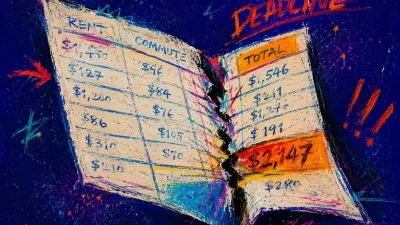
If you’re a late-20s/early-30s city renter who got a rent increase notice mid-workday and instantly felt the “Toronto rent hike” panic in your chest, even before you did the math—yeah.
Jordan showed up on my screen still in their office clothes, the kind of “I’m fine” posture that’s mostly held together by caffeine and a calendar. It was 9:12 a.m. downtown—Slack notifications popping in the corner of their laptop, an espresso machine hissing somewhere off-camera. The rent hike email sat open like a dare.
“I know it’s just a number,” they said, and their voice did that careful thing people do when they’re trying not to sound dramatic. “But my body acts like it’s an alarm.”
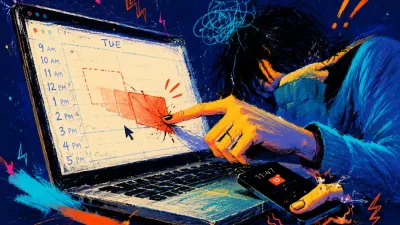
I watched their throat work as if swallowing something sharp. Their jaw was set, shoulders inching up toward their ears, breath shallow—like their lungs were only taking sips. They described the loop: banking app → listings → Google Sheets → draft text to the landlord → delete → rewrite → don’t send. By night, it became doomscrolling condos.ca until the listings blurred, then waking at 1:17 a.m. to refresh their balance again “just to know.”
The contradiction was clear and brutal: they wanted stable housing and financial security, but one increase felt like proof they weren’t safe in this city at all.
“You’re not failing at adulthood,” I told them, keeping my tone steady. “A rent hike can be a number—and still land like an alarm. Let’s not force certainty today. Let’s try to map the fog until we can find one real next step.”
Choosing the Compass: A Celtic Cross for Rent Renewal Anxiety
I asked Jordan to place one hand on their chest for a moment—not as a ritual, just as a nervous-system check-in. “Notice your breath,” I said. “No fixing it. Just noticing.” Then I shuffled slowly, the way I used to onboard anxious travelers on transoceanic voyages: not with mystery, but with pacing. When people feel unmoored, rhythm is medicine.
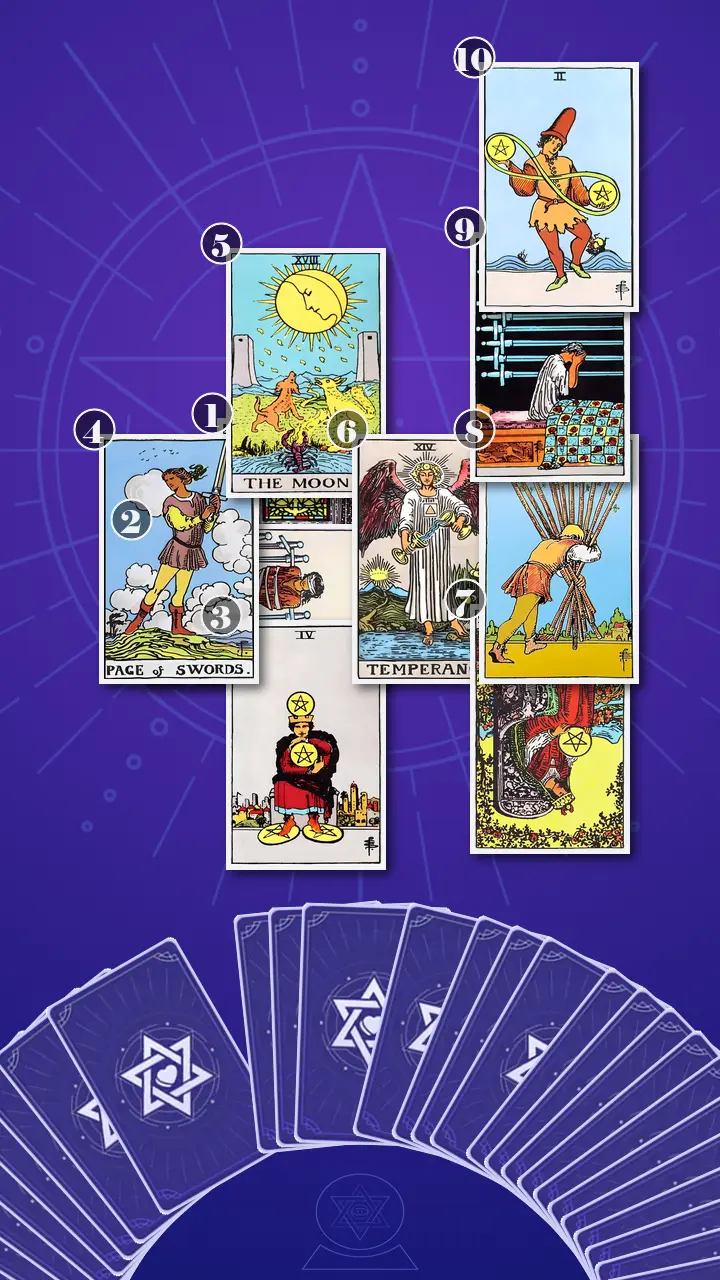
“Today we’ll use a spread called the Celtic Cross · Context Edition,” I explained. “Because this isn’t a yes/no question. It’s a chain: what got activated, what’s keeping you stuck, where the old scarcity lives, and what one grounded move can restore momentum.”
For readers who’ve wondered how tarot works in real life: this is exactly why I like the Celtic Cross at career crossroads and housing stress moments. It doesn’t pretend life is simple. It shows the mechanism—present flare → mental blocker → deeper root → trigger → conscious story → near-future balancing energy → self-management → external load → hope/fear engine → the most ethical, non-fate-based “next step.”
“Pay attention to three positions,” I told Jordan. “The center shows the scarcity flare in your body. The crossing card shows the thought pattern that freezes you. And the final card—Position 10—won’t predict your future. It’ll give you one step today that creates movement within 24 hours.”
Reading the Map: Snow, Blindfolds, and the Night Loop
Position 1: Present scarcity flare — Five of Pentacles (upright)
“Now turned over,” I said, “is the card representing the present scarcity flare: what the rent hike is activating in your day-to-day behavior and body.”
Five of Pentacles, upright.
I pointed to the image: two figures in the snow, the lit window behind them. “This is like when you read the rent hike and suddenly stop thinking in plans and start thinking in survival—assuming you have to ‘limp through’ it alone while ignoring the very real supports nearby: one conversation, one budget review, one negotiation attempt.”
Energetically, this is contraction. Earth energy (money, housing, stability) doesn’t flow; it grips. The body mirrors it: chest tight, throat tight, jaw locked—like the nervous system is trying to keep heat in by making everything smaller.
Jordan let out a quick, slightly bitter laugh. “That’s… honestly too accurate,” they said. “Like, rude.” Their eyes didn’t leave the card.
“Accurate is allowed to feel rude,” I replied. “But notice the window. Help exists nearby. The gap isn’t resources versus no resources—it’s psychological distance created by fear.”
Position 2: Primary blocker — Eight of Swords (upright)
“Now turned over is the card representing the primary blocker: the thought pattern or pressure that keeps you stuck.”
Eight of Swords, upright.
“This is like when you have ten browser tabs open and feel cornered by options,” I said, “even though the next step could be as simple as sending one message or getting one number confirmed.” The blindfold and loose bindings matter here: it looks inescapable, but it’s a trap made of interpretation as much as reality.
Energetically, this is blockage in Air (thinking). Your mind treats uncertainty as danger, so it narrows options before you’ve checked facts. I asked Jordan, “What’s the exact sentence that ties the blindfold?”
They didn’t hesitate. “I can’t afford to live here anymore.”
“Good,” I said. “Not good as in true—good as in named. Now it’s something we can test instead of obey.”
Position 3: Past scarcity root — Four of Pentacles (upright)
“Now turned over is the card representing the past scarcity root: the learned money-safety belief being reactivated.”
Four of Pentacles, upright.
The image is pure body language: pentacle clutched to the chest, feet planted on two more, a walled city behind. “This,” I said, “is like gripping a transit pole too hard on a shaky streetcar. You think the tighter you hold, the safer you’ll be. But you end up with cramped fingers and no ability to move.”
I let it land, then translated it into Jordan’s week: “This is you cutting everything—skipping the $6 latte, canceling a friend hang—because part of you believes: If I clamp down hard enough, nothing can go wrong.”
Energetically, it’s excess control in Earth. Safety gets equated with holding tight, not adapting.
Jordan’s mouth tightened—defensiveness first—then their shoulders dropped a millimeter. “I do that,” they admitted. “And it doesn’t even make me feel better. It just… makes life smaller.”
“Grip makes you feel safe,” I said gently. “Juggle gives you options.”
Position 4: The trigger event — Page of Swords (upright)
“Now turned over is the card representing the trigger event: what recently happened that set this cycle in motion.”
Page of Swords, upright.
This one always feels like an email subject line with too many implications. I gave Jordan a quick micro-scene, because that’s how the nervous system remembers: “The rent email subject line pops up between Slack pings. You reread it for tone. What does this mean? What aren’t they saying? What if I miss a deadline?”
Then the contrast: “There’s ‘info gathering’—useful, finite. And there’s ‘infinite possibilities’—the wind whipping you into hyper-alert mode.”
Energetically, this is vigilance—a spark that turns old scarcity into active scanning. Jordan gave that same quick, tense laugh again, like being seen was both relief and embarrassment.
“So… I’m not ‘preparing.’ I’m spiraling,” they said.
“Exactly,” I answered. “Refreshing isn’t a plan. Drafting isn’t a step.”
Position 5: Conscious storyline — The Moon (upright)
“Now turned over is the card representing the conscious storyline: what your mind is telling you this rent hike means.”
The Moon, upright.
The room felt quieter when The Moon showed up—like the whole reading dimmed by half a shade. “This is the night-fog card,” I told Jordan. “Not because you’re doomed. Because when the data is incomplete, the mind fills gaps with fear-movies.”
I walked them through a montage I’ve heard from so many city renters: 1:17 a.m. banking app refresh; 1:42 a.m. maps zooming in and out; 2:08 a.m. replaying every past money mistake like it’s evidence in court. The mind turns missing information into a horror trailer.
I had them do a simple, almost boring clarity check in three columns: Fact / Unknown / Assumption. The moment we did, Jordan whispered a small “oh.” Not dramatic—recognition. The kind that loosens the throat a touch.
“Uncertainty isn’t the same as danger,” I said. “But your body is treating it like danger.”
Position 6: Immediate next energy — Temperance (upright)
“Now turned over is the card representing the immediate next energy: what helps you regain balance in the coming days.”
Temperance, upright.
I smiled, because Temperance is a relief that doesn’t lie. “This is measured blending,” I said. “Practical steps plus emotional regulation. Not one dominating the other.”
Energetically, it’s balance—a regulated flow returning. As a Jungian psychologist, I think of it like integration: you don’t banish fear; you stop handing it the steering wheel. You create a container—a timer, a table, a glass of water—so planning stays planning and doesn’t become punishment.
Jordan nodded, slower now. “So… I don’t have to solve this tonight,” they said, like it was a new concept their body didn’t fully trust yet.
“You don’t,” I agreed. “And we’ll make that practical.”
Position 7: You in the situation — Queen of Pentacles (reversed)
“Now turned over is the card representing you in the situation: your self-management style and agency point.”
Queen of Pentacles, reversed.
“This is the competent caretaker in shadow,” I told them. “You’re capable. But under stress, care flips into over-responsibility and self-neglect disguised as ‘being responsible.’”
I translated it directly: “You work the budget like a crisis drill, and then realize you haven’t eaten. You do money tasks in bed with blue light in your eyes, and wonder why everything feels catastrophic.”
Energetically, it’s deficiency in nourishment. Not just food—rest, softness, anything that tells the body it’s not in exile.
“Deprivation without a plan is just stress with extra steps,” I added.
Jordan’s eyes flicked away from the camera. “Yeah,” they said quietly. “I’ve been… punishing myself. Like comfort is something I have to earn by fixing everything.”
Position 8: External load — Ten of Wands (upright)
“Now turned over is the card representing the external load: context shaping your options.”
Ten of Wands, upright.
“This validates something important,” I said. “The load is real. And it may not be only rent—work deadlines, life admin, social pressure, the constant cost-of-living math in a city like Toronto. When you’re carrying ten things already, one more feels like collapse.”
Energetically, it’s excess burden. Overload narrows perception; you can’t see the town ahead because the bundle blocks your view.
I watched Jordan roll their shoulders unconsciously, as if their body recognized the picture before their mind did.
Position 9: Hope/fear engine — Nine of Swords (upright)
“Now turned over is the card representing the hope/fear engine: what you’re craving and dreading beneath the planning.”
Nine of Swords, upright.
“This is the 3 a.m. self-blame card,” I said. “The problem becomes a story about your worth, not a solvable logistical shift.”
Energetically, it’s excess rumination. Thoughts become furniture—swords on the wall—until the room feels unlivable.
Jordan swallowed. “It’s like… if I can’t handle this, it means I’m not actually stable,” they said. “Like everyone else has some secret I missed.”
“That’s the scarcity script talking,” I replied. “And it’s loudest at night.”
When the Two of Pentacles Turned Panic Into Rhythm
Position 10: One step today — Two of Pentacles (upright)
I let my hands rest on the deck for a beat before turning the last card. The air in the room shifted—less like a confession, more like a plan.
“Now turned over,” I said, “is the card representing one step today: a grounded, ethical action that creates movement within 24 hours.”
Two of Pentacles, upright.
I showed them the infinity loop ribbon around the coins, the waves and ships behind the juggler. “This is like creating a two-track plan,” I said. “Track A: negotiate and confirm. Track B: quietly explore backup options. Not because you’re doomed—because your nervous system calms down when it knows you’re not standing on one thin plank.”
Setup: Jordan was right back on their couch at 11:58 p.m.—half-finished Google Sheet, rental apps glowing, a draft text to the landlord rewritten until every word felt like it could ruin their life. Their mind was still chasing the fantasy that the perfect plan could remove uncertainty entirely.
Delivery:
Stop gripping for a perfect guarantee and start juggling what’s real, like the Two of Pentacles turning change into a rhythm rather than a crisis.
I let the sentence sit in the space between us.
Reinforcement: Jordan’s reaction came in layers. First, a tiny freeze—their breath caught and their eyes went wide, as if their brain had just lost its usual script. Second, their gaze softened and unfocused for a second, like they were replaying the last week and noticing every moment they’d tried to “earn” safety by overthinking. Third, the release: their shoulders dropped, jaw unclenched, and they exhaled with a sound that was half laugh, half relief.
Then the vulnerability: “But if I don’t control it,” they said, voice sharpening for a moment, “doesn’t that mean I’m… irresponsible? Like I’m just letting things happen to me?”
“No,” I answered immediately, coach-voice gentle but clear. “This is competence. This is you choosing a rhythm. Your job isn’t certainty. Your job is the next 15 minutes.”
I used my Energy Flow Diagnosis the way I always do: I watched their shoulders creep again as soon as they imagined sending the message. “See that?” I said. “The moment you picture ‘Send,’ your neck tightens and your jaw locks. That’s not a sign you’re wrong. That’s your body bracing for an old scarcity memory.”
“So what do I do with it?” they asked.
“Three-minute reset,” I said—one of my quick recovery techniques from years of training people to stay regulated between meetings and ports. “Feet on the floor. Phone face-down. Drop your shoulders like you’re letting heavy bags slide off. Six slow breaths. In Venice, water stays clean because it circulates. Stagnation is what makes it foul. We’re not forcing calm; we’re restoring flow.”
I leaned in. “Now—using this new lens—think back to last week. Was there a moment when this would’ve changed how you felt?”
Jordan blinked hard. “Tuesday night,” they said. “I rewrote that text six times. If I’d allowed it to be… version 0.1, I would’ve slept.”
“Exactly,” I said. “That’s the bridge from panic to agency.”
This wasn’t about magically feeling safe. It was about moving from self-doubt and catastrophe-storytelling into grounded, realistic options—one small, reality-based step at a time.
The Two-Track Rent Plan: Actionable Advice for the Next 24 Hours
I summarized what the spread had shown us in plain language, the way I would for a traveler looking at rough water and wanting to know if they should panic. The rent increase triggered an old scarcity reflex (Five and Four of Pentacles): your body tightened and your mind tried to buy safety with control. The primary blocker (Eight of Swords) wasn’t lack of intelligence—it was the sentence that treated uncertainty as danger. The trigger (Page of Swords) flipped you into vigilance. Then the night loop (The Moon + Nine of Swords) turned missing data into a full disaster narrative.
Temperance and the Two of Pentacles offered the way through: balance over intensity, rhythm over perfect guarantees. The cognitive blind spot was this: you’ve been acting as if you must eliminate uncertainty before you’re allowed to ask a basic question. The transformation direction was the opposite: gather facts and take one time-bounded action within 24 hours.
Here’s the practical, low-drama plan I gave Jordan—simple enough to do even with a tight chest and a buzzing brain:
- Two Numbers, Not a Whole Life BudgetOpen Notes and write only two lines: “My max rent is $___.” and “My stretch-but-still-okay rent is $___.” Do it at a table (kitchen or desk), not in bed, and do not perfect the spreadsheet tonight.If you catch yourself editing categories for more than 10 minutes, that’s The Moon talking—stop and switch to the message step.
- Version 0.1 Landlord Message (15 Minutes)Set a 15-minute timer. Send one two-sentence message: “Hi [Name], I got the renewal notice. Can we chat this week about the increase and timeline? I want to understand the options.”If you rewrite more than twice, send the simpler version. Boundary: you don’t owe emotional disclosure—just logistics.
- The Two-Track List to Calm the Nervous SystemCreate two notes: Track A = “Confirm/Negotiate” (lease clause, cap, timeline, what’s negotiable). Track B = “Backup Options” (3 neighborhoods/buildings to check). Limit backup search to 20 minutes.This is the Venice rule: circulation, not flooding. Two tracks keep you moving without drowning in possibilities.
And because Jordan’s body was clearly part of the story—not a side note—I added one non-medical body cue: “When your jaw locks, that’s often responsibility overload,” I said. “It’s your system trying to carry the whole city alone. Let that cue be your reminder to drop your shoulders, breathe, and return to the next timed step.”
A Week Later: The Quiet Proof
A week later, Jordan messaged me a screenshot: their sent text to the landlord, timestamped 11:14 a.m. It wasn’t poetic. It wasn’t perfect. It existed.
They wrote, “I did the 15-minute timer. My chest got tight, but I put the phone face-down, did the six breaths, and still hit send. We’re talking Thursday. I also made the two-track list. I didn’t spiral all night.”
They didn’t describe fireworks—just a small, bright detail: they sat alone in a coffee shop afterward, laptop closed, hands wrapped around a warm cup. Their first thought the next morning was still, What if this goes badly?—but this time they noticed it, exhaled, and kept moving.
That’s the real Journey to Clarity: not a guaranteed outcome, but a shift from gripping for safety to practicing a steadier rhythm—facts, one message, one breath, one next step.
When a rent hike hits, it can feel like your whole life in this city is on trial—your chest tight, your jaw clenched—because part of you is terrified that one number is going to prove you were never actually safe here.
If you didn’t need a perfect guarantee—just one honest, time-bounded step—what would you do in the next 15 minutes to put motion back into the situation?