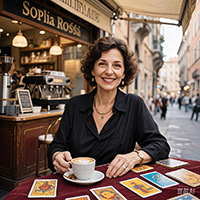
From Nighttime Lock-Checking to Settling In with Clear Boundaries

Finding Clarity in the 11:17 p.m. Lock-Window-Stove Loop
If your new-apartment routine in Toronto includes the lock-window-stove circuit—and you still can’t unclench enough to sleep, welcome to post-move hypervigilance.
Taylor (name changed for privacy) came into my café just before closing, the kind of night when the street outside feels washed in cold rainlight and every passing car sounds like it’s dragging a zipper through the dark. She sat at the small table by the window, still in her work pants, tote bag looped around her ankle like a seatbelt.
“It’s embarrassing,” she said, rubbing her thumb along the rim of her cup. “I moved for a better commute. More space. It’s a good building. I’m fine all day. And then… night hits, and my body doesn’t care that it’s fine.”
As she talked, I watched the tiny tells: the way her shoulders stayed slightly lifted even while she tried to sound casual, the shallow breath that never quite reached her belly, the way her eyes flicked to the door when someone in the hallway laughed too loudly. Unease isn’t always a thought—it’s often a posture.
She described the routine like a script she didn’t choose: door lock. Windows. Stove. Door lock again. TV on low “for background.” Phone glow in her face as she doom-scrolled neighborhood safety threads and vague posts that read like mini sirens. And then boxes—still half-open in the corner like a permanent exit plan.
“I want to feel at home,” she said, voice dropping. “But part of me is convinced that settling in is how I get careless. Like… relaxing is the moment something happens.”
The way it landed in my chest was familiar. It felt like trying to sip a cappuccino while someone keeps tapping the spoon against the cup—small, relentless, impossible to ignore.
“I’m glad you told me,” I said, keeping my voice steady and un-fancy. “This is a real thing people go through after moving—especially living alone. And we’re not here to judge your nervous system. We’re here to understand what story it’s running, and how to give it a new ending. Let’s make a map through the fog and find some clarity.”

Choosing the Compass: The Five-Card Insight Line Spread
I didn’t light candles or make a big show of it. In my café, the most powerful “ritual” is often just a transition: a slow breath, a warm cup held with both hands, the sound of cards being shuffled like soft paper rain. I asked Taylor to inhale once as if she were smelling fresh-ground coffee—simple, sensory, and grounding—then to focus on one clean question: After moving apartments, what past story is shaping how safe I feel at night?
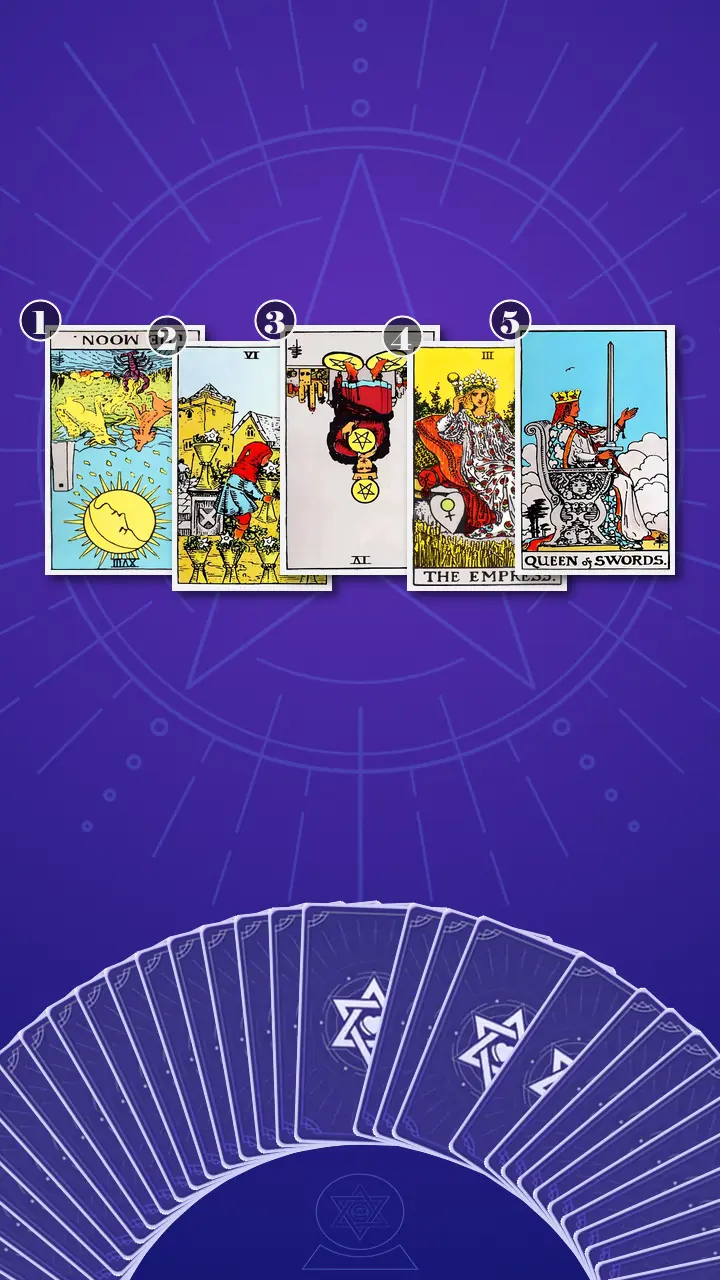
“Today,” I explained, “we’ll use a spread called the Five-Card Insight Line. It’s a simple tarot spread for feeling safe in a new home because it moves in a straight line: present symptoms, past imprint, how the past is replaying now, the repair resource, and a practical next-step experiment.”
For anyone reading this and wondering how tarot works in a situation like this: I’m not using cards to promise certainty about the building. I’m using them to reflect pattern—how the mind and body respond under stress, where the loop began, and which small moves break it. When you’re dealing with post-move anxiety living alone, the goal isn’t a dramatic epiphany. It’s actionable advice that your body can actually follow at 11:38 p.m.
“Card 1,” I told her, “will name what your body is reacting to right now—the visible nighttime behaviors. Card 3 is often the bottleneck: the specific control pattern that keeps you tense. And Card 5 will give us a clear boundary routine—the ‘done for the night’ rule—so you don’t have to keep rechecking locks and windows at night to earn sleep.”
Reading the Map: When Fear Feels Like “Being Practical”
Position 1 — What my body is reacting to right now: The Moon (reversed)
I turned over the first card and said, “Now we’re looking at the card representing what your body is reacting to right now in the new apartment—the visible symptoms and nightly behaviors.”
The Moon, reversed.
“Here’s the modern-life version,” I said, keeping my voice plain. “It’s the first week in your new apartment and nighttime turns everything into a question mark: the elevator dings, pipes tick, someone’s keys jingle in the hall—and your mind writes a whole storyline. You catch yourself staring at the peephole, then re-checking the lock even though you remember turning it, because uncertainty feels louder than memory.”
In reversed position, The Moon is not “more danger.” It’s distortion starting to show itself. The energy here is a blockage: your brain is trying to resolve uncertainty by filling in blanks. Like autofill. Like a notification you can’t clear—not because it’s true, but because uncertainty feels unfinished.
Taylor let out a laugh that wasn’t happy. It had a bitter edge, like she surprised herself. “That’s… kind of brutal,” she said. “Also, yeah. The peephole thing. I hate that you just said that.”
I nodded. “It can feel cruel when a pattern gets named cleanly. But it’s also relief, because it means you’re not ‘crazy’—you’re predictable under stress. And predictable means workable.”
I pointed gently at the card. “The Moon is the part of you working the night shift. It’s scanning for risk because it thinks that’s love. But it’s also the card that reminds us: at night, your mind will swear it saw something in the shadows. In the morning, you realize it was a coat on a chair.”
Position 2 — The past safety template: Six of Cups (upright)
I slid my fingers to the second card. “Now we turn over the card representing the past story or memory-template that shaped your definition of what ‘safe at home’ feels like.”
Six of Cups, upright.
I told her the translation I see again and again: “You’re trying to decide if the new place is ‘safe,’ but what you’re really comparing it to is an old baseline: the childhood/earlier-home feeling of being protected, known, or comforted. When the new apartment doesn’t feel instantly soft and familiar, you read that mismatch as danger (or as you having chosen wrong) instead of recognizing you’re grieving an older template of home.”
The energy here is balance, but it’s also a quiet trap: nostalgia can become an invisible grading rubric. The Six of Cups is the memory of safety as something received—an atmosphere someone else helped create. It doesn’t mean your childhood was perfect. It means your body learned a specific language of comfort early on, and now it’s searching for that accent in a brand-new place.
“When you picture ‘safe,’” I asked, “what does your body reach for first? Not logically. Viscerally. Who was there? What did it sound like?”
Taylor stared at the card a second longer than she meant to. “My grandma,” she said quietly. “When I stayed with her, she’d do this whole… closing routine. Doors, lights, the kettle. She’d hum. It was like the night had an ending.”
There it was: not a fortress. A rhythm.
Position 3 — How the past is replaying now: Four of Pentacles (reversed)
“Now,” I said, “we’re turning over the card representing how that past story is being replayed as a coping style today—the specific control pattern keeping you tense.”
Four of Pentacles, reversed.
“This one is the tight grip,” I told her. “And it’s not moral. It’s mechanical.” Then I gave her the modern-life scenario, word for word: “You manage safety like a spreadsheet: check the locks, check the windows, check the stove, check the neighborhood posts, check your budget—then still don’t feel safe. You keep essentials in bags and leave boxes unopened because committing (placing, arranging, settling) feels like tempting fate. The apartment becomes something to manage instead of somewhere to live.”
Reversed, the Four of Pentacles is a strain—control energy that’s overworked. This is the “coin pressed to the chest” card, and you described it before you even came in: tight chest, shallow breathing, the feeling that if you loosen your grip, you’ll lose something you can’t afford to lose.
This is where my café brain kicks in—my Stress Flavor Profile. In coffee, over-extraction happens when you pull and pull, trying to get more out of the same grounds. What you get isn’t more safety. You get bitterness.
“Your checking is like over-extraction,” I said gently. “The intention is protection. But the longer you pull the shot—one more lock check, one more Toronto subreddit thread, one more ‘just to be sure’—the more bitter your nervous system gets. You’re not finding proof. You’re heating up the fear.”
I watched Taylor’s throat move as she swallowed. She gave a tight nod—the kind that says, Oh. That’s me.
“Here’s the split-screen,” I added, using the echo technique the cards were begging for. “On one side: you living out of boxes, essentials in tote bags, space in draft mode—breath high, shoulders up. On the other side: you do one check, then you unpack one box and put one thing in a permanent drawer. Not forever. Just… real. And notice your breath. That tiny change is the beginning of your body learning: ‘We’re not just surviving here. We live here.’”
She looked away for a second, as if a memory replayed behind her eyes. “Monitoring feels like safety,” she said, almost to herself, “but it blocks familiarity.”
“Exactly,” I said. “You’re not failing to settle in. You’re stuck in a safety loop.”
When The Empress Turned the Perimeter into a Garden
Position 4 — The inner resource for repair: The Empress (upright)
I paused before turning the fourth card. The espresso machine had finished its cleaning cycle a minute ago, and the café felt suddenly quieter—no steam hiss, no grinder, just the radiator ticking like a metronome. The room shifted into that attentive stillness I’ve learned to trust.
“We’re flipping the card that represents the most supportive inner resource for rebuilding safety from the inside out,” I said. “Repair. Re-parenting. The part of you that can create ‘home’ without waiting for permission.”
The Empress, upright.
Her shoulders rose an inch—reflex—like she expected a lecture about self-care. I didn’t give her one.
Setup. I pictured the moment the blueprint of her nights kept returning to: standing in her new Toronto kitchen at 11:38 PM, hand on the deadbolt again, listening for hallway footsteps—knowing she already checked, but feeling like she can’t risk being wrong. That panic isn’t drama. It’s a job her body thinks it has.
Delivery.
Stop treating your home like a place you must constantly monitor, and start tending it like The Empress’ garden—daily nourishment that makes safety feel real.
I let the sentence sit between us the way a fresh espresso aroma does—impossible to rush, oddly honest.
Reinforcement. Taylor’s reaction moved in layers. First, she went still—breath paused like her body needed to verify it was allowed to take in new information. Then her eyes softened, unfocusing for a second the way they do when someone is replaying their own routine from a new angle. Finally, she exhaled long and slow, and I saw her shoulders drop a fraction, as if she’d been holding a coat she forgot she was wearing.
“I keep turning my apartment into a courtroom,” she said, voice thin with recognition. “Like every sound is evidence.”
“Yes,” I said, and this is where my Café Therapy lens always shows up—modern riposo culture, the art of giving the body a structured pause. “And your body doesn’t need a courtroom. It needs a routine.”
I leaned in, practical now. “Try this tonight—ten minutes, max. One single check sequence: front door lock → windows → stove. Set a five-minute timer. When it ends, you’re done checking—no ‘just one more.’ Then do one Empress cue for five minutes: boil the kettle, make the same tea, turn on one warm lamp—not the big overhead light—and put one soft item, like a throw or hoodie, on the couch.”
“And if anxiety spikes,” I added, “you’re allowed to stop and simply sit with both feet on the floor. Hand on your chest if that helps. This isn’t about forcing calm. It’s about teaching your body a repeatable ending.”
In the Empress, the energy is balance—nourishment that’s steady, not intense. Warmth. Light. Texture. Rhythm. This is not TikTok ‘cozy apartment reset’ perfection. This is one tiny pool of lamplight that tells your nervous system: we’re not on duty.
“Now,” I asked her, “with this new lens—monitoring versus tending—think back to last week. Was there a moment when you rechecked the lock, and this would’ve felt different? Even 2% different?”
Taylor blinked hard, then nodded once. “Tuesday. I had the Citizen app open. My finger was hovering. I could’ve… put a blanket on the couch instead. That sounds so small. But I get it.”
“That’s the point,” I said. “Micro-bravery. Not huge confidence. A 2% release of grip.”
And this is the real shift: from post-move nighttime hypervigilance and control-as-safety to embodied settling-in with clear, compassionate boundaries. Not because you proved the world is safe, but because you gave your body something consistent it can recognize.
How the Queen of Swords Ends the Night Shift
Position 5 — The one-week boundary experiment: Queen of Swords (upright)
I turned the final card. “Now we’re looking at the card representing a concrete next-step boundary or routine that helps you feel safe without spiraling—your one-week experiment.”
Queen of Swords, upright.
I gave her the life translation first, because that’s where trust forms. “You write a simple ‘closing routine’ like you’re setting a policy for your own brain: one check sequence, then you’re done. You decide what counts as a real risk vs a fear-image, and you stop reopening the case at midnight. If you need support, you choose one person to text—otherwise, you let the night be the night.”
The Queen’s energy is balance with a firm edge: discernment without self-shaming. She doesn’t argue with fear for hours. She sets a rule that protects your soft Empress work.
I used the “night shift dialogue” frame, because it fit Taylor perfectly.
“The Moon voice says,” I told her, “‘Did you hear that? Check again.’ And the Queen of Swords interrupts with one clean sentence: ‘We did the routine. We’re done for tonight.’ That’s it. Crisp. Not inspirational. Not mean.”
Taylor’s mouth twitched into something like a smile. “I like her,” she said. “She’s… not panicking.”
“She’s careful,” I corrected gently. “Not on alert. Monitoring isn’t the same as being careful.”
The One-Check-Then-Cue Routine: Actionable Next Steps for Feeling Safe at Home
I stacked the cards back into a line, left to right, like rooms you can walk through in order. “Here’s the story your spread told,” I said. “The Moon reversed shows the present: a new place at night, uncertainty filling in blanks, fear-story under unfamiliar sounds. The Six of Cups shows the past: your body remembers safety as a specific kind of care and closure—an ending to the day. The Four of Pentacles reversed shows the mechanism: control-as-safety. It gives you short-term relief but long-term cost—your home never gets to become familiar. The Empress is the repair: tending, not monitoring. And the Queen of Swords is the protection: a humane boundary so you stop reopening the case at midnight.”
“Your cognitive blind spot,” I added carefully, “is thinking you have to prove safety through constant monitoring. But your nervous system learns ‘safe’ through repeats, not research. The transformation direction is simple—even if it’s not easy: shift from proving safety through constant checking to building safety through consistent settling-in rituals and clear boundaries.”
Then I made it concrete. Not a manifesto—an experiment.
- Sticky-Note Closing LineWrite one sentence on a sticky note and place it by the door: “We did the routine. We’re done for tonight.” After your single lock/window/stove check, read it out loud once.If it feels cheesy, treat that reaction as data. You’re not trying to feel convinced—just consistent.
- One Box, Permanent Spots (15 minutes)Choose one box—bathroom or bedroom is easiest. Set a 15-minute timer and unpack it fully. Put items in their permanent drawer/cabinet, not a “temporary pile.” Stop when the timer ends.Zero-cost “I live here” move. If money stress is part of the grip, this gives you ownership without spending a cent.
- Empress Anchor for 7 NightsPick one nightly tending cue and repeat it for a week right after the check: same tea, OR the same warm lamp, OR the same calming scent. Keep it identical on purpose—repeats teach the body.Use my Cup Temperature Scan: notice how fast your mug cools while you do the cue. Fast cooling often matches a system that’s burning through energy. Your job is to slow the cool-down, not by force—by routine.
- Queen of Swords Safety Note (Phone Policy)Create a note in your phone with: (1) your one-check list, (2) one practical precaution you’ll take (like a door bar if you choose), (3) one person you’ll text if you feel genuinely unsafe. After you read it, you close the app—no scrolling.Think of it like espresso machine maintenance: scheduled, preventative, and then you stop fiddling with it all night. That’s Alertness Scheduling—planned care instead of endless vigilance.
Taylor hesitated, then offered the practical obstacle that always matters more than motivation. “But I can’t always do ten minutes,” she said. “Some nights I get home late, and it’s like I’m already running on fumes.”
“Perfect,” I said, because that honesty is actually the doorway. “Then we do the five-minute version. One check—only the front door. Two-minute timer. Then three minutes of tending: kettle click, warm lamp, feet on the floor. If you can do TikTok for five minutes, you can do this. And if you can’t do five minutes, do ninety seconds. Consistency beats intensity.”

A Week Later: Ownership, Not Certainty
Six days later, I got a message from Taylor while I was opening the café—rolling up the metal gate, breathing in that first rush of coffee aroma that wakes the whole street like a promise.
“Did the one-check-then-cue thing,” she wrote. “Warm lamp + tea. Unpacked my bathroom box. Still had a ‘Moon moment’ when the radiator clicked, but I said the line out loud and… stopped. I slept through the night. Woke up and my first thought was still ‘what if I’m wrong?’—but I laughed a little. It felt… smaller.”
That’s the kind of proof I trust: not perfection, but a nervous system learning a new job description.
When I think about her Journey to Clarity, I don’t see a dramatic before-and-after. I see a tiny shift from living in her space like it’s a temporary shelter to occupying it like it’s hers—tending, then drawing a boundary, then letting familiarity finally take root.
When you want to finally exhale in your new place but your body keeps bracing—like settling in would be the exact moment you get caught off guard—it’s not drama, it’s an old safety story running a night shift.
If you didn’t have to earn safety by staying on alert, what’s one tiny “I live here” ritual you’d be willing to repeat this week—just long enough for your body to start believing you?
Every reading at AceTarot is a Journey to connect with inner wisdom and empower next step.
Learn more about our Journey to Clarity.