From Midnight Reset Loops to Steadier Mornings: Making Rest Safer

Finding Clarity in the 12:30 a.m. Fridge Glow
You’re a Toronto tech PM who can ship a roadmap but still ends up standing in the fridge light at 12:30 a.m. doing the “midnight reset loop” like it’s the only off-switch you’ve got.
Jordan (name changed for privacy) said it like a confession, but her voice had that tired, flat steadiness of someone who has already tried every “fix” and is now just living inside the pattern.
As she talked, I could picture it without effort: 12:34 a.m. on a Tuesday in a small Toronto apartment kitchen—socked feet on cool laminate, the fridge hum filling the silence. The door opens and the harsh white light hits your face like a stage spotlight. The air smells faintly like leftover takeout and cold plastic. Your phone is warm on the counter, screen still glowing. You’re eating something salty without tasting it, half-reading tomorrow’s calendar invite titles like they’re a threat.
Jordan rubbed the side of her neck, like she was trying to loosen a knot she’d been carrying all day. “The fridge light feels like the only pause button I can find,” she said. “I’m not even hungry. I just need my brain to stop.”
I watched her shoulders—pulled up and forward, as if even sitting down had a deadline. What she was describing wasn’t “bad habits.” It was a system that had trained her nervous system to stay alert until the world went quiet—and then to panic about the quiet.
Her exhaustion wasn’t a vague mood. It was a wired-but-tired buzz that sat behind her forehead like a fluorescent ballast: too bright, too loud, and impossible to turn off. And underneath it, the core tug-of-war landed in one clean line: she wanted real rest and recovery, but she feared slowing down would make her fall behind—and prove she wasn’t actually good enough.
“We can work with this,” I told her, gentle and plain. “Not by shaming the fridge moment, and not by trying to win a fight at midnight. Let’s map what’s happening—so you can find clarity and a next step that actually fits your life.”

Choosing the Compass: The Transformation Path Grid (6) Spread
I invited Jordan to take one slow inhale, then a longer exhale—nothing mystical, just a physiological handoff from spiraling thought to present-moment attention. While I shuffled, I kept my voice grounded. “Think about the exact moment you’re pulled to the fridge. Not the whole week. Just that one doorway moment.”
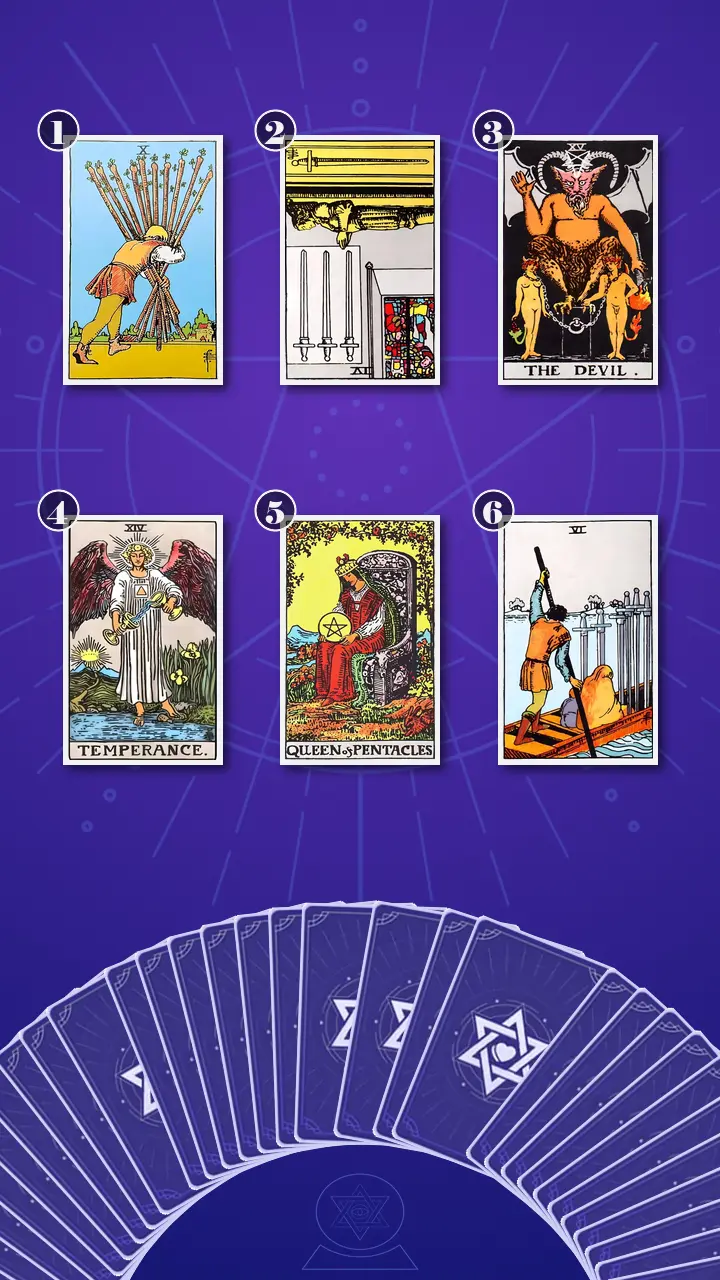
“Today, we’ll use something I call the Transformation Path Grid (6) · Context Edition,” I said. “It’s a six-card tarot spread for burnout-driven nighttime reset loops—simple, but complete.”
For readers: I choose this spread when someone is at a career-and-life crossroads inside their own body—when the symptom is obvious (the midnight fridge-and-phone loop), but the mechanism is tangled. A timeline spread would just narrate, ‘Then you did this, then you did that.’ This grid separates what’s happening, where recovery fails, what’s driving it, and then it moves into the turning point, the practical next step, and what stabilization looks like. It’s designed to turn “I’m stuck” into actionable advice.
I tapped the layout on the table as I described it: “Top row: a snapshot of what the night loop looks like, the specific blockage point, and the deeper driver underneath. Bottom row: the catalyst—what shifts the trajectory without a total life overhaul—then a concrete action plan for this week, and finally integration: what ‘moving forward’ looks like when it’s gradual, not performative.”
Jordan nodded, eyes on my hands. “I like that it’s… not trying to fix my whole personality,” she said.
Reading the Map: Card Meanings in Context
Position 1 (Surface Symptom Snapshot): Ten of Wands, upright
I turned over the first card. “Now opening is the card that represents the surface symptom snapshot—what the burnout looks like in your real, observable night behavior and load level.”
The Ten of Wands, upright.
“This is burnout through over-responsibility,” I said, and I pointed to the figure’s hunched posture—the way the bundle blocks his view. “This card doesn’t say you’re weak. It says you’ve been carrying too much for too long, and now your body is calling it in.”
Then I grounded it in the modern-life scene it was echoing: “It’s 6:43 p.m. and you’re closing your laptop after a day of shifting priorities, pings, and ‘quick’ follow-ups. Your shoulders are basically earrings. You realize you haven’t eaten a real meal, but you also feel guilty stopping. By midnight, the only break your body can access is the fridge door—because carrying everything alone all day left you no room for actual recovery.”
The energy here is excess fire—effort with no off-ramp. Not ambition. Not passion. Just load.
Jordan gave a small laugh that landed bitter at the end. “Okay,” she said, eyes narrowing like she was squinting at an uncomfortably accurate mirror. “That’s… way too on the nose. Like, almost rude.”
I nodded. “That reaction makes sense. The Ten of Wands is blunt. But it’s also kind. It names the problem as weight—not as a character flaw.”
Position 2 (Where Recovery Fails): Four of Swords, reversed
I flipped the next card. “Now opening is the card that represents the specific point where recovery fails—what keeps rest from working and pushes you toward the fridge-light coping loop.”
Four of Swords, reversed.
“This is rest that doesn’t restore,” I said. “Your environment might be quiet, but your nervous system doesn’t believe it. So stillness feels inaccessible—and stimulation becomes the substitute.”
I used the translation exactly where her life lived: “You get into bed and your body is dead tired—but your brain starts hosting a meeting. You replay Slack messages, pre-draft tomorrow’s answers, and feel a wired buzz behind your forehead. The apartment is quiet, but your nervous system doesn’t get the memo that the day ended. So you go looking for stimulation—fridge light, cold air, crunchy food, endless scroll—because stillness feels inaccessible.”
Energetically, reversed Four of Swords is a blockage: the ‘off’ switch is jammed. And here’s the metaphor that always lands for people living in always-on jobs: bed becomes a conference room. The second your head hits the pillow, your mind opens Slack.
I kept it specific, the way a systems thinker needs it: “In your inner monologue, it sounds like: ‘If I fall asleep right now, I’ll miss something. I’ll forget something. I’ll be behind.’ Silent apartment outside—internal sprint review inside.”
Jordan’s breath hitched, then left her in a long exhale. Her shoulders dropped about half an inch, like gravity finally got permission. “Oh…” she said, almost to herself. “That’s it. That’s literally it.”
I added one crucial caution, because the reversed Four of Swords has a common trap: “And just so we’re clear—your over-functioning brain may try to ‘fix’ this by getting strict. Banning all late-night food. Setting perfect bedtime rules. That can backfire into rebound snacking and even more restlessness. We’re not doing punishment. We’re doing a doorway into downshifting.”
Position 3 (Root Driver): The Devil, upright
I turned the third card. “Now opening is the card that represents the deeper driver beneath the behavior—the attachment, belief, or fear that fuels the repeated midnight pattern.”
The Devil, upright.
Jordan’s eyes flicked to the image and then away, like it was too bright in a different way.
“People see The Devil and think it’s about being ‘bad,’” I said quickly. “But in real-life readings, it’s almost always about a contract you didn’t mean to sign.”
I pointed to the loose chains. “They’re loose. That matters. It means the loop feels compulsory, but it’s changeable once it’s named.”
Then I grounded it in her modern scenario: “You’re not powerless—you’re stuck in a deal you didn’t consciously negotiate: ‘I’ll trade real rest for the feeling of staying on top of things.’ The fridge and the phone aren’t the enemy; they’re the fastest dopamine reset when a deeper fear shows up: if you truly rest and performance dips, it might ‘prove’ you’re not as capable as people think. The midnight loop becomes a contract that keeps renewing itself.”
Energetically, this is attachment—not to food, not to the phone, but to what those things represent at 12:30 a.m.: relief, numbness, and the temporary illusion of control.
I kept my tone naming-not-shaming. “Your hand opens the fridge before your brain finishes the sentence. That’s autopilot. Not a moral failure.”
Jordan’s chest rose and stayed high for a beat—like she was bracing. Then her eyebrows knit, not in denial, but in a kind of uncomfortable curiosity. “So what’s the thought right before?” she asked. “Because it’s not even always, like… conscious.”
“Exactly,” I said. “Sometimes it’s not a thought. Sometimes it’s a flash of fear—freedom vs safety, rest vs worth.”
When Temperance Spoke: The Thermostat That Finally Worked
Position 4 (Turning-Point Energy): Temperance, upright
I paused before turning the next card. The apartment sounds outside my studio—an elevator, a distant car—seemed to soften, as if the world knew we were about to touch the hinge of the story.
“Now opening,” I said, “is the card that represents the turning-point energy—what can begin to shift the system without demanding a total life overhaul.”
Temperance, upright.
I felt my own internal flash of familiarity—not from superstition, but from rhythm. In the Tokyo planetarium where I work, I spend my days teaching people that the night sky isn’t chaos. Even the ‘random’ blinking of a pulsar is a kind of clock. Your body is like that, too: it’s always keeping time, even when your calendar pretends you don’t need it.
“Temperance is regulation,” I told Jordan. “It’s the middle gear you’ve been missing. Not collapse. Not overdrive. The measured pour between two cups.”
I anchored it in the modern-life scenario the card was already speaking: “Instead of trying to white-knuckle the 12:30 a.m. moment, you start adjusting the day like a thermostat: a real lunch, a hard stop to pings, a two-minute landing routine. Nothing heroic—just repeatable. Over a week, your nervous system starts trusting that bedtime isn’t the first time all day you’re allowed to feel human, so the fridge light loses some of its power.”
Setup: I looked at Jordan and named the exact trap she was living in, the one that makes every night feel high-stakes. “It’s 12:30 a.m., your socks slide on the kitchen floor, and the fridge light hits like a stage spotlight. You’re not hungry—your body is exhausted—but your brain is still running standup for tomorrow’s meetings.”
She nodded fast, like yes, yes, yes—too fast, like she was afraid the moment would escape if she didn’t hold it down.
Delivery:
Stop trying to white-knuckle the fridge-light moment; start pouring small, consistent balances like Temperance until your nervous system trusts bedtime again.
I let it sit there in the quiet, the way I let a constellation name hang in the planetarium dome before I explain what it means. Some truths need a second to land in the body.
Reinforcement: Jordan’s reaction came in a three-step chain. First: a brief freeze—her breath paused, her fingers still on the edge of her mug, as if the sentence had physically pinned her in place. Second: her gaze unfocused, not dissociating, but re-running recent nights like a mental replay—fridge door, phone glow, calendar titles, jaw clenched. Third: an exhale from deep in her chest that sounded like something unclenching.
“But…” Her voice sharpened for a second, a flash of anger that was really grief wearing armor. “But doesn’t that mean I’ve been doing it wrong? Like—this whole time?”
I met her eyes. “It means you’ve been doing what works fast under pressure,” I said. “The midnight loop is an emergency brake. Temperance is brakes you install in the day—so you don’t have to skid at night. Different tools. Not a moral verdict.”
Then I gave her a concrete, non-negotiation practice—what I call a Temperance pour, and what she could try tonight, without making it a new performance standard:
“10-minute ‘Temperance Pour’ tonight: (1) Set a timer for 2 minutes and dim one light (a lamp, not the overhead). (2) Put your phone on the other side of the room—or just outside the bedroom door—face down. (3) Pour a drink (water or tea) and take 6 slow breaths, counting the exhale. Then decide: bed, bathroom, or a pre-chosen option (water + back to bed). No negotiating in the fridge light. If this spikes anxiety, you can stop and just sit on the bed with the lamp on—this is practice, not a test.”
This is where I wove in my signature lens—Pulsar Breathing. “When you count the exhale,” I told her, “treat it like syncing to a pulsar. Not because the cosmos is judging you—because rhythm tells the nervous system, ‘We’re safe enough to downshift.’ Six slow exhales is you choosing a new clock.”
I asked her the question that turns insight into memory: “Now, with this new frame—can you think of a moment last week where this would’ve changed how it felt? Even slightly?”
Jordan swallowed. “Sunday,” she said. “I closed my laptop and the quiet was… too loud. I could’ve done the lamp and the breaths. Instead I did the fridge.”
“That’s the shift,” I said. “Not from chaos to perfect calm. From wired midnight coping to values-based recovery pacing—one pour at a time.”
Position 5 (This Week’s Next Step): Queen of Pentacles, upright
I turned the fifth card. “Now opening is the card that represents a concrete next step you can take this week—something practical that supports downshifting and reduces night spirals.”
Queen of Pentacles, upright.
“This is ‘ops for your body,’” I said, and Jordan actually smiled at that—the first sign of relief that didn’t require her to pretend she was fine.
I anchored the card in its modern-life translation: “You treat recovery like scheduled maintenance, not a reward. You set up your space so the default choice is supportive: warm lamp light, water by the bed, a pre-portioned snack option if you’re actually hungry, phone out of reach. You make the kitchen feel less like a neon-lit decision arena and more like a calm, low-stimulation zone. Care becomes logistical—and that’s why it works.”
Energetically, the Queen of Pentacles is balance—earth energy that contains and supports. It’s the antidote to decision fatigue. It’s also the line I want everyone with a midnight loop to hear: The fridge light isn’t your failure—it’s your nervous system asking for a different plan.
Jordan glanced off-camera toward her own kitchen, like she could already see what needed to change. “Support beats willpower at 12:30 a.m.,” she said quietly, trying the phrase out like it might fit.
Position 6 (Integration Direction): Six of Swords, upright
I turned the final card. “Now opening is the card that represents integration—what moving forward looks like when you practice the new approach consistently.”
Six of Swords, upright.
“This is the two-week crossing,” I said. “Not instant bliss. A route.”
I grounded it in the modern scenario: “You stop expecting one perfect night to fix everything. You commit to a transition: one draining habit at a time—less late-night Slack, less doomscrolling, fewer skipped meals—while letting your sleep catch up gradually. You don’t have to announce it or justify it. You just keep taking the calmer route until your brain learns it’s safe to arrive.”
Energetically, Six of Swords is movement with support—calmer water ahead, but you still have to cross. That matters for burnout recovery, because the perfectionist part of the brain wants teleportation. This card offers something more realistic: momentum without violence.
Jordan’s expression held two emotions at once—relief, and the patience it takes to accept that relief won’t be a one-night miracle. “So I don’t need a perfect bedtime,” she said, more to herself than to me.
“You don’t need a perfect bedtime,” I agreed. “You need a calmer route.”
The No-Negotiation Night Plan: Actionable Advice That Starts Small
I leaned back and stitched the whole spread into one story, because clarity isn’t just individual card meanings—it’s the pattern they make together.
“Here’s what I see,” I said. “You’re carrying an overloaded day (Ten of Wands), and then you try to recover in a place where your mind turns rest into another meeting (Four of Swords reversed). Under that is a quiet ‘shadow contract’ (The Devil): rest feels risky because you’ve tied performance to worth, so stimulation becomes your emergency brake. Temperance is the pivot—small, consistent regulation across the day, like a thermostat, so you don’t overheat at night. The Queen of Pentacles turns that regulation into logistics—warm light, fewer choices, embodied support. And Six of Swords promises the payoff isn’t a transformation montage. It’s a steady crossing into calmer mornings.”
The cognitive blind spot was clear: Jordan had been treating this like a midnight willpower problem, when it was a daytime recovery structure problem. She was trying to hotfix a whole week at 12:30 a.m.
“The transformation direction,” I said, “is from midnight coping to daytime brakes. Rest as a non-negotiable system—not a reward you earn after you’ve proven you’re competent.”
Then I gave her the simplest, most touchable next steps—small enough to start, structured enough to trust. (And because Jordan lives in a tiny apartment where work and rest blur together, we focus on environment design over discipline.)
- Build a Night-Friendly Station (before 9 p.m.)Set out a warm, dim lamp (or set a smart bulb to warm), put a glass of water by the bed, and choose one pre-portioned snack option you won’t negotiate about if you’re genuinely hungry (yogurt, toast, banana + peanut butter). Add a sticky note on the fridge: “Light = stimulation. Choose the lamp first.”Expect the over-functioning voice to say, “This is silly.” Do the smallest version for 3 nights—not forever. This is about options, not banning food.
- Install One Daytime Brake (3x this week)Schedule one real lunch away from your desk three times this week—even 15 minutes. No Slack, no doomscrolling. Just food and, if possible, a window. Treat it like a meeting you don’t cancel.If emergencies happen, shorten it—don’t delete it. The goal is to teach your body it won’t be starved of recovery until midnight.
- Run the 10-Minute Temperance Pour When You WakeIf you wake at night: drink water, take 6 slow breaths counting the exhale, and choose from a pre-decided script (bed, bathroom, or water + back to bed). Phone stays out of reach—on the other side of the room or just outside the door, face down.If it feels activating, stop and sit on the bed with the lamp on. Interruption is the win, not perfection.
Before we ended, I offered one of my gentlest “Tokyo-planetarium-in-an-apartment” strategies, because Jordan’s world is full of harsh light and constant pings. “If your building’s washing machine or dishwasher makes that steady low sound at night,” I said, “let it be your cosmic background. In the planetarium, the dome hum is what helps people settle into the sky. At home, a consistent sound can cue your nervous system: we’re not on-call.”
A Week Later: Ownership, Not Certainty
Eight days later, Jordan messaged me at 9:11 p.m. “Did the cheesy sticky note,” she wrote. “Lamp rule. Phone on the dresser. Also ate lunch by the window three times. I still woke up once, but I did the water + breaths before I moved. I didn’t go to the fridge.”
She added: “I’m not magically cured. But I didn’t hate myself in the morning.”
That was the quiet proof—small, real, and life-changing in the way only small things can be when they interrupt a loop.
Clear but still a little tender: she slept a full night, but in the morning her first thought was still, “What if I can’t keep this up?”—and then, this time, she paused and breathed out like she had a choice.
In my work, whether I’m guiding people under a star projector in Tokyo or reading cards at a kitchen table, the lesson repeats: clarity isn’t always a lightning bolt. Sometimes it’s a rhythm returning—one steady pour at a time.
When the day finally goes quiet, your body begs for rest—but your brain treats rest like a risk, so you end up under that harsh fridge light trying to prove you’re still in control.
If you didn’t have to solve your whole life at 12:30 a.m., what’s one tiny daytime “pour” you’d be willing to try this week so your night doesn’t have to rescue you?