From Wake-Up Dread to Calm Agency: Breaking the Morning Snooze Loop
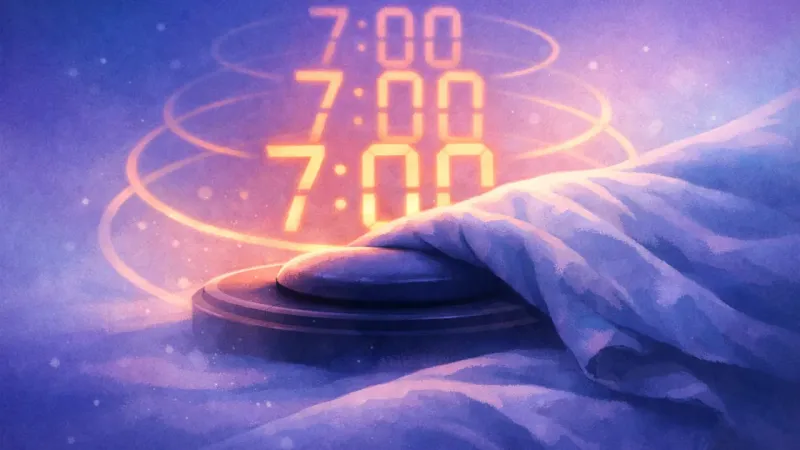
Finding Clarity in the 8:07 a.m. Screen Glow
If you’re a Toronto hybrid worker who sets two alarms, wakes up already scanning for Slack chaos, and still hits snooze because “five more minutes” feels safer than starting—this is your morning anxiety loop.
Casey (name changed for privacy) said that to me like it was a confession they’d been carrying in their jaw.
They didn’t come to our session to “become a morning person.” They came because they were tired of the same tiny ritual that never stayed tiny: 8:07 AM on a Wednesday in a Toronto condo bedroom, grey light leaking through half-closed blinds, the radiator clicking like it had its own agenda. Their phone screen—brightest thing in the room—glowed against the duvet while Slack previews stacked like small red sirens. Their thumb hovered over snooze. Their chest tightened. Their legs felt heavy.
“If I sit up,” Casey said, voice low, “it becomes real.”
In my head, I pictured wet cement. Not dramatic despair—more like that thick, resisting heaviness where every movement costs extra. Dread isn’t loud; it’s adhesive. It glues you to the place where time doesn’t count yet.
I’m Giulia Canale, and I’ve spent years listening to people’s inner weather—first on transoceanic cruise decks where the horizon messes with your sense of control, and now in quieter rooms where the waves are mostly inside. “We’re not going to fix your whole life today,” I told them gently. “We’re going to find the one anxiety pattern you’re avoiding, and the one step that breaks it. A journey to clarity—simple, not easy, but doable.”

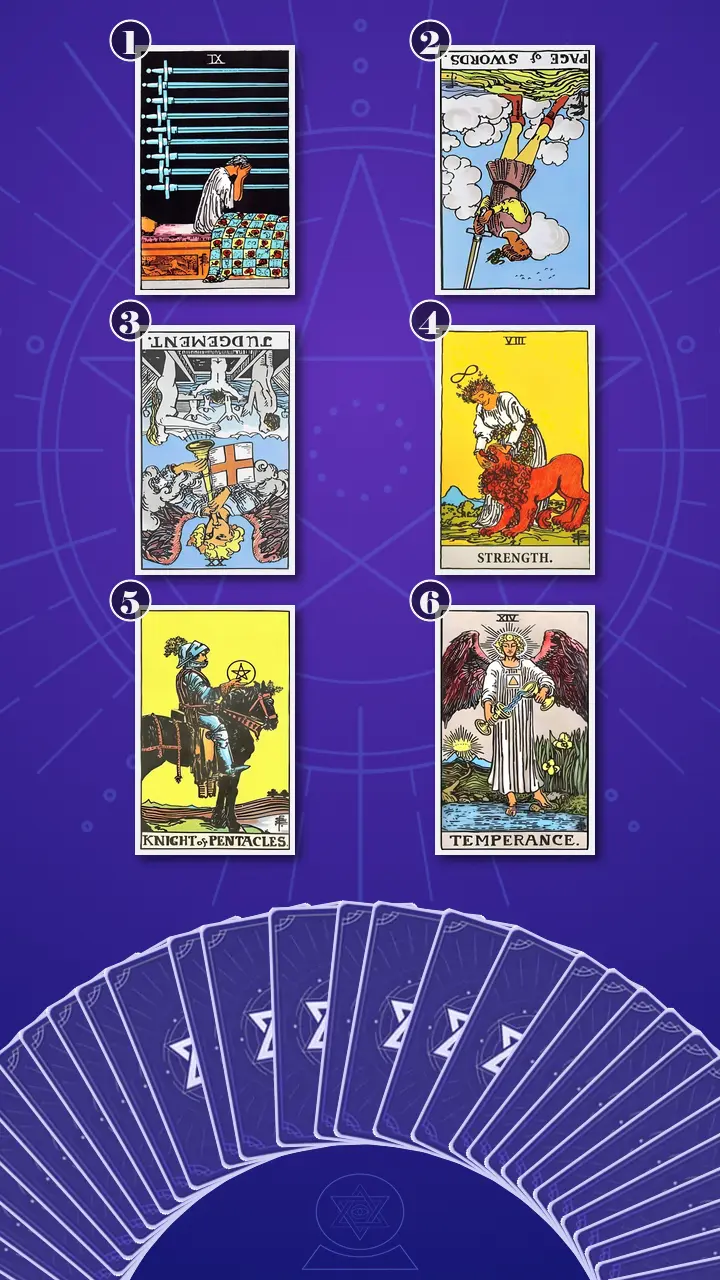
Choosing the Compass: The Transformation Path Grid (6)
I asked Casey to take one slow breath—not as a mystical ritual, just a nervous-system handrail. “Let your question be specific,” I said. “Snooze button again—what anxiety pattern am I avoiding, one step?”
As they exhaled, I shuffled slowly. The sound of cards slipping against each other always reminds me of water moving through Venetian canals: not rushing, just circulating until what’s stuck can finally float.
Today I chose a spread I use when someone isn’t asking the future to rescue them—they’re asking their present pattern to make sense. It’s called the Transformation Path Grid (6) · Context Edition.
For you reading along: this is why it works for “why do I keep hitting snooze even when I’m not tired?” A bigger spread like the Celtic Cross can add noise. This six-card grid keeps a clean arc: present pattern → immediate blocker → deeper root belief → catalyst energy → one practical next step → integration. The layout reads like walking down a staircase from stress into steadiness—exactly how a snooze spiral feels when it finally breaks.
I pointed to three spots on the grid. “This first card shows what your morning anxiety actually feels like in your body and brain. This second card shows the move that tightens the spiral—usually the thing you call ‘prepping.’ This middle-right card is our turning point—your lever.”
Reading the Map: How Tarot Works in a Morning Snooze Loop
Position 1 — Present state: the observable snooze pattern
“Now we flip the card that represents your present state—what happens when the alarm goes off, and what it feels like internally,” I said.
Nine of Swords, upright.
I let the image sit between us: a figure upright in bed, hands to their face, swords lined like a threat display on the wall.
“This is like this,” I told Casey, using the most literal modern translation of the card: Your first alarm goes off and you don’t even sit up—you just stare at the ceiling while your brain runs a rapid-fire reel: unread messages, a meeting you’re not ready for, something you forgot yesterday. The room is quiet but your mind is loud. Staying in bed feels like the only place you’re not actively failing yet.
In this position, the Nine of Swords isn’t “you’re doomed.” It’s an energy state: Air energy in excess—thoughts moving too fast, too sharp, too early. The mind tries to solve the entire day before the body has even warmed up.
Casey gave a small, bitter laugh—one of those sounds that’s half humor, half self-protection. “That’s… so accurate it’s kind of mean.” They rubbed their forehead, then dropped their hand like it was heavy.
“It’s not mean,” I said. “It’s precise. And precision is kind. Because it means we can work with the real thing.”
Position 2 — Blockage: the immediate habit that tightens the spiral
“Now we flip the card that represents the blockage—the exact move that keeps the loop going in that moment,” I said. “The habit that feels reasonable.”
Page of Swords, reversed.
“Your phone isn’t a planner at 8:03 AM—it’s a threat portal,” I said, and watched Casey’s eyes flick up like I’d named something they’d been trying not to name.
Here’s the scenario the Page of Swords reversed mirrors: You tell yourself you’re ‘just getting oriented,’ but you’re bouncing between Slack, email, news, and socials in bed. Each check adds urgency. You don’t get clarity—you collect adrenaline. The more you scan, the harder it feels to move.
Reversed, the Page’s energy is blocked and jittery. It’s vigilance without direction—like opening 15 browser tabs at once while still half-asleep and calling it “getting organized.” The thumb flick, the app-switching, the refresh—those aren’t neutral actions. They’re little micro-doses of alarm.
I used the echo I’ve learned lands with people who live in screens: “You’re not ‘getting oriented’—you’re looking for danger.”
Casey winced, then nodded—an immediate, reluctant recognition. Their shoulders rose toward their ears as if bracing for impact. “I literally go Slack → email → CBC alerts → Instagram. Like… in under two minutes.”
“And your nervous system hears that as an incident-response drill,” I said. “Scan alerts first. Feel safe later. But safety never arrives.”
Position 3 — Root cause: the deeper belief underneath the habit
“Now we flip the card that represents the root—the deeper driver underneath snoozing,” I said. “The belief you’re postponing by staying half-asleep.”
Judgement, reversed.
Judgement is the wake-up card in the Tarot—literally an image of a call to rise. Reversed, that call gets hijacked.
“This is the courtroom,” I said, keeping it grounded in modern stakes. “Your calendar invite becomes evidence. Unread messages become charges. Productivity posts become the jury.”
Then I spoke the lived translation: Waking up feels like an instant audit: yesterday’s unfinished tasks as evidence, today’s calendar as the jury, and your inner voice delivering a verdict—‘behind, again.’ Snoozing isn’t rest; it’s postponing being evaluated by your own brain.
Judgement reversed is evaluation energy where renewal should be. It’s not that you don’t want to get up. It’s that getting up feels like consenting to be graded.
Casey went still in a way I recognize from my psychology work—the body holding its breath while the mind replays. First: their inhale stalled. Second: their gaze unfocused, like they were watching a memory on fast-forward. Third: a quiet exhale slid out, and their shoulders dropped a fraction.
“It’s not that I’m sleepy,” they said, almost whispering. “It’s that I don’t want to open the day.”
“It’s not five more minutes of sleep,” I replied, “it’s five more minutes of not being graded.”
When Strength Spoke: Guidance Energy vs Verdict Energy
Position 4 — Key catalyst: the inner resource that changes everything
I touched the next spot on the grid. “Now we flip the card that represents the key catalyst—the turning point that loosens the pattern without requiring a perfect morning or perfect mood.”
Before I turned it over, the room felt quieter—like even the air wanted to listen.
Strength, upright.
On the card, a woman holds a lion with soft hands. Not domination. Relationship. The infinity symbol above her head looks like a loop—but here it’s a loop that can heal instead of trap.
I gave Casey the modern scene: Instead of trying to bully yourself into productivity, you do something softer and more powerful: you lead your body. Feet on the floor. One slow breath. A sip of water. You don’t argue with anxiety—you hold it steady long enough to move anyway.
Strength is calm Fire—not hype, not aggression, but steady courage. And this is where my own “Energy Flow Diagnosis” lens always clicks in. I’m not reading their body medically—just noticing energy patterns the way I used to watch travelers on a ship deck: where tension collects, where breath disappears.
“When you described the alarm,” I said, “you lifted your shoulders. Your neck tightened. That’s an energy blockage I see all the time in screen-induced exhaustion—like your body is bracing against the day before it even arrives.”
I paused, then offered the reframe that makes Strength practical. “Verdict energy makes you freeze. Guidance energy lets you start.” Outside Casey’s condo window, a faint streetcar rumble rolled by—Toronto’s own reminder that movement can happen without drama.
Casey swallowed. “But if I don’t judge myself, won’t I just… let everything slide?”
That question is the whole trap: confusing self-attack with self-leadership.
Here’s the setup—the moment I could see them back in bed in their mind: you know that second when the alarm hits, your chest tightens, and your brain pulls up the entire day like it’s a threat briefing—so staying under the covers feels like the only place time can’t touch you.
Stop treating the morning like a verdict and start treating it like a lion you can soothe and guide with steady hands.
I let the sentence land without rescuing it with more words.
Casey’s face did a full, human sequence. First, their eyes widened—tiny shock, like the idea was almost offensive. Then their gaze dropped to their hands, as if they could see the invisible tug-of-war: one hand hovering over snooze, the other gripping the duvet edge for safety. Finally, their mouth softened. A slow exhale left their chest, and with it, their shoulders lowered in a way that looked like gravity returning.
“If I force it,” they said, voice rougher now, “I rebel. If I soothe it… I can move.” They blinked hard, not quite tears, but close enough that the room felt tender.
“Exactly,” I said. “And you don’t have to make anxiety disappear. You just need one compassionate, pre-decided move that tells your body, ‘We’re safe enough to begin.’”
“Okay,” they breathed, and there was a new kind of vulnerability in it—the dizzy kind that comes right after clarity. “But what do I do tomorrow? Like… literally?”
I gave them my simplest Quick Recovery Technique—three minutes, the way I’d teach a crew member between briefings, or a traveler between ports. “Try this ‘Feet First’ reset tomorrow,” I said. “(1) Put your phone across the room tonight—or at least out of arm’s reach. (2) When the alarm goes off, sit up and put both feet on the floor—no negotiating, no checking. (3) Take five slow breaths and drink a few sips of water. That’s it.”
“And if you feel activated,” I added, “you’re allowed to stop at ‘feet on the floor’ and just notice sensation for 20 seconds. This is practice, not a test.”
Then I asked the question that turns insight into memory: “Now, with this new lens—morning as lion-care, not performance review—can you think of a moment last week when this would’ve changed how it felt? Even by 1%?”
Casey nodded slowly. “Monday. I woke up, saw a ‘quick sync’ invite, and it was like… instant failure. If I’d just put my feet down first, maybe I wouldn’t have opened Slack like it was a fire alarm.”
That was the emotional transformation beginning right there: from dread-driven snoozing and self-criticism toward calm agency through compassionate, repeatable micro-routines.
Position 5 — One step: the practical micro-action for the next 7 days
“Now we flip the card for one step—the under-two-minute action that makes this real,” I said.
Knight of Pentacles, upright.
I smiled, because this card never promises sparkle. It promises results.
“Here’s the lived version,” I told Casey: You pick one boring, repeatable step (curtains open, face wash, water) and treat it like practice. Not a ‘new you’ routine. Not a perfect morning. Just a tiny action that rebuilds trust because you can actually repeat it when you’re anxious.
The Knight is Earth energy in balance: steady, simple, reliable. And it carries a line I want everyone with decision fatigue to tattoo on their brain (metaphorically): Consistency builds self-trust faster than intensity ever will.
Casey frowned—practical resistance. “But what if I can’t even do the three minutes? Some mornings I feel like I have zero bandwidth.”
“Perfect,” I said. “Then we make the step smaller than your anxiety. Ten seconds counts. The win condition is boredom, not intensity.”
Position 6 — Integration: what mornings become over time
“Now we flip the card for integration—what your baseline can start to feel like if the one-step practice sticks,” I said.
Temperance, upright.
Temperance pours between two cups like an emotional sound mixer—adjusting levels instead of trying to mute emotion entirely.
“This is your future if you keep it simple,” I said. Mornings stop being all-or-nothing. You don’t have to feel amazing to begin, and you don’t have to sprint to make up for snoozing. Your pace becomes steadier—enough calm to think, enough action to move—so the day starts like a gradual fade-in instead of a jump scare.
And this is where my Venetian Aqua Wisdom comes in—the strategy I’ve leaned on my whole life. “In Venice,” I told them, “water isn’t fought. It’s guided. If it stagnates, it gets heavy. If it’s forced, it floods. Temperance is circulation. Your mornings don’t need a revolution. They need flow: a little movement before information, so the energy can travel instead of pooling in your chest.”
The Minimum Viable Morning: Next Steps You Can Actually Start
I looked across the whole grid and stitched it into one clear story for Casey.
“Here’s why it’s been happening,” I said. “You wake into the Nine of Swords—your mind attacks with worst-case scenarios. Then Page of Swords reversed kicks in: you scan your phone to feel prepared, but it spikes adrenaline. Under that is Judgement reversed—the belief that waking up equals being evaluated. Strength is the bridge: treat anxiety like a lion to soothe, not a monster to defeat. Then the Knight of Pentacles makes it real with one repeatable step. Temperance is the payoff: mornings become calibration, not pass/fail.”
“Your cognitive blind spot,” I added carefully, “is thinking you need to feel ready before you move. But your cards show the transformation direction: move first in a compassionate, physical way—while ‘not-ready’ is still here. That’s how self-trust gets rebuilt.”
Then I gave them actionable advice—small enough to survive a bad morning.
- Phone Out of Reach TonightBefore bed, charge your phone across the room or on a shelf you can’t reach from under the duvet. If you need an alarm, use it—but make it require standing to silence.Expect resistance. Don’t debate your brain. Treat it like moving the lion’s leash to a safer distance—simple, not moral.
- Feet-First Before Input (10 Seconds Counts)When the alarm goes off: sit up → both feet on the floor for 10 seconds before you touch anything. Then take 5 slow breaths and drink 3 sips of water.If anxiety spikes, you’re allowed to stop at “feet on the floor” for 20 seconds. This is practice, not a test.
- One Honest Start NoteWrite one sentence tonight—on a sticky note or your lock screen: “Tomorrow only needs one honest start.” Read it out loud before you unlock your phone. Then do one under-2-minute step (open curtains, wash face, half-make the bed) for 7 mornings.After you do it, say quietly: “Promise kept.” Then stop. Don’t optimize. Let consistency do the work.
Because Casey is a designer—desk life, neck tension, shoulders creeping up—I added one non-medical body cue. “If you want a bonus,” I said, “do a 15-second posture reset after your water: roll shoulders back once, unclench your jaw, and feel your feet. It’s not ‘fixing’ you. It’s telling your nervous system where the ground is.”

A Week Later: Ownership, Not Certainty
Six days later, Casey messaged me a photo: their phone charging on a shelf by the door, nowhere near the bed. The text underneath said, “I still wake up with the same dread sometimes. But I put my feet down first. And weirdly… it breaks the spell.”
They added, “I didn’t become a new person. I just stopped starting the day in panic mode.”
That’s what a real Journey to Clarity looks like most of the time. Not a cinematic transformation—just the quiet return of agency. From dread-driven snoozing and self-criticism to calm agency, built the boring way: one compassionate cue, repeated.
They told me they’d had one of those bittersweet mornings: they woke up, put their feet on the cold floor, and didn’t check Slack. They felt steadier—and also oddly alone for a minute, sitting on the edge of the bed in the grey light, realizing how often the phone had been their company.
When the alarm goes off and your chest tightens, it can feel like getting out of bed means consenting to a full-day performance review—so you stay in limbo under the covers, not because you’re lazy, but because you’re trying to postpone the moment you might ‘prove’ you’re not in control.
If tomorrow morning still comes with the same anxiety, what’s one tiny, pre-decided action you’d be willing to do anyway—just to show your body you’re back in the driver’s seat?