From 'On This Day' Spirals to Quiet Momentum: Name the Story, Take One Step

Finding Clarity When an “On This Day” Photo Turns Into a Verdict (and You Can’t Focus)
You’re a 20-something in a big city—Toronto energy—who can be mid-commute and get emotionally sideswiped by an “On This Day” photo like your brain instantly opens a case file on your life.
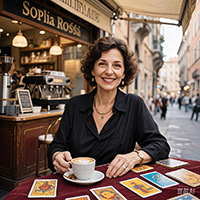
Jordan (name changed for privacy) said it exactly like that when she slid into the chair by my front window—half relief, half annoyance at herself. Outside, the street was still wet from an early drizzle, and inside my café the espresso machine hissed with the steady confidence of something that has done the same job for twenty years. The air smelled like dark roast and orange peel from the little bowl I keep by the register.
“It’s always the stupid banner,” she told me. “Facebook, iPhone Photos—whatever. ‘On This Day.’ And my stomach just… drops. Like I’m about to get graded.”
She described 8:52 a.m. at Bloor–Yonge: fluorescent lights flickering, that damp-wool smell from winter coats, her phone warm against her palm. One notification. One tap. And then—twenty to forty minutes gone. Camera roll dive. Old group chat reread like evidence. Draft a message, delete it. Snap back to her laptop with the kind of focus that looks fine on Slack but feels like trying to run through waist-deep water.
What made it sting wasn’t the memory itself. It was the trap underneath it: she wanted to move forward with self-trust, but she was terrified that letting go of the past meant losing her last “proof” she was lovable, valuable, on track.
Longing sat in her body like a spoon pressing into the soft part of her stomach—quiet but insistent—while her shoulders stayed up and tight, bracing for a difficult truth that hadn’t even been spoken yet.
I nodded, keeping my voice gentle and grounded. “We’re not here to erase anything,” I said. “We’re here to figure out what story that photo activates—and what one small next step looks like after it. Let’s draw a map through the fog. Clarity doesn’t have to be dramatic. It can be practical.”

Choosing the Compass: The Four-Layer Insight Ladder Spread
I asked Jordan to take one slow breath in, one breath out—nothing mystical, just a nervous system handrail. While she did, I tidied the table the way I tidy my counter before I pull a shot: clear space, clear input, cleaner result. I shuffled my worn Rider–Waite deck the way I grind beans—steady, unhurried, listening for the moment the texture changes.
“Today I’m using a spread I like for memory triggers,” I said. “It’s called the Four-Layer Insight Ladder · Context Edition.”
For you reading this: this spread works when an “On This Day” photo triggers a nostalgia spiral and rumination, because it’s built like a simple staircase. It doesn’t ask you to interpret your whole life—just this loop. It goes: trigger → past story driver → reframe → one step. Minimal cards, maximum clarity.
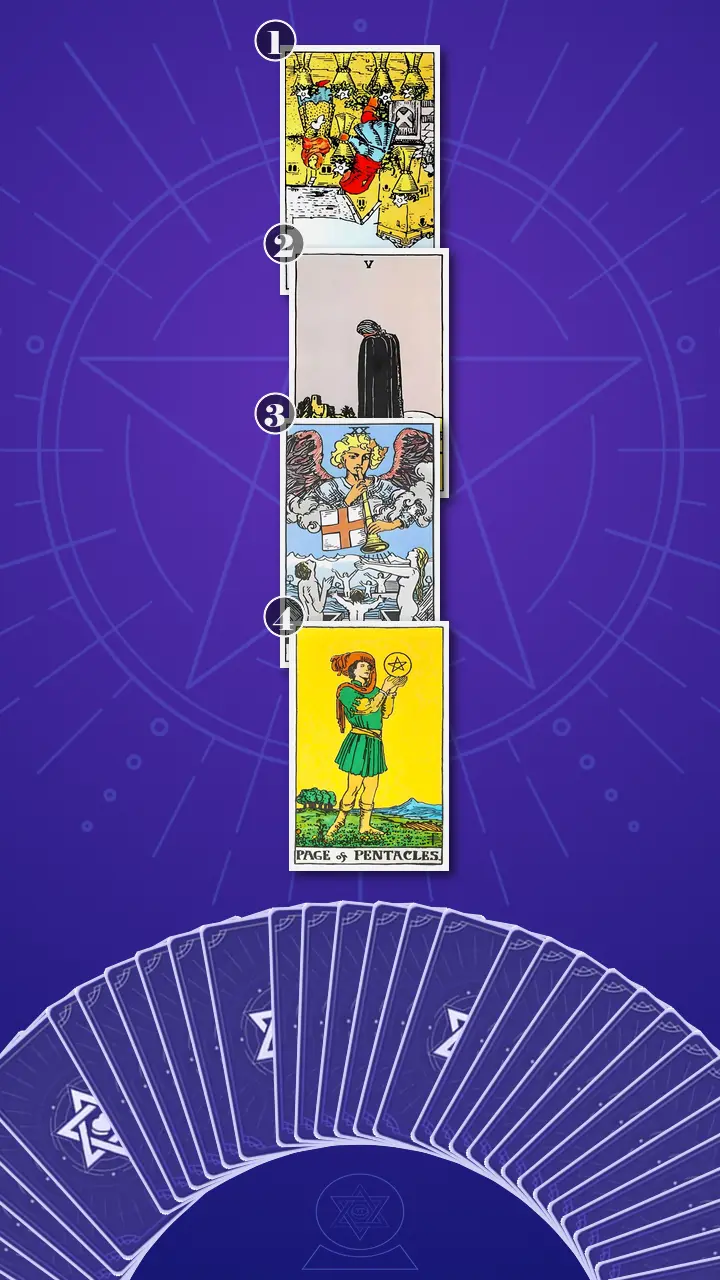
I traced the layout in the air: four cards in a vertical ladder. “The first card shows the surface hook—what happens in the first minute. The second goes underneath, to the older conclusion running the show. The third is the interruption: the insight that changes what the memory is for. And the fourth is the bottom rung—one realistic step this week that puts your feet back in the present.”
Reading the Map: How Tarot Works in the Middle of a TTC Life
Position 1 — The Tiny Digital Room Where Nothing New Can Happen
“Now flipped over,” I said, “is the card representing Surface trigger: how the ‘On This Day’ photo hooks your attention and shows up in a concrete, observable reaction pattern.”
Six of Cups, reversed.
I didn’t even have to reach for poetry; the card practically spoke in app language. “This is the moment you tap the memory ‘just for a second,’” I told her, “and suddenly you’re not just looking—you’re negotiating with it. If I watch the whole slideshow… if I find the exact photo… if I reread that chat thread…”
I could see it land because her mouth pulled into a half-laugh that didn’t reach her eyes. “That’s brutal,” she said, and the laugh turned into a wince. “It’s literally bargaining.”
Reversed, the Six of Cups is nostalgia that doesn’t soothe. The energy isn’t balance—it’s blockage. The past arrives like a gift cup being offered, but instead of receiving it, you treat it like a transaction: replay the memory and you’ll earn reassurance. And the walled courtyard on the card—the safe little enclosure—becomes that tiny digital room where nothing new can happen.
I mirrored back the inner script I see so often with this card, because naming it takes away its stealth:
“I’ll just look for a second.”
“Wait, where’s that one pic?”
“Okay, last one.”
Jordan’s thumb moved unconsciously, as if it wanted to scroll even without a phone in her hand. Then she caught herself and folded her hands together, tight, knuckles pale.
“Nostalgia hits hardest when it’s trying to double as proof,” I said quietly. “It’s not weakness. It’s a strategy—just one that shrinks your present options.”
Position 2 — The Loss Tally You Do Before You Even Notice What Still Stands
“Now flipped over,” I said, “is the card representing Past story driver: the older emotional conclusion or meaning-making habit that still runs the show underneath.”
Five of Cups, upright.
This is the root of the spiral: the reflex to count what spilled before you check what remained. “The photo doesn’t just remind you of the past,” I told her. “It triggers the habit of scanning for what’s gone first—who drifted, what didn’t last, what version of you felt more certain.”
I used the echo technique I love for this card—scene-based, body-based—because it’s never abstract in real life. “It’s like re-reading old messages for what wasn’t said,” I said. “Shoulders up by your ears. Jaw clenched. Thumb scrolling on autopilot. You’re standing over the spilled cups trying to find the exact moment the story turned.”
Jordan swallowed hard—one of those throat-tight ‘yep’ moments that isn’t agreement so much as recognition. Her gaze dropped to the table, then drifted to the window like she was watching an old version of herself cross the street.
“Grief loves a highlight reel—so does self-doubt,” I added, careful not to push her into forced positivity. “This card doesn’t deny loss. It just shows how attention can get stuck facing it.”
And here—this is where my café brain always kicks in. I’ve pulled espresso for two decades. I know what happens when you over-extract: you keep forcing water through old grounds, trying to get more out of what’s already been used. The result isn’t richer. It’s bitter, thin, and tight on the tongue.
“Your mind is over-extracting meaning from the past,” I told her. “You keep running the same chapter through the machine, hoping the next pull will finally taste like certainty. But it can’t. Not because the chapter wasn’t real—because you’re asking it to do a job it was never meant to do: prove your worth today.”
Her shoulders lifted, then fell. A tiny release, like her body was tired of holding a verdict it didn’t ask for.
Position 3 — When Judgement Spoke Like a Trumpet, Not a Courtroom
When my fingers went to the third card, the room felt quieter—not in a spooky way. In a café way. Like when the grinder stops for half a second and you suddenly notice your own breathing.
“Now flipped over,” I said, “is the card representing Key reframe: the insight that interrupts the loop and changes what the memory is ‘for’ in your life now.”
Judgement, upright.
I watched Jordan’s face before I even spoke. Her eyes were already doing that thing—trying to solve the card like it was a test she could pass if she just thought hard enough. I could almost hear the internal monologue: Okay, what does this mean? What did I do wrong? What’s the correct takeaway?
So I used the contrast this card demands. “Your brain hears the notification and turns it into a courtroom,” I said, letting the words be sharp-but-gentle. “You become the prosecutor, the defendant, and the judge. You present Exhibit A: the photo. Exhibit B: the old texts. Exhibit C: your current life, compared side by side.”
Then I shifted the energy—clean interruption. “But Judgement isn’t asking you to relive it,” I said. “It’s asking you to decide what it means now.”
Jordan’s brow tightened. “But if I stop treating it like a verdict,” she said, a flash of heat in her voice, “doesn’t that mean I was wrong for caring this much? Like I wasted years being… stuck?”
That reaction—anger as self-protection—was honest. I didn’t correct it. I steadied it. “No,” I said. “It means you’re updating the contract. Caring wasn’t wrong. Obedience is what hurts.”
And then I delivered the line exactly as it needed to be delivered—simple, unmistakable, like the first sip of espresso that wakes up your whole face.
Stop treating the photo as a verdict; answer its call like a trumpet—take the lesson, then rise into a present-day choice.
I let silence sit for a beat, the way I let crema settle before I slide a cup across the counter.
Jordan’s reaction came in a chain—three small movements that told the truth better than any speech. First: a freeze. Her breath stopped mid-inhale, and her hands paused in the air like she’d been caught in the act of defending herself. Second: the “processing” look—eyes slightly unfocused, like she was replaying a specific commute, a specific Sunday night, a specific moment with her phone face-lit in the dark. Third: the release—one quiet exhale that sounded like her body had been waiting for permission to stop arguing.
Her eyes went glassy, not dramatic, just honest. Her shoulders lowered a fraction. Her jaw unclenched like she’d set down something heavy without realizing she’d been carrying it. And then—because clarity can feel dizzy at first—she blinked fast, like the room was brighter than it had been a minute ago.
“It’s weird,” she whispered. “That makes it feel… optional. Like I can RSVP to it instead of falling into it.”
“Exactly,” I said. “A calendar alert you can acknowledge and snooze—not a portal you have to drop through.” I tapped the Judgement card gently. “This is conscious review and release. Integration, not obedience.”
I leaned in just a little, keeping it consent-based. “Now, with that lens,” I asked, “think back to last week. Was there a moment—on the TTC, between tasks, late at night—where this insight would’ve changed your next ten minutes? Not the whole story. Just the next ten minutes.”
Jordan looked down, then nodded once, slow. “Wednesday,” she said. “3 p.m. I opened a patio photo. I spent half an hour hunting for the ‘right’ picture. If I’d treated it as… data? I would’ve closed it. I would’ve sent the email I was avoiding.”
In tarot terms, this was the pivot from her starting state—nostalgia-driven rumination, self-worth on trial—toward the emotional transformation we were here for: grounded curiosity and small present-day momentum. Not certainty. Not erasing. Just movement.
And because I’m who I am, I added one more café truth: “In Italy we have riposo—a pause in the middle of the day that’s not laziness, it’s maintenance. Judgement is riposo for your identity. A clean pause so you don’t over-extract yourself.”
Position 4 — Quiet Proof Beats a Perfect Story
“Now flipped over,” I said, “is the card representing One step: a small, realistic action you can take this week that anchors you back into the present and builds self-trust.”
Page of Pentacles, upright.
The Page held the pentacle with both hands, like it was the only thing that mattered—not glamorous, not optimized, just real. “This is the grounded exit,” I told her. “After you name the story the photo activates, you pick one small, trackable step that makes your current life more real. One email. One calendar block. One tiny savings transfer. Something that still matters even if nobody sees it online.”
Here the energy is balance—Earth energy. Consistency over intensity. Beginner’s mind over highlight reels. The Page doesn’t ask, “Do I feel perfectly ready?” The Page asks, “What can I build in the next ten minutes?”
Jordan’s shoulders didn’t jump this time. They stayed down. Her eyes softened. “I can do small,” she said, almost surprised. “I keep thinking I need a huge revelation.”
“Quiet proof beats a perfect story,” I replied. “And the Page loves receipts you can hold in your hand.”
From Trigger to Actionable Advice: The Memory-to-Motion Reset
I gathered the four cards into one clear storyline, because this is where tarot becomes less like fortune-telling and more like pattern literacy.
The Six of Cups reversed showed the trigger: the “On This Day” notification arrives like a gift, but turns into a transaction—replay the past to buy reassurance. Underneath, the Five of Cups revealed the driver: an old loss-story that makes your brain scan for what’s gone first, so the present feels emptier by comparison. Judgement was the interruption: the memory is a call for integration, not a sentence you must serve. And the Page of Pentacles was the exit: one small, trackable step that proves you can move while feeling tender.
The cognitive blind spot I named for Jordan was simple: she kept assuming clarity would come from more analysis—more scrolling, more rereading, more “figuring it out.” But her clarity would come from a different move: past as data, not verdict, followed by one embodied, present-day action.
“You don’t have to erase the chapter to stop living inside it,” I told her. “We’re just changing what role it plays.”
Then I gave her a plan—small, specific, and repeatable. Not a personality overhaul. A protocol.
- The 3-Minute Memory TimerWhen the “On This Day” memory appears, set a 3-minute timer and look at it once—no digging into the camera roll, no opening old chat threads.If your thumb speed-scrolls or your shoulders climb toward your ears, treat that as your body’s “close the app” signal. No debate—just close.
- One Sentence: “The story this photo activates is…”Open Notes and write one line: “The story this photo activates is ___.” Keep it a headline, not an essay.Expect your brain to say “this is cheesy.” That’s normal. The goal isn’t feeling better—it’s regaining choice.
- The 5-Minute Physical Reset (My Café Version)Close the app and do one 5-minute physical task—start laundry, wash a few dishes, step onto the balcony and feel the air. If you want a café anchor, do my 5-Minute Coffee Meditation: grind beans (or open a jar of coffee/tea), inhale the aroma for two slow breaths, then move your body for the remaining minutes.Stop after five minutes if you feel flooded. The win is proving to your body you can return to the present on purpose.
I also offered her an optional add-on for the Five of Cups days—the ones that hit like a hollow chest:
“Do a quick ‘Two Standing Cups Audit,’” I said. “Three bullets for what you think you lost. Two bullets for what’s still true and usable today. Not gratitude—reality-checking attention bias. Then circle one standing cup and take a ten-minute action that uses it.”
And because I’m Sophia Rossi and I can’t not bring coffee into it, I added one more tool from my own practice—my Cup Temperature Scan. “If you make a tea or coffee after a trigger,” I told her, “notice how fast it cools. When you’re emotionally over-extracted, your energy drops quickly. The cooling cup is a reminder: don’t sit in the memory until you go cold. Warmth is for living.”

A Week Later: The Quiet Proof That the Present Is Real
Six days after our reading, I got a message from Jordan while I was wiping down the counter at closing.
“Got an On This Day on the streetcar,” she wrote. “Did the 3-minute timer. Wrote the sentence. Then I cleaned my kitchen for five minutes and sent the email I was avoiding. Still felt a little sad, but I didn’t lose my whole afternoon.”
That’s what I mean by a Journey to Clarity. Not a perfect mood. Not a rewritten past. Just a new relationship to the trigger—and one small present-day action that rebuilds self-trust.
Later, she told me the bittersweet part, like a confession and a victory in the same breath: she’d closed the memory app and sat with her coffee at her own table for a minute, alone, listening to her building’s quiet hum. The ache was still there—but it wasn’t steering.
When an “On This Day” photo hits and your stomach drops, it’s not because you’re weak—it’s because part of you is still using that chapter as the last solid proof you mattered.
If you let that memory be data instead of a verdict, what’s one small, quiet thing you could do this week that would count as proof you’re still building?