From Badge-Driven Urgency to Triage Rhythm Across Work, Money, People

The 8:47 a.m. Line 1 Badge Storm
If you clear Slack, then your bank app, then your DMs like you’re defusing three tiny bombs—only to realize you didn’t actually finish anything—you’re not alone.
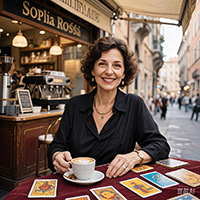
Jordan (name changed for privacy) slid into the corner table by my front window, coat still half-zipped, like they’d been chased here by their own lock screen. Outside, the late-winter Toronto light looked clean and cold, and the streetcar wires hummed faintly overhead. Inside, my espresso machine exhaled its steady hiss, the kind of sound that usually makes people’s shoulders drop—until their phone buzzes again.
They set their phone down face-up. It didn’t even need to light up for the red circles to feel loud. I watched their thumb hover, then tap, then tap again—Slack, Gmail, bank app, group chat—like their body had memorized a sequence.
“It’s like… my phone is a to-do list that never ends,” they said, almost laughing, but the laugh didn’t land. “Work wants me responsive. Money stuff pings me all day. And if I don’t text people back fast, I feel like I’m being… flaky. Unreliable. Like I’m failing adulthood.”
They paused, then added the sentence that always tells me we’re not talking about productivity apps. We’re talking about a nervous system: “I’m answering people, but I’m not actually finishing anything.”
The overwhelm wasn’t an abstract mood on them. It lived in the buzzing restlessness in their hands, the way their jaw stayed slightly clenched even when they tried to soften it, the tight chest that arrived the moment their screen lit up—like their body thought every notification was a siren. It felt, to me, like watching someone try to read a subway map while the train is already moving and every station announcement is yelling at once.
I leaned forward, keeping my voice simple. “Okay. We’re not going to scold your phone, and we’re not going to pretend you can ‘just relax.’ We’re going to make a map. A real triage map—for work, money, and relationships—so you’re choosing your next move instead of your badges choosing it for you. This is a Journey to Clarity, not a quest for perfection.”

Choosing the Compass: The Energy Diagnostic Map (7) Spread
I pulled the tarot deck from its worn cloth sleeve the way I pull a portafilter from the espresso machine: with familiarity, not drama. “Before we start,” I said, “take one breath. Not to be mystical—just to interrupt the reflex.”
While Jordan breathed, I did what I always do in my café readings: a quick Caffeine Energy Scan. “Tell me what coffee does to you lately,” I asked. “Does it steady you, or does it make the buzzing worse?”
“Worse,” they admitted. “I drink it anyway.”
I nodded. “That tracks. When your attention is already on high heat, caffeine can feel like turning the espresso grinder one notch too fine. Everything becomes… intense.”
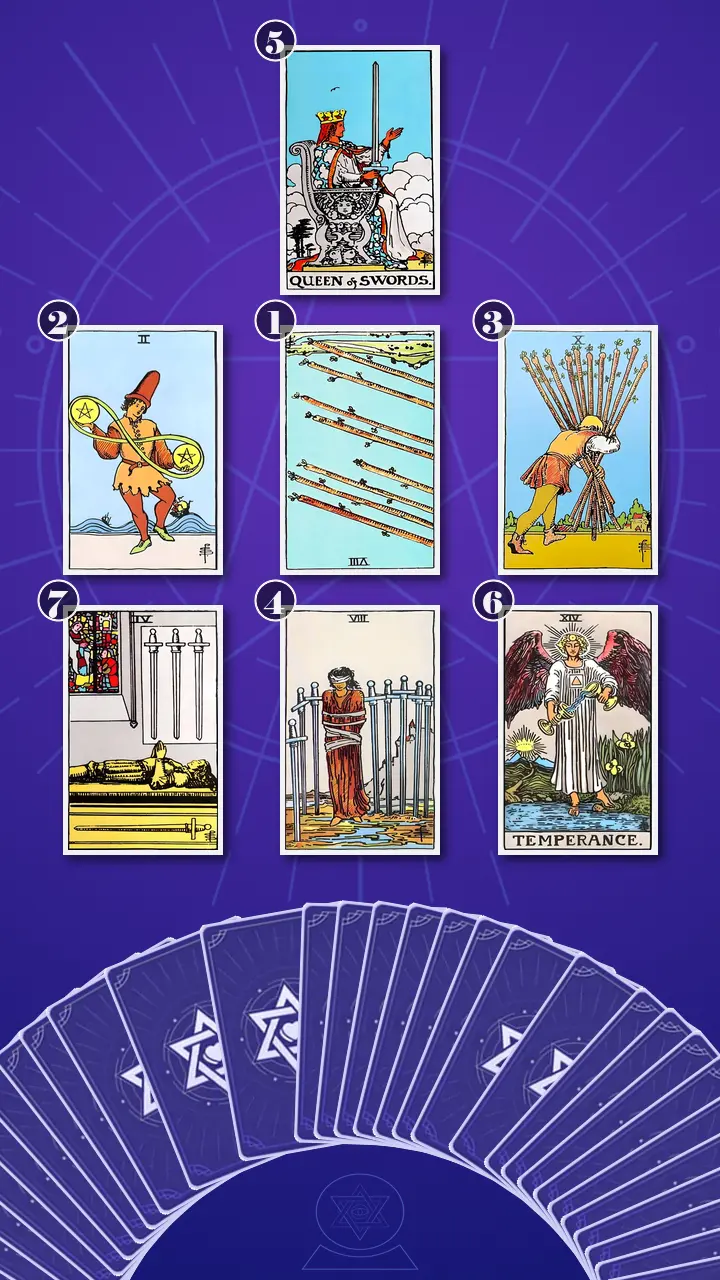
I chose a spread that matches modern life’s simultaneous pings: Energy Diagnostic Map (7) · Context Edition. I explained it plainly—not just to Jordan, but to you, the reader who might be googling how tarot works and wondering if any of this can be practical. This is not a timeline and it’s not a binary ‘Option A vs Option B.’ It’s a diagnostic: it separates what you’re doing (surface symptom), what you’re carrying (inner tug-of-war and external pressure), the belief that keeps the loop running (core blockage), the strength you can actually use (resource), the pivot that changes the system (key transformation), and the one grounded practice that makes it stick (next step).
“Think of it like a transit map,” I told Jordan. “You start at the noisy hub, then you follow the lines out to a calmer route home. Card 1 shows what your badge overload looks like day-to-day. Card 4 is the choke point underneath it—usually a rule you never agreed to but still obey. Card 6 is the turning point: the rhythm that makes triage real.”
Reading the Map: Card Meanings in Context
I laid the cards out the way I’d described—center, left, right, beneath, above, then the diagonal pivot and the landing. Jordan’s gaze kept flicking to their phone like it might object to being ignored.
Position 1: The Badge Storm You Live Inside
“Now flipped open,” I said, “is the card representing the surface symptom: what the overload looks like day-to-day in behavior and attention.”
Eight of Wands, in reversed position.
In the traditional image, the wands fly through an open sky—fast, clean, like momentum. Reversed, that speed becomes a barrage. And the modern-life translation landed immediately: It’s 10:11 AM and you’ve opened your phone five times in three minutes. Slack is popping, email has a new thread, and your bank app flashes a notification. You’re moving fast—swiping, tapping, quick ‘got it’ replies—so the badges shrink, but your actual work doesn’t progress.
“Badges are not priorities,” I said, letting it be simple. “They’re just loud.”
I described the energy dynamic as blockage: motion without landing. A lot of fire-energy, but it’s misfiring—reaction replacing completion. “This is why you’re so active and still feel behind,” I told them. “The day feels like it’s flying past you while you’re trying to catch tasks mid-air.”
Jordan gave a small, bitter laugh—surprised, almost offended by the accuracy. “That’s… brutal,” they said. “Like, yes. I do that. And I hate that I do that.” Their shoulders lifted, then dropped, like their body was tired of holding itself up.
Position 2: The Inner Juggle That Never Stops Spinning
“Now flipped open,” I continued, “is the card representing the inner tug-of-war: how you’re juggling competing priorities across work, money, and relationships.”
Two of Pentacles, upright.
This card always makes me think of those weeks where your Google Calendar blocks look like Tetris and you’re still trying to squeeze in one more piece. The modern scenario was almost too perfect: You’re toggling between a work task board, a budgeting tab, and a group chat like you’re keeping three plates spinning. Nothing is on fire, but everything feels like it needs maintenance.
“You’re not failing,” I said. “You’re juggling without a rhythm. So your brain treats every lane as ‘right now’ instead of ‘in its time.’”
The energy here isn’t deficiency—it’s excess in the wrong place: too much switching, too little cadence. “Marking it as read isn’t the same as closing it,” I added, and Jordan’s eyes narrowed like the sentence had touched a bruise.
Position 3: The World That Rewards You for Carrying More
“Now flipped open is the card representing external pressure: what your environment is adding to the load.”
Ten of Wands, upright.
The figure on this card is bent forward, vision blocked by the bundle they insist on carrying alone. In modern terms: Your workload, life admin, and social expectations pile up until you’re carrying all of it in your own arms. You say yes to extra tasks, you absorb ‘quick questions,’ and then you can’t even see what matters most because your attention is buried under the bundle.
“Hybrid work culture can quietly train you into ‘always on,’” I said. “Even when nobody explicitly asked. The reward for being fast is… more incoming.”
I watched Jordan’s throat move as they swallowed. “It’s like if I’m not immediately responsive, I’m not valuable,” they said, softer.
“That’s the pressure,” I replied. “And it’s not all you. But what we do with it—that part is where we get choice.”
Position 4: The Rule You Enforce Without Signing It
“Now flipped open,” I said, slowing down, “is the card representing the core blockage: the limiting belief or perceived consequence that keeps you stuck in reactive triage.”
Eight of Swords, upright.
The blindfold. The loose bindings. The swords like a fence you could step through if you trusted your feet. The modern-life scenario is the exact freeze Jordan had described: You’re staring at your phone, frozen—not because you don’t know what to do, but because every option feels like a consequence. If you focus on work, you’re ‘bad at relationships.’ If you don’t check money, you’re ‘not a real adult.’
I used the internal monologue structure I hear in so many 20-somethings and 30-somethings living inside notification economies: “If I don’t reply now, I’m unreliable. If I don’t check now, I’m careless. If I don’t react right now, I’m the one who drops the ball.”
Then I offered the counter-proof, grounded in their city. “Remember Line 1,” I said. “You’re on the platform, that blue glow on your face, chest doing that hollow drop. You wait. Two stops. You reply when you get above ground. And nothing explodes. Nobody drafts your obituary titled ‘They Didn’t React to the Meme.’”
Jordan’s reaction came in a chain, exactly how it happens when something true slips past the defenses: first their breathing paused for half a beat, like a freeze-frame. Then their gaze went unfocused, as if their brain was replaying a dozen moments in the TTC tunnels. Then their shoulders lowered and they let out a quiet, startled exhale—almost a whisper: “Oh.”
“Notifications aren’t handcuffs,” I said, tapping the loose bindings on the card. “But your belief makes them feel like one.”
Position 5: The Voice That Can Cut Through Noise (Without Being Cold)
“Now flipped open is the card representing your usable resource: a strength or mindset you can access to cut through noise and set priorities.”
Queen of Swords, upright.
Her sword is upright—one clean line. Her gaze is direct—not cruel, not performative. Just clear. The modern translation is basically a script Jordan has been craving: Instead of proving you care by replying instantly, you prove reliability with clarity. You send one calm sentence—‘Heads-down until 3, then I’ll reply’—and you stop negotiating with your lock screen.
To make it real, I painted the contrast as a scene. “Here’s the sweaty paragraph,” I said, and I mimed typing with tense shoulders: ‘Hey sorry I’ve been so bad at replying I’ve just been slammed and I feel awful and I promise I’m not ignoring you…’ It’s five lines long, it begs forgiveness, and it still doesn’t tell them when you’ll respond.
“And here’s the Queen,” I continued, voice calm, posture still. “You open Notes. You save a template. It’s one line: ‘Heads-down until 3—will reply after.’”
Jordan’s hands, which had been hovering near the phone, went still. Their breath deepened, and their jaw softened a fraction. They looked almost… relieved by the idea of being precise.
“Clear is kind,” I said. “Constant isn’t.”
When Temperance Poured Between Two Cups
I told Jordan, “We’re turning the corner now. This next card is the bridge—the one that changes the system.” The café seemed to quiet on cue, like the room understood we were moving from diagnosis into design. Even the espresso machine shifted from hiss to a soft, resting silence.
Position 6: The Key Transformation—A Rhythm, Not a Heroic Sprint
“Now flipped open,” I said, “is the card representing the key transformation: the central reframe that integrates work, money, and relationships into a workable rhythm.”
Temperance, upright.
In the image, the angel pours carefully between two cups. Not splashing, not rushing—flow control. The modern-life scenario is the missing piece Jordan’s tried to download in a dozen abandoned Notion setups: You stop trying to be equally available to everything all day. Instead, you build a simple cadence: a focused work block, a short weekly money check-in, and an intentional relationship moment that’s actual presence—not micro-replies.
As I spoke, I pulled in my own signature lens—my Stress Flavor Profile. “You know what over-extraction tastes like?” I asked. “When the espresso shot runs too long, too hot, too desperate to get every last drop. You get bitterness. Not because the beans are bad—because the flow was unmanaged.”
I nodded at Temperance. “This card is the opposite of over-extraction. It’s measured. It’s repeatable. It says: you don’t need more discipline—you need a container.”
Setup: Jordan was stuck in the exact loop they’d described—unlock the phone ‘just to clear badges,’ bounce to Slack, then the bank alert, then a group chat—hands buzzing, jaw tight—yet nothing finished. Their brain treated every ping like proof of whether they were a good employee, an adult, a friend.
Delivery:
Stop treating every badge like an emergency and start pouring your attention with intention, cup-to-cup, the way Temperance turns chaos into a steady flow.
I let the sentence sit. No fixing. No adding. Just air.
Reinforcement: Jordan’s face shifted in layers. First: their eyebrows lifted, a tiny look of being caught—like they’d been seen doing something they didn’t realize was a choice. Second: their lips pressed together, not in defiance, but in the effort of not crying in a café at 10 a.m. Third: their shoulders, which had been up by their ears for most of the reading, slid down as if gravity suddenly made sense again.
They looked down at their hands like they were meeting them for the first time. The buzzing wasn’t gone, but it was quieter—like the volume knob had been turned from emergency to merely uncomfortable.
“But if I don’t respond fast,” they said, voice sharper for a second, a flash of anger under the softness, “doesn’t that mean I’ve been doing it wrong this whole time?”
I met that honestly. “It means you’ve been coping with a system designed to hijack attention. You weren’t doing life wrong. You were pouring into every cup at once because you were scared any one cup would run empty and you’d be judged for it.”
I slid a small notepad across the table. “Now—using this new lens—think back to last week. Was there a moment where a badge yanked you, and this could have changed how you felt?”
Jordan stared at the blank page, breathing shallow at first, then deeper. “Friday,” they said. “3 p.m. My manager asked a ‘quick question,’ my bank app pinged a balance thing, and my friend sent a meme. I froze. I drafted three replies. I did none.”
“Right,” I said. “Temperance is the choice to pour cup-to-cup. Not because you care less, but because you’re caring on purpose.”
In that moment, I named the emotional transformation plainly, so it wouldn’t slip back into vagueness: “This is the move from badge-driven reactive urgency and guilt to values-based triage—steadier self-trust and calmer follow-through. Not overnight. But structurally. Like changing the plumbing, not the water.”
Position 7: The Landing—A Protected Pause That Makes Decisions Possible
“Now flipped open,” I said, “is the card representing the next grounded step: a concrete practice for the coming week that makes the new approach sustainable.”
Four of Swords, upright.
Here’s where people expect me to say ‘rest more’ like it’s a poster. I don’t. I make it concrete, because the nervous system doesn’t speak in slogans. The modern-life scenario is a tool, not a reward: Before you do end-of-day triage, you take a real no-input reset: phone in another room, timer on, and you just sit or walk—no inbox, no feeds, no catch up.
I described it exactly: “Phone goes in another room. One chair by a window. Timer for 20 minutes. No feeds, no inbox. You’re not ‘being good.’ You’re letting your nervous system stop vibrating long enough to choose.”
Jordan’s expression softened with something like disbelief. “I can do that,” they said—then immediately, more honestly, “I think. Even five minutes.”
“Even five counts,” I agreed. “Rest isn’t what you do after you catch up. It’s how you catch up to yourself.”
From Push Notifications to Pull Rituals: Actionable Advice That Actually Fits a Real Week
I leaned back and stitched the whole spread into one story, so it wouldn’t just be seven interesting thoughts. “Here’s the pattern,” I said. “Your surface life is Eight of Wands reversed: constant inputs that feel urgent, so you move fast but don’t land. Internally, Two of Pentacles keeps you switching lanes because you don’t have a declared rhythm. Externally, Ten of Wands rewards you for carrying more, so the load keeps inflating. Underneath, Eight of Swords runs the policy: ‘I’m not allowed to prioritize.’ The resource is the Queen of Swords—clean boundaries that create trust. The pivot is Temperance: a repeatable cadence that gives Work, Money, and People each their contained share. And the practice that makes it sustainable is Four of Swords: a protected no-input pause so your choices come from clarity, not adrenaline.”
“Your blind spot,” I added gently, “is thinking that responsiveness equals reliability. It doesn’t. It just looks like it does. The transformation direction here is moving from badge-driven reacting to a defined triage system—with scheduled check-in windows, clear priority rules, and calm, reusable communication.”
Then I shifted into my café-owner mode—the part of me that keeps things running not by willpower, but by maintenance. “An espresso machine doesn’t stay good because it tries harder,” I told them. “It stays good because you clean it, you schedule it, you don’t let it run all day at max heat. Your attention is the same.”
Here’s what I gave Jordan—small, specific, and built to survive a bad day:
- Two Badge-Check WindowsPick two fixed 15-minute windows for the whole week (for example: 12:15 p.m. and 4:30 p.m.). Outside those windows, turn off non-critical notifications (Slack/Teams previews, social badges, bank ‘FYI’ alerts). If something is truly urgent, it will arrive through your defined exceptions (your manager’s call, a calendar meeting starting in 10 minutes).Expect it to feel ‘rude’ on day one—that’s the Eight of Swords talking. Make it time-bound so your brain can trust you’ll check later.
- The Queen Sentence SystemDraft and save three reusable boundary lines in Notes (or as keyboard shortcuts): (1) ‘Heads-down until __; will reply after.’ (2) ‘I can’t today, but I can __.’ (3) ‘Saw this—circling back at __.’ Send one of them today to the lowest-stakes person/channel to practice.Keep it neutral—no over-explaining, no apology spiral. If someone reacts badly, that’s information, not a verdict on you.
- The Temperance Mixing Plan + Riposo ResetOn Sunday, set a 12-minute timer and do your mixing plan: schedule (A) one deep-focus work block, (B) one 20-minute money check-in, (C) one intentional relationship moment. Label each block with what ‘done’ means. Then—before your end-of-day triage—do one Four-of-Swords no-input pause. If you want a café-friendly version, use my 5-Minute Coffee Meditation: grind beans or open a jar of coffee, breathe in for 5 slow breaths, and let the scent be your ‘pull ritual’ into focus.Start with the minimum viable rhythm. If you over-design it, you’ll abandon it. Your plan should survive a bad day, not just a perfect one.

A Week Later: Quiet Proof in the Calendar
A week later, Jordan messaged me a screenshot—not of a perfect life, but of a calmer one. Two small calendar blocks sat there like boundary stones: “Pull, don’t push — 12:15” and “Pull, don’t push — 4:30.” Underneath: a 20-minute money check-in labeled “review transactions + cancel one subscription.”
They wrote: “I sent the ‘Heads-down until 3’ text. My friend replied ‘all good!’ and I didn’t die. Also I did the no-input reset. It felt weirdly lonely at first—like I’d taken my hands off the steering wheel—but then my jaw unclenched. I finished one actual thing.”
That’s the proof Temperance promises: not certainty, not a silent phone, but a steady flow you can repeat.
When every badge feels like a morality test, your hands stay busy all day—yet your chest still tightens at night, because being “reachable” isn’t the same as being truly on top of your life.
If you trusted—just a little—that one clear boundary could create more reliability than ten instant replies, what’s the smallest check-in rhythm you’d be willing to try this week—one cup-to-cup pour you can actually keep?