From RSVP Paralysis to a Paced Yes: Meeting Parents After Breakup

The 11:47 p.m. WhatsApp Hover
You get a text that should be sweet—“My parents would love to meet you, are you free Saturday?”—and your stomach drops before you even type back (meet the parents anxiety).
When Taylor said that to me, their voice had that careful, almost-too-steady tone people use when they’re trying to sound “normal” while their body is doing something else entirely.
It was 11:47 p.m. in their London flat—Hackney streetlight stripes cutting across the wall like blinds they didn’t own. They sat on the edge of their bed with WhatsApp open, thumb hovering. “I’d love to,” typed… deleted. “Let me check my schedule,” typed… deleted. Their calendar got opened three separate times even though Saturday was blank. The phone screen was too bright; the room was too quiet; somewhere in the building a radiator clicked like it was keeping time.
Taylor (29, non-binary, product designer—competent all day in Figma, suddenly a human loading screen at night) looked into the camera and said, “I don’t know why a dinner invite feels like a trapdoor.”
I watched them take a shallow breath—tight across the chest, the kind that stops at the collarbones—while their hand kept tapping the phone like it might give them a better outcome if they just refreshed the thread one more time.
Apprehension, in their body, wasn’t an abstract feeling. It was a tight band pulled across their ribs, like someone had cinched a seatbelt and forgotten to let it lock comfortably. And under it: a guarded hope, small and bright, the way a match looks in a windy alley.
“You want to say yes,” I said, gently, “because being included feels tender and real. And you also fear that one wrong step will recreate the last breakup—like it would prove you can’t trust your judgment.”
They gave me a quick, embarrassed nod, like I’d read something private off their screen.
“Let’s make this a Journey to Clarity,” I added. “Not a push toward a ‘right answer.’ Just a map—so this invite stops being an identity test, and becomes something you can actually respond to.”
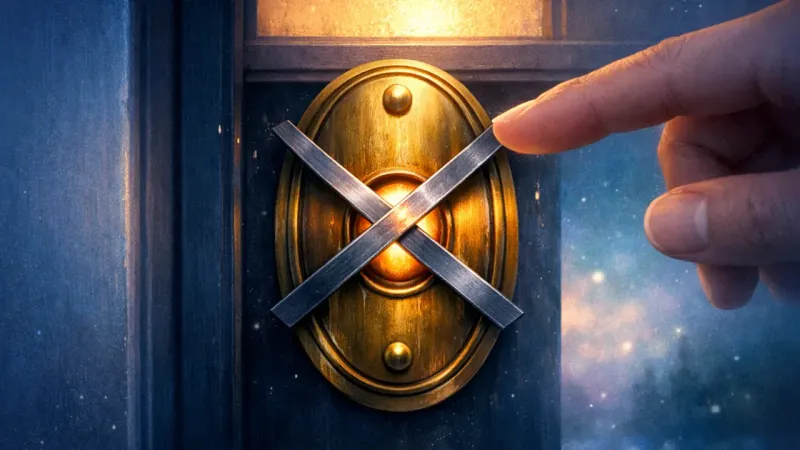
Choosing the Compass: The Celtic Cross · Context Edition
I’m Laila Hoshino. Most days, I’m a tour guide under a planetarium dome in Tokyo, translating celestial motion into something you can feel in your ribs—why the Moon looks closer some nights, why the same stars return like familiar punctuation. I’m also a researcher who lives with one foot in astrophysics and one foot in tarot: two languages for pattern, timing, and the stories we tell when we don’t have full data.
For Taylor, I didn’t need anything theatrical. I needed something grounding.
“Before we pull cards,” I said, “let’s do my pre-meeting 3-minute cosmic breathing. It’s not mystical—it’s nervous-system housekeeping.”
I had them place one hand on their chest and one on their stomach and breathe like they were fogging up a cold window, slow and steady. On my side of the screen, the planetarium office was dim; the star projector sat behind me like a silent witness. The calm, in both rooms, wasn’t dramatic. It was functional—like turning down the brightness so you can actually read what’s on the page.
“Today,” I told them (and you, because this matters for how tarot works in real life), “we’ll use a spread called Celtic Cross · Context Edition.”
The reason is simple: this isn’t just a yes/no RSVP. It’s a present dilemma shaped by a past emotional imprint, with a root-level driver underneath the logic, and then—most importantly—an integration plan. The classic Celtic Cross already does that. This ‘Context Edition’ just refines two positions so the reading stays practical: position 5 becomes ‘what you want this milestone to represent’ (values behind the choice), and position 10 becomes ‘most aligned next step’ (not a foretold outcome).
“We’ll start with the center,” I said. “Card 1 shows the present pattern—what RSVP paralysis looks like in real time. Card 2 crosses it: what’s actively complicating the decision. And later, the top-right card—position 10—will tell us how to move forward in a self-trusting way. Not with certainty. With structure.”
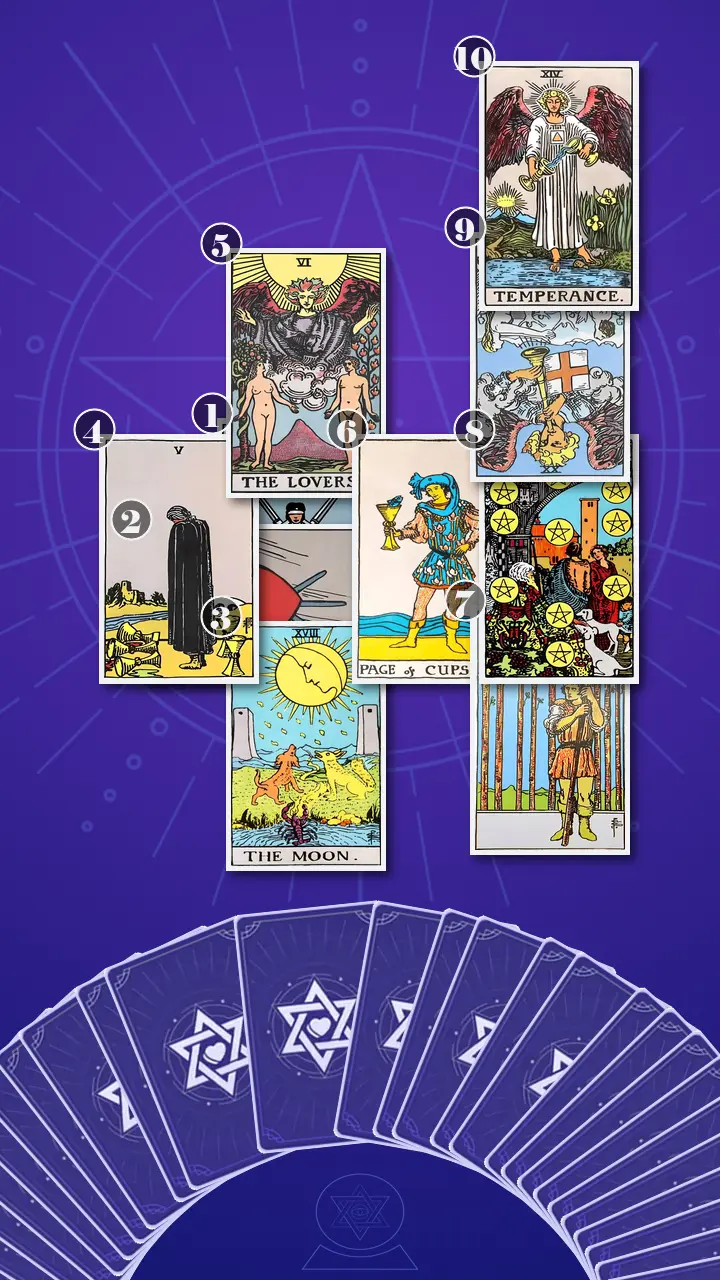
Reading the Map: From Phone-Glow Air to Moonlit Water
Position 1: The Micro-Moment You Freeze
“Now turning over,” I said, “is the card representing Present behavior pattern around the yes/no—how decision paralysis shows up in real time.”
Two of Swords, upright.
I didn’t have to reach for symbolism; Taylor was already living inside it. “This is the WhatsApp ‘typing… deleting…’ loop,” I said. “A blindfolded kind of protection. You keep the conversation neutral by delaying the reply, because choosing feels like exposing your heart to consequences.”
The energy here is blockage: not a lack of intelligence, not a lack of desire—an overactive self-protection reflex. The Two of Swords doesn’t say, “You don’t know what you want.” It says, “You know what you want, and you’re trying to prevent something by not moving.”
I leaned forward a little. “Delay feels like control, but it quietly makes the decision heavier.”
Taylor surprised me—an unexpected reaction right on cue. They let out a short, bitter little laugh and looked down at their phone. “That’s…,” they said, and the laugh became a wince. “That’s too accurate. It’s almost rude.”
“It can feel that way,” I said. “But it’s not here to shame you. It’s naming the loop so we can change it.”
Position 2: What’s Crossing the Decision
“Now turning over is the card representing What’s actively complicating the RSVP—the breakup residue pressing on the decision.”
Three of Swords, reversed.
“This is heartbreak that’s healing,” I said, “but not fully integrated. Not a fresh injury—more like a scar that still pulls when you reach for something.”
And here’s the modern-life scenario, exactly as it shows up: you can function all day, but the moment a relationship milestone appears, the old breakup memory spikes and the body reacts before the mind can catch up.
I described the pattern back to them in the simplest inner monologue I know—the one that sounds logical while it’s trapping you: “If I answer now, I’m naive. If I wait, I look weird. If I choose, I can be wrong.”
That’s Air energy in excess—the mind drafting and redrafting reality like it’s a document that can be perfected. It creates short-term relief (“I haven’t stepped into danger yet”), but long-term cost: the relationship starts to feel tense because the decision turns into a high-stakes referendum.
Taylor’s face did what the echo promised: a quiet wince, then a relieved exhale. Their shoulders dropped a fraction, like something finally had a name.
“I hate that I’m still letting my ex write the rules in my current relationship,” they said.
“Old heartbreak will volunteer to drive—unless you take the wheel gently,” I replied. “Not by forcing yourself to be ‘over it,’ but by acknowledging the tenderness and choosing your pace on purpose.”
Position 3: The Subconscious Driver Under the Logic
“Now turning over is the card representing Subconscious driver—what your nervous system is assuming is true beneath the logic.”
The Moon, upright.
The Moon is the card of the unknown—of projection, uncertainty, and old emotional material that fills gaps when we don’t have full information. In modern life, it’s like doom-scrolling your own imagination: your mind autoplays worst-case Instagram Stories you didn’t even post.
“When you don’t know what the parents will be like,” I said, “your brain builds a horror trailer out of an ordinary dinner.”
I asked them to do a split-screen—feelings vs facts.
Facts: There is an invite. Your partner is being consistent. Saturday is free.
Feelings/imagination: You’re being judged. You’ll be trapped. One awkward moment will flip into a breakup repeat.
The Moon’s energy is deficiency of clear light. Not “you’re wrong.” More: you’re navigating a night Tube platform where the shadows look louder than they are until you step closer.
Taylor paused; their eyes unfocused for a second in that specific way that means something slid into place behind the forehead. “So…” they said slowly, “am I reacting to the invite—or to a familiar feeling?”
“Exactly,” I said. “That question is your lantern.”
Position 4: The Breakup Imprint Still in the Room
“Now turning over is the card representing Recent past emotional imprint—what still colors current milestones.”
Five of Cups, upright.
“This is grief with selective attention,” I said. “Not melodrama. More like your mind keeps replaying the breakup’s ‘evidence’ and misses the quieter evidence that this partner is showing up differently.”
The Five of Cups shows what was spilled—and it also shows what’s still standing behind you. That matters here because meeting the parents isn’t only about parents. It’s about trust, dignity, and the future you pictured last time—and lost.
The energy is imbalance: too much weight on loss, not enough room for present-day possibility. It’s the difference between remembering and reliving.
Taylor swallowed, jaw working once like they were trying to undo a knot. “I keep seeing the last breakup like a trailer,” they admitted. “Like, every time something feels ‘big.’”
As they said it, I noticed the environment in my own room—my screen reflecting the planetarium’s starfield wallpaper. Even in dim light, you can mistake glitter for depth. The cards were doing the same thing: showing how the past can make everything look more cosmic than it is.
Position 5: What You Want This Milestone to Mean
“Now turning over is the card representing Conscious desire—what you want this invite to represent at your best.”
The Lovers, upright.
The Lovers is not just romance. It’s values-based choice. It says: “Choose in the light.” Clear communication instead of hidden tests. Alignment instead of performance.
I watched Taylor’s posture change in real time—the echo we wanted. Shoulders softened. Their face stopped bracing for impact. “So it’s not ‘what do they think of me,’” they said, almost surprised, “it’s ‘what do I value and want to build.’”
“Yes,” I said. “Swap ‘family dinner = performance review’ with ‘family dinner = values check.’”
Then I gave them something speakable—London dating life, not a therapy essay: “You could say to your partner, ‘I want to do this in a way that feels good for us. Can we talk through what Saturday actually looks like?’”
The Lovers’ energy is balance: honesty with desire, not desire swallowed by fear-management.
Position 6: The Near-Term Emotional Terrain
“Now turning over is the card representing Near-term unfolding—what’s likely to happen emotionally if you stay with honesty and curiosity.”
Page of Cups, upright.
“This is a gentle invitation,” I said. “Not a final exam.”
In modern terms: the next phase is less ‘strategy’ and more sincere presence. The Page holds the cup out and gets surprised—by warmth, by a small moment of connection, by realizing you can be nervous and still show up.
The energy is availability—not overexposure. It’s that soft, doable kind of openness.
Taylor’s mouth lifted at one corner. “That would be… nice,” they said, like they were letting themselves consider the possibility of something going well without trying to guarantee it.
Position 7: Your Inner Stance—Wounded, Still Standing
“Now turning over is the card representing Self-position—how you’re showing up internally: guardedness, boundaries, readiness.”
Nine of Wands, upright.
“This is resilience,” I said, “and also the body memory of ‘I’ve been hurt before, so I brace.’”
The energy here is protective strength—useful, earned. The question is whether it’s acting like a seatbelt (supporting movement) or like a wall (preventing connection).
Taylor nodded too quickly, like they’d been waiting for permission to not be ‘chill.’ “I’ve been telling myself I’m being mature by not making a fuss,” they said. “But it’s… exhausting.”
“It makes sense,” I said. “Your system is trying to prevent being blindsided again.”
Position 8: The Room You’re Walking Into
“Now turning over is the card representing External context—the family system vibe and the social reality of meeting parents.”
Ten of Pentacles, upright.
“This is the ‘loaded’ part,” I said. “Meeting parents can carry long-term symbolism, even if your partner is casual about it.”
In modern life: it’s not just ‘Will they like me?’ It’s ‘Do I fit into this whole world, and what does fitting cost?’
The energy is structure. Family culture, tradition, the unspoken rules of someone else’s household. The Ten of Pentacles is an archway—a threshold.
“This is why it’s not silly that you’re activated,” I added. “You’re not weak. You’re walking into a system.”
Position 9: The Performance-Review Fear
“Now turning over is the card representing Hope/fear knot—fear of being judged and the wish for a clean new chapter.”
Judgement, reversed.
Taylor let out a half-laugh—more cringe than humor—and covered their face for a second with their palm. “Oh no,” they said. “That’s literally it.”
“Judgement reversed,” I explained, “is turning dinner into a performance review with invisible KPIs.”
I named it plainly, because shame dissolves faster when it’s specific: “You picture their questions like interrogation. You start pre-defending yourself in your head as if you’re already on trial. ‘Prove you belong.’”
“A dinner invite isn’t a verdict—unless you make it one,” I said, and watched Taylor exhale like they’d been holding their breath for days.
The energy here is self-judgment in excess. External judgment—what their parents think—is real but limited. Self-judgment—what you decide it means about your worth—can be endless.
When Temperance Poured Between Two Cups
When I reached for the final card, the planetarium office felt even quieter. Not spooky—just focused. Like the moment before the lights dim and the first star appears, and everyone in the dome instinctively stops rustling their popcorn.
“Now turning over,” I said, “is the card representing Integration and most aligned next step—how to move forward in a self-trusting way.”
Temperance, upright.
Temperance is pacing. Blending. One foot on land, one in water—feelings honored, then translated into practical structure.
Setup: You know that moment: your partner texts “My parents would love to meet you—are you free Saturday?” and before you even reply, your stomach does the little drop like you just missed a step on the Tube. You’re stuck trying to think your way into certainty, because certainty feels like the only protection against being blindsided again.
Delivery:
Stop treating the dinner like a verdict; start treating it like a slow pour—blend honesty with structure, cup to cup, step by step.
I let the sentence sit there for a beat, the way I let silence sit under a night sky tour when people finally notice the Milky Way isn’t a photo—it’s texture.
Reinforcement: Taylor’s reaction came in layers. First: a physiological freeze—breath catching, their thumb hovering above the phone like it had suddenly become heavy. Second: cognitive seepage—their eyes went slightly unfocused, as if their brain replayed every “big step” moment from the last relationship and compared it to this one. Third: emotion—an exhale that sounded like the body letting go before the mind fully agreed. Their shoulders sank, not dramatically, but with the quiet relief of something unclenching.
Then the unexpected complexity: a flash of resistance. “But if I do that,” they said, voice sharper for a second, “doesn’t it mean I’ve been doing it wrong? Like… I made it a verdict.”
I nodded. “It means you did what your nervous system learned to do. That’s not a moral failure. It’s old software.”
This is where I used my signature lens—what I call Dark Matter Detection. In astrophysics, dark matter isn’t visible, but you can see its pull by what it does to everything around it. In your life, the ‘dark matter’ is the overlooked factor that’s been steering your choices from the background.
“Your dark matter,” I told Taylor, “is the assumption that if you don’t predict every risk, you’ll be blindsided. That assumption is invisible, but it’s been bending your whole orbit—turning a warm invite into a threat-management project.”
“Temperance doesn’t ask you to leap,” I continued. “It asks you to adjust your trajectory.”
I thought of my other tool—Gravity Assist Simulation. A spacecraft doesn’t ‘muscle’ its way across the solar system. It uses a measured swing-by to change direction with less fuel. “A paced yes with one clear boundary,” I said, “is a gravity assist. It changes the relationship’s trajectory without you having to white-knuckle the entire dinner.”
Then I asked, exactly as I always do at the hinge-point: “Now, with this new perspective, think back to last week. Was there a moment where this insight—paced yes, slow pour—would have changed how you felt?”
Taylor blinked, eyes wet but not falling apart. “Yeah,” they said quietly. “When I opened the calendar the third time. I could’ve just… asked for a time limit. Instead I tried to get certainty from the empty Saturday box.”
“That,” I said, “is the shift—from bracing and replaying to grounded self-trust in a chosen pace. You don’t need a fearless yes. You need a paced yes.”
The Paced-Yes Plan: Turning ‘Courtroom Brain’ Into Kitchen-Light Clarity
When we zoomed back out, the whole reading made one coherent story.
The center of the spread was Air—Swords energy: your mind trying to keep you safe by drafting and delaying. The crossing card was heartbreak still healing, which explained why the RSVP freeze felt so intense. Underneath it all, The Moon showed the real engine: uncertainty triggering old alarm, feelings masquerading as facts. The Lovers reminded you what you actually want—a values-led choice in the light. And the staff on the right made the real-world context clear: you’re a resilient person stepping into a family system (Ten of Pentacles) while fighting the fear of evaluation (Judgement reversed). Temperance then offered the medicine: integration through pacing and structure.
Your cognitive blind spot—the thing you couldn’t see from inside the spiral—was this: you were treating certainty as the price of admission. As if you had to eliminate risk before you were allowed to respond.
The transformation direction was simpler and kinder: from “I need certainty before I say yes” to “I can say a paced yes with clear boundaries, and learn from what actually happens.”
To make it concrete, I offered a plan using my favorite navigation metaphor (my clients tease me that I can’t go ten minutes without turning life into interstellar travel). “We’re not choosing a forever destination,” I said. “We’re choosing the next burn.”
Here are the next steps I gave Taylor—actionable advice that fits real life, not a perfect world:
- Send the two-sentence honest RSVPOpen the WhatsApp thread and send: “I’d like to meet them. I get a bit tender around big relationship steps—can we chat for 5 minutes about what Saturday looks like?”If your first thought is “cringe / too vulnerable,” send it anyway as a pacing text, not a whole emotional thesis. You’re collaborating, not asking permission.
- Create one concrete container (your Temperance ‘slow pour’)Before you commit, ask for a time boundary: “Could we aim for a couple of hours and then see how we feel?” Add one support (check-in halfway, or permission to step outside for air).Boundaries aren’t a wall; they’re the seatbelt that lets you show up. An exit plan isn’t pessimism—it’s nervous-system support.
- Do the 3-and-3 ‘constellation alignment’ checkIn your Notes app, write two mini constellations: (1) 3 things you control (your timing, your boundaries, your tone). (2) 3 things you don’t (their first impressions, their family dynamics, their preferences). Choose your RSVP based only on constellation (1).If you catch yourself courtroom-braining it, don’t argue with the thoughts. Redirect to the controllables list like it’s a saved map pin.
And because sudden shifts are what Taylor feared most, I added one more piece from my toolbox—Spacecraft Attitude Adjustment. “If the vibe gets weird,” I said, “we don’t panic. We reorient.” We chose a simple line Taylor could use if overwhelmed: “I’m going to step outside for a quick minute—back in a sec.” No drama. Just a small correction mid-flight.
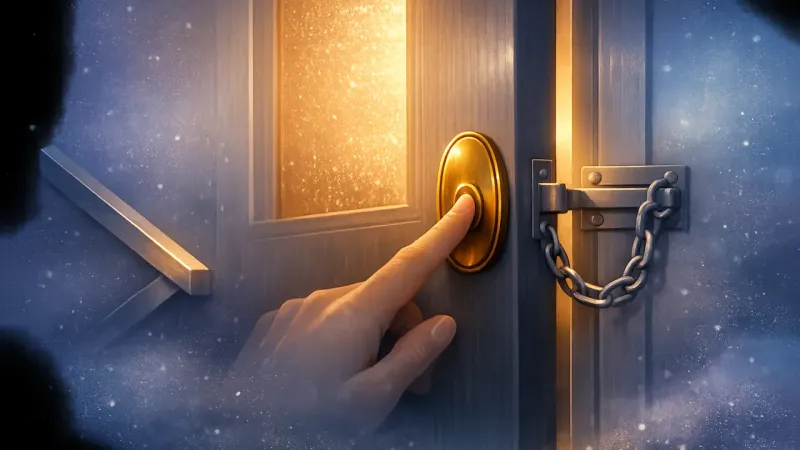
A Week Later: Ownership, Not Certainty
Six days later, I got a message from Taylor. No long recap, no over-analysis—just a screenshot of the sent text.
“I sent it,” they wrote. “My partner replied, ‘Of course. Thank you for telling me.’ We agreed on two hours and a check-in.”
Then another line: “I slept a full night. This morning I still thought, ‘What if I’m wrong?’—but it didn’t swallow me. I made tea and didn’t reopen the calendar three times.”
That’s what clarity looks like most often. Not fireworks. Not certainty. A quieter body. A choice made with structure. The old breakup script still exists, but it doesn’t get to hold the pen alone.
When an invite is warm on the surface but your chest tightens anyway, it’s not because you don’t care—it’s because part of you still thinks closeness is where the floor drops out.
If you let yourself give a ‘paced yes’—one that includes a boundary you actually believe in—what would that boundary be, just for this one dinner?