Red Comments Felt Like a Verdict, Then Revision Became a Craft
The 10:38 p.m. Google Doc Spiral
When Jordan (name changed for privacy) joined my Shadow Spread session, I said the thing I already suspected she needed to hear first: if one professor note can make an otherwise capable 24-year-old feel twelve again on a Wednesday night, that is not her being dramatic; that is performance feedback landing like a verdict on intelligence.
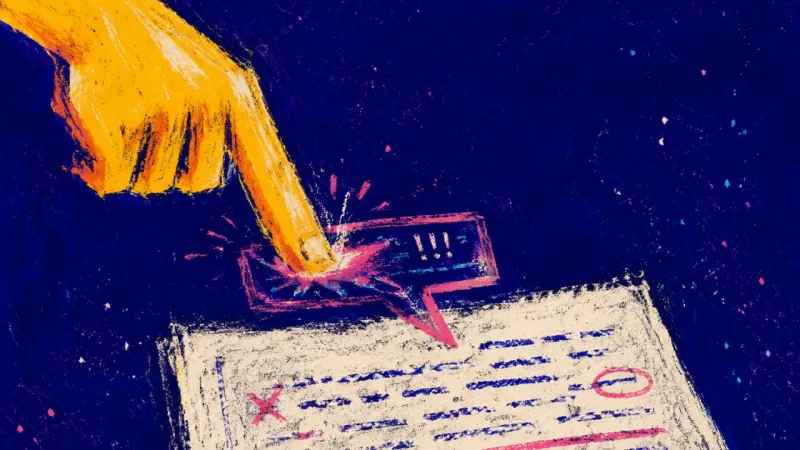
She was calling from a basement apartment near St. Clair West. In the reflected light of her screen, I could still see the Google Doc open in suggesting mode behind our video window, lit up in red. A mug of tea sat beside the laptop gone cold; the radiator kept hissing under the window; once, while she was talking, she clicked the same comment bubble twice without meaning to.
“I know it’s just feedback,” she said, rubbing at her throat, “so why does it feel like public humiliation?”
I had heard versions of that question from editors, junior analysts, founders, and graduate students, but the grad-school version has its own specific sting. She wanted to improve the essay and be taken seriously. At the exact same time, the red comments made part of her fear they were exposing her as a dumb kid again. The comments were on the draft, but her body was reacting like the grade was on her.
I could see the shame in her before she named it: the hot face, the tightened jaw, the stomach-drop that makes a laptop screen feel less like a tool and more like a tiny interrogation lamp. She told me the usual sequence. She opened the doc. She clicked the sharpest note first. She reread it three or four times. Then she escaped into Zotero, formatting, a fresh Notion list, inbox checks—anything that let her feel productive without touching the actual paragraph.
I nodded. “The doc got edited. Your worth did not,” I told her. “And tonight, I don’t want to force you past that feeling. I want to map it. Let’s make this a journey to clarity instead of another night of tracked changes anxiety.”

Choosing the Ladder: The Shadow Spread for Feedback Shame
I asked Jordan to put both feet on the floor, take one slow breath, and say the question plainly: “Why do comments on my essay make me feel stupid again?” Then I shuffled slowly—not as theater, but as a way of giving the nervous system a clean transition from spiral to observation.
I told her I was using The Shadow Spread, a tarot spread I reach for when one external trigger lights up a much older wound. I read tarot the way I once read risk models on Wall Street: not to hand down a mystical verdict, but to surface the hidden variable distorting the decision in front of us. Here, the issue was not the essay’s timeline. It was the trigger-to-wound-to-reframe sequence happening in under ninety seconds every time she opened the file.
That is why I did not use a bigger spread. A ten-card Celtic Cross would have given us more scenery and less precision. The Shadow Spread keeps the logic tight. The first card shows the conscious trigger—the criticism spiral in the immediate contact zone between Jordan and the red comments. The second drops beneath it to the older shame story. The third reveals the antidote—the quality that brings her adult competence back online. The fourth grounds everything in behavior, so we leave with actionable advice instead of a pretty insight and no next steps.
I laid the cards in a vertical line. I have always liked the architecture of this spread. It feels like lowering a ladder into an old wound and climbing back out with a tool in hand.

Reading the Red Weather
Position 1: The Loop That Calls Itself “Preparation”
I turned the first card and named its job before its face. “This position shows the presenting problem from the diagnosis—how the visible red comments trigger the immediate freeze, defensiveness, and over-reading loop.”
It was the Page of Swords, in reversed position.
I wasn’t surprised. In modern life, this is the card of opening a tracked-changes essay at 11 p.m., clicking the comment that sounds sharpest, rereading it several times, and starting a full defense in your head before you have even skimmed the rest of the page. Then you detour into citation formatting, headings, or sentence-level tweaks because line-editing feels safer than facing the actual request. The raised sword becomes the preemptive rebuttal. The windblown clouds are nervous-system noise. The sideways stance is what happens when you approach the document already braced for attack.
“This is blocked Air,” I told her. “Too much mental speed, not enough clean sorting. The mind reads tone as threat before it has actually processed the information. So the session turns into fragments: What did they mean by that? That’s not fair. Maybe they’re right. I should fix the citations first.”
Jordan’s reaction came in three quick beats. First her breath paused. Then her fingers hovered over the mug as if she had forgotten what she was reaching for. Then she let out a small, bitter laugh. “Okay,” she said. “That’s accurate enough to be rude.”
I smiled. “Good. That means the card found the loop, not your character. What if the harshest note is the loudest one, not the truest one?” I pointed back to the card. “Page of Swords reversed often shows me a mind trying to protect intelligence so quickly that it cannot yet receive usable signal. That is why you can spend twenty-five minutes fixing headings and still feel like you never actually started.”
Position 2: When One Comment Reopens an Old File
I turned the second card. “This position reveals the deeper mechanism beneath the reaction—the underlying fear and old self-judging story that make ordinary feedback feel like humiliation.”
Judgement, in reversed position.
Right as I said the name, a streetcar bell drifted faintly through her window and into the call. I remember noticing how perfectly it echoed the card’s trumpet: a sound that calls something buried back to the surface. That is how this card works here. A margin note like “needs stronger analysis” stops being about one paragraph and becomes a time-travel device. Suddenly Jordan is not just a graduate student revising a draft; she is an older school-age version of herself being summoned back into the room to be graded again.
“This is the real blockage,” I said. “When feedback hits an old bruise, the body reads information as humiliation. Judgement reversed turns one present-day note into a full internal verdict. Hot face. Tight throat. Sinking stomach. And then the brain pulls an archived shame file and labels it current issue.”
I felt a brief flash from my old life then: a compliance memo returned on the trading floor with so much red on it the page looked almost violent. What stayed with me was not the markup itself, but how many smart people mispriced themselves off a single redlined document. That same valuation error was sitting here in softer clothes and a grad-school apartment.
Jordan went quiet. Her shoulders had climbed toward her ears without her noticing. “The oldest sentence?” she asked, after a moment. “Probably, ‘If I were actually smart, I wouldn’t need this many notes.’”
“There it is,” I said gently. “That sentence is older than this draft. The professor did not write it. The comment woke it up.”
When Strength Placed a Hand on the Lion
Position 3: The Antidote That Keeps the Adult Writer in the Room
When I turned the third card, the atmosphere changed. Even through the screen, I felt it. The radiator had gone quiet between bursts, and for a second the whole call seemed to hold still around the next image. This was the core of the reading—the emotional turning point.
“This position identifies the transformation lever,” I told her. “The inner quality that interrupts shame regression and restores self-trust in the moment of critique.”
The card was Strength, upright.
I described the picture first: the gentle hand on the lion, the infinity symbol above the woman’s head, the calm face that is not trying to dominate fear, only to stay connected in its presence. “In real life,” I said, “this is the moment the shame spike hits and you keep your body in the room anyway—feet on the floor, jaw unclenched, hand on the desk, one sentence that separates self from work. This is balanced fire. Not aggression. Not force. Courage regulated enough to stay present.”
Jordan was still trapped in the familiar sequence I already knew: open the document late, click the sharpest comment first, feel the heat rise in her face, then vanish into tabs, citations, and tiny tasks because touching the real paragraph feels way too exposing.
You do not need to fight the red ink like a threat; place a steady hand on the lion of shame and let revision become an act of strength.
I let the sentence sit between us for a breath. Then I gave it the language I use from my own toolbox. “This is what I call Human Capital Valuation,” I said. “You are valuing your entire intelligence off one marked-up asset. That is bad pricing. A draft is not your full market cap. A marked-up draft is not a leaked IQ score. It is one work sample in motion.”
She didn’t soften immediately. First she went very still, so still that even her blinking slowed. Then her eyes lost focus in that way people do when they are replaying something from a week ago—the library, the train, the midnight document, all of it overlapping. Then the resistance came. “But if that’s true,” she said, and there was actual anger in it, “then I have been turning every comment into a crisis for no reason.”
“Not for no reason,” I said. “For protection. Just outdated protection.”
Her mouth tightened, then trembled once. I watched the reaction move through her in layers: the jaw unclenching first, the shoulders dropping half an inch, the throat working as if the body were relearning how to swallow. There was relief in it, but also that strange, almost dizzy feeling that comes when a heavy pattern loosens and leaves responsibility behind. If the comments are not a verdict, then she cannot outsource the session to panic anymore; she has to stay and practice.
“Think back to last week,” I said quietly. “Was there a moment when this lens would have changed how you felt?”
She nodded before she answered. “On the TTC,” she said. “I opened the doc on my phone and my whole body locked. If I’d just said, ‘This note is about the paragraph,’ I think I might have waited until I got somewhere stable instead of arguing with it for twenty minutes in my head.”
“Exactly,” I told her. “That is the first step from shame-triggered defensiveness and freeze to grounded competence under evaluation. Strength is not about becoming numb to criticism. It is about being kind and steady enough that the adult writer can stay in the chair.”
Position 4: The Workbench, Not the Witness Stand
I turned the final card. “This position grounds the reading in behavior by showing the next workable practice that turns feedback into skill-building instead of self-judgment.”
It was the Eight of Pentacles, upright.
“This is Earth,” I said. “Grounded, repeatable, gloriously un-dramatic.” In modern terms, it is the difference between opening seven tabs and re-deciding your identity with every comment, versus working the draft like a craftsperson: one pass for clarify, one for evidence, one for style, one paragraph at a time. The workbench in the card is a contained revision system. The repeated pentacles are reps.
I could see recognition land again. “So not ‘fix the whole essay tonight,’” she said, “more like… move one ticket across the board?”
“Exactly,” I said. “Kanban, not catastrophe. Revision is a craft loop, not a courtroom. Eight of Pentacles says competence grows through clean repetition, not through one heroic session where you finally prove you belong in grad school forever.”
Her expression changed there. Not euphoric. Just steadier. The kind of steadiness I trust more.
From Courtroom to Craft
Once all four cards were on the table, the story was clear. The Page of Swords reversed showed me the first contact zone: words feel weaponized, so Jordan’s mind rushes into rebuttal, tone-decoding, and safe side tasks. Judgement reversed showed me why the reaction feels so disproportionately big: one present-day comment wakes an older self-verdict, and the body treats revision like status loss. Strength interrupted that chain by replacing self-attack with steady contact. Eight of Pentacles finished the job by turning insight into process.
I told her the blind spot was not laziness, lack of discipline, or even ordinary procrastination. The blind spot was that she kept treating feedback as evidence about self-worth, then blaming herself for not revising efficiently under emotional threat. The direction of change was simpler and harder: separate the draft from the self, then treat revision as a learnable craft. That is how finding clarity appears here—not as perfect confidence, but as enough regulation to do the next clean thing.
I gave her a plan I knew she could actually use.
- The Opening Bell ResetBefore you open the next marked-up draft, do it at a desk, library carrel, or quiet campus corner—not on the TTC and not at midnight if you are already fried. Use my trading-floor opening simulation for 20 seconds: both feet on the floor, one hand on the desk or mug, shoulders down, and say out loud, “This comment is on the paragraph, not on my intelligence.”If it feels awkward, good. Keep it short anyway. Lowest-bar version: one breath, feet down, one separating sentence.
- The One-Page Comment SortSet an 8-minute timer. On one printed page or one screen view, label each note only as “clarify,” “evidence,” or “style” before you change any wording. If one comment feels sharp, star it and keep sorting the rest of the page first.No mental courtroom until the sorting pass is done. If your system spikes, stop after five comments and count that as a completed rep.
- The Adult RewriteTake the single comment that stings most and rewrite it in neutral language in a separate note, as if it were addressed to the paragraph rather than to you. Under it, write the oldest sentence it wakes up, then add one adult counter-sentence such as, “Needing revision is part of writing in grad school.”Do this on paper or in Notes, not inside the draft. The goal is not to solve your whole history with criticism—just to separate the current note from the old story.
“You do not have to feel confident to make the next clean edit,” I reminded her. “You only have to stop asking the session to certify your worth before it begins.”
A Week Later, the Paragraph Moved
A week later, Jordan sent me a message from Robarts. Not a breakthrough monologue. Just this: “Did the one-page sort. Labeled eleven comments. Made the first real edit before opening Zotero. Felt weirdly calm.”
That was the quiet proof. Not that the shame had vanished. Not that she would never again feel that hot-face, tight-throat drop when a marked-up draft came back. It was that she had stayed in the room long enough for skill to outrank panic. That is what I use The Shadow Spread for: not fortune-telling, but helping someone see the machinery clearly enough to choose differently inside it.
She told me the next morning she still woke with the thought, What if the revisions still aren’t enough? Then she laughed, put both feet on the floor, and opened page two.
When one note can make your face burn, your throat close, and your whole body feel sorted into “smart enough” or “not,” of course revision stops feeling like revision. That does not mean the comment is telling the truth about you.
If the next red comment felt like part of your craft rather than a test of your worth, after one lion-hand pause, what is the first small edit—the first pentacle—you would make?