A Lease Email, Three Open Tabs, and the Talk That Split the Question

When a Lease Deadline Starts Impersonating Intimacy
When Jordan (name changed for privacy) sat across from me, I recognized the pattern before she finished her first sentence. If you are a late-20s office worker in a high-rent city who can build three versions of a cohabitation budget but still has not sent the can-we-talk-about-living-together text after a lease renewal email, I know how deceptively practical that kind of paralysis can look from the outside.
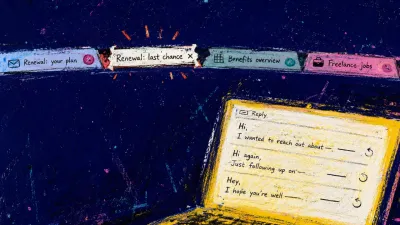
She told me about 12:41 p.m. in the PATH food court in downtown Toronto: a too-cold salad, fluorescent lights buzzing overhead, a Slack ping flashing on her screen, and her thumb toggling between a lease renewal email, an Apple Notes page titled move in?, and a Rentals.ca tab she still had not sent to anyone. Her phone felt warm in her palm. Her shoulders had climbed toward her ears without her noticing. What looked like lunch-break life admin was really two questions fused into one: did she actually want this next step with her partner, or did she just need the pressure to stop?
Then she said the line that put the whole reading on its axis: I cannot tell if this is intimacy or just timing. Underneath that was the real contradiction—moving in now versus the fear that her lease ending was creating panic rather than real readiness. I could almost see the sensation she described: anxiety sitting in her body like a streetcar brake stuck half-on, everything still moving but nothing releasing. Tight chest. Shallow breathing. A knot in the stomach whenever rent numbers or housing emails came up.
I answered her the way I always do when someone is trying to reverse-engineer their feelings from a spreadsheet. I told her there was nothing silly or dramatic about what she was feeling. In a city where rent can make every housing decision feel symbolic, it makes sense when love and logistics start blurring together. But blur is not truth. I told her I would not use the cards to make the decision for her; I would use them to separate the fused questions so she could hear herself again. I smiled and said, Let me help you draw a map for the fog. Our journey today is not about forcing certainty. It is about finding clarity.

Choosing the Compass: The Decision Cross for Move-In Clarity
I asked Jordan to take one slow breath, not as a mystical performance, but as a way to give her nervous system somewhere to land. Then I shuffled while she held the question in plain, human language: should we move in now, or am I panicking because my lease is up?
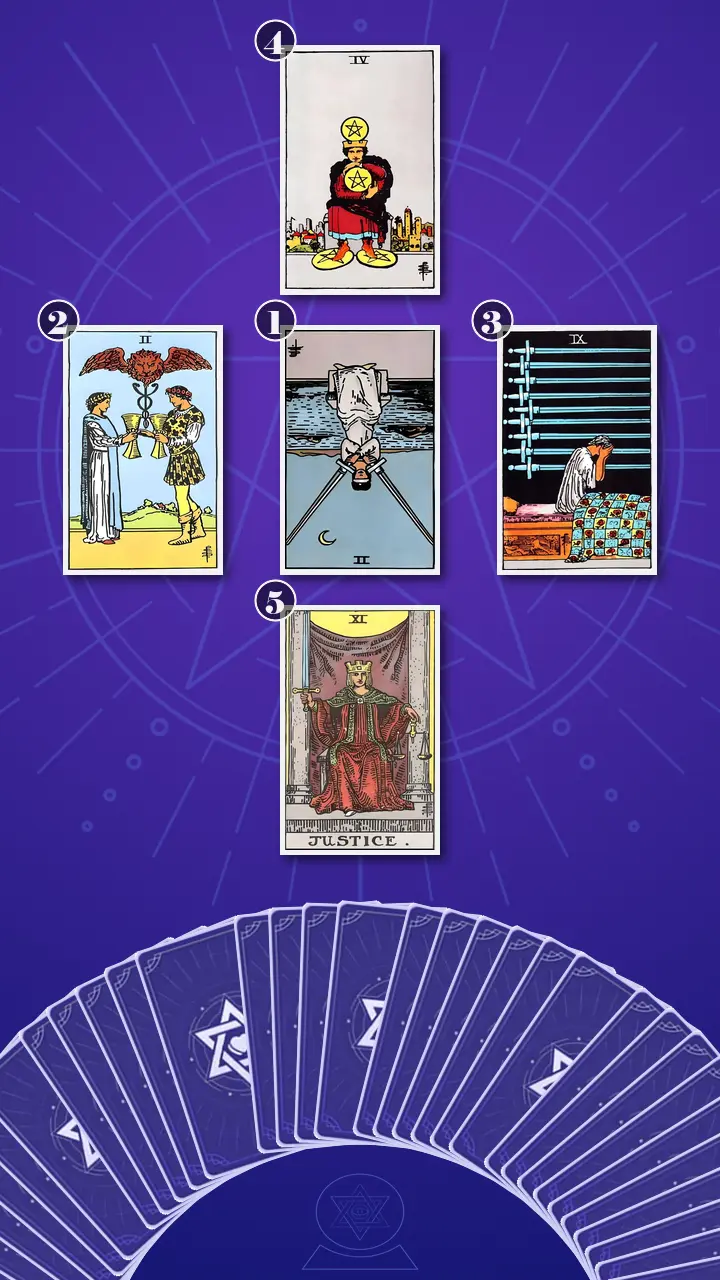
I chose a five-card Decision Cross, the tarot spread I reach for when someone is mixing rent panic with relationship readiness. This is how tarot works best in a situation like this: not as prediction, but as structured contrast. The spread is especially useful when one choice has become tangled with deadlines, trade-offs, and fear of choosing for the wrong reason. The center card shows the visible knot. The left and right cards show what is genuinely supportive versus what is reactive or distorting. The card above reveals the hidden influence shaping both sides. The card below gives the grounding principle—the standard sturdy enough to hold the whole decision.
I told her what I was watching for. The first card would name the present stall. Another would show what in the relationship actually supports living together, so we would not confuse real affection with pure urgency. Another would expose the panic amplifier. Then I wanted the upper card to tell me what hidden need for safety and control was hanging over the whole question, and the final card to show us what kind of choice could still make sense in daylight, after the clock stopped shouting.
Reading the Tabs, Not Just the Cards
Position 1: The Stall That Looks Like Research
Now I turned over the card representing the observable stall at the heart of the dilemma. The card was the Two of Swords, reversed.
I told Jordan the image fit her life almost too neatly: the lease portal open, one half-drafted text to her partner sitting unsent, three rental tabs open, and a Notes app list she kept editing instead of finishing. She was technically working on the decision, but the real function of all that activity was avoidance dressed up as thoroughness. The energy here was blocked and overloaded Air. Too much thought, too little separation. It was like trying to use one spreadsheet cell for three different numbers and wondering why the whole sheet kept breaking. The blindfold on the card became the blur between separate questions, and the crossed swords at the chest felt exactly like the body brace she had been carrying around.
I told her the card did not accuse her of being irrational. It showed a nervous system trying to prevent exposure by keeping every option half-open. I even said it had a bit of a Severance feeling to it—the competent admin self kept functioning while the emotional self absorbed the real weight, and the split itself had become the problem. Then I asked her, when you open the lease email, which question are you actually trying to answer first: are we ready, can I afford this, or I need this pressure to stop?
She gave a short laugh with a bitter edge. Her fingers froze on the paper cup she had been turning in circles, and then she looked down at the card as if it had called her out by name. Honestly? she said. All of them. I nodded and answered gently, Being unsure is not proof you should leave or proof you should move in. It means the question needs cleaner edges.
Position 2: The Part That Is Actually a Yes
Next I turned over the card representing what genuinely supports moving in, so we could distinguish real relational desire from deadline pressure. The card there was the Two of Cups, upright.
The room softened the moment I saw it. I described the scene she had already lived: a Saturday evening in her partner’s kitchen, groceries on the counter, the kettle clicking, onion hitting the pan, the apartment smelling warm and lived-in. They moved around each other easily. They made room for each other without performance. This card was balanced Water—mutuality, reciprocity, emotional reality. It told me the possible yes was not fake. Shared routines already worked in small, ordinary ways, and that mattered more than any romantic milestone script on TikTok ever could.
I told her the exchanged cups on the card were not about proving the relationship. They were about equal offering. Eye-level honesty. A version of closeness that is chosen, not extracted because rent is expensive. In modern relationship language, this was the evidence that the relationship itself had some real weight behind it. The question was not whether love existed. The question was whether love and timing were being asked to carry each other unfairly.
Jordan’s facial tension eased a little. I watched the muscles around her mouth unclench before she spoke. That is why this is so confusing, she said quietly. This actually does feel good. I told her I was glad she said that out loud, because the reading needed that truth in the room. Otherwise she would keep gaslighting herself into pretending it was all panic.
Position 3: The 3:07 a.m. Amplifier
Then I turned over the card representing the urgency amplifier—the panic, projection, and practical stress distorting the choice. The card was the Nine of Swords, upright.
I did not have to translate it very far. I told her this card was 3:07 a.m. in the dark, staring at the ceiling and running two opposite disaster movies at once: say yes and feel trapped, or say no and quietly damage a good relationship. Nothing new is actually happening in the room, but the nervous system reacts like a verdict has already arrived. This was excess Air. Thoughts outrunning facts. Imagined regret becoming louder than anything that had actually been said between two people in daylight.
I told her that the figure jolting upright beneath the row of swords looked exactly like the moment future shame starts masquerading as evidence. A neutral delay in a text reply feels meaningful. Old relationship memories get reopened and treated like warning labels. More rent math starts feeling like progress even when it is really just doom-refreshing the same internal app. Then I gave her the sentence I knew she needed right there: A loud deadline is not a clear answer.
Her shoulders rose, then dropped a fraction. First came the body reaction: a brief pause in her breathing. Then the cognitive one: her gaze shifted toward the window, slightly unfocused, as if she were replaying every midnight Google Sheet spiral at once. Only after that did the admission come. I keep thinking if I do enough budget math, I can prevent regret, she said. I just need one more data point. I answered her the way I would answer any smart person trapped in an Air loop: this is not intelligence versus stupidity. It is certainty versus exposure.
Position 4: The Grip Behind the Spiral
Then I turned over the card in the hidden position, the one uncovering the deeper mechanism beneath both the urge to rush and the urge to stall. The card above the center was the Four of Pentacles, upright.
The moment it appeared, I moved into one of my own diagnostic lenses, something I call Systemic Friction Auditing. After years of guiding people through both tarot and astrology, I have learned to strip away the illusion that more hustle can override every stuck season. Toronto rent is real friction. Scarcity is real friction. A lease deadline can absolutely flood a nervous system. But this card told me Jordan was not only trying to solve housing. She was trying to manufacture total safety—emotional safety, financial safety, privacy, reversibility, and zero regret—all in one move.
I pointed to the pentacle pressed over the heart and the ones fixed beneath the feet. I told her this was Earth in excess: useful structure turned clenched control. It was like holding the subway pole so hard your hand aches because the train might lurch. The city in the background on the card mattered to me too; it reminded me that the fear was not abstract. It was tied to a real housing environment. But real pressure had merged with a deeper fear: if she said yes for the wrong reason, she might feel trapped inside her own choice.
So I said the line as cleanly as I could: maybe what you are trying to secure is not the apartment. It is the right not to feel trapped inside your own yes.
That was the first real opening. Her reaction came in three waves. First, her fingers tightened around her phone so visibly that her knuckles paled. Then her eyes unfocused for a beat, as if some memory had replayed with the sound turned down. Finally she let out a long breath from much lower in her ribs than anything that had come before. That, she said, almost annoyed at how true it felt, is exactly it.
When Justice Sat Beneath the Cross
Position 5: The Standard That Survives Daylight
We turned over the final card, the one representing the guiding principle that could separate real readiness from scarcity-driven reaction and turn the whole thing into an honest next step. The card was Justice, upright. The room changed the way it sometimes does in a reading when the pattern suddenly stops hiding. Even the radiator’s faint ticking seemed to space itself out. Justice sat there with scales in one hand and a sword in the other, and I felt that clean internal click I always get when discernment enters the room.
This is where I used the lens I call Macro-Cycle Phase Identification. I track where someone is inside overlapping cycles because resistance often becomes kinder and clearer once I stop pretending every pressure belongs to the same orbit. Here, the lease was in a hard deadline cycle. The relationship was in a slower intimacy cycle. Jordan had been treating them as if they had to peak at the same moment or the whole thing meant something catastrophic. Justice said otherwise. It did not ask for speed. It asked for correct alignment.
Whenever I read Justice, my mind flashes to star charts spread across a desk late at night. If I plotted two planets without checking their houses, I could mistake proximity for compatibility. Human beings do this all the time too. A date on a lease is timing. It is not automatically truth. Justice was balanced Air at last—discernment refined, not frantic. The scales became two separate columns of evidence. The sword became one clean question at a time instead of ten spinning at once.
I looked at Jordan and named the exact psychological setup she was in. On her lunch break, with the lease email open, one thumb on apartment listings and a half-written text to her partner, it had honestly started to feel like one expiring lease was asking her to prove the entire relationship all at once. That pressure was real. It just was not the whole truth.
This is not a choice to make because the clock is loud; put love and logistics on Justice's scales, and let clear standards rather than panic cut the path.
I let the sentence sit in the air.
Her reaction did not come as immediate relief. First came stillness: her inhale stopped halfway, and her thumb hovered above the edge of her phone as if her body had forgotten what it was doing. Then came cognitive penetration: her gaze went soft and distant, replaying the PATH lunch break, the TTC notification, the late-night budget math, the unsent text, now rearranged into separate files instead of one impossible blur. Only then did emotion break through. Her mouth tightened. She gave one sharp exhale that carried frustration with it. But then was I just letting the deadline act like the judge? she asked, and there was a flash of anger in her voice—not at me, not at the card, but at how cornered she had felt in her own head.
I answered her softly and directly. No. It means you have been under pressure, and pressure is loud. That is different from being wrong. I watched her shoulders drop, not dramatically, just enough to change the whole line of her neck. People expect clarity to feel triumphant; often it feels stranger than that. There is relief, yes, but also a small dizzy vulnerability when the weight lifts and the choice becomes yours again. So I asked her the question I always ask when Justice lands this cleanly: with this new lens, can you think back to last week and tell me where this would have changed the feeling?
She pressed a hand lightly to her sternum, this time like she actually noticed her own body. Sunday night, she said immediately. I would have stopped treating the spreadsheet like it could answer whether I wanted a life with him. That was the turning point of the whole reading—not yes versus no, but the shift from deadline-driven panic and over-analysis to grounded discernment and steadier self-trust. I handed her the first small practice right there: take ten minutes and make two columns, relationship readiness and housing pressure. Write three facts under each. Then stop. No fixing tonight. She nodded in a way that told me the tool was finally small enough to be usable.
I added one final sentence because I wanted the lesson to land in her bones, not just her notes app: if love and logistics only work when they are blurred together, that blur is the problem.
The Two-Column Truth Check and the 72-Hour Orbital Sync
By then the narrative of the spread was unmistakable. The center card showed a mind trying to solve three different problems in one spreadsheet cell. The supportive card confirmed that the relationship itself contained genuine mutuality and ordinary tenderness. The complicating card showed how imagined regret had gotten louder than present-day facts. The hidden card named the real engine underneath both stalling and rushing: a fierce need for safety, privacy, control, and the right to change course if needed. Justice, sitting as the base, gave the transformation direction plainly: stop asking what ends the pressure fastest, and start asking what shared conditions would make living together feel stable, mutual, and chosen.
I told Jordan her blind spot was subtle but expensive. She had been treating preparation as if it were the same thing as readiness. More tabs, more pros-and-cons lists, more friend opinions, more budget math—all of it felt responsible enough to hide the fact that she was postponing the one thing that could actually clarify the decision: naming criteria and bringing them into one honest conversation. She had been asking information to provide a guarantee, and information cannot do that job.
So I gave her my own practical framework, The Orbital Sync Protocol. For the next 72 hours, I wanted her to pause forced action and stop trying to decide from the most activated version of herself. No midnight apartment spirals. No major conclusions after 9 p.m. No treating panic as proof. The goal is not the fastest relief. The goal is a choice you can still respect in daylight.
- The Two-Column Truth CheckWithin the next 24 hours, open one blank page and split it into two headings: relationship readiness and housing pressure. Under each one, list only concrete evidence—what already works between you, what the rent numbers actually are, what the deadline literally says. Cap the page at 10 bullets total.If you notice yourself adding nuance just to delay the point, stop at bullet 10 and close the app. This is for clarity, not for building a prettier avoidance ritual.
- The Deadline Detox ConversationSet one 30- to 45-minute conversation with your partner in a calm, neutral window—Saturday afternoon or a weekday after dinner, not late at night after a budget spiral. Bring three criteria you would need for cohabitation to feel stable and mutual: money, privacy, conflict repair, alone time, routines, or what happens if the arrangement stops working.If scheduling the talk feels bigger than the talk itself, send the smallest honest text first: Can we set aside 30 minutes this week to talk about what living together would need to feel good for both of us?
- Boundary-First Cohabitation FilterBefore any final yes or no, finish this sentence in your phone notes: For living together to feel chosen rather than trapping, I would need... Write at least three answers, and make one of them a non-negotiable around space or privacy.If shame tries to tell you these needs are unromantic, treat them as design requirements. You do not need a guarantee to ask for better criteria.

A Week Later, the Jaw Unclenched
Five days later, Jordan sent me a message that sounded calmer even through text. She had done the conversation. She had not forced a yes. She had not hidden inside logistics. She had asked what would make living together feel good for both of them, and the conversation had moved—really moved—through money, alone time, privacy, conflict, and fallback plans. The result was not a cinematic answer. It was something better: she felt less cornered.
A week after the reading, she told me she had slept through the night for the first time in a while. In the morning, the old thought still showed up—what if I get this wrong?—but this time she smiled, made coffee, and opened the two-column note instead of Rentals.ca. Clearer, not perfect. Steadier, not finished. That is the kind of proof I trust.
When I think back on that session, what stays with me is not whether the cards pushed her toward yes or no. They did not. They helped her separate love from logistics before panic voted for her. Once the questions had cleaner edges, the power returned to where it had always belonged: her own discernment.
If tonight an expiring lease is starting to sound like a verdict on your whole relationship, I want to say this plainly: of course your chest goes tight. You are not only choosing a place. You are trying to protect your freedom, your safety, and your right to change your mind.
If love and logistics sat in separate columns for one quiet minute beneath Justice’s scales, what would be the first condition that would make this feel chosen instead of rushed?
Every reading at AceTarot is a Journey to connect with inner wisdom and empower next step.
Learn more about our Journey to Clarity.