From Self-Paced Course Freeze to Steadier Self-Trust: One Study Block

The Tuesday-Night Portal Glow
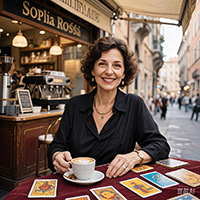
If you are the kind of late-20s city professional who can hit campaign deadlines all day but open a self-paced course at 9 p.m. and freeze the second there is no due date attached, I knew exactly what Maya (name changed for privacy) meant the moment she sat across from me in the back corner of my café.
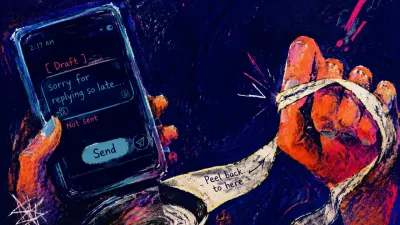
She was a junior marketing coordinator in Toronto, bright, capable, and carrying the very modern exhaustion of trying to build a better future after work hours. She told me about 8:47 p.m. on a Tuesday at her condo kitchen table: Earl Grey going lukewarm beside her laptop, the fridge humming, the course portal throwing that too-blue light into tired eyes. She opens the dashboard, hovers over the trackpad, then clicks into Notion instead. Rename a folder. Rewrite the checklist. Reread the module title. Close the tab. Promise tomorrow. In a city where career upskilling feels tied to rent, mobility, and self-respect, every untouched module had started to feel expensive.
‘I wanted flexibility,’ she said. ‘But if nobody is expecting it from me, it stops feeling real. I can hit other people’s deadlines all day, but my own somehow disappear.’
What I heard underneath was the real split: she wanted the freedom of a self-paced class, but she still needed check-ins to feel safe enough to begin. Her apprehension was not dramatic. It was quieter and sharper than that—like standing at an empty crosswalk with the light already green and still feeling your body refuse the first step, just in case something comes speeding through and proves you misread the signal.
I wrapped my hands around my coffee cup and met her there, not ahead of her. ‘That makes sense,’ I told her. ‘We do not need more pressure tonight. We need clarity. Let’s make a map of what happens between opening the lesson and backing away from it.’

Choosing the Compass: A Situation-Obstacle-Advice-Outcome Spread
I asked her to take one slow breath and hold the question in plain language: what old rule makes me freeze when nobody is checking in? Then I shuffled slowly and laid four cards in a straight line across the table. I do not treat this part like stage magic. It is a focusing device, the same way clearing a café counter before the morning rush makes the real work easier to see.
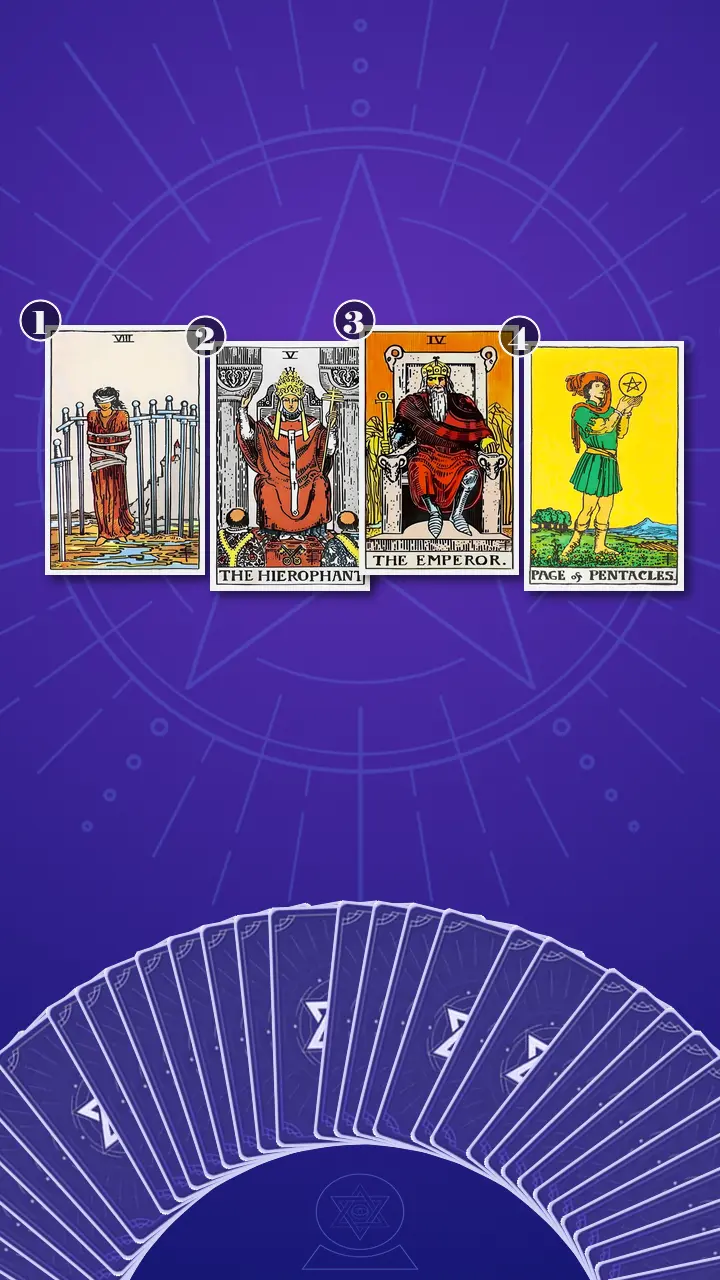
For this question, I used a Situation-Obstacle-Advice-Outcome spread—a small four-card tarot spread I reach for when someone is dealing with procrastination, self-trust, or that specific feeling of needing accountability to study. When people ask me how tarot works in a moment like this, I tell them I am not trying to predict whether they will finish the certificate. I am looking for the architecture of the pattern: the visible symptom, the hidden rule underneath it, the medicine, and the first grounded next step.
This spread fits self-paced class paralysis because the problem is not a lack of goals. It is the chain beneath the behavior. The first card shows the freeze at the dashboard. The second reveals the older belief that makes unsupervised learning feel illegitimate or unsafe. The third points to the shift from borrowed structure to self-authored structure. The fourth shows what that shift looks like in real life, when it finally leaves proof behind.
Reading the Threshold
Position 1: The Dashboard That Turns into a Wall
Now I turned the first card, the one representing the observable freeze behavior from the diagnosis: stalling at the course dashboard when no one is checking in.
It was the Eight of Swords, upright.
I told Maya this was exactly the moment after work when the portal opens, the next module has no deadline attached, and suddenly the syllabus, FAQ, transcript, and notes app all look safer than the lesson itself. In ordinary life, this card feels like having twelve tabs open and still hovering over the one button that would actually start the task. The energy here is blocked air: too much thinking, too much self-monitoring, not enough movement. The blindfold says the whole course is being treated like a threat. The loose bindings say the trap feels total, but it is not.
‘So the problem is not that I am lazy,’ she said.
‘No,’ I said. ‘The problem is that starting has gotten tangled up with what it might mean about you. Planning can feel like progress because it protects you from being seen trying.’ I asked her what actually makes the lesson unsafe, versus what only feels unsafe because no one is there to witness the first imperfect step.
She let out one short laugh that had a little sting in it. ‘Wow. That is accurate in a slightly rude way.’ Then she nodded, small and tight, and I watched her shoulders drop by half an inch—the kind of drop people make when being described correctly feels better than being advised too soon.
Position 2: The Old Classroom Still Running the Room
Next I turned the card representing the old rule and underlying fear: the inherited belief that learning only counts when an authority tracks it.
The Hierophant, upright.
This is the card I see when someone can meet a manager’s deadline without drama but goes weirdly blank in front of a self-paced module. I told her the image was simple: a task only feels real once it comes with a syllabus, a Slack ping, a reminder email, somebody else’s name attached. The energy here is not missing discipline; it is an excess of borrowed authority. Her inner OS was still running old classroom software: good-student mode, waiting for the lesson to become official from above.
‘Whose voice shows up when you think, “If I do this badly on my own, it means something about me?”’ I asked. ‘A teacher? A parent? A boss? Or your own copied version of them?’
She went quiet. Her thumb pressed hard against the cardboard sleeve of her cup, then loosened. ‘It is permission,’ she said finally, more soberly now. ‘Not just procrastination. If nobody above me is tracking it, my body acts like it does not count yet.’
That was the real blockage. Not laziness. Not lack of ambition. An old hierarchy living rent-free in the middle of a Tuesday night, turning freedom into exposure.
When the Emperor Built a Steady Frame
When I reached the third card, the room changed. The grinder in the front of the café had gone quiet, and for a second all I could hear was the soft radiator click against the window. This was the turning card—the antidote.
Position 3: Not a Stricter Teacher, a Steadier Organizer
Now I turned the card representing the key shift from the transformation framework: moving from borrowed structure to self-authored structure.
The Emperor, upright.
Before I said anything else, I felt the familiar certainty I get when a card names the practical truth cleanly. Seeing that stone throne, I had a quick flash of my own café before opening: beans labeled, grinder dialed in, milk pitchers where my hands expect them. Not because someone is supervising me. Because structure is what lets care survive low energy.
I looked at Maya. ‘You do not need a stricter inner teacher,’ I said. ‘You need a steadier inner organizer.’
On those weeknights when the tea goes cold, the portal is open, and your hand is still hovering over the trackpad, it can genuinely feel like the lesson does not count until someone else could have seen you begin. This card interrupts that story.
You are not waiting for the teacher's nod anymore; you are building your own steady frame, like the Emperor's stone throne, and letting structure come from your choices.
In plain, everyday terms, I told her: you do not need more permission to learn. You need one small container you chose before fear had a chance to negotiate.
I also brought in one of the tools I use a lot, what I call a Learning Rhythm Audit. I do not ask, ‘When are you most virtuous?’ I ask, ‘When does your mind most easily cross the threshold into starting?’ Her 9 p.m. self had plenty of editing energy—enough to rename folders, polish Notion, save another Ali Abdaal clip, maybe even watch a study-with-me video—but almost no initiation energy left after a full day of meeting other people’s deadlines. The Emperor does not ask for heroics. He asks for one fair container chosen before fear gets the mic: a start time, a length, and a stopping point. Not a whole new system. Just one container.
First she went very still. Her fingers stopped tapping the mug. Then her gaze slipped past the cards, unfocused, the way it does when someone is suddenly replaying three separate nights at once—the hovering cursor, the untouched module, the private little shame spiral. I watched the thought land in layers: surprise first, then grief for how long she had been turning supervision into safety, then a deeper exhale that seemed to come from somewhere under the sternum. Her shoulders lowered. Her mouth opened, closed, then she said, almost annoyed at the simplicity of it, ‘But if I am the one making the structure, couldn’t I just ignore it?’
‘You could,’ I said, ‘if the goal were to impress yourself. But the Emperor is not asking for a performance review. He is asking for a fair agreement. One recurring block. One defined stop. Something your tired Wednesday brain can keep without debate.’ I pointed back to the card. ‘Now, with this lens, think about last Tuesday. If you had already decided “7:30 to 7:45, first exercise and stop,” how different would that moment at the dashboard have felt?’
Her eyes came back into focus. ‘Smaller,’ she said. ‘Less like a test.’ That was the real movement: not from failure to perfection, but from permission-seeking study paralysis to the first, cautious shape of steady self-trust in unsupervised learning.
Position 4: The Beginner Who Leaves Proof Behind
Then I turned the card representing the first grounded embodiment of the shift: the manageable study behavior that rebuilds self-trust.
The Page of Pentacles, upright.
I smiled when I saw it. After all that pressure, the outcome was not some dramatic personality transplant. It was a beginner holding one real thing at eye level. I told Maya this looked like finishing one video, one practice task, and one plain sentence about what she learned before logging off. No heroic weekend reset. No rebranding her whole life through a prettier dashboard. Just one concrete unit, handled fully enough to exist outside her head.
The energy here is balanced earth. Attention narrows. The mountains stay in the distance instead of climbing onto the table with her. ‘When no one’s watching, small still counts,’ I said. ‘That is how the nervous system relearns that progress is real.’
She gave me the first unguarded expression of the session—not a huge smile, just a soft one, mixed with relief and a little embarrassment. That combination told me she could already picture it: closing the laptop with one visible checkbox ticked instead of a prettier system.
From Permission to Structure: Actionable Advice for This Week
By then the story of the reading was clear. The Eight of Swords showed the freeze itself: the dashboard as wall, the hovering hand, the held breath. The Hierophant showed why that wall felt moral rather than practical: an old rule that learning only counts when someone higher up confirms it. The Emperor broke the spell by moving authority inward. The Page of Pentacles turned that shift into behavior small enough to survive a tired weeknight. The whole spread moved like a short bridge—from mental restriction, through inherited rules, into chosen structure, and finally onto solid ground.
The blind spot was this: Maya had been treating planning as neutral preparation and check-ins as proof that the work was legitimate. In reality, the planning was often protection, and the check-in had become permission. The transformation direction was simpler and more powerful: use one chosen checkpoint as support while starting the next lesson imperfectly. Borrow less authority. Build more structure. That was the entire medicine of the reading: you do not need more permission to learn; you need a simple structure that you choose and keep.
In my own language, this is where Focus System Optimization and Cognitive Filtering matter. If every study session begins with five apps, three possible goals, and the open question of whether you are doing enough, attention burns itself before the lesson even starts. Learning needs order logic. One block, one task, one proof line. I call that Knowledge Systematization; in everyday life, it just means giving the lesson a clean place to land.
Maya frowned a little. ‘What if I do not have fifteen clean minutes after work?’
‘Then we do not ask for fifteen clean minutes,’ I said. ‘We ask for five honest ones. A checkpoint works best when it supports the start, not when it gatekeeps it.’
- Build the Stone-Throne Block Tonight, in Google Calendar or Apple Calendar, create one recurring study block for this week only—Wednesday 7:30–7:45 p.m., open Module 3, stop after the first exercise. Decide the stopping point before you open the portal. If your mind says this is too small to count, good. Small is what makes it keepable. Lowest-bar version: five minutes and one click into the lesson.
- Filter the Threshold At the start of that block, use Cognitive Filtering: keep Notion closed unless the lesson truly requires it, silence productivity apps, leave one course tab open, and choose one concrete unit—one video, one quiz question, or one practice prompt. The study block is for touching the course, not designing a better life. If your body starts bracing, narrow the unit again instead of pushing harder.
- Leave a Proof-of-Progress Note When the timer ends, open one plain running note on your phone called Proof of Progress and write a single line: what you watched, what you answered, or what you learned. If you want accountability, send that one-line note to a friend after the session once this week. Let the check-in witness the action after it happens. Evidence, not elegance. Support, not permission.

A Week Later, the Quiet Proof
Six days later, Maya sent me a screenshot. One calendar block. One plain note: ‘Watched lesson 3 to 09:14, did Q1, learned the rubric was simpler than I made it.’ She had done the session alone, then sat in a café staring at that tiny note for a minute—half proud, half unconvinced. That counted too.
She added one more sentence: ‘I still had the what-if-I-fall-behind-again thought the next morning, but it did not run the room.’ That was my favorite part. Clear, but still human.
That was the whole Journey to Clarity for me. Not certainty. Ownership. Tarot did not magically make the certificate lighter; it helped her stop treating external supervision as the price of beginning, and start trusting a fair structure she could keep with herself.
If tonight you also know that particular ache—the one that comes from wanting freedom and still feeling your chest lock in the quiet second when no one is there to confirm that your first messy attempt counts—please remember this: once you can see the old rule, you are no longer fully trapped inside it.
So when your own screen glows later this week and your hand hovers over the trackpad again, what tiny checkpoint would you want beside you—not to police you, but simply to witness that you touched the lesson at all?
Every reading at AceTarot is a Journey to connect with inner wisdom and empower next step.
Learn more about our Journey to Clarity.