Over-Explaining Late Texts: From Old House Rules to Adult Voice
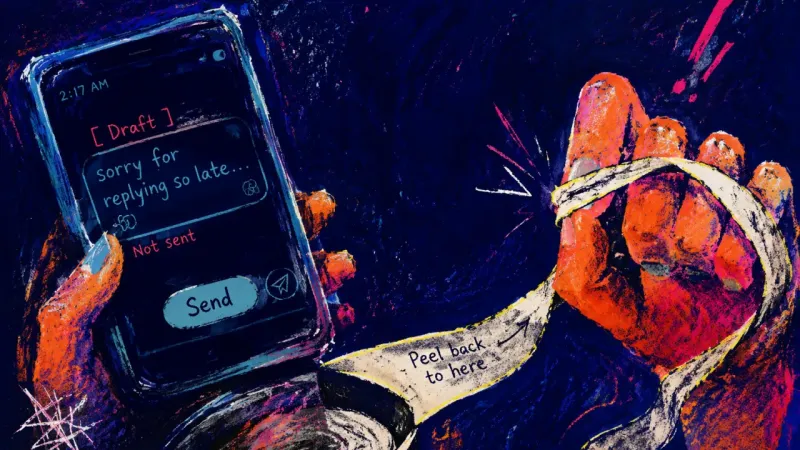
The 9:32 p.m. Moment When a Late Text Feels Like Trouble at Home
The espresso machine had already gone quiet, but my cafe still held the smell of orange peel and dark roast when Maya (name changed for privacy) sat down across from me, phone face-down beside her cup like it had personally offended her. I told her, gently, what I have ended up saying to more people than you might think: if you live alone, commute home tired, microwave dinner, and then spend ten minutes editing 'Sorry, today got away from me' like it's a performance review, you're probably not dealing with bad texting habits. You're dealing with reply anxiety.
Then she gave me the scene exactly as her body remembered it. Tuesday, 9:32 p.m., small downtown Toronto kitchen, the microwave humming, the overhead light too white, work tote still dropped by the door. She peels back the film on dinner, finally opens the text she meant to answer at lunch, and feels the phone warm in her palm while her stomach drops and her jaw locks. She types the first line, then keeps adding meetings, TTC delays, battery percentage, all of it trying to do one impossible thing at once: reply naturally like an adult while also making sure a late reply does not turn into proof that she is in trouble at home.
After twenty years behind an espresso bar, I know the difference between a person facing a problem and a person bracing for a verdict. What Maya described was anticipatory shame with its own body language, like a trapdoor opening under the ribs while the rest of you has to keep standing there acting normal. There was even a little resentment under it. She knew other adults texted back late every day. She hated that this still felt loaded.
'A late reply is not a court date,' I told her. 'And if your body still acts like it is, then let's not shame the reaction. Let's map it.' That was our shared goal from the start: not to prove she was doing relationships wrong, but to follow the fog back to its source and find a cleaner kind of clarity.

Choosing the Corridor: The Shadow Spread for Late-Reply Shame
I moved the sugar jar aside, asked Maya to put both hands around her cup, and invited one slow breath before I shuffled. I never treat the opening ritual as theater. It is simply a threshold. One breath, one question, one deliberate pause between being hijacked by a pattern and actually looking at it.
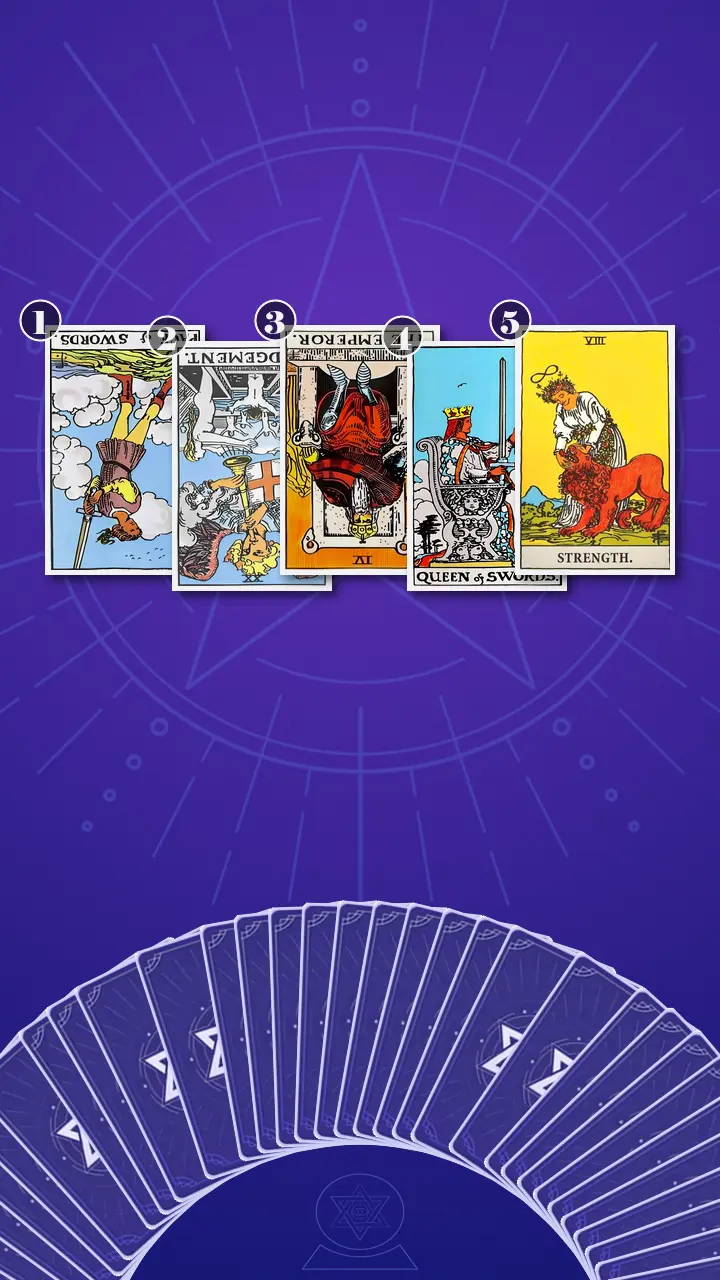
For her reading, I chose The Shadow Spread · Context Edition, one of the best tarot spread structures I know for over-explaining texts and late reply anxiety when an ordinary present-day behavior is clearly being driven by older emotional wiring. It uses five cards in a straight line: the visible symptom, the hidden blame story, the older authority script beneath it, the integrating truth that loosens the knot, and the embodied next step that makes the insight usable.
I explained it the way I would explain a good coffee tasting flight. We start with what is obvious on the surface. Then we look for what is shaping the flavor underneath. Then we separate the old bitterness from what actually belongs in the cup now. In practical terms, the first card would show what her late-reply habit looks like on the screen, the second and third would tell us why a neutral text can feel morally loaded, and the last two would show how to text from adult self-trust instead of panic. That is how tarot works when I want it to be useful: card meanings in context, not vague mysticism.
The cards lay in a horizontal line between us like a text thread stretched open. Symptom on the left. Root on the center line. Return path on the right. A corridor out of an old hallway.
Reading the Chat Window and the Hidden Courtroom
Position 1: The Draft That Tries to Beat the Blame
I turned over the first card, the one representing the concrete communication symptom and the defensive body state underneath it. Page of Swords, reversed.
This was Maya's pattern in one image. The exact moment she opens a lunch-time text after work, notices how late it is, and starts typing like she is being cross-examined. In that card, the raised sword became the phone held in a guarded grip; the sideways stance mirrored being half in the conversation and half in threat-detection mode. The energy here was blocked Air: thought moving fast, but not freely. Not curiosity. Self-surveillance. The Bear-level nervous-system energy, but inside an iMessage draft.
'You're not writing a defense brief,' I said. 'You're sending a text.' But Page of Swords reversed is what happens when the nervous system does not believe that yet. The reply swells into a mini case file: here is where I was, here is why I was delayed, here is proof I still cared the whole time. Communication becomes self-protection before it ever becomes connection.
Maya let out one of those sharp little laugh-exhales that arrives with a wince. 'That is painfully specific,' she said. 'Like... yes. I can hear myself sounding too apologetic and I still hit send.' Her fingers brushed the rim of the cup and stopped there, as if even her hand had been caught revising itself.
Position 2: When the Notification Sounds Like a Summons
The second card revealed the hidden assumption of blame and self-judgment that keeps the pattern active. Judgement, reversed.
I always slow down for this card, because most people think the pain is in the message. It usually is not. It is in the meaning added before the message is even answered. In Maya's life, a neutral notification lands in her body like an HR summons. A simple follow-up like 'hey' or 'all good?' becomes a courtroom call to the stand. The energy here was excess judgment turned inward: not information, but a verdict mentally rehearsed in advance.
I asked her, 'What part is the actual text, and what part is the story your mind starts writing around it?' She looked down immediately. 'The story is always that they noticed,' she said. 'And now I need to get ahead of it before it becomes a thing.'
That was Judgement reversed exactly. It makes 'I replied later than I wanted' feel identical to 'I have damaged the relationship.' A normal phone buzz becomes accusation before anyone has actually accused her. The hidden driver was not bad manners or lack of confidence. It was an inner tribunal.
Position 3: The Old House Rule Still Running in the Background
I turned over the third card, the one showing the earlier authority or home conditioning that taught lateness to feel like danger. The Emperor, reversed.
Even before I spoke, the room changed. Outside, a streetcar scraped past and made my front window tremble; inside, the pastry case clicked as it cooled, and the silence between us suddenly had structure. This card carried stone, armor, and rules that mattered more than softness. In modern language, it was an old parental settings panel still running in the background of every chat app.
When I see The Emperor reversed, my mind does not go first to myth. It goes to the espresso bar. If the pressure is too harsh and the puck is packed too tight, the shot chokes: bitter, forced, overworked. Old authority does the same thing to communication. It trains the body to believe timing and tone must be perfect or something relational will go cold. So even when Maya is texting a friend, a date, or a coworker, some older part of her is still answering to household rules where lateness required explanation.
'The old house rule may be loud,' I told her, 'but it isn't the person on your screen.' That was the difference this card wanted her to feel. Her blind spot was not that she cared too much. It was that she kept answering to an authority that was no longer in the room. Rigid fire had turned into self-policing. Reliability had quietly become compliance.
Her breathing paused for a beat. Then her eyes unfocused the way they do when memory starts replaying before language catches up. 'Nobody in my life now actually talks to me like that,' she said quietly. 'So why do I still act like they might?' The question landed between us with the weight of something she had known for years but never named cleanly.
When the Queen of Swords Closed the Extra Tabs
Position 4: The Sentence That Restored an Adult Voice
Then I turned the fourth card, the one naming the integrating truth that loosens the contradiction and restores an adult voice. Queen of Swords, upright.
This was the hinge of the whole reading. The Queen's upright sword and open hand say something radical to anyone who has ever searched why do I over explain late texts at 11 p.m.: tell the truth clearly, stay relational, and stop pleading with an invisible judge. The energy here was balanced Air—precise, adult, unsmeared by panic. Same suit, different nervous system. The Page braces in the wind. The Queen sits in clarity.
I could feel Maya back inside that familiar moment: microwave going, work clothes still on, unread text open, body acting like a five-hour delay had turned her into a problem that needed explaining.
You do not need a defense statement to earn safety; speak from the Queen's upright sword of clarity, not from the old urge to explain yourself into acceptance.
I let the sentence settle between us. Then I added, more softly, 'A late reply is not a character trial. You do not need to submit evidence of your innocence to stay connected.'
At my cafe, I have a name for what this Queen asks of people: Knowledge Filtration. A coffee filter does not disrespect the beans by keeping the grounds out of the cup. It makes the drinkable part clear. Your extra explanations are not bad. They are just not all meant to be served. The Queen keeps the sentence that carries truth and leaves the sediment of fear behind. In real life, this is Maya sending 'Sorry for the delay, today ran long. Thursday works for me. How are you?' and letting that be a complete adult reply. Brevity can be honest without being cold.
I asked her, right there at the table, to open Notes and write two versions of one recent late reply: the defense-brief version and the three-sentence version. Then I asked her to read them side by side, take one slower exhale, and notice which one actually sounded like a conversation instead of a closing argument.
Maya froze first—breath suspended, thumb resting against the edge of her phone. Then her gaze drifted past me toward the darkened window, unfixed, as if a dozen apology-heavy drafts were replaying behind her eyes at once. When she finally looked back, there was heat in it. 'But doesn't that mean I've been putting myself on trial for years?' she asked, and there it was: not just shame, but anger for how much ordinary texting had cost her.
'Not for no reason,' I said. 'For an old reason. That's different. It was intelligent once. It just isn't current anymore.'
Her mouth tightened, softened, then gave way to the smallest exhale. Her shoulders dropped so suddenly it almost looked like surprise. I know that second wave well—the strange little dizziness that comes when someone sets down a burden and, for a second, feels both relief and the exposed air where the burden used to be. This was the real crossing: from anticipatory shame and defensive self-surveillance to concise self-trust and calmer connection. Not certainty. Not perfection. Just one clean adult voice returning to the chat window.
I asked her, 'Now, with this new perspective, think back to last week. Was there a moment when this would have changed the message in your hands?' She gave a softer laugh this time. 'Thursday,' she said immediately. 'I sent four extra lines to someone I actually like, and none of them were the answer.'
Position 5: Sending from Steadiness, Not from the Witness Stand
The final card translated insight into a real-time embodied texting practice that could support calmer, cleaner connection. Strength, upright.
I loved that this came after the Queen. Insight first, body second, but working together. In Maya's actual life, this is the moment the urge hits to write four explanatory paragraphs and she does something radically small instead: both feet on the floor, one longer exhale than inhale, jaw unclenched, eyes back on the original message instead of the imagined reaction. The energy here was balanced Fire—warm courage, not force.
'Send from steadiness, not from the witness stand,' I told her. Strength does not ask her to become instantly unbothered. It asks her to lower the alarm one notch. To hold the phone the way someone steadies a skittish rescue dog: firm, gentle, not forceful. If the body believes a late text equals danger, then the body has to be included in the change.
This time she nodded without flinching. Then, almost experimentally, she put both feet flat on the cafe floor as if testing whether it could really hold her.
From the Inner Courtroom to Three-Sentence Enough for Over-Explaining Late Texts
When I looked back across the full line of cards, the story was clean. First came the visible symptom: Page of Swords reversed, the over-edited late reply, the threat-scanning brain, ordinary texting turning into a moral test. Beneath it sat Judgement reversed, the private tribunal that hears neutral contact as blame before evidence exists. Under that again was The Emperor reversed, the old home authority script that taught timing and tone could affect belonging. No wonder the apology got long. Maya thought the explanation was creating safety, but her cognitive blind spot was that it mostly recreated the old courtroom. Communication had been recruited into self-protection.
The transformation direction was just as clear: stop proving you had a good reason and start replying from present-day self-trust. Not coldness. Not withdrawal. Concise truth. Clear boundaries. A body that is allowed to come out of brace position before the text gets sent. That is how adult communication starts to feel calmer, cleaner, and more connected.
I slid a paper napkin toward her and gave her the next steps in the smallest usable form.
- Three-Sentence EnoughPick one low-stakes conversation this week and reply in three sentences or fewer: one brief acknowledgment, the actual answer, and one return to connection. Before sending, delete one explanatory detail that is only there to prove you are a good person. I had Maya practice with: 'Sorry for the delay, today ran long. Thursday works for me. How's your week going?'If it feels rude, use my Latte Memory Technique: write Acknowledge / Answer / Return in Notes first, then send only that version. Start with a safe, ordinary chat—not a high-conflict one.
- One-Breath SendWhen the late-text panic spikes, put both feet on the floor before touching the keyboard. Take one longer exhale than inhale, unclench your jaw, and read the original message one more time without reading tone into it.You do not need to feel fully calm for this to count. The goal is one notch more choice, not instant serenity. If breathwork annoys you, lower your shoulders and soften your grip on the phone instead.
- The Inner Courtroom CheckOpen Notes and make two lines: 'What actually happened' and 'What I'm assuming.' Keep the first line factual—'I replied five hours later.' Put the imagined verdict on the second line—'They think I don't care'—and check whether the text itself ever said that.Keep it brutally short so it does not become a new overthinking ritual. If repair is genuinely needed, name the specific thing directly instead of drowning it in context.
These steps were small on purpose. Better scheduling apps, prettier wording, or a full Notion life system will not fix a shame response by themselves. But a smaller, cleaner action can start teaching the body that a delayed reply is a scheduling fact, not proof of bad character.
This is exactly why I use The Shadow Spread · Context Edition as a tarot spread for texting anxiety and late-reply guilt. It traces the symptom back to hidden judgment and home-rule conditioning, then gives the insight somewhere to land in real behavior.
A Week Later, the Quiet Proof
Five days later, just after I lifted the shutters, Maya sent me a screenshot. It was almost funny in its simplicity. Her message read: 'Sorry for the delay, today ran long. Thursday works for me. How's your week going?' The reply underneath it was even shorter: 'All good :) Thursday is perfect.'
She told me the strangest part was not that the world did not collapse. It was that her body had expected collapse anyway, and then had to update. She slept a full night after sending it, though when she woke the next morning her first thought was still, What if I sounded rude? This time, she smiled at the thought and made coffee anyway.
I loved that message because it was not a movie ending. It was better. It was the first real proof of her Journey to Clarity: from feeling in trouble for texting back late to answering from an adult voice that no longer needed to submit evidence of good intent.
When a tiny unread bubble can drop straight into your stomach and lock your jaw like you've broken a house rule, of course it's hard to remember you're in a conversation now—not standing in front of an old verdict.
So if you catch yourself drafting the director's commentary tonight instead of the clean pour, what would your one honest, enough-sized reply sound like?