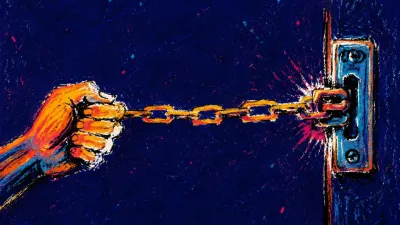
One 8:07 p.m. Work Ping in the Kitchen—and a Boundary Took Shape

The 8:07 p.m. Ping and the Shape of After-Hours Work Anxiety
If your evening keeps getting split into before the 8 p.m. ping and after the 8 p.m. ping, even when nobody explicitly asked you to do anything tonight, I already know I am looking at after-hours work notification anxiety, the kind that turns one late ping into an all-night mental occupation. When people ask me why one Slack message ruins my whole night, this is the pattern I usually see underneath it.
Alex (name changed for privacy) joined me from her Toronto condo just after sunset. She had been stirring pasta when a Slack banner lit up on the counter; the range hood was buzzing, tomato steam had fogged her glasses for a second, and Netflix was already murmuring in the next room. By the time she sat down with me, dinner was eaten, but the thread was still alive in her body.
“I know it’s just one message,” she said, “but my whole body treats it like a test.” She wanted her night back, and she wanted to look dependable. Those two wants were fighting inside the same set of shoulders.
What I saw in her was not vague stress. It was the feeling of an airport scanner installed behind the ribs, beeping at every after-hours notification even when there was nothing dangerous to declare: a stomach dropping through one floor, a jaw locking like a hinge in winter, shoulders staying half-lifted as if work might still need a seat at the table.
I told her gently, “That makes sense. We are not here to shame the part of you that learned to stay reachable. We are here to figure out why one work ping can hijack a whole night, and to draw a map back to clarity.”

Choosing the Map: A Four-Card Tarot Spread for Work Boundaries
I asked her to take one slow breath, put both feet on the floor, and hold the question in plain language: How do I stop one 8 p.m. work ping from taking over my night? Then I shuffled slowly. For me, that moment is not about theatre; it is a clean transition from spiraling inside the problem to looking at the pattern from one step back.
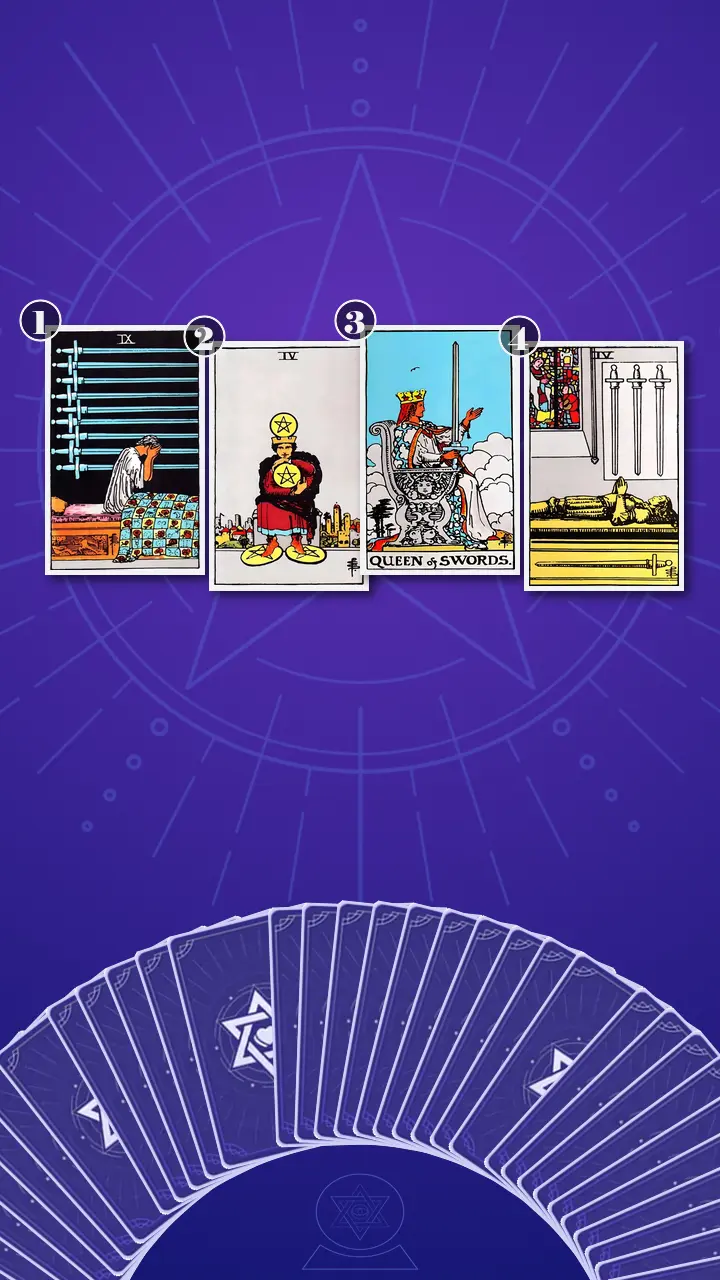
I used the Situation-Obstacle-Advice-Outcome · Context Edition, a compact four-card tarot spread for work boundaries. Tarot works well here not because it predicts what a manager will think, but because it shows the anatomy of the loop: the visible symptom, the hidden grip underneath it, the corrective shift, and the way that shift can be lived in an actual Tuesday night.
I told her—and I would tell any reader the same—that this spread is small on purpose. The first position shows the trigger loop as it is happening in real time. The second goes underneath it to the fear that keeps the loop feeling necessary. The third is the pivot, the card that shows where discernment has to replace panic. The fourth is not a prediction so much as a landing place: what an evening can feel like when rest has some structure around it.
The Problem Cluster
Position 1: The Thread That Kept Running After the App Closed
I turned over the card representing the exact after-hours trigger loop from the diagnosis: how one 8 p.m. ping hijacks attention, body, and behavior in real time.
Nine of Swords, upright.
This card is almost painfully literal for late work ping spiral energy. I translated it for Alex in the most modern way possible: 8:12 p.m., supposedly done for the day, opening the thread for “just a second,” then carrying it through the kitchen, onto the couch, into the bathroom while brushing her teeth, and nearly into bed. The real takeover is not the workload. It is the all-night cognitive afterimage. A little bit Severance, except the outie is still doing damage control on the couch while Netflix autoplay keeps rolling.
In energetic terms, this is Air in excess—thought spinning so fast it starts impersonating responsibility. The message lands once, but the mind reenacts it twelve times: tone-reading, worst-case forecasting, writing tomorrow’s explanation at 8:19 p.m. as if a future accusation has already arrived. I asked her, “In the first two minutes after a banner appears, what story begins before you even have facts?”
Her mouth twisted into a quick, bitter half-laugh. “That I’m already behind somehow. That is so accurate it’s kind of rude.”
I smiled. “Not rude. Precise. If your body treats every ping like a summons, that is a safety rule, not a character flaw.”
She nodded then, slower this time, one thumb rubbing the side of her mug while her eyes dropped to the card. That small movement told me the shame had loosened just enough for recognition to get in.
Position 2: The Phone as Emotional Insurance
I turned to the card representing the deeper fear beneath the reflex—the need to stay professionally safe by never fully letting go.
Four of Pentacles, upright.
This is the card of gripping. For Alex, it looked exactly like the phone staying face-up through dinner, Slack and Teams previews left on, work chat kept within reach because distance from the device felt weirder than interruption. She was not trying to work more. She was trying to feel less exposed. The phone had quietly become emotional insurance: proof that she was reachable, attentive, hard to replace.
Energetically, this is Earth in blockage. Stability has become rigidity. Like keeping twenty browser tabs open because closing them feels riskier than the lag, she was holding on so tightly to availability that nothing in the evening could actually breathe. I asked her the harder question: “If you waited until morning on the last non-urgent late message, what is the worst thing you imagined people would think that says about you?”
She exhaled through her nose, long and thin, and pressed one hand flat to her chest before answering. “That I’m not as on top of things as I seem. That maybe I’m only dependable because I’m always there.”
That was the real obstacle. Not the ping itself. The meaning fused to it. I told her, as plainly as I could, “Professionalism is not permanent access.” She went still after that, the kind of stillness that is really someone hearing their own hidden rule spoken out loud.
When the Queen Raised Her Sword
Position 3: The Card That Drew a Line
When I turned the third card, the atmosphere shifted the way it does when a window opens in a room that has been holding too much heat. Even over video, I could see the harsh kitchen light on Alex’s face stop looking accusatory and start looking simply bright. This was the pivot of the whole reading.
I turned over the card representing the key shift: separating true urgency from internalized pressure and rebuilding boundaries through discernment.
Queen of Swords, upright.
I have spent fifteen years working with scent, and I often think in what I privately call Spatial Boundary Scenting. One stray note can colonize an entire blend if there is no structure around it. Alex’s evening had started as dinner—tomato steam, dish soap, streetcar hiss through the window, a show queued in the next room. Then one work banner released a different atmosphere into the same space: fluorescent urgency, performance, apology, vigilance. The Queen of Swords does not teach her to care less. She clears the air. She creates a line between information and obligation so the whole night no longer has to smell like the office.
This card translates into real life very cleanly: pause before opening the thread, check the rule decided earlier, and sort the message into one of two buckets—truly urgent tonight, or emotionally activating but fine for tomorrow. Activated is not the same thing as required. A late message is information, not an automatic demand. Your reliability does not rise or fall with same-night responsiveness. A notification is data, not a verdict.
Picture the exact 8:07 p.m. moment: dinner half-ready, show already queued, phone lighting up on the counter, and your whole body going on alert before you even know whether the message needs anything tonight. Alex was not deciding between “care” and “don’t care.” She was trapped inside “reply now or prove you’re careless.”
A notification is not a summons; raise the Queen's sword, separate real urgency from borrowed pressure, and let clarity guard your night.
Her hand stopped halfway to her glass. First came the freeze: breath held, fingers suspended, jaw set so firmly I could see the muscle jump near her ear. Then came the cognitive ripple. Her gaze slid past the screen and unfocused, as if she were replaying every 9:12 p.m. Teams thread where she had typed herself into compliance before anyone had actually asked for same-night work. Then the feeling surfaced, and it was not relief first. It was anger. “But if I do that,” she said, voice suddenly sharp, “doesn’t that mean I’ve built this whole thing wrong?”
I let that sit for a beat. The Queen of Swords is compassionate, but she is not foggy. “No,” I told her. “It means your nervous system built a rule to keep you professionally safe. It worked for something. It just costs too much now.”
Her shoulders dropped one at a time, like a bag being set down unevenly. There was that brief, almost disorienting blankness I see when someone stops bracing faster than their body expected to. The anger thinned into something sadder and truer. Her eyes shone, not dramatically, just enough to catch the light. I asked her to put both feet on the floor and tell me facts only. She swallowed. “One message. No direct ask. No mention of tonight.” Another breath. “And two coworkers replying fast doesn’t actually make it urgent. It just makes me panic.”
“Exactly,” I said. “Now use that lens on last Thursday. If you had named facts first, would the night have felt different?”
She gave me the smallest nod. “Completely.”
That was the crossing point: not from caring to indifference, but from fear-timeline responsiveness to chosen-timeline boundary confidence. In other words, from feeling summoned to feeling informed.
Position 4: The Night Learns to Lie Down
I turned over the final card, the one representing the integration state: pause, recovery, and chosen response windows instead of open-ended vigilance.
Four of Swords, upright.
I love this card for work-boundary readings because it is not dramatic. It is structured rest. In Alex’s life, it looked simple and almost ordinary: a last-check time, work banners stopping after that, the phone moved out of reach, and one part of the night becoming genuinely unavailable to work chat. The thread still exists, but it no longer lives inside every minute of the evening.
Energetically, this is balance through containment. The same boundary energy that looked rigid in Four of Pentacles becomes restorative here. Not clutching. Architecture. Rest is easier to keep when it has structure. I asked her, “If your evening had one reliable shutdown point, where would the phone go, and what would your body need to believe the day is actually over?”
She looked toward the bookshelf behind her desk and almost smiled. “Not beside my fork. Not on the couch arm. Probably over there, on charge. And honestly? I think I need the screen not to talk to me from the lock screen.”
There it was: the first practical picture of relief. Her jaw had softened. The room on my screen looked the same, but she did not.
From Fear Timeline to Chosen Timeline
When I laid the whole line of cards together, the story was clear. Nine of Swords showed the late work notification turning into an all-night occupation. Four of Pentacles showed why: instant access had become a safety object, a way of clutching at worth and control. The Queen of Swords interrupted that with discernment—not “care less,” but “decide more clearly.” Four of Swords showed the landing place: a night with walls around it.
The blind spot was not that Alex cared too much about her job. It was that she had started treating same-night responsiveness as evidence of value, when most of the pressure she was obeying was ambient pressure: previews, coworker speed, LinkedIn hustle culture, and her own tone-reading. In my Sensory Overload Audit lens, the bright banner, the face-up phone, the mixed-use screen, and the habit of checking who else replied were not neutral details. They were tiny drains on psychological bandwidth, quietly keeping her body on retainer for work.
The direction of change was simple, even if it would feel unfamiliar at first: from “this ping might expose me” to “this is information I can triage against a boundary.” Boundaries work better when they are pre-decided than when they are negotiated mid-adrenaline. So I gave her actionable advice, not a personality makeover.
- Write the Tonight Triage NoteTonight or tomorrow morning, create a note in your phone called “What Actually Counts Tonight.” List two or three situations in your customer-success role that truly need a same-night reply, then read that note before opening any after-hours thread for one workweek.If your mind starts yelling, “But what if this one is the exception?” make the first version one sentence only: “Tonight is for true blockers, not vague urgency vibes.”
- Use the 72-Hour Physical Boundary ProtocolFor the next three nights, pick a last-check time—even 7:45 p.m. on just three evenings counts. Five minutes later, let Slack or Teams Do Not Disturb turn on automatically, move the phone to a charger across the room or in the hall, and pair that move with one specific sensory trigger that you never use in work mode: a cedar hand cream, a peppermint tea, a shower steam tab, a lamp you only switch on off-clock.That sensory cue is not fluff; it teaches the body where high-output mode ends. If the first ten minutes feel oddly exposed, treat that as unfamiliarity, not proof the boundary is wrong.
- Create a Boundary-First Reply WindowWhen a message does not match your urgent categories, answer in your next chosen window—for example at 9 a.m.—with one clean line: “Saw this. I’ll pick it up at 9 a.m. and send an update then.” Draft it in the morning, not invisibly in your head all night.If a full-evening cutoff feels impossible, protect one contained block first: one episode, one meal, one shower, or twenty minutes of reading. Small proof beats perfect policy.
Alex looked at the list, then back at me. “I can do one episode,” she said. “Not the whole night. One episode.” I told her that was more than enough. The nervous system trusts repetition long before it trusts ideals.

A Week Later, the Episode Was Audible Again
Four days later, Alex sent me a message. “Did the 7:45 cutoff. Phone on the bookshelf. Cedar hand cream after. The first ten minutes felt illegal. Then I actually heard the show.” A beat later she added, “I still woke up thinking, what if I missed something? But I laughed instead of opening Slack.”
That is what I mean by a journey to clarity. Not a life transformed by magic, and not a career saved by perfect boundaries. Just a woman in Toronto hearing her own evening again because she stopped treating every late ping like a verdict on her worth. It was small, but it was real chosen-timeline boundary confidence. The cards did not take control of her night; they handed it back.
When one tiny banner can make your stomach drop and your jaw lock, it is exhausting to keep feeling like you have to choose between a real evening and proving you are still dependable. If that tug-of-war lives in your own kitchen, on your own couch, or at the edge of your own bed, simply noticing it means you are already a little less trapped inside it.
If tonight’s message were information instead of a verdict, what would protecting just the next twenty minutes of clear air look like for you?
Every reading at AceTarot is a Journey to connect with inner wisdom and empower next step.
Learn more about our Journey to Clarity.