Small-Favor Guilt—and Learning to Let Kindness Land First

Finding Clarity in the 8:42 a.m. PATH Coffee Line
If you’re the junior office person in downtown Toronto who can handle client feedback all day but still opens Venmo under the table the second a coworker says “I’ve got it,” I never treat that as too small for a reading. That is feeling indebted by ordinary kindness in one of its most modern forms, and I hear it all the time hidden inside one search-bar confession: “why do I feel guilty when someone buys me coffee?”
When Jordan (name changed for privacy) sat down with me, she twisted the cardboard sleeve off her takeaway tea and gave me the scene that had been living rent-free in her body: 8:42 a.m., Union Station PATH, espresso hissing, plastic lid snapping into place, a coworker tapping their card before she could reach hers. By the time the elevator doors closed, her oat latte was warming her palm, her Slack was already pinging in her tote, and her thumb was halfway to Venmo under the table.
“I know it’s just coffee,” she said, then gave me that embarrassed half-laugh I hear so often in people who are hyper-competent everywhere except in the tiny moment of being cared for. “But if I don’t fix it fast, it sits in my head all day.”
It was only a coffee, but her body had reacted like a contract had just been signed. The guilt she described felt to me like finding a hidden invoice tucked into every paper cup.
I nodded. “Some people hear ‘I’ve got it.’ Your body hears ‘stay careful.’ That doesn’t make you rude. It means something in you is translating kindness into risk very, very fast. Let’s make a map of that, and see if we can get you to a little more clarity.”
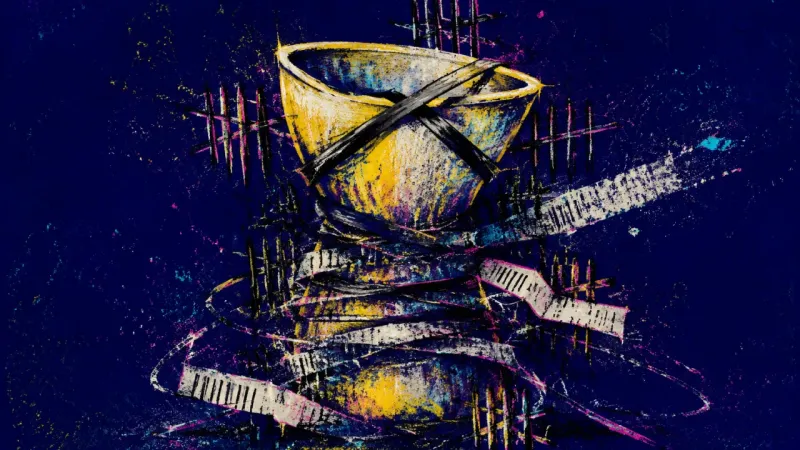
Choosing the Compass: How This Four-Card Tarot Spread Works
I asked her to take one slow inhale and one longer exhale while I shuffled. In my reading room, I use sound the way some readers use incense—not as theatre, but as a nervous-system bridge. A low instrumental track hummed under the radiator clicks, just enough to give her body something steadier than the urge to act fast.
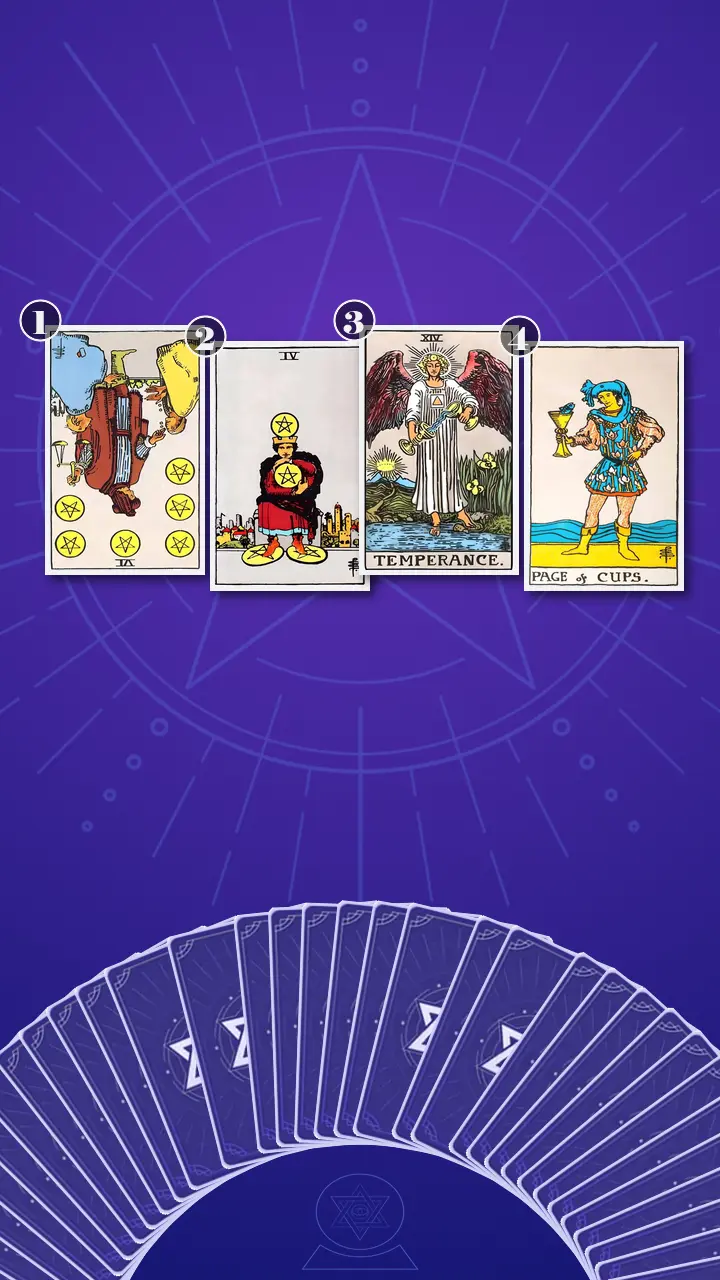
For this question, I chose The Inner Compass, a four-card tarot spread for receiving kindness without feeling indebted. When readers ask me how tarot works in moments like this, my answer is simple: I don’t need ten cards to tell me what a body is already repeating. I need a clean sequence—symptom, root pattern, corrective truth, next step.
So I told Jordan exactly what I was looking for. The first card would show the receiving moment where gratitude flips into a debt response. The second would reveal the fear about control and hidden obligation underneath it. The third—the heart of the reading—would show the shift from rigid scorekeeping to flexible reciprocity. The fourth would turn that shift into something she could actually try this week, in real life, on a coffee run, a lunch break, or a date.
Reading the Map: The Ledger and the Grip
The Cup That Turned Into a Tab
The first card I turned over was the one that shows the concrete receiving moment where gratitude flips into a debt response: Six of Pentacles, reversed.
I pointed to the scales, the falling coins, the uneven flow of the scene. “This is exactly the PATH coffee line,” I told her. “A coworker casually adds your latte to their order, says ‘I’ve got it,’ and before the lid cools you’re already rehearsing how to make it even. In modern language, this is private Splitwise brain. The gesture is warm on the outside, but inside it gets converted into social math.”
In reversed position, I read this as blocked receiving. The energy isn’t gone; it’s distorted. Instead of allowing generosity to move naturally, her mind scans for invisible terms and conditions. The problem isn’t the coffee. It’s the speed of the conversion. Five dollars becomes leverage, status, unfinished business.
I asked her, “What feels worse in that moment—the price of the drink, or the feeling that you didn’t control the terms?”
Jordan looked down at the card and let out one short laugh, dry around the edges. “Wow. That’s accurate enough to be rude.” Her fingers tapped once against her cup, then flattened, like she had caught them trying to reach for her phone again.
The Grip Beneath the Manners
The second card revealed the underlying fear about control, dependence, and hidden obligation that makes small favors feel risky: Four of Pentacles, upright.
I have spent too many years in radio studios not to notice what happens to someone’s breath when a truth lands. Jordan’s had been sitting high in her chest since she arrived. Four of Pentacles told me why. This wasn’t only about fairness; it was about self-protection. Card in hand before the till. Calendar full. Ride home arranged. Separate order, separate tab, separate exit. She kept every app in low-power mode so nothing unexpected could start running in the background.
“Look at the body on this card,” I said, tracing the pentacle pressed to the chest and the two pinned under the feet. “This is excess control. It says, ‘If I keep the terms in my hands, nobody gets leverage. Nobody gets to define what this means. Nobody gets unexpected access to my time, warmth, or compliance.’”
I could see the recognition hit physically before she answered: first the little freeze in her jaw, then her gaze unfocusing as if a dozen lunch-break memories were replaying at once, then a long exhale that lowered her shoulders by maybe an inch.
“I always call it fairness,” she said quietly. “But honestly? It’s more like… I need to close it before it grows teeth.”
“Exactly,” I told her. “Is it really fairness you’re defending, or control? Because those are not the same thing.”
When Temperance Poured Between Two Cups
The Card That Rewrote Fairness
When I turned over the third card, the room went noticeably still. Even the low track in the corner seemed to soften itself. This was the card that identifies the key transformation from rigid scorekeeping to flexible reciprocity: Temperance, upright.
On a weekday coffee run, someone says “I’ve got it,” and before the elevator reaches your floor you’re already halfway inside Venmo and halfway inside a private panic about what this now means. That is the exact half-second Temperance interrupts.
Because sound is part of how I work, I used the frame I trust most here: Music Pulse Diagnosis. “Tell me what you’ve been playing lately on the commute after one of these moments,” I asked her.
She blinked. “Fast stuff. Or a podcast. Anything that keeps me from thinking.”
I smiled a little. “Right. Your nervous system is trying to hard-cut the feeling before it lands. After a decade of listening to bodies through music choices, I can tell you this much: when someone keeps reaching for speed after a small act of kindness, the body isn’t processing care. It’s outrunning uncertainty.”
A Coffee Is Not a Contract
A coffee is not a contract; let exchange move like Temperance’s poured water, balanced over time instead of forced even in one nervous swipe.
Then I said it even plainer. “You do not need to erase kindness to stay equal; equality can live in the relationship, not in a same-minute repayment.”
The words sat there. Jordan stopped moving altogether. First her breath caught—one suspended beat. Then her eyes went slightly unfocused, like she was watching old scenes line up differently in her head: the PATH coffee, the lunch break near King West, the date where she had promised to get the next one before she had even tasted the croissant. Then the emotion arrived more honestly. Her mouth tightened; her eyes brightened; one shoulder lifted as if to argue with me and then dropped. “But if I don’t erase it right away,” she said, and there was real resistance in it, almost anger at the idea, “doesn’t that make me careless?”
I shook my head gently. “No. It makes you early in the discomfort. That’s different.” I asked her to think back over the last week with this new lens. “Was anything actually asked of you, in any of those moments?”
She stared at Temperance again. Her fingers, which had been curled into her palm all session, slowly opened against her knee. Another breath. Then one of those quiet, disbelieving exhale-laughs that only comes when someone’s inner operating system has been caught in the act. “No,” she said. “Not really. I just… assumed the tab was open.”
That was the turning point. Not total comfort. Not instant trust. But the first step from braced guilt and hyper-vigilant scorekeeping toward cautious ease and trust in mutuality. Equal doesn’t have to mean instantly even. Temperance was not asking her to become passive; it was teaching her measured reciprocity, emotional regulation, and the possibility that a relationship can hold balance over time.
The Beginner’s Cup
The fourth card translated that shift into a low-stakes way of receiving and responding this week: Page of Cups, upright.
I loved the honesty of this card for her. Page of Cups isn’t master-level vulnerability. It is beginner-level receiving. In real life, it looks almost awkwardly small: someone covers something minor, and instead of turning the moment into admin, you say, “Thank you, that was kind,” and let yourself take one sip, one bite, or one full breath before deciding what comes next.
This is gentle water—present, but not flooding. Not overexposure. Not passivity. Just enough openness to let the moment register as care before strategy barges in. The fish rising out of the cup always reminds me that feeling shows up as a surprise before it feels like a skill.
Jordan smiled this time, softer. “That sentence feels weirdly intimate,” she said.
“Yes,” I told her. “Because sincerity is more vulnerable than logistics. But it also creates more real closeness than a same-minute transfer ever will. Let the kindness land before you settle the tab.”
The No-Invoice Pause: Actionable Advice for This Week
When I looked across the whole line of cards, the story was clean. First came the hidden invoice: Six of Pentacles reversed turning a normal kindness into a private ledger entry. Then the deeper rule: Four of Pentacles guarding autonomy so tightly that even warmth could feel like a threat. Temperance shifted the meaning of equality itself, from instant settlement to mutuality over time. Page of Cups brought it back down to earth as one sincere, non-performative response.
Jordan’s blind spot was not that she cared too much about fairness. It was that she kept mistaking body alarm for evidence. The moment her stomach tightened, she treated the sensation as proof that an obligation existed. The transformation direction was gentler and more radical: pause long enough to ask whether the moment actually requires repayment, or whether it is simply asking for the capacity to receive.
- The 10-Breath SoundtrackThe next time a safe coworker, close friend, or easygoing date covers something small, I asked Jordan to put her phone face down and follow the Breath Soundtrack I wrote for her: inhale for four, exhale for six, ten rounds, before she opens Venmo, Apple Wallet, or drafts “next one’s on me.”If ten breaths feels too exposed, do three and name the reaction precisely: ‘This is the owe feeling, not a demand.’
- The 24-Hour No-Venmo ExperimentOnce this week, with one safe person and one low-cost gesture, let the kindness stand for twenty-four hours before sending anything back. During that window, I asked her to keep one line in Notes: ‘What was actually asked of me, if anything?’Keep it small. This is not for manipulative situations, and it is not a rule that you must always accept.
- The Clean Thank-You LineBefore work, I asked her to type one sentence into Notes: ‘Thank you, that was really kind of you.’ Use it once this week, exactly as written, and do not add repayment language for at least one full minute.If saying it live feels too vulnerable, send it later in a text. Warm counts more than polished.
Because this is my lane, I also gave her a tiny BGM Prescription for the commute home after one of these moments: one lyric-free track around resting-heart tempo, one brown-noise reset for the open office, and one warm acoustic song for later that night. Not to force trust, just to stop urgency from being the only soundtrack her body recognizes.

A Week Later, the Cup Stayed Warm
A week later, while I was cueing up a late-night segment, a text from Jordan came through. “Coworker got my coffee this morning,” it read. “I said the line. Took a sip. Didn’t open Venmo until after lunch… then realized I didn’t actually need to.”
She added one more sentence a minute later: “Still felt the buzz on the TTC home. But it didn’t take over the whole ride.” That was my favorite kind of proof—light, specific, and imperfect. Clearer, not cured. Warmer, not wide open. Real.
That is what a Journey to Clarity usually looks like when I use The Inner Compass four-card tarot spread for receiving kindness without feeling indebted: not a new personality, just one interrupted reflex and a little more room for care to arrive before control does. In Jordan’s case, the shift was simple and profound—from social math to warmth, from guarding control to tolerating care.
When a tiny kindness makes your stomach tighten before your gratitude can even land, what hurts is rarely the coffee itself; it’s the sudden fear that being cared for might cost you your freedom.
So when life gets noisy again and your thumb reaches for the payment app, what will you hold onto in that extra beat—the hidden invoice, or the ten-breath soundtrack that reminds you a coffee is not a contract?