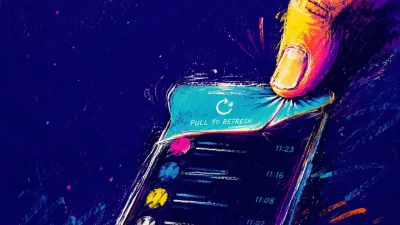
From Instagram Detective Mode to Self-Respect: Setting One Clean Boundary

Finding Clarity in the Tube Ride Where Your Thumb Betrays You
If you’ve ever typed their name “just to see” and felt that tight-chest + restless-hands combo—like your nervous system is negotiating with your thumb—this is for you.
Taylor arrived at my café in London with that particular kind of tired you can’t sleep off. Not the “I worked late” tired—more like their attention had been yanked around all week by a tiny glowing rectangle.
They told me the moment it usually starts: 8:47 p.m. on a Tuesday, somewhere between Bank and London Bridge on the Jubilee line. One hand on the pole, the carriage humming and swaying, phone warm from their palm. “I open Instagram to decompress,” they said, almost rolling their eyes at themself. “And their story is first. It’s like… my chest tightens like I missed a step on the escalator. Part of me wants to look away, part of me taps before I decide.”
They shrugged like they were trying to be chill about it, but their fingers kept doing that small, itchy fidget people do when their body wants an action it knows it shouldn’t take. “I hate that a photo can ruin my whole evening,” they said. “I’m not trying to get them back. I just want my brain to be quiet.”
Underneath all the practical talk—“I only checked because it popped up first,” “it doesn’t count if it’s just one thing”—I could hear the deeper contradiction humming like an espresso machine that needs cleaning: wanting emotional closure and connection while fearing that fully letting go will confirm you weren’t ‘enough’ to be chosen.
Heartache does something physical. In Taylor, it looked like a tight band around the ribs, and it sounded like their breath catching mid-sentence whenever Instagram got mentioned—like their lungs didn’t trust the air to stay safe.
I set a small cup of coffee in front of them anyway—something gentle, not a double shot that would make their system spike—and said, “We’re not here to judge your phone habits. We’re here to get you back inside your own life. Let’s draw a map through this fog and find a boundary that protects your nervous system.”
Choosing the Compass: The Celtic Cross · Context Edition
I asked Taylor to put both feet on the floor and take one slow breath that wasn’t for performance. Not spiritual theatrics—just a clean transition from “Tube + algorithm” into “room + choice.”
While I shuffled, the café did its usual quiet conspiring: the soft clink of a spoon against ceramic, the low hiss of steaming milk, a doorbell chiming as someone slipped in for a takeaway. Ordinary sounds—exactly the point. Tarot works best, in my experience, when you remember you’re still a person in a Tuesday.
“Today,” I told them, “I’m using a spread called the Celtic Cross · Context Edition.”
And because I’ve learned trust is built by naming the logic (not by pretending the cards are a theatre curtain), I explained it plainly: this question isn’t just ‘should I mute my ex on Instagram?’ It’s a whole chain—trigger, body response, story your mind tells, compulsion, crash. The Celtic Cross is good at mapping that chain from the present pattern to the deeper root, and then translating it into actionable advice you can actually try this week.
In this version, we pay special attention to two places: one card will show the near-term boundary experiment for the next 7 days (so you don’t have to make a forever decision while you’re activated), and another will speak to the Instagram environment itself—mutual friends, tags, algorithmic exposure—the whole digital field that keeps “reopening the bruise.”
“We’ll start in the center,” I said, tapping the cloth where the first two cards would cross, “with what happens in you right now when you see them. Then we’ll find the hook. Then the root. Then we’ll climb—card by card—toward the cleanest, most supportive boundary.”
Reading the Map: How Tarot Works When the Feed Won’t Let You Be
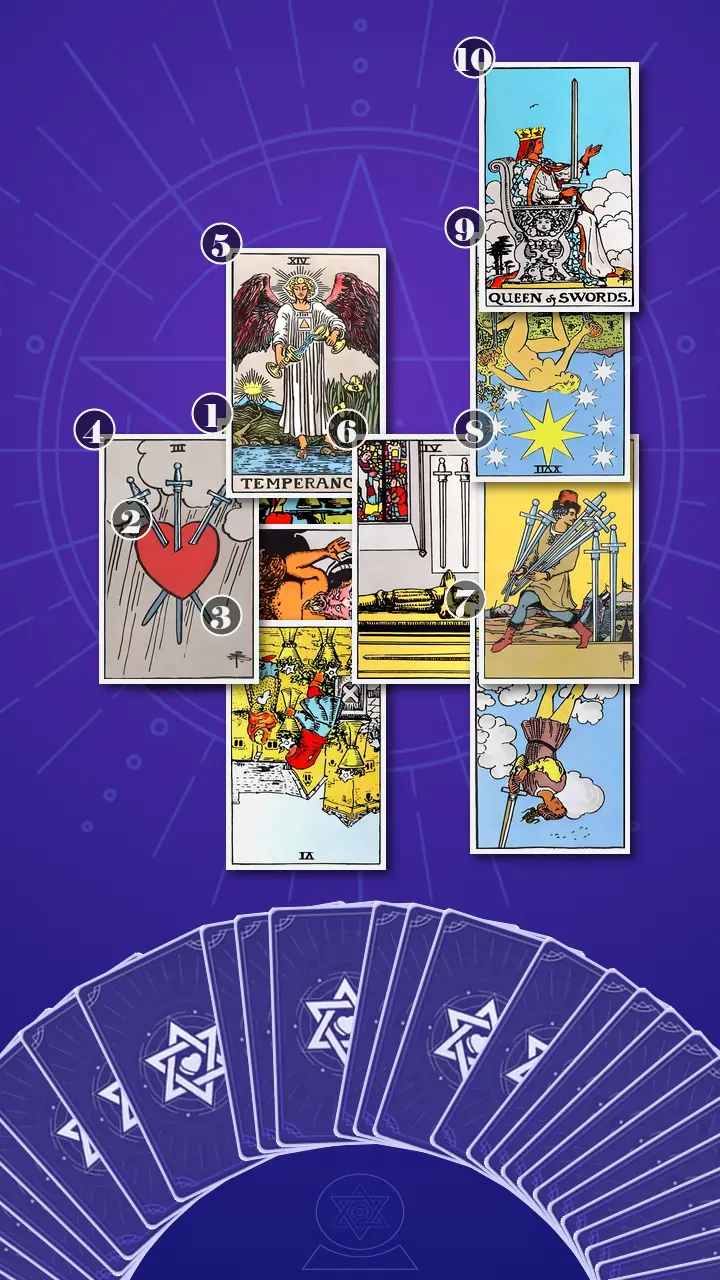
Position 1: What happens in you right now when you see your ex on Instagram
“Now we’re turning over the card that represents what happens in you right now when you see your ex on Instagram—the immediate pattern.”
Eight of Cups, reversed.
I pointed to the figure in the image—the classic leaving-and-looking-back posture. “This is unfinished leaving,” I said. “Part of you has walked away, but part of you keeps turning back for one more look.”
And I used the translation that actually fits 2026 life: “It’s like you close Instagram, reopen it two minutes later, and tell yourself it doesn’t count because you’re only checking one thing.”
Taylor let out a short laugh—sharp, almost amused—then immediately looked down at their hands like they’d been caught. “That’s… yeah,” they said, and the laugh turned bitter around the edges. “Saying it out loud makes me sound unhinged.”
“Not unhinged,” I said, steady. “Human. Your brain is trying to finish a story that ended without your consent.”
Reversed Cups energy often shows a loop: emotion can’t complete its natural arc because you keep re-entering the doorway. In Taylor’s life, that doorway is Instagram—an open tab in your pocket.
“Here’s the question the card asks,” I added gently. “What feeling are you hoping the next scroll will finally settle—loneliness, regret, or the need to be chosen?”
Position 2: The main challenge that keeps the loop going
“Now we turn over the card that represents the main challenge—the hook that keeps the loop going.”
The Devil, upright.
“This doesn’t mean you’re doomed,” I said quickly, because I never let this card be used as a shame stamp. “It means there’s a sticky attachment loop here—compulsion, temptation, and the sensation of ‘I can’t stop even when I want to.’”
I tapped the chain in the imagery. “Notice it’s a chain you can lift off if you see it as a chain.”
And then I used the echo that usually lands in the body before it lands in the mind. “Instagram checking can work like a slot machine,” I said. “Refresh is the lever. Anticipation is the micro-hit. Even when you lose—when you see something that hurts—you still get that quick jolt of ‘at least I know.’”
I watched Taylor’s posture shift as if they were leaning toward an invisible screen. Their shoulders rose half an inch. Their jaw set. Their thumb twitched against their index finger—the muscle memory of tapping.
“That’s exactly it,” they said, quietly. “It’s like… if I just know what it means, I can calm down.”
“And then?” I asked.
They swallowed. “I’m still not calm.”
“Right,” I said. “Because the hook isn’t information. The hook is the fantasy that information can substitute for safety.”
Position 3: The deeper root beneath the checking
“Now we turn over the card that represents the foundation—the deeper root, the underlying fear under the behavior.”
Six of Cups, reversed.
“This is nostalgia that isn’t neutral,” I said. “Selective memory. Emotional time travel.”
In modern terms, it’s when you scroll back to early photos—when you both looked soft and close—and you treat that sweetness like proof of something permanent, forgetting what you were tolerating. The past becomes a curated highlight reel in your own head, and the present feels harsh by comparison.
Reversed, this energy is a pull backward. Not because you’re foolish—but because familiarity feels safer than uncertainty. And under that, the fear that if you stop looking and truly move on, you’ll have to face a silence that says: maybe they moved on because I wasn’t enough.
Taylor’s eyes didn’t tear up in a dramatic way. They just got shiny, the way a street looks after rain when the clouds haven’t decided what to do next.
“That’s the part I hate,” they said. “It’s like if I make it a clean boundary, I’m… admitting something.”
“You’re admitting it mattered,” I corrected softly. “That’s not the same as admitting you were unworthy.”
Position 4: The breakup wound that gets reactivated
“Now we turn over the card that represents the recent past—the breakup wound you’re still carrying that gets reactivated.”
Three of Swords, upright.
The image is brutally honest: a heart, pierced. Storm clouds. No filters.
“This card does something important,” I told them. “It refuses to let pain hide behind the word ‘curiosity.’ It says: this hurt is real.”
Instagram triggers are potent because they poke the same bruise. Your mind tries to solve pain with more information—like if you just understand the caption, the tag, the like, the timeline, you can undo the ache.
“But healing isn’t about being unaffected,” I said. “It’s about not re-injuring yourself on purpose.”
Taylor nodded once, slow. Their throat bobbed like they were swallowing a sentence they didn’t want to say.
Position 5: Your conscious intention for healing
“Now we turn over the card that represents your conscious aim—what you think you need to feel better.”
Temperance, upright.
Temperance is the card I can almost smell. Two cups, water poured steadily between them—like a barista’s careful pour, not a panicked dump of boiling water over grounds.
“You’re not looking for drama,” I said. “You’re looking for dosage. Balance. A way to stop swinging between ‘block them forever’ and ‘keep bleeding daily.’”
It’s the energy of measured mixing: exposure that your system can actually process. Not because you “should be mature,” but because your nervous system is an instrument—you can’t play it well if you keep striking the same raw note.
As a café owner, I think about this as over-extraction. You can take something that could have been nourishing—connection, memory, even grief—and pull it too hard, too fast, until all that’s left is bitterness. That’s my Stress Flavor Profile lens: when life is over-extracted, everything tastes harsher than it needs to.
Temperance is asking: “What amount of contact with their online life supports recovery… and what amount keeps the wound open?”
Position 6: A boundary experiment for the next 7 days
“Now we turn over the card that represents the near future—the next step you can try as a practical container.”
Four of Swords, upright.
The energy changed immediately. It always does with this card—like someone turned the volume down without asking permission.
“This,” I said, “is ‘Do Not Disturb’ for your brain.”
And I let the imagery do what it’s meant to do: a protected rest. A sanctuary. Not a forever vow. A pause long enough for the system to stop scanning.
I described it in their actual world: “Phone charging in another room. Flat quiet. London night sounds—a distant siren, the radiator clicking. A boundary that says, ‘Nothing new gets to poke the bruise right now.’”
Taylor’s shoulders dropped. It was subtle but visible, like a coat sliding off a hook. Their mouth loosened as if they’d been holding their lips tight to keep from saying something needy.
“I can do 72 hours,” they said, surprised by their own voice. “I can’t do… ‘never again.’ But I can do 72 hours.”
“That’s exactly the point,” I said. “We’re not chasing perfection. We’re gathering data on how you function with fewer triggers.”
Position 7: How you’re showing up internally—your self-talk and habits
“Now we turn over the card that represents you—your inner stance in this situation.”
Page of Swords, reversed.
“This is the part of you that calls spying ‘research,’” I said, without cruelty. “It’s mental quickness turned into mental agitation.”
It’s the 1 a.m. sharpness that feels productive—rewriting a DM in Notes, deleting it, reopening the chat thread anyway—then the 9 a.m. crash when your brain is still full of screenshots you never took.
Reversed, the Page’s energy is blocked and scattered: the sword is up, but it’s waving in the wind. “Checking is a reflex that feels like control and lands like pain,” I told them, using the phrase I’ve learned people hold onto when they’re ashamed of their own behavior.
Taylor looked up at me then—direct, almost relieved. “So I’m not… crazy,” they said. “It’s just… a pattern.”
“A pattern,” I agreed. “And patterns can be interrupted.”
Position 8: The external field—Instagram, mutuals, algorithmic exposure
“Now we turn over the card that represents your environment—the digital field that keeps putting them in your line of sight.”
Seven of Swords, upright.
“This is the ‘curated versus complete’ card,” I said. “Strategic presentation. Partial truth. Missing context.”
One smiling photo is a three-second trailer, not the full movie. A tag at a bar is one frame, not the plot. But your brain—especially when heartbroken—treats it like a verdict.
“In an information economy,” I said, “you have to know what counts as reliable data. Instagram is not reliable data. It’s selected footage.”
Position 9: Hopes and fears—the emotional double-bind about moving on
“Now we turn over the card that represents what you hope for and what you fear about moving on.”
The Star, reversed.
“This is hope with a dimmer switch,” I said. “Not gone—just wobbling.”
Reversed, The Star can look like: “Healing is taking too long. Everyone else gets over breakups faster than me. I should be over this by now.” It can also look like borrowing reassurance from outside—checking the feed—because self-trust feels temporarily offline.
I watched Taylor build the familiar equation in their face: They look happy = I’m replaceable.
“Let’s rewrite that,” I said, calm and firm. “This is incomplete data. Public signal is not private truth. Curated is not complete.”
Their gaze unfocused for a second, like they were replaying a specific post. Then they blinked, hard, and their shoulders lowered again.
“I fill in the gaps,” they admitted. “Like it’s fact.”
“Exactly,” I said. “And that’s why the boundary isn’t about winning a breakup. It’s about changing access to unreliable inputs.”
When the Queen Lifted Her Sword: The Clean Cut That Protects Your Peace
Position 10: The most supportive boundary mindset to integrate now
I took a breath before turning the final card. Even in a bustling café, there are moments when the room seems to hush around a truth. The milk steamer clicked off. Outside, a bus sighed at the curb. The air felt briefly still—like a held inhale.
“Now we turn over the card that represents the most supportive boundary mindset to integrate now,” I said. “Not a fixed fate. A direction of healing.”
Queen of Swords, upright.
Her gaze is clear. Her sword is upright—not flailing, not threatening. Just… present. Unnegotiable in the way a locked door is unnegotiable.
“This is the antidote,” I told Taylor. “The Queen of Swords is clarity without cruelty. It’s a boundary that doesn’t ask your mood for permission.”
Setup: The midnight scroll that pretends it’s just one second
And I anchored it in the exact trap they’d described: it’s 11:58 p.m., you tell yourself you’re only opening Instagram for a second—then their story is right there. Your thumb moves before your brain agrees, and suddenly you’re scanning faces, captions, and likes like it’s evidence that will finally make you feel okay.
In that moment, Taylor’s mind is doing what so many minds do at a breakup crossroads: “If I can decode this, I’ll be safe.”
Not “I should be able to handle seeing them,” but “I choose a clean cut for my peace”—lift the Queen’s sword and make your settings match your self-respect.
Reinforcement: The body hears the boundary before the brain believes it
Taylor reacted in a three-beat chain I’ve come to trust more than words.
First: a freeze. Their breath stopped halfway in, and their fingers hovered above their phone like the device had suddenly become heavier.
Second: the thought landed. Their eyes went slightly distant—not dramatic, just that faraway look of someone replaying a hundred tiny moments: the Tube ride, the sofa, the blue-white screen glow in bed, the Notes app DM graveyard.
Third: an emotional release that didn’t look like relief at first. It looked like anger—brief, clean, honest. “But if I do that,” they said, voice tight, “doesn’t it mean I was wrong? Like… I should’ve been able to handle it.”
I didn’t rush to soothe them. I leaned into the Queen’s truth. “It means you’re done paying for peace with your nervous system,” I said. “It means you’re choosing care over monitoring.”
Then I brought in my most practical café-based way of making this real: “In my world,” I told them, “we don’t judge the espresso machine for needing maintenance. We schedule it, because consistency keeps it working. Your attention is the same.”
“Here’s what I want you to notice,” I continued, switching into my Caffeine Energy Scan lens. “When you’re activated—tight chest, itchy hands—your body is already in a stimulant loop. Instagram acts like caffeine at midnight: it feels like focus, but it’s actually agitation. The Queen of Swords isn’t asking you to be ‘strong.’ She’s asking you to stop dosing yourself with the thing that spikes you.”
Taylor’s face softened—not into happiness, but into recognition. Their shoulders sank for real this time. They exhaled through their nose in a long, shaky line like they’d been holding their breath for weeks. And then there was that slightly dizzy vulnerability that comes after clarity—like stepping out of a loud club into cold night air.
“Okay,” they whispered. “So… settings. Not speeches.”
“Exactly,” I said. “No announcement. No proving you’re unbothered. Just admin access.”
I let the silence sit for a beat, then asked the question that turns insight into self-trust: “Now, with this new lens—clean cut for peace—can you think of a moment last week when this boundary would’ve changed your night?”
Taylor blinked, then nodded once. “Sunday,” they said. “The Sunday Scaries. I saw a mutual like their post and I spiraled. If I’d muted them earlier, I… wouldn’t have been dragged into it.”
“That’s the shift,” I said. “From ‘I need more information to feel okay’ to ‘I need a consistent boundary to protect my nervous system and rebuild self-trust.’ That’s how you move from compulsion and spikes to quiet clarity and nervous calm.”
The Boundary Plan: Settings-Not-Willpower, With a Little Italian Riposo
I gathered the whole spread into one story—simple, coherent, and kind.
“Here’s why this has been so hard,” I said. “Your present is Eight of Cups reversed: you keep turning back. The Devil crosses it: the feed has become a chain that promises control. At the root, Six of Cups reversed keeps offering you a sweetened version of the past, and the Three of Swords confirms the wound is still tender. Temperance shows you’re not trying to be dramatic—you’re trying to find balance. Four of Swords offers the first real opening: a protected pause. The Page of Swords reversed shows the mental scanning pattern, and Seven of Swords reminds us the environment is incomplete data. Star reversed explains why hope wobbles. And the Queen of Swords brings the solution: one clean, consistent boundary that protects your attention.”
“Your blind spot,” I added, “is thinking ‘closure’ will come from one more piece of information. In this reading, closure comes from consistency. From proving to yourself—through repeated small actions—that your attention isn’t community property.”
Then I shifted into the practical. “Let’s turn this into next steps you can actually do. Not a personality makeover. A 72-hour experiment.”
- The 72-Hour Sanctuary (Four of Swords)Tonight, open Instagram and mute their posts and stories for 72 hours. Pair it with an iPhone Screen Time/App Limit (15–30 minutes/day) so you’re not relying on willpower at 11:58 p.m.Expect the first 24 hours to feel louder. If guilt spikes, tell yourself: “A boundary isn’t a verdict on them. It’s a container for me.”
- The Queen of Swords Reset (10 minutes, no speeches)Do a clean settings sweep: (1) mute posts + stories, (2) remove them from Close Friends if that green-circle access still exists, and (3) delete their name from your search history so autocomplete stops pulling you back.Keep it private. No announcement, no “I’m doing this for healing” post. Settings—not statements.
- The Turn-Back Point Cutoff + 90-Second ResetPick your most common turn-back point (sofa after work, Tube ride home, late-night-in-bed). Make one rule for 7 days: “If I type their name, I close the app immediately.” Then do a 90-second reset before deciding anything else (water + 6 slow breaths + stand up and walk to the kitchen and back).If you relapse and check, treat it as data—not failure. Note the trigger, adjust the settings, and move on without self-attack.
And because I’m me—and my café has taught me that rest is not a luxury but a system requirement—I added one more layer I call Café Therapy: riposo.
“Riposo is the Italian pause,” I said. “A small, protected break that keeps you from over-extracting yourself.”
“So after 10 p.m. for the next three nights,” I continued, “treat your phone like the espresso machine at closing time: it gets put away. Charge it outside your bedroom if you can. If you can’t, put it across the room. You’re not trying to be perfect—you’re giving your mind fewer inputs so it can stop scanning.”
Taylor hesitated, then voiced the practical obstacle—exactly the kind that makes boundaries fail if you ignore it. “But I use my phone as my alarm,” they said. “And if it’s across the room… I’ll just get up and grab it and then I’m back in it.”
I nodded. “Totally fair. Make it easier to succeed.”
“Put the phone across the room and put a book on your pillow,” I suggested. “Not as a ‘you should read’ thing—just as a physical speed bump. And if you get up to grab the phone, that’s your cue for the 90-second reset first.”
Then I offered my Cup Temperature Scan—a tiny, odd little strategy that often makes boundaries feel measurable instead of moral. “When you make a hot drink at night,” I said, “notice how fast it cools. If it goes cold in five minutes, your system is running hot—stress, alertness, scanning. That’s the night you need stricter settings and more rest. If it stays warm longer, you’re steadier. It’s not science-lab perfect, but it gives you a body-based check-in instead of an Instagram-based one.”
Taylor actually smiled—small, real. “That’s weirdly helpful,” they said. “Like… I can track me, not them.”

A Week Later: Ownership, Not Certainty
A week later, Taylor messaged me at 7:41 a.m. (the hour when most people are either optimistic or vulnerable, sometimes both). The text was short:
“Muted. App limit on. First night I panicked and wanted to undo it. Put the phone face-down. Breathed. Didn’t check. Slept.”
Then, in a second message: “Woke up and my first thought was still ‘what if I’m being dramatic?’ But I laughed a bit. Like… okay, nervous system. We’re doing this anyway.”
It wasn’t a fairytale ending. It was better: a small, real proof. Clear but still a little tender. The kind of clarity that shows up as a quieter morning, not a perfect heart.
When I think about this reading, I don’t think about predicting anything about their ex. I think about the journey from being pulled by a chain to choosing a boundary with dignity. From “I need to decode this” to “I need to protect my mind.”
When you want closure so badly you keep reopening the app, it’s not because you’re “dramatic”—it’s because part of you is terrified that letting go will confirm you weren’t enough to be chosen, and your chest would rather stay tense than face that silence.
If you didn’t need one more piece of information to be okay tonight, what’s the smallest boundary you’d try—just for the next 72 hours—to protect your attention like it actually belongs to you?