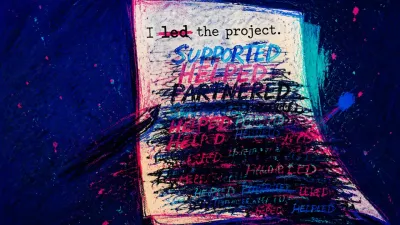
The Metric I Kept Deleting—And the Timer That Finally Got Me Drafting

Finding Clarity in the 10:47 p.m. Workday Tab
You’re a mid-level city professional filling out a self-review portal at 11 p.m., and you’re stuck on the first paragraph because every sentence feels like it could be used against you (classic impostor syndrome).
Alex (name changed for privacy) sat down across from me on Zoom from their Toronto kitchen table, the kind that becomes an office after dark. The overhead light was too bright—clean, clinical—and the laptop glow made their eyes look a little overexposed. I could hear a fridge hum in the background, and every few seconds: the tiny click of keys, then a pause like they were bracing for impact.
“It’s due tonight,” they said, staring past the camera at a screen I couldn’t see. “I have notes. I have, like… actual proof. Dashboards. Decks. Slack kudos. But the moment I type anything that sounds confident, my chest clamps down. And then I delete it.”
I watched their shoulders inch upward without them noticing, as if their body was trying to shrink their name right off the page. Their phone sat warm in their hand from scrolling—LinkedIn on one tab, the self-review portal on another, and a messy notes doc beside it. They told me they had typed a perfectly true metric…and then erased it like it was contraband.
There’s a particular flavor of self-doubt that doesn’t feel like sadness. It feels like trying to drive with the parking brake on—your foot is on the gas, the engine is willing, but every movement costs twice as much.
“You want to be accurate,” I said gently, “but the moment you sound sure of yourself, you feel exposed. That’s not laziness. That’s a self-protection ritual that’s gotten too good at its job.”
And because what they needed wasn’t a pep talk but a path, I added, “Let’s try to give this a map. Our whole journey tonight is about finding clarity—enough clarity to submit something fair and real, even if your nervous system doesn’t feel ‘safe’ about it yet.”

Choosing the Compass: The Transformation Path Grid (6)
I asked Alex to take one slow breath with me—not as a mystical moment, just a nervous-system handoff. “In through the nose,” I said, “and let your shoulders drop on the exhale.” While they did that, I shuffled, the soft snap of cards steadying the pace of the room.
“Tonight we’ll use a spread I designed for exactly this kind of career crossroads pressure,” I told them. “It’s called the Transformation Path Grid (6) · Context Edition.”
And for you reading this: this is why a six-card grid matters. A full Celtic Cross can overcomplicate a time-sensitive problem—especially when the deadline is literally tonight. But a three-card pull can miss the deeper mechanism that makes you shrink. This 2x3 grid links the symptom to the root, then turns insight into actionable advice and next steps.
I pointed to the invisible layout on my desk. “The first card shows the surface snapshot—how you’re shrinking in real time. The second shows what’s blocking you tonight: the specific impostor story constricting your wording. The third goes underneath that—what’s actually driving the whole loop. Then we drop to the turning point: the energy that breaks the pattern. After that, we name one step you can take in the next hour. And finally, we lock in integration: how to do a fairness pass so you don’t erase yourself on the last edit.”
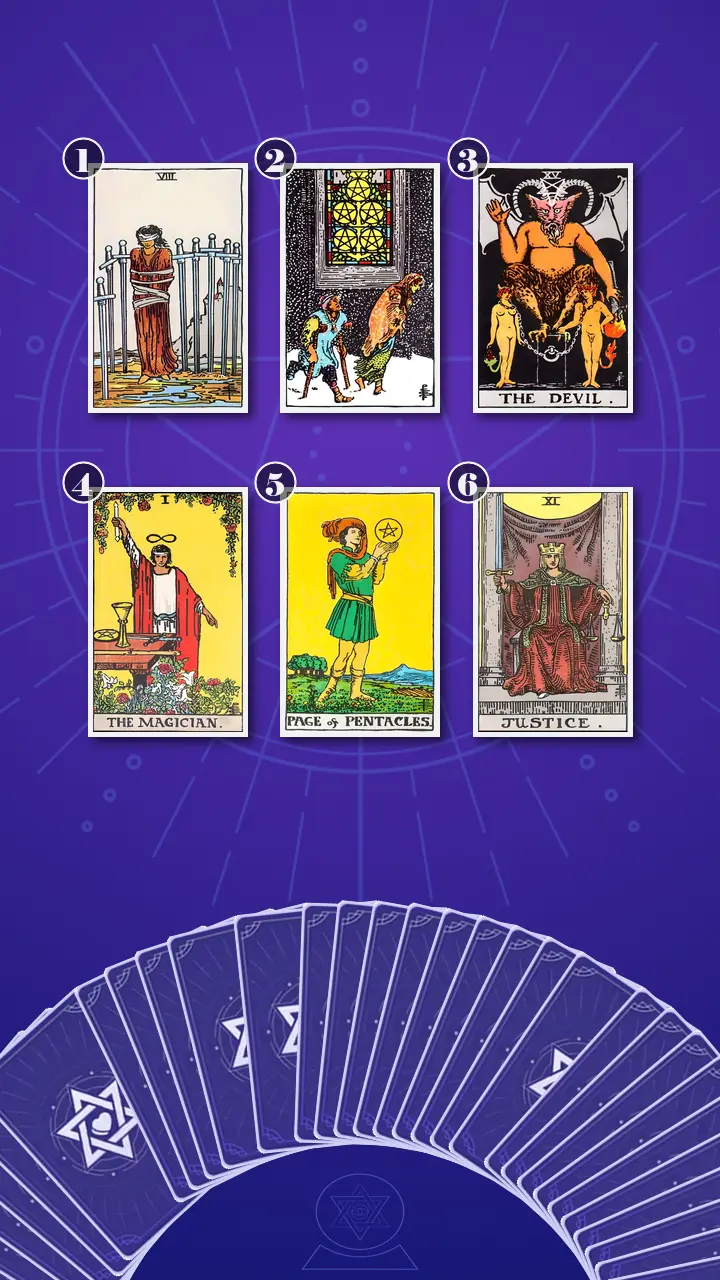
The Cursor-Hover Loop: Card Meanings in Context
Position 1: Surface snapshot — the exact way you’re shrinking right now
“Now we’re turning over the card that represents the surface snapshot: the exact way you’re shrinking right now while trying to write the self-review,” I said.
Eight of Swords, upright.
“This is 10:47 p.m. in your Toronto apartment,” I told them, “the self-review portal open, and you’re trapped on the first paragraph like it’s a courtroom statement. You reread one sentence ten times, imagining how it could be misread, and your fingers start deleting the only specific claim you made. The work isn’t missing—the sense of ‘danger’ is.”
In the Eight of Swords, the energy isn’t broken—it’s blocked. The blindfold, the loose bindings, the ring of swords: it’s a body that believes movement equals risk. In modern life, it’s the cursor blinking like a metronome. If I write it plainly → they’ll think I’m arrogant. If I soften it → I vanish. So you choose safety by shrinking, and you call it “editing.”
Alex gave a quick, almost disbelieving laugh—dry, a little bitter. “That’s… rude,” they said. Then quieter: “Also true.” Their fingers rubbed the base of their thumb like they were trying to sand down a nerve.
“You’re not failing the review—you’re running the shrink script,” I said. “And the Eight of Swords always asks a practical question: what single fact would you write if you weren’t trying to predict anyone’s reaction?”
Position 2: What’s blocking you tonight — the impostor story constricting your wording
“Now we’re turning over the card that represents what’s blocking you tonight: the specific impostor story or mindset that constricts your wording,” I said.
Five of Pentacles, upright.
“This is the moment you compare yourself to coworkers and suddenly feel like you don’t fully belong,” I told them. “In the review, that becomes scarcity language: you delete metrics, soften leadership into ‘supported,’ and write as if you’re asking permission to take up space. You act like recognition is a warm room you’re not allowed into—despite proof of support being right there.”
The Five of Pentacles is Earth energy in deficiency. It’s not that you don’t have value; it’s that your system is convinced value is rationed, like belonging is a premium feature and you’re on the free tier. The cold outside, the lit window—this card always shows that the story says “no shelter,” while the picture says, “There’s warmth. It’s closer than you think.”
Alex exhaled heavier than before, the kind of breath that comes from the bottom of the ribs. Their eyes didn’t look watery, exactly—more like something behind the eyes softened. “I screenshot kudos,” they admitted. “And then I tell myself they were just being nice.”
“That’s the belonging math,” I said, keeping my voice level. “If praise is always a fluke, then you never have to risk letting it count. But it also means your self-review becomes a letter from the cold.”
Position 3: The deeper root — the attachment keeping the impostor script in place
“Now we’re turning over the card that represents the deeper root: the attachment, fear, or psychological mechanism that keeps the impostor story in place,” I said.
The Devil, upright.
“This is when the self-review stops being a document and turns into a shame contract,” I said. “The rule reads: ‘If I sound confident, I’ll be exposed.’ So you over-explain, add disclaimers, and keep polishing like the right phrasing will prevent judgment. You’re chained to approval-seeking even while you know you have receipts.”
The Devil is a Major Arcana root for a reason. This isn’t a minor mood swing; it’s a learned system. The energy here is excess—too much vigilance, too much imagined surveillance. It’s like an invisible terms-and-conditions agreement you never signed but keep obeying: Stay small and you won’t be targeted.
Alex’s jaw tightened, then released. I saw their leg bounce under the table. “It’s so stupid,” they said, and there was a sharpness in their tone—anger, not at me, but at the whole arrangement.
“Not stupid,” I corrected softly. “Protective. The Devil doesn’t show up to shame you. It shows you where shame has been doing the driving.”
I paused, letting the room hold that. “If you spoke plainly about your impact… what do you think would happen? And whose standard are you still trying to satisfy when you try to sound ‘safe’?”
When The Magician Spoke: Evidence First, Confidence Later
Position 4: The turning point — the energy that breaks the loop and restores authorship
I let my hand rest on the deck for a beat longer than usual. “We’re about to turn over the card that represents the turning point: the most effective energy to invoke to break the loop and regain authorship of your narrative,” I said. “This is the hinge.”
The Magician, upright.
“This is the moment you stop trying to sound ‘worthy’ and switch to tool-mode,” I told Alex. “You pull up project notes, campaign results, decks, and a couple of Slack/email compliments. You write three plain bullets with outcomes, like you’re documenting a case file—direct sentences, no apology language. Confidence becomes optional; evidence becomes the driver.”
As a Jungian psychologist, I watch the body when the mind gets loud. The Magician is a mind-body card in disguise: wand raised, one hand to the table, one to the sky—a circuit completing. Alex’s circuit, right now, was stuck in their shoulders and neck, the place my work always finds the bottleneck first. Their shoulders were nearly touching their ears.
“Can I try something with you?” I asked. “Non-medical, just energy and attention. Put one hand on your chest for ten seconds.”
They did. Their breathing caught at first—just a small freeze.
“Now say out loud, ‘I led,’” I said, “and notice what your shoulders do.”
Their shoulders jumped. Their face pinched as if the word had a sting. That was my Energy Flow Diagnosis in real time: the psyche tightening the body to keep the self small.
Setup: It was late, the portal was still open, and Alex was toggling between notes and someone else’s shiny LinkedIn win—shoulders inching up as they deleted the only concrete number they had. They were trapped in the idea that they had to feel confident first, or else every clear sentence would become evidence against them.
Stop waiting to feel “qualified” before you speak; start working with what’s already on your table, like The Magician, and let the evidence do the talking.
Reinforcement: The sentence landed like a dropped pebble in still water. Alex’s breath stalled for half a second. Their fingers hovered above the keyboard, frozen—then their gaze went unfocused, as if their brain replayed a week of edits, a month of disclaimers, a year of “supported” and “assisted.” Then, slowly, their shoulders sank a fraction, like a backpack sliding off one strap. They blinked hard once. “But… if I do that,” they said, and the edge came back, defensive and raw, “doesn’t that mean I was wrong this whole time? Like I’ve been lying to myself?”
I nodded, because that question is honest. “It doesn’t mean you were wrong,” I said. “It means you were surviving. The Devil wrote a contract. The Magician renegotiates it.”
I offered them a quick reset I used to teach on transoceanic voyages—three minutes between meetings, between storms, between versions of yourself. “Drop your shoulders. Unclench your jaw. Exhale longer than you inhale, three times. Picture Venice for a second: water doesn’t force the canal. It circulates. Venetian Aqua Wisdom is simple—energy moves when it has a channel. Tonight your channel is structure: facts first.”
Then I asked the question that makes insight usable. “Now, with this new lens, think back to last week. Was there a moment when you deleted a metric or swapped ‘led’ for ‘supported’—and this sentence could have let you feel different?”
Alex stared at the ceiling, then nodded once, sharply. “Tuesday,” they said. “I wrote ‘increased CTR by 18%,’ and I deleted it. I told myself it sounded like I was trying too hard.” Their voice got quieter. “It was true, though.”
“That’s the shift,” I said. “Not from fear to zero fear—just from mood-based gatekeeping to evidence-based authorship. Evidence first. Confidence can catch up later.”
That was the first real step from tight, self-monitoring panic toward steadier self-respect.
Position 5: One-step action — the smallest grounded move within the next hour
“Now we’re turning over the card that represents one-step action: a small, grounded move you can take within the next hour to complete the review,” I said.
Page of Pentacles, upright.
“This is apprentice energy,” I told them. “You treat the self-review like building a simple artifact. One project at a time, you write a three-part bullet: what you did → what changed → what it enabled. You save it and move on without polishing. It’s steady, concrete, repeatable.”
The Page of Pentacles is Earth energy in balance. Not flashy. Not performative. And it’s exactly what performance review anxiety needs: a boring, solid method that doesn’t require you to feel brave—only willing.
Alex frowned a little, practical brain kicking in. “But I don’t have time,” they said. “I’ve already burned like two hours on one paragraph. I literally can’t do a whole rewrite.”
“Good,” I said, and I meant it. “We’re not doing a whole rewrite. We’re doing one bullet. Finished and specific beats polished and invisible.”
Position 6: Integration — how to keep it accurate and balanced after drafting
“Now we’re turning over the card that represents integration: how to keep the review accurate and balanced after the draft is written—neither shrinking nor inflating,” I said.
Justice, upright.
“This is your closing move,” I told Alex. “Before submitting, you do a fairness pass instead of an anxiety pass. You ask: ‘Is this accurate, specific, and proportionate to what happened?’ You keep numbers that are true, remove unnecessary disclaimers, and avoid hype. Your language becomes balanced: neither shrinking nor boasting.”
Justice is Air and Earth shaking hands: scales (measure) and sword (state). The energy here is balance—a calibration pass like QA. Not a self-worth check. Not a lie detector test. Just accuracy.
Alex’s face shifted—less pinched, more neutral. “That sounds… doable,” they said, surprised by their own tone. “Like I can check fairness without trying to become a different person overnight.”
The One-Hour Plan: Actionable Advice for an Evidence-Based Self Review
I leaned back and let the whole spread click into one story I could say in plain language.
“Here’s what I see,” I said. “Your current loop (Eight of Swords) isn’t a lack of accomplishments—it’s mental restriction. The blockage (Five of Pentacles) is the belonging wound: you write as if you’re outside the warm room, even when you have keys. The root (The Devil) is the shame contract that says staying small equals staying safe. The turning point (The Magician) is switching from vibes to receipts—tools on the table, facts in order. The Page of Pentacles makes it concrete: one boring bullet at a time. And Justice keeps you honest: not inflated, not erased. Fair.”
The cognitive blind spot I named for Alex was simple: they were treating emotional safety as the entry fee for accuracy. If they didn’t feel confident, they assumed they weren’t allowed to sound clear. But the transformation direction was the opposite: document evidence first, then let confidence lag behind without veto power.
“If it’s true,” I told them, “it’s allowed to sound true.”
Then I gave them a short plan—small steps, no heroics—built from what the cards recommended.
- Evidence First Sprint (10 minutes)Set a 10-minute timer. In your review, write only factual bullets—no editing. Aim for three receipts: one metric (even a placeholder like “[18% CTR]”), one deliverable (a deck, a launch, a campaign), and one piece of feedback (Slack kudos / email quote). When the timer ends, stop.If your chest tightens or you start wordsmithing, name it out loud: “This is the shrink story.” Then lower the bar: fragments are allowed.
- The “Disclaimer Ban” Pass (2 minutes)Put a sticky note next to your screen: just / a bit / kind of / helped. After you draft, do one single pass removing those words wherever they weaken a true statement.One pass only. If you notice yourself trying to make the draft “immune,” pause and return to the list—don’t negotiate with imaginary critics.
- Justice Check Before Submit (3 questions)Right before you hit Submit, ask: (1) Is this accurate? (2) Is it specific? (3) Is it proportionate to what happened? Replace one vague verb (supported/assisted/contributed) with a clearer one (led/owned/shipped/launched) only where it’s true.If the fairness check turns into another spiral, cap it: one pass, then submit. Do a fairness pass, not an anxiety pass.
Finally, I added one body-based support, because Alex’s shoulders had told the truth before their words could. “Between passes,” I said, “do a three-minute reset: shoulders down, jaw unclenched, exhale longer than inhale. Screen-induced exhaustion makes the mind more moralistic—like every word is a verdict. We’re interrupting that.”

A Week Later: Ownership, Not Certainty
Six days later, Alex messaged me: “Submitted on time. Kept the 18% CTR line. Didn’t die.”
They added, almost as an afterthought: “I hit Submit and then just… sat on my couch for a minute. No celebration. Just quiet.”
I could picture it—laptop closed, the room finally dim, their shoulders a notch lower. Clear, but still a little tender. That’s how real change often looks: not fireworks, just a small loosening and a finished document where there used to be a trial.
This is what tarot can do when you use it as a practical tool: it turns a blurry, shame-heavy career moment into a clear sequence—diagnosis, turning point, actionable advice, and next steps you can actually complete.
When you’re trying to be accurate but your body tightens the second you sound sure, it’s easy to start erasing yourself just to avoid the risk of being seen wrong.
If you didn’t need to feel confident tonight—only fair—what’s one piece of evidence you’d let stay on the page exactly as it is?
Every reading at AceTarot is a Journey to connect with inner wisdom and empower next step.
Learn more about our Journey to Clarity.